


Primary sourcePainting19th century
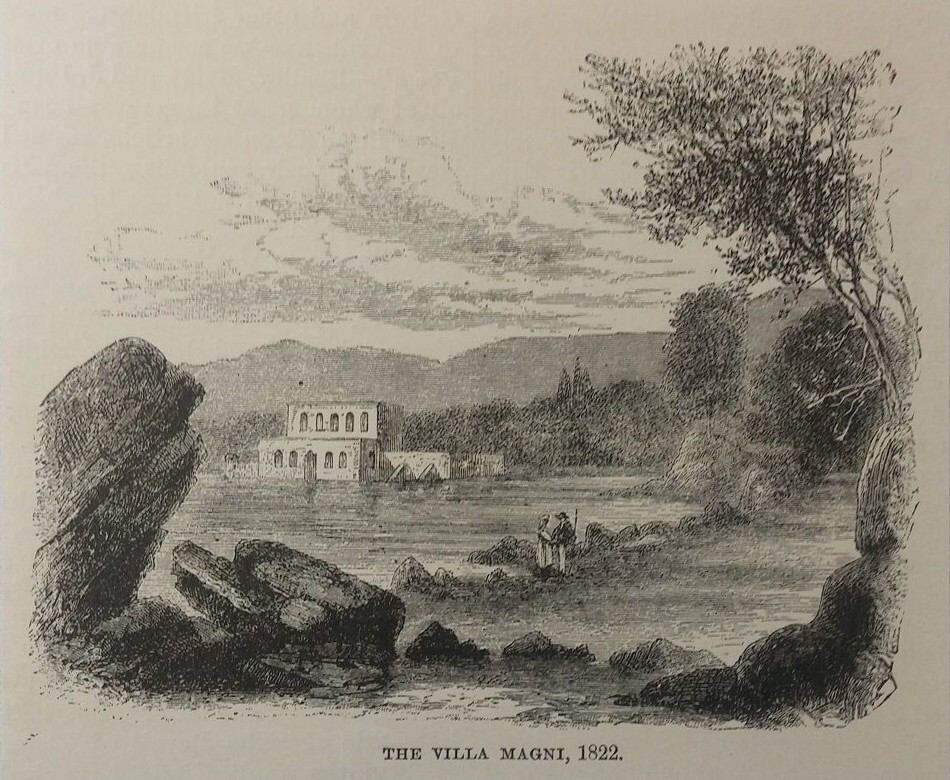
Villa Magni, San Terenzo, 19th-century engraving
19th century
A 19th-century engraving titled 'The Villa Magni, 1822', showing the house in San Terenzo where Percy Bysshe Shelley lived before he drowned in 1822.
A 19th-century engraving of the house where Percy Bysshe Shelley lived and drowned in 1822, linked to Mary Shelley's life.
About this source
What it is
This is a black-and-white engraving titled 'The Villa Magni, 1822'. It shows a two-storey, pale building with arched windows at the water's edge beside a calm bay, backed by hills and trees. Rocks and a tree frame the foreground, and two small figures stand on the shore. The engraver is unknown, and the image is dated to the nineteenth century.
Why it matters
The Villa Magni is the house in San Terenzo where Percy Bysshe Shelley lived. He drowned in 1822, and his wife Mary Shelley, the author of Frankenstein, was left to continue her life and writing. An engraving like this one preserves how the place looked in the years around that loss.
Look closer
- Why might the engraver have chosen the title year 1822 for this view?
- Who are the two small figures on the shore, and what does their size suggest about the scene?
- What does an engraving leave out that a photograph would show, and what does it add?
This painting is part of the curated material that grounds the AI version of Mary Shelley on Humy.ai — when students ask about related events, the AI can quote it and cite it.
More Mary Shelley sources
Browse all 94 →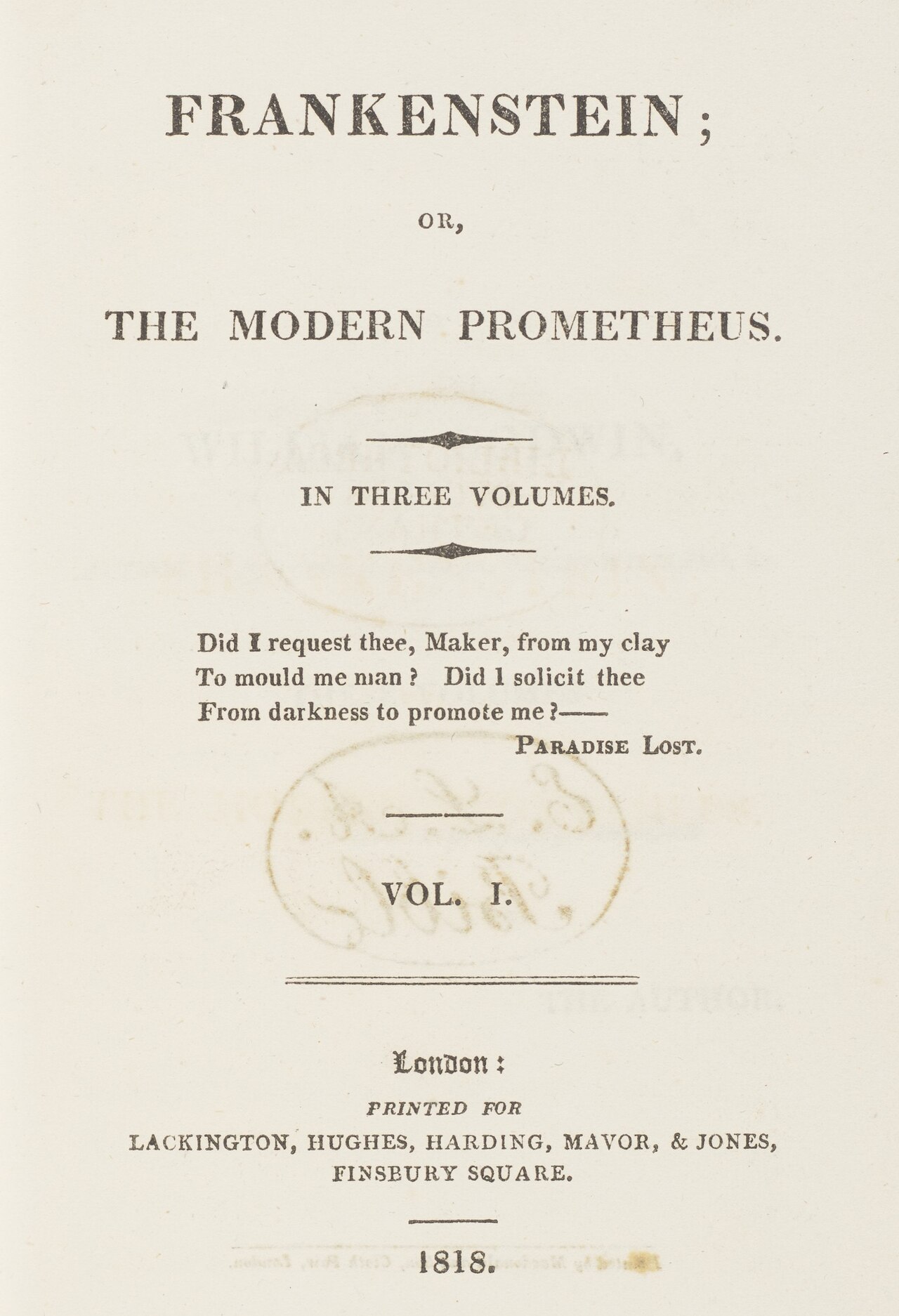 Book
Primary source
Frankenstein; or, The Modern Prometheus
Mary Shelley · 1818
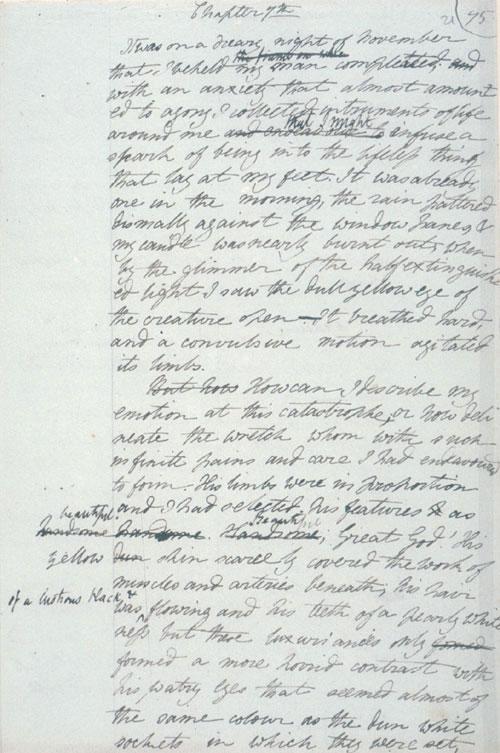 Document
Primary source
Frankenstein Draft Manuscript
Mary Shelley
Primary source
Frankenstein, or the Modern Prometheus (1831 edition)
Mary Shelley · 1831
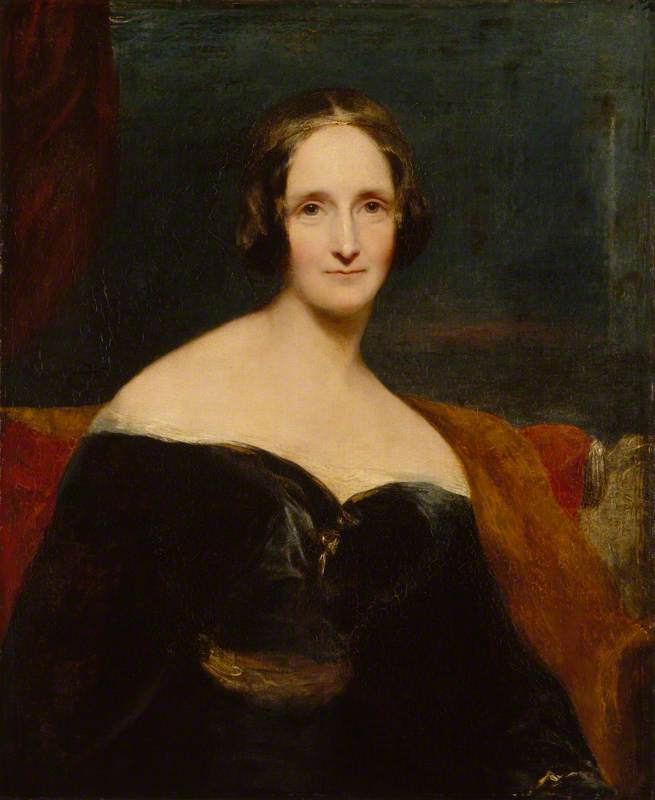 Painting
Primary source
Portrait of Mary Shelley
Richard Rothwell · 1840
Free account
Browse every Mary Shelley source
Sign up free →
Ready when you are
Start chatting with Mary Shelley now.
20 messages free · No credit card · Available in 50+ languages.