


Primary sourcePhotograph1916
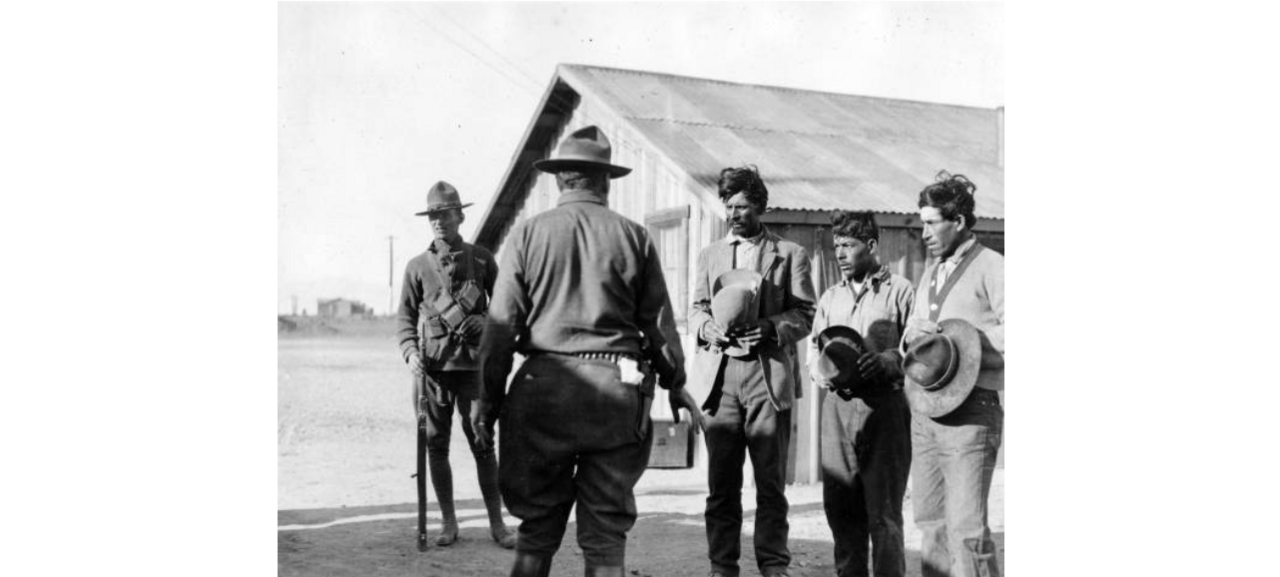
Villistas Captured by US Cavalry After the Columbus Raid
Otis Aultman Studio · 1916
A 1916 El Paso studio photograph of men who fought with Pancho Villa, shown as prisoners of the U.S. Cavalry after the Columbus raid.
Shows men from Villa's army as prisoners after the Columbus raid, so it documents the events that followed his forces' attack.
About this source
What it is
This black-and-white photograph was made in 1916 by the Otis Aultman Studio in El Paso, Texas. It shows an American soldier in a wide-brimmed hat, seen from behind, facing three men who hold their hats in their hands in front of a corrugated metal building. A second soldier with a rifle stands at left in the background. Its title describes these men as Villistas captured by the U.S. Cavalry after the Columbus raid.
Why it matters
Pancho Villa led the forces whose men appear here as prisoners. The photograph records the aftermath of the Columbus raid from the side of the people who made it, not from the men pictured. Comparing it with other accounts of the same events helps students see how one event can be described by different people.
Look closer
- What do the men's hats and posture suggest about their situation?
- Why might a studio in El Paso have photographed these men?
- What does the photo leave out about why the men were captured and what happened next?
This photograph is part of the curated material that grounds the AI version of Pancho Villa on Humy.ai — when students ask about related events, the AI can quote it and cite it.
More Pancho Villa sources
Meet the AI Pancho Villa →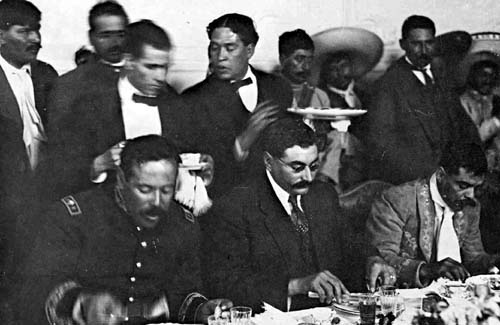 Photograph
Primary source
Pancho Villa, Eulalio Gutiérrez and Emiliano Zapata
December 1914
 Book
Primary source
Insurgent Mexico
John Reed · 1914
 Photograph
Primary source
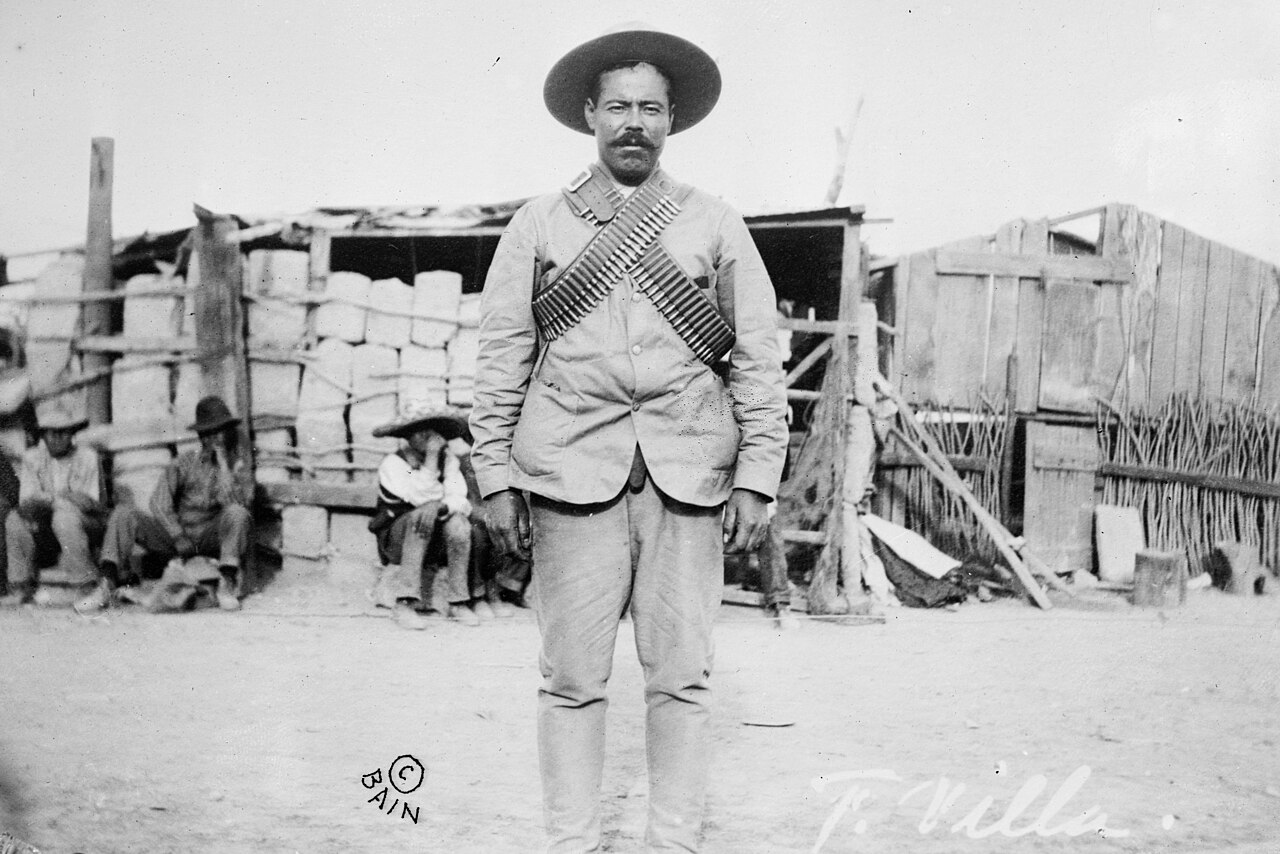
Pancho Villa in Bandoliers
Bain News Service
 Photograph
Primary source
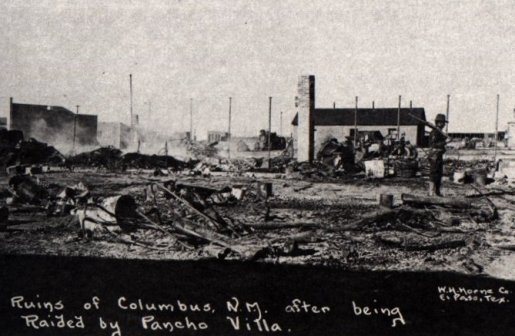
Ruins of Columbus, New Mexico
OSCAR · 1916
 Photograph
Primary source
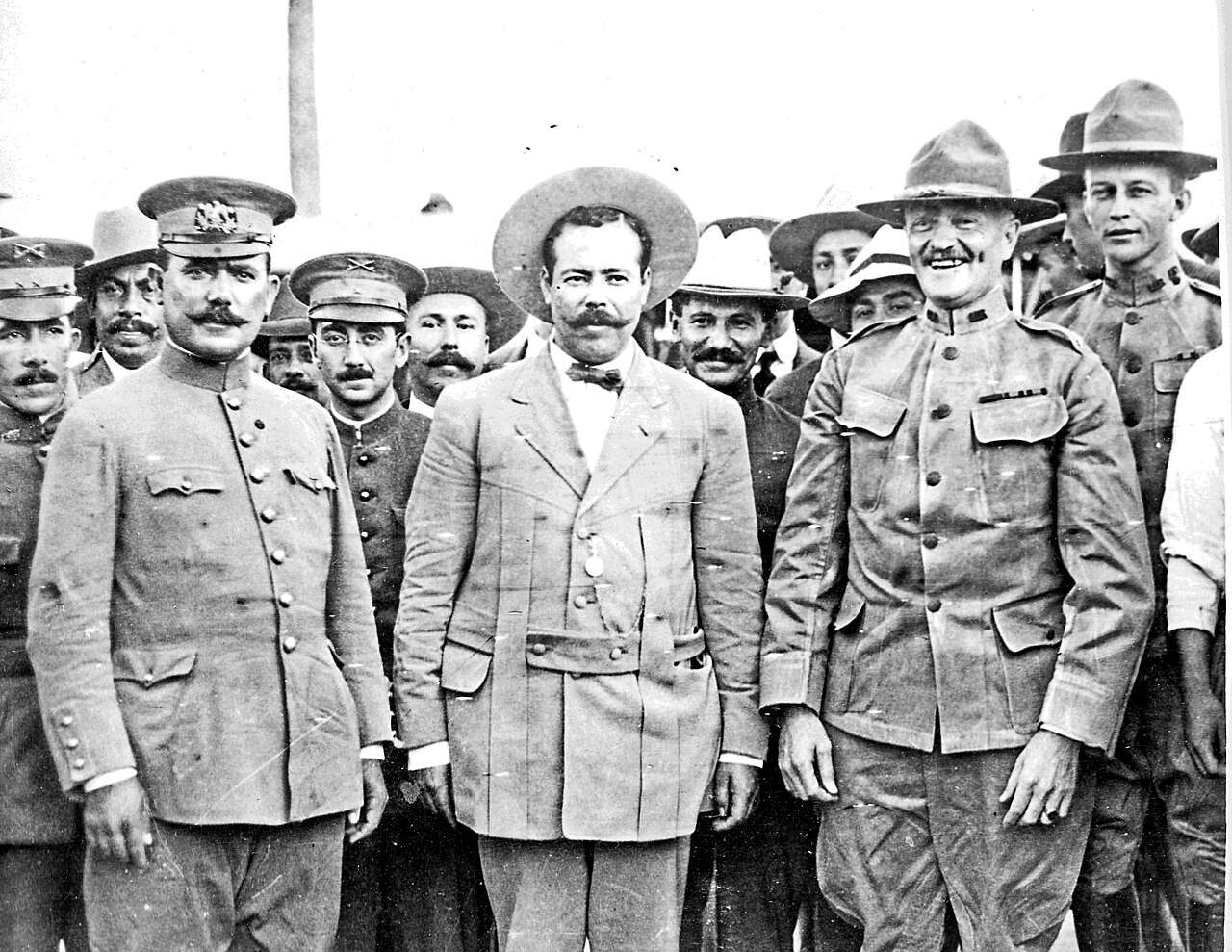
Obregón, Villa and Pershing at Fort Bliss
Unknown · 26 August 1914
Ready when you are
Start chatting with Pancho Villa now.
20 messages free · No credit card · Available in 50+ languages.