


Secondary sourceArtifact1800
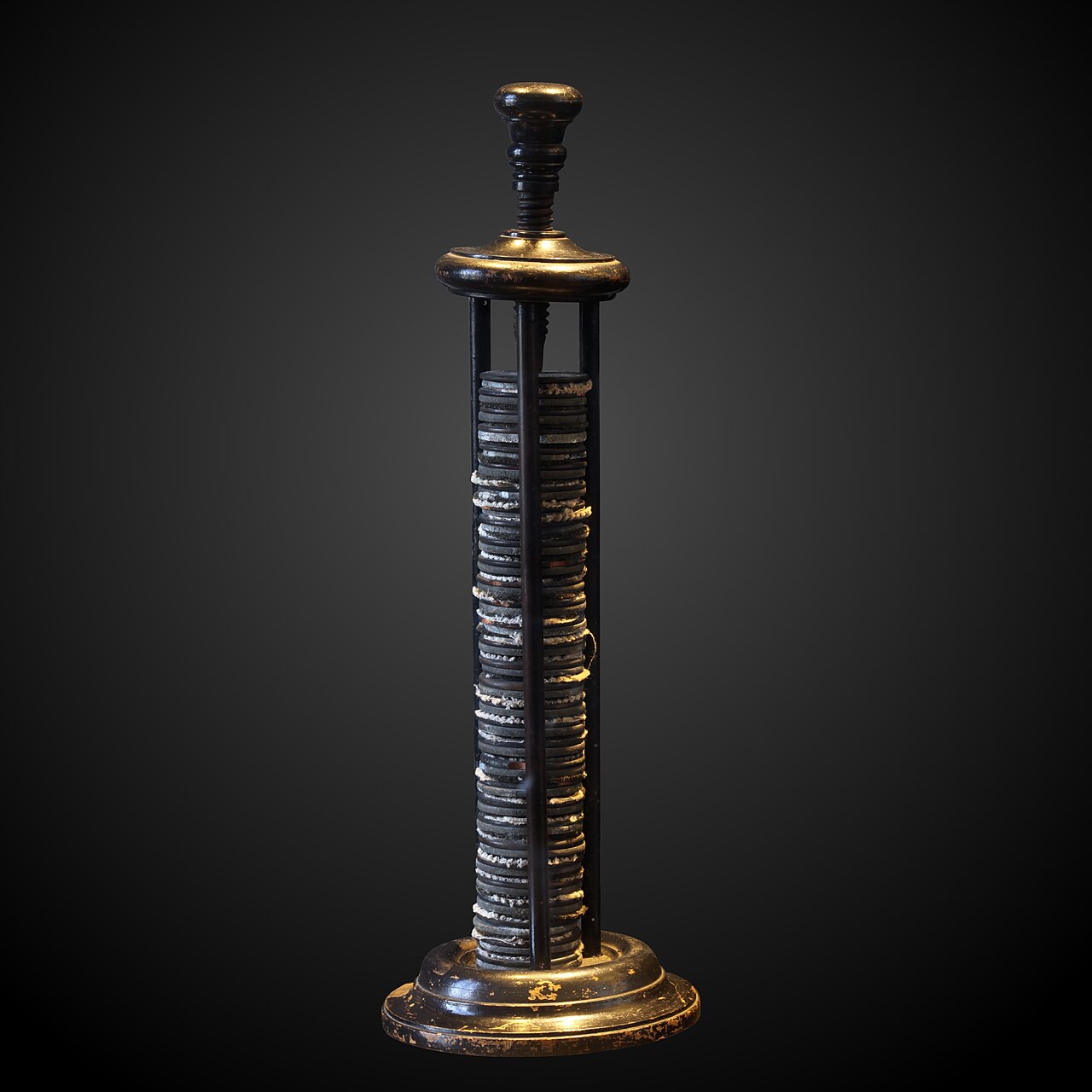
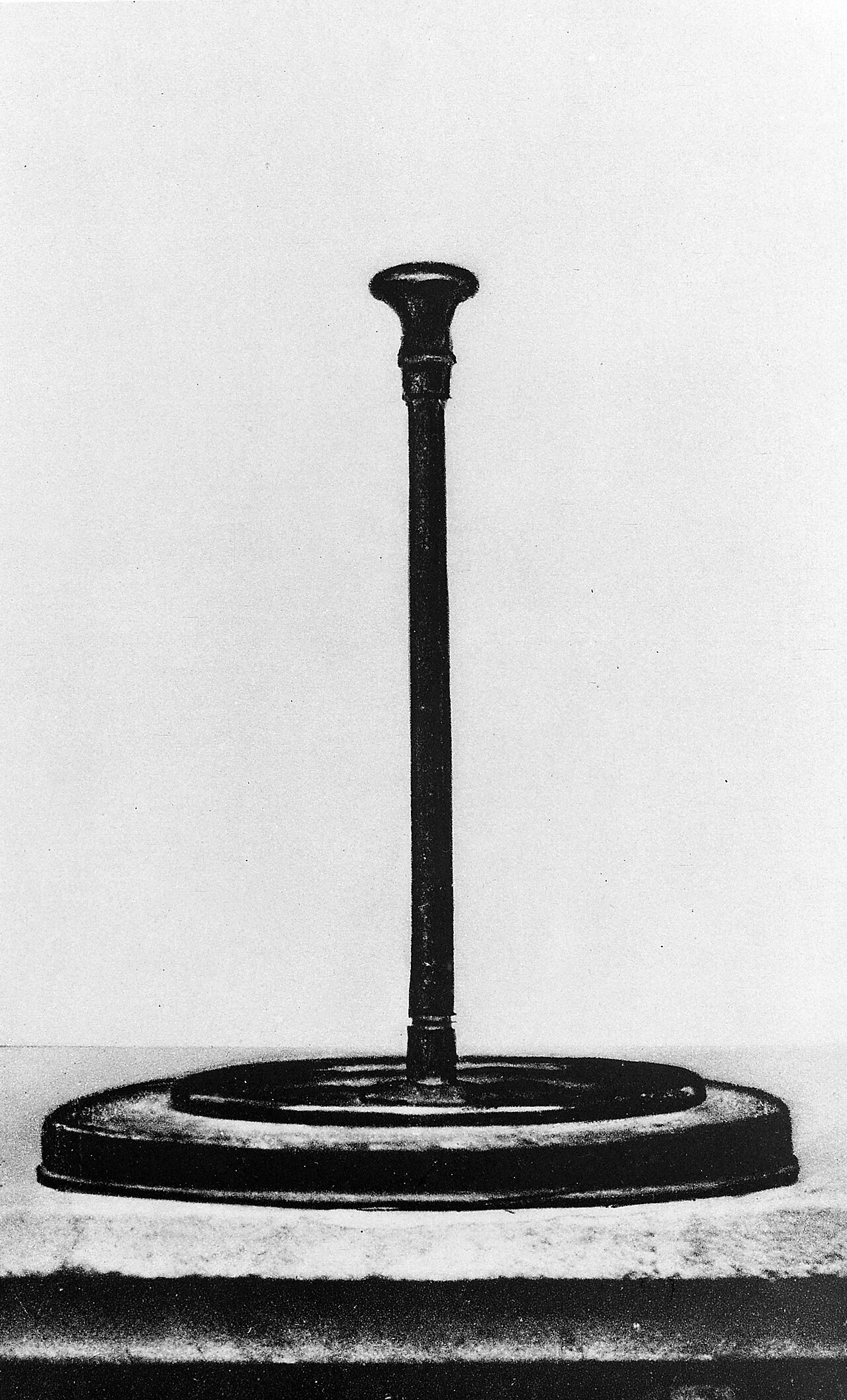
Voltaic Pile
Alessandro Volta · 1800
The first device to produce a continuous electric current, invented by Alessandro Volta and announced in 1800.
This is Volta's own invention, the device that made him famous and gave electricity a continuous source.
About this source
What it is
The voltaic pile is a stack of alternating copper (or silver) and zinc discs separated by brine-soaked cloth or cardboard. When wired together, it produced a steady electric current — something no earlier device could do. It was invented by Alessandro Volta, who described it in letters and papers starting in 1800.
Why it matters
Volta's pile grew out of his disagreement with fellow scientist Luigi Galvani over frog-leg experiments. Once built, it triggered a wave of discoveries: William Nicholson and Anthony Carlisle used it to split water by electrolysis, and Humphry Davy used larger piles to isolate several chemical elements. For most of the 19th century, batteries based on Volta's design powered the growing electrical industry.
Look closer
- What materials and arrangement made this pile different from earlier electrical devices like the Leyden jar?
- Why might an argument between two scientists lead to such an important invention?
- The piles now displayed in museums are often not original — why does that matter when studying history?
This artifact is part of the curated material that grounds the AI version of Alessandro Volta on Humy.ai — when students ask about related events, the AI can quote it and cite it.
More Alessandro Volta sources
Browse all 98 →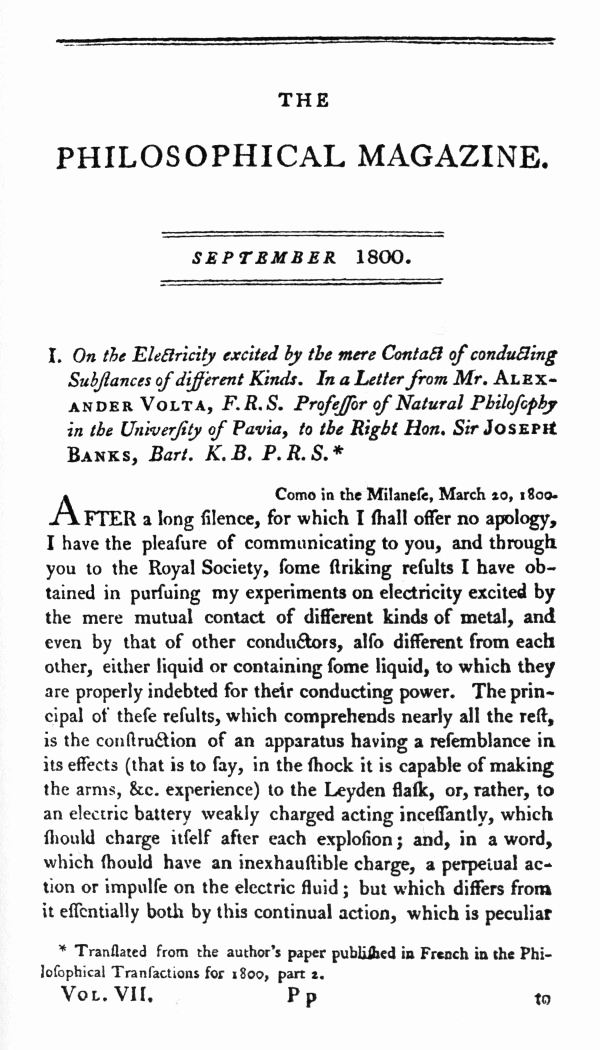 Document
Primary source
On the Electricity Excited by the Mere Contact of Conducting Substances of Different Kinds
Alessandro Volta · September 1800
ArtifactPrimary source
Voltaic Pile Given to the Saussure Family
Alessandro Volta · 1801
 Letter
Primary source
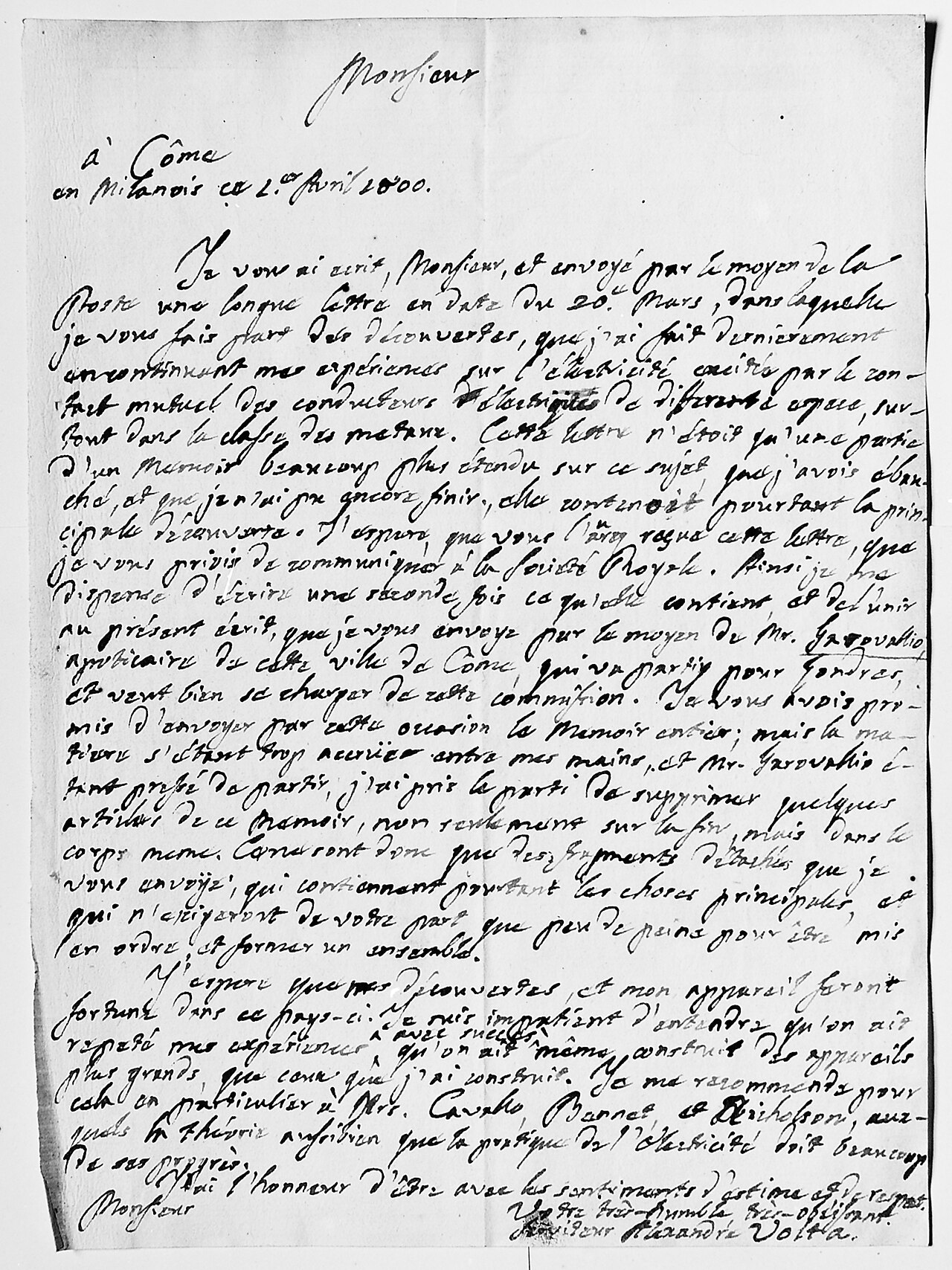
Letter from Volta to Joseph Banks, 1 April 1800
Alessandro Volta · 1 April 1800
 Painting
Primary source
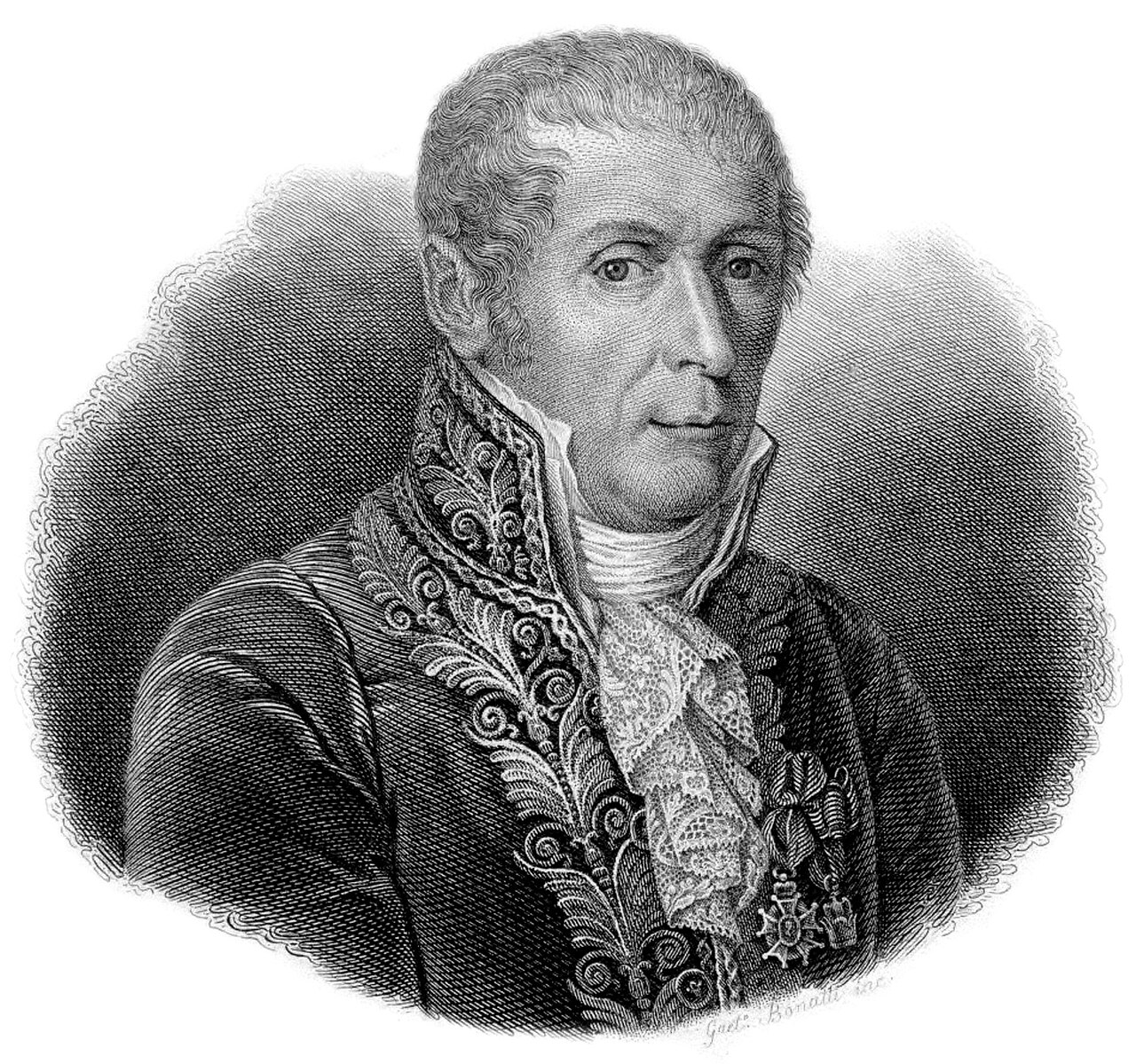
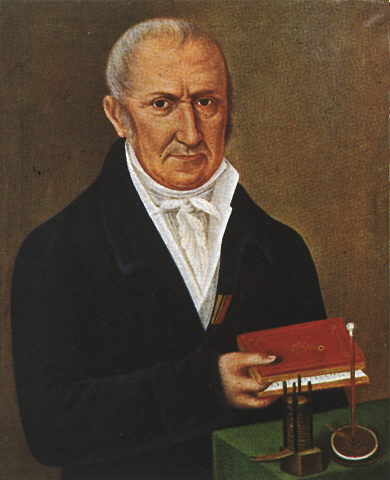
Portrait of Alessandro Volta
Giovita Garavaglia (engraver), Gaetano Bonatti (engraver)
Free account
Browse every Alessandro Volta source
Sign up free →
Ready when you are
Start chatting with Alessandro Volta now.
20 messages free · No credit card · Available in 50+ languages.