


Primary sourcePainting1880
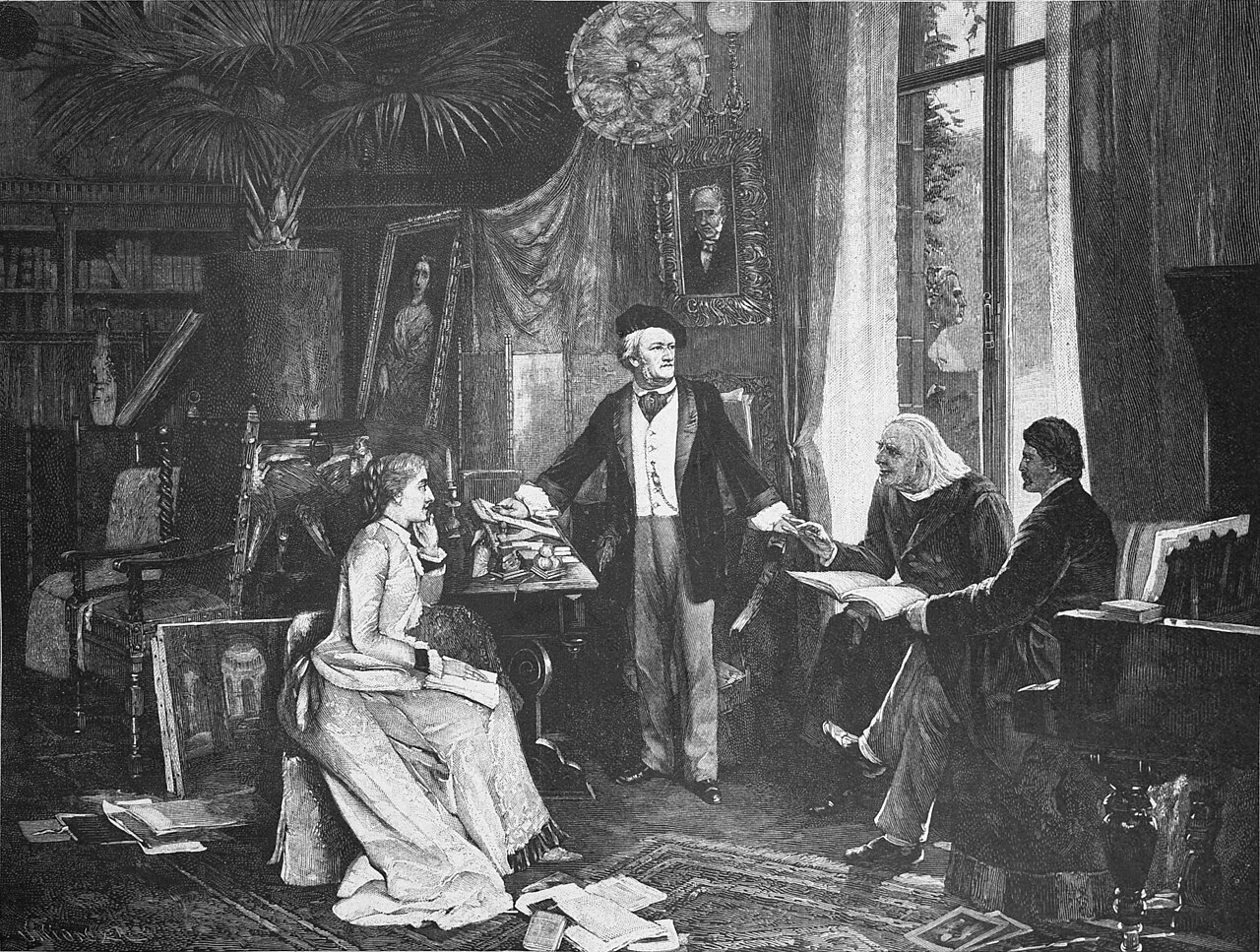
Wagners and Liszt at Wahnfried, 1880
W. Beckmann · 1880
A black and white magazine engraving of Liszt with Richard and Cosima Wagner and Hans von Wolzogen at the Wagners' Bayreuth home, Wahnfried, in 1880.
Shows Liszt as a guest in the Wagners' home at Bayreuth in 1880, part of the close circle around the composer.
About this source
What it is
This is a black and white engraving published as a magazine illustration. Its caption names Richard and Cosima Wagner with Liszt and Hans von Wolzogen at their home, Wahnfried, in 1880. The caption says the picture is based on a painting by W. Beckmann. The image shows a richly furnished room with a palm plant, bookshelves and framed portraits, with a piano by a tall window. A seated woman, a standing man and two seated men appear in it. The image is a Wikimedia Commons file and was published in the magazine Die Gartenlaube.
Why it matters
The engraving is a reproduction of a scene, not a photograph, so it shows how a 19th-century reading public was given images of famous musicians. It places Liszt among the Wagners in their own home, showing the close circle around the Bayreuth composer. Because it was printed in a popular magazine, it helps show how the lives of celebrated artists were shared with ordinary readers.
Look closer
- Who is seated, who is standing, and what does their arrangement suggest about the relationships between them?
- Why might an engraver include a piano and portraits in a room scene like this?
- Since this is an engraving after a painting, what details might have been changed when it was copied?
This painting is part of the curated material that grounds the AI version of Franz Liszt on Humy.ai — when students ask about related events, the AI can quote it and cite it.
More Franz Liszt sources
Browse all 87 →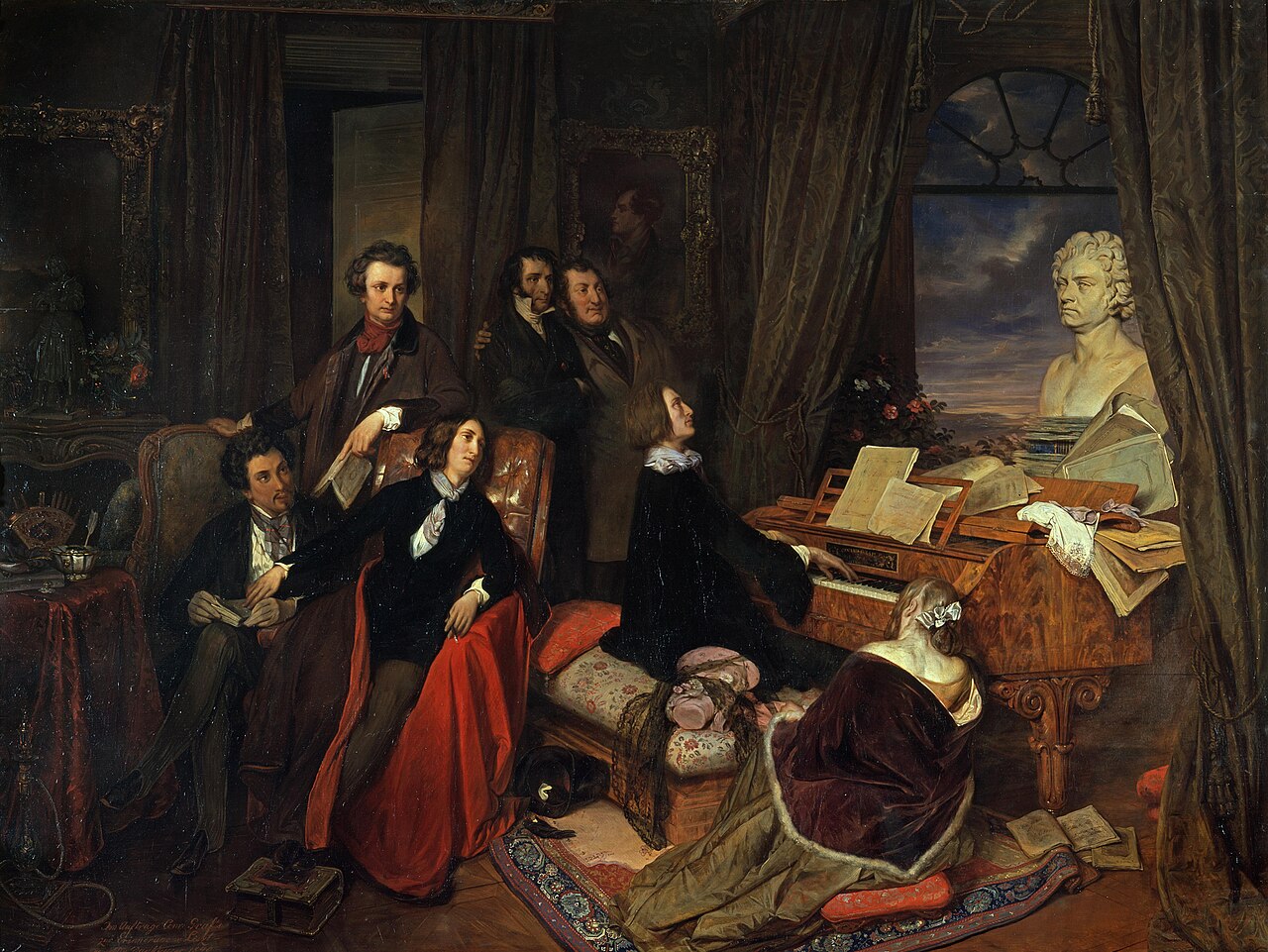 Painting
Secondary source
Liszt at the Piano
Josef Danhauser · 1840
Secondary source
Life of Chopin
Franz Liszt · 1852
 Painting
Primary source
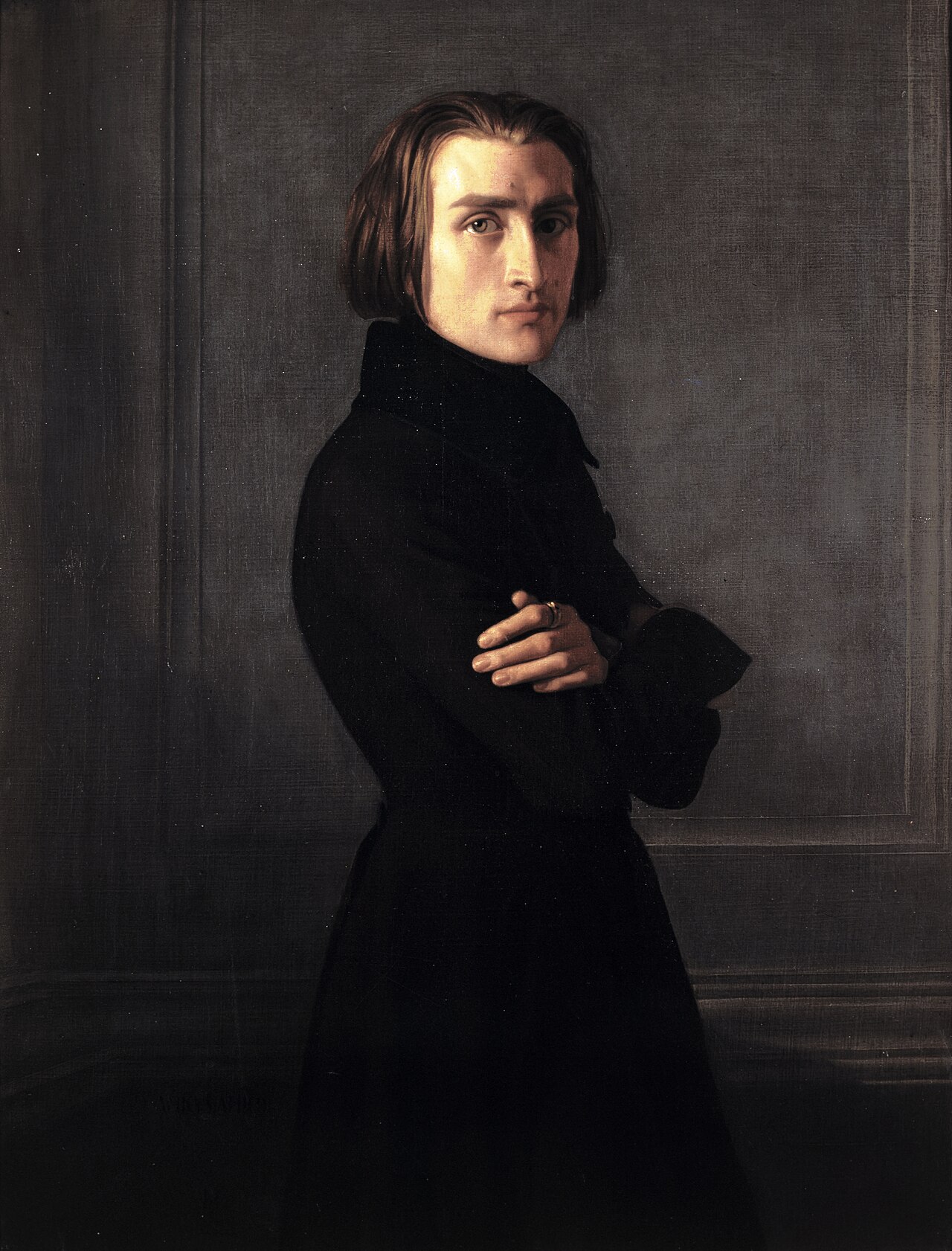
Portrait of Franz Liszt
Henri Lehmann · 1839
 Painting
Primary source
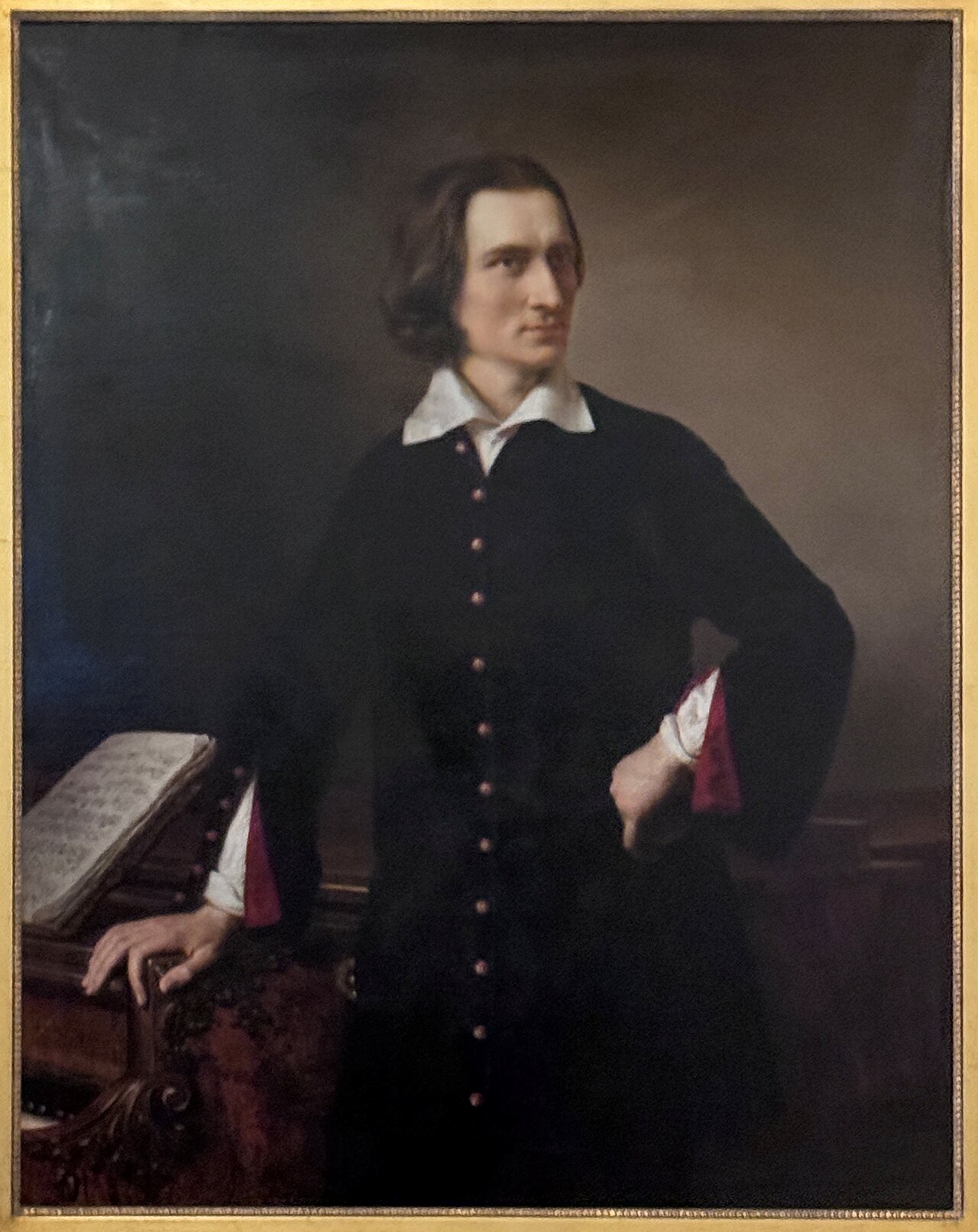
Portrait of Franz Liszt
Miklós Barabás · 1847
Free account
Read every Franz Liszt source
Sign up free →
Ready when you are
Start chatting with Franz Liszt now.
20 messages free · No credit card · Available in 50+ languages.