


Primary sourceDocument1500s AD
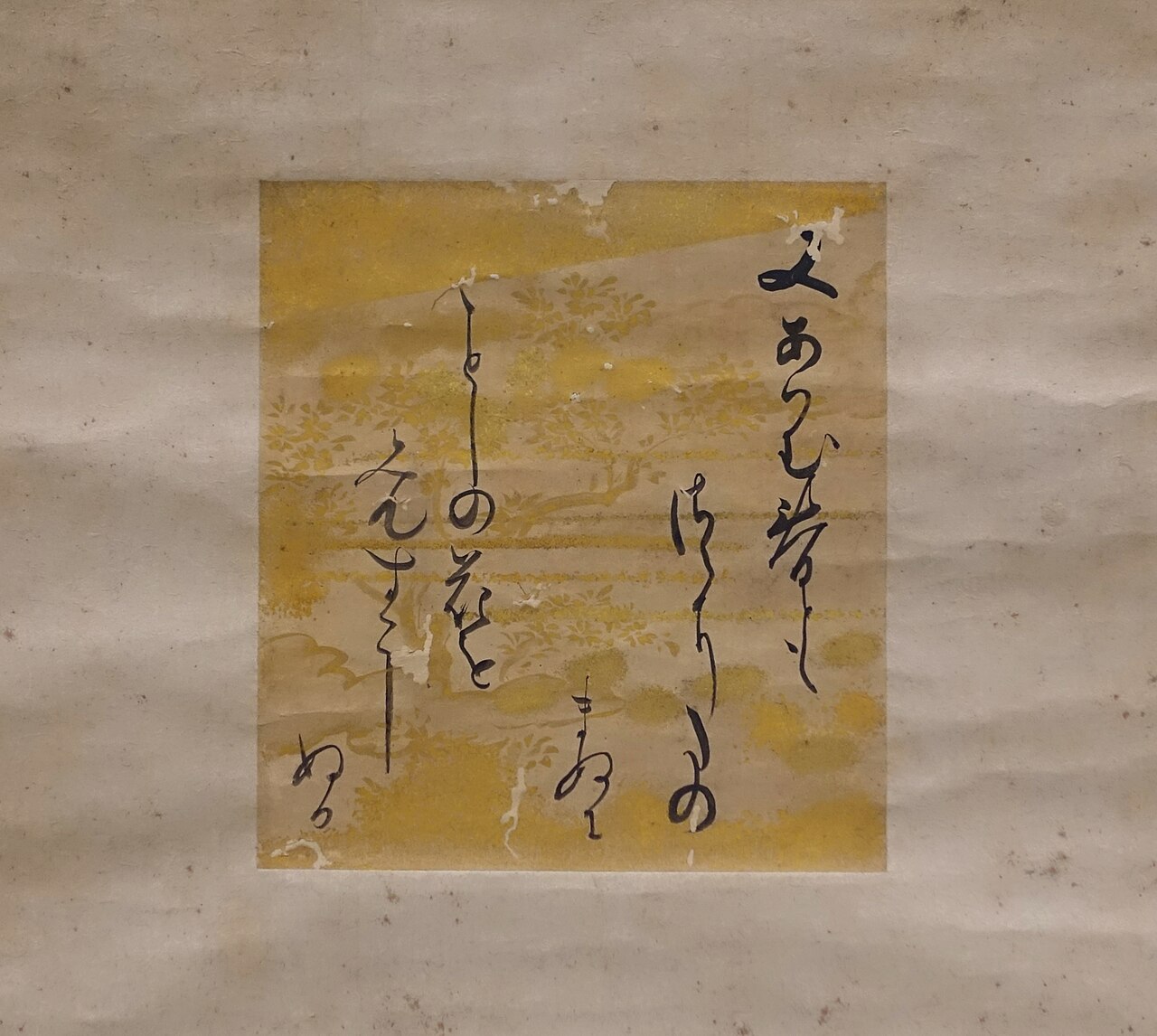
Waka Poem by Toyotomi Hideyoshi
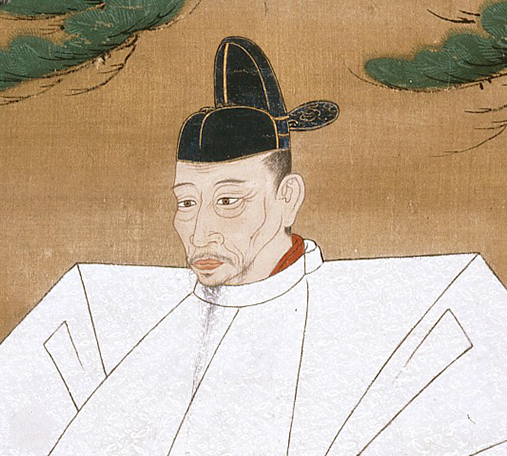
Toyotomi Hideyoshi · 1500s AD
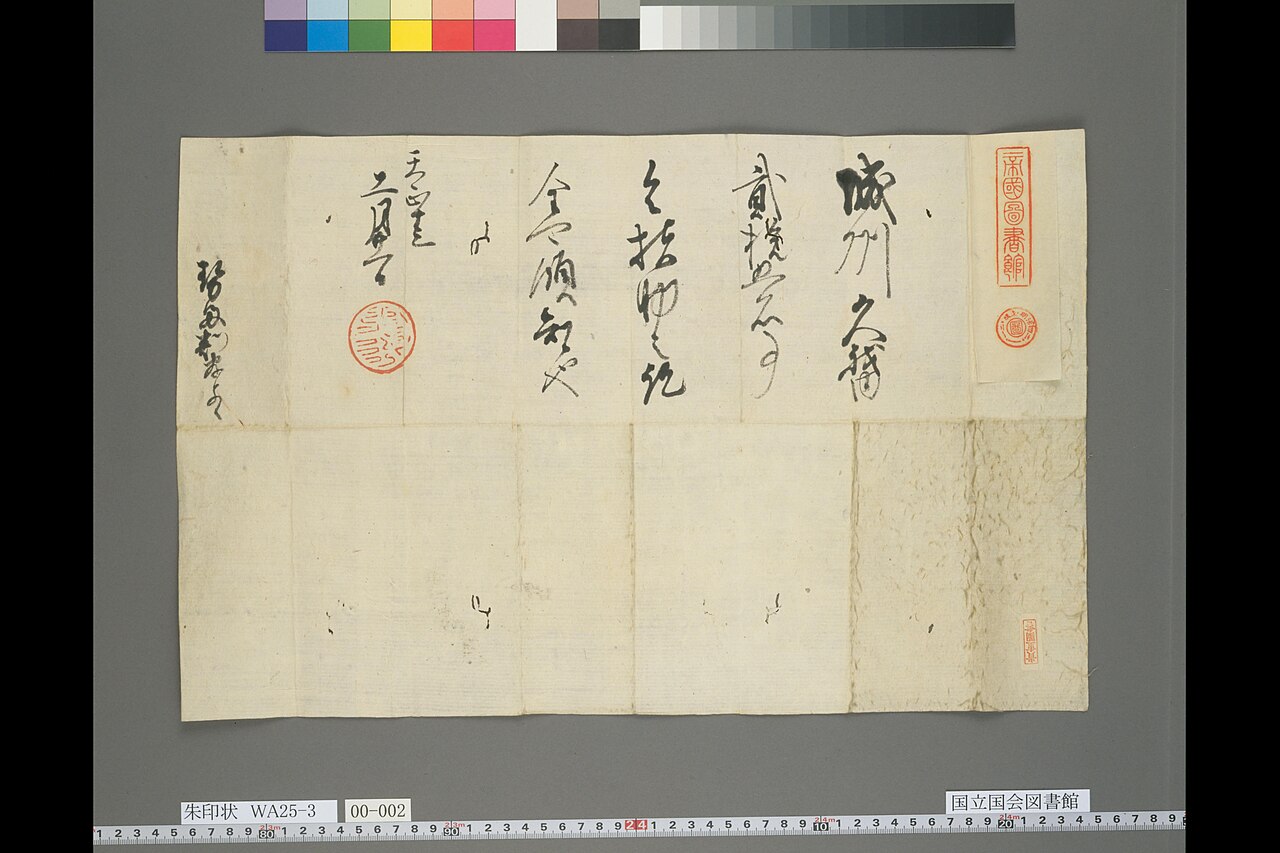
A poem written in Hideyoshi's own hand, showing the courtly, cultured side of the former commoner who rose to rule Japan.
A poem written in Hideyoshi's own hand, revealing his cultivation of courtly culture despite his humble origins.
About this source
What it is
This is a mounted piece of Japanese calligraphy: a short poem written in black ink brush script on decorated gold-flecked paper. It was written by Toyotomi Hideyoshi during the Azuchi-Momoyama period. It is now held at the Ishikawa Prefectural Museum of Traditional Arts and Crafts in Kanazawa, Japan.
Why it matters
Hideyoshi began life as a commoner but rose to become one of Japan's most powerful rulers. Writing waka poetry was a mark of elite, courtly culture, and this piece shows how he adopted the refined artistic practices of the aristocracy he had risen above. It is a rare example of his personal handwriting and taste.
Look closer
- What does the choice of fine decorated paper suggest about how Hideyoshi wanted to present himself?
- Why might a self-made ruler want to show skill in traditional courtly arts like poetry?
- What does the calligraphy itself (not just the words) tell us about the writer?
This document is part of the curated material that grounds the AI version of Toyotomi Hideyoshi on Humy.ai — when students ask about related events, the AI can quote it and cite it.
Ready when you are
Start chatting with Toyotomi Hideyoshi now.
20 messages free · No credit card · Available in 50+ languages.