


Secondary sourcePainting1838
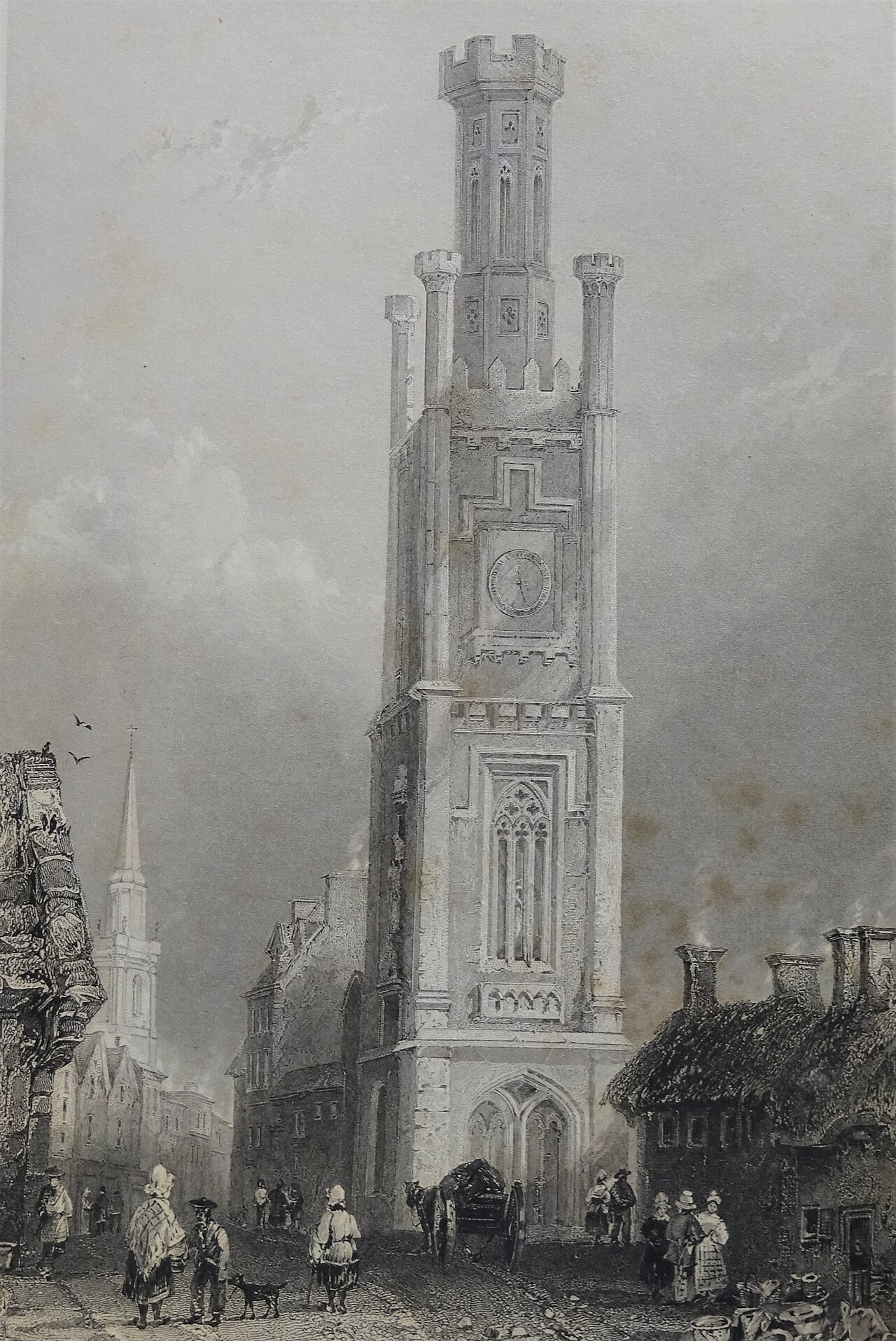
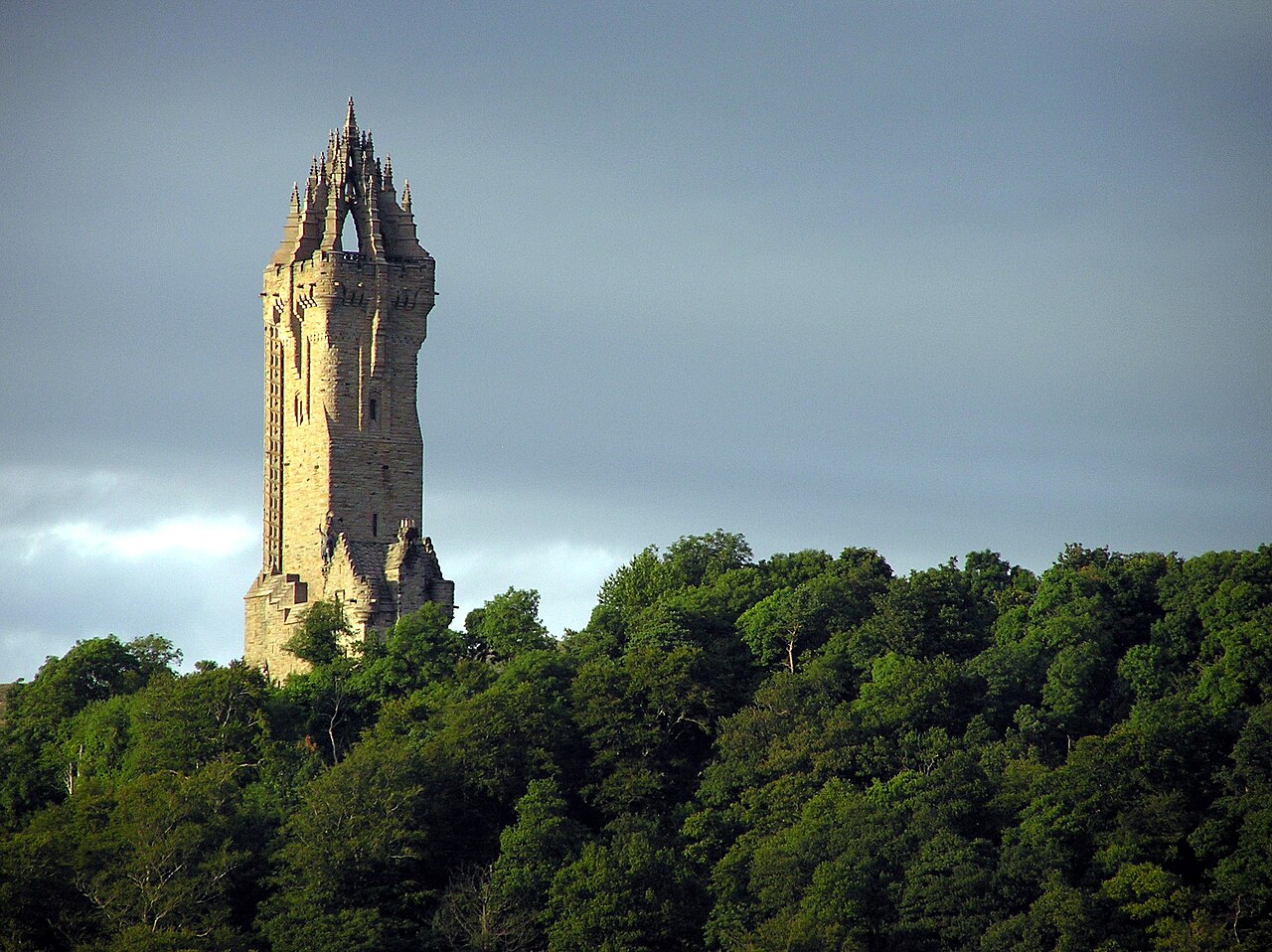
Wallace Tower in Ayr
W.H. Bartlett · 1838
An 1838 engraved view by W.H. Bartlett of the tower in Ayr named for William Wallace, showing it as it looked to a Victorian-era viewer.
Shows the Ayr tower named for Wallace as a nineteenth-century viewer saw it, linking his name to a local monument.
About this source
What it is
This 1838 engraving by W.H. Bartlett shows the Wallace Tower in Ayr. It is a tall, narrow Gothic-style tower with battlements, a clock face, pointed windows and a corbelled top. The street below has townspeople, a horse-drawn cart, a dog and thatched cottages, and a church spire is visible at the left. The record also names George Virtue in connection with the print.
Why it matters
The tower was named for Wallace, so it shows how a town chose to link itself to his memory. The picture is a period view, made in the nineteenth century, and it tells us how the monument looked and how an artist chose to present it. It is not an image from Wallace's own time.
Look closer
- What details show that this is a town street, and what do they suggest about daily life?
- Why might an artist include a dog, a cart and cottages next to a monument?
- What would a view from 1297 look like differently, and why does this engraving leave that out?
This painting is part of the curated material that grounds the AI version of William Wallace on Humy.ai — when students ask about related events, the AI can quote it and cite it.
More William Wallace sources
Browse all 87 →Primary source
Lübeck Letter
Andrew Moray and William Wallace · 11 October 1297
 Artifact
Secondary source
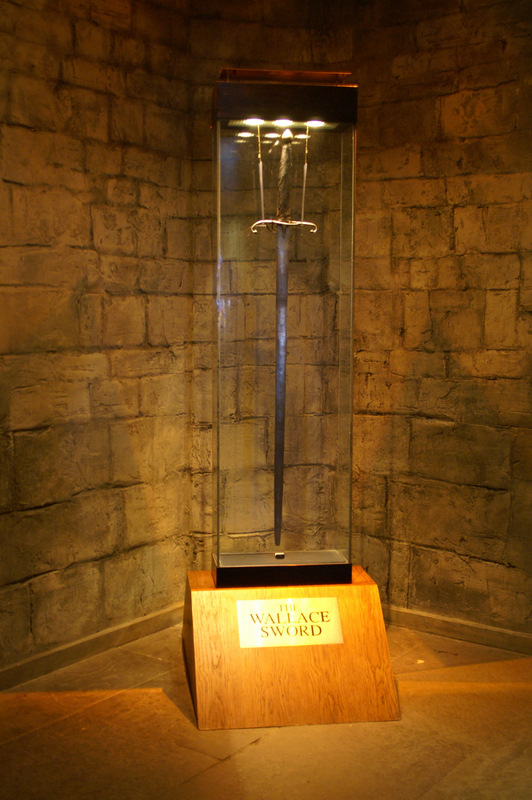
Wallace Sword
traditionally c. 1297 (much altered later)
 Document
Primary source
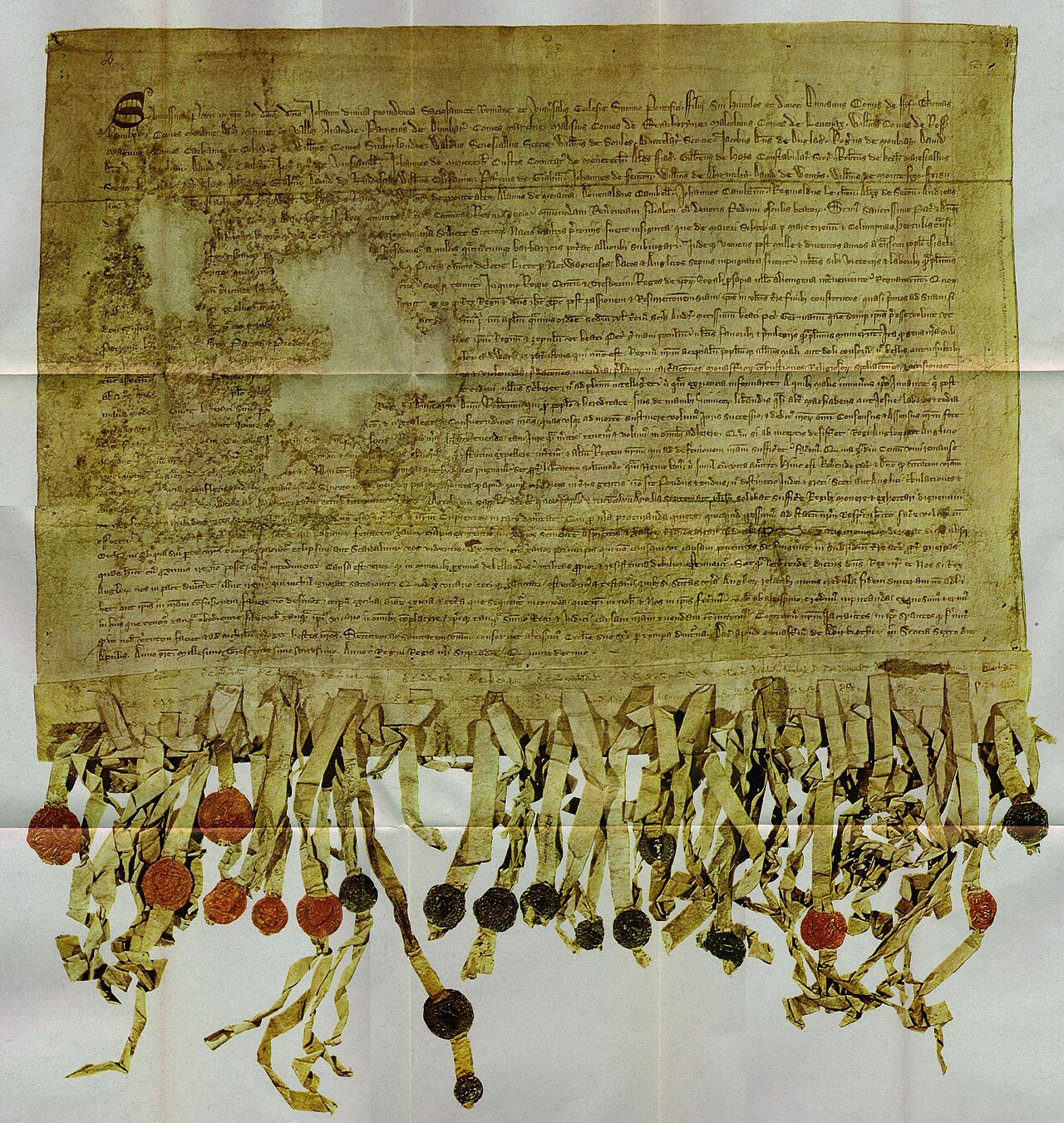
Declaration of Arbroath
Bernard of Kilwinning (attributed) · 6 April 1320
 Speech
Secondary source
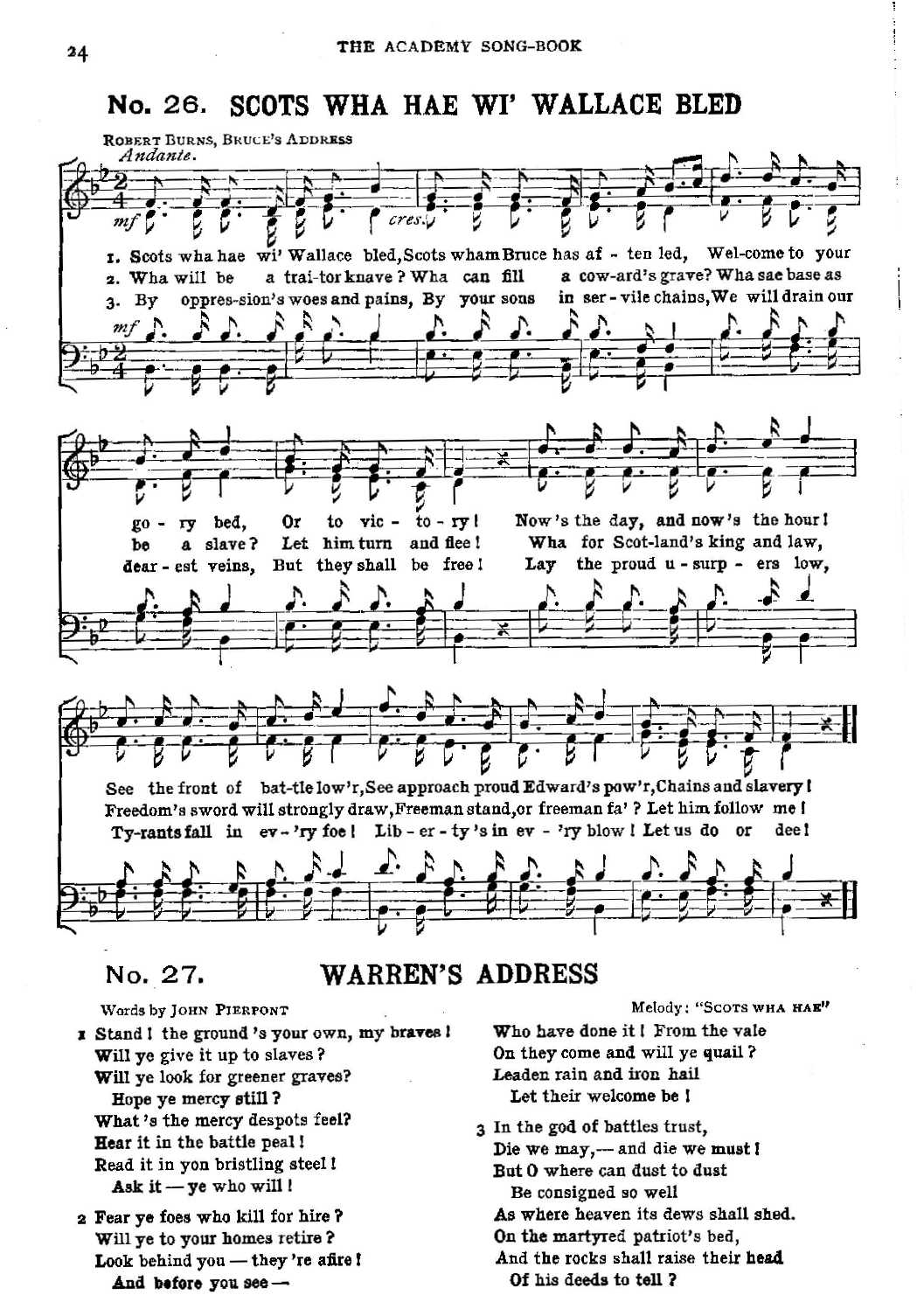
Scots Wha Hae
Robert Burns · 1793
Free account
Read every William Wallace source
Sign up free →
Ready when you are
Start chatting with William Wallace now.
20 messages free · No credit card · Available in 50+ languages.