


Secondary sourcePainting1830
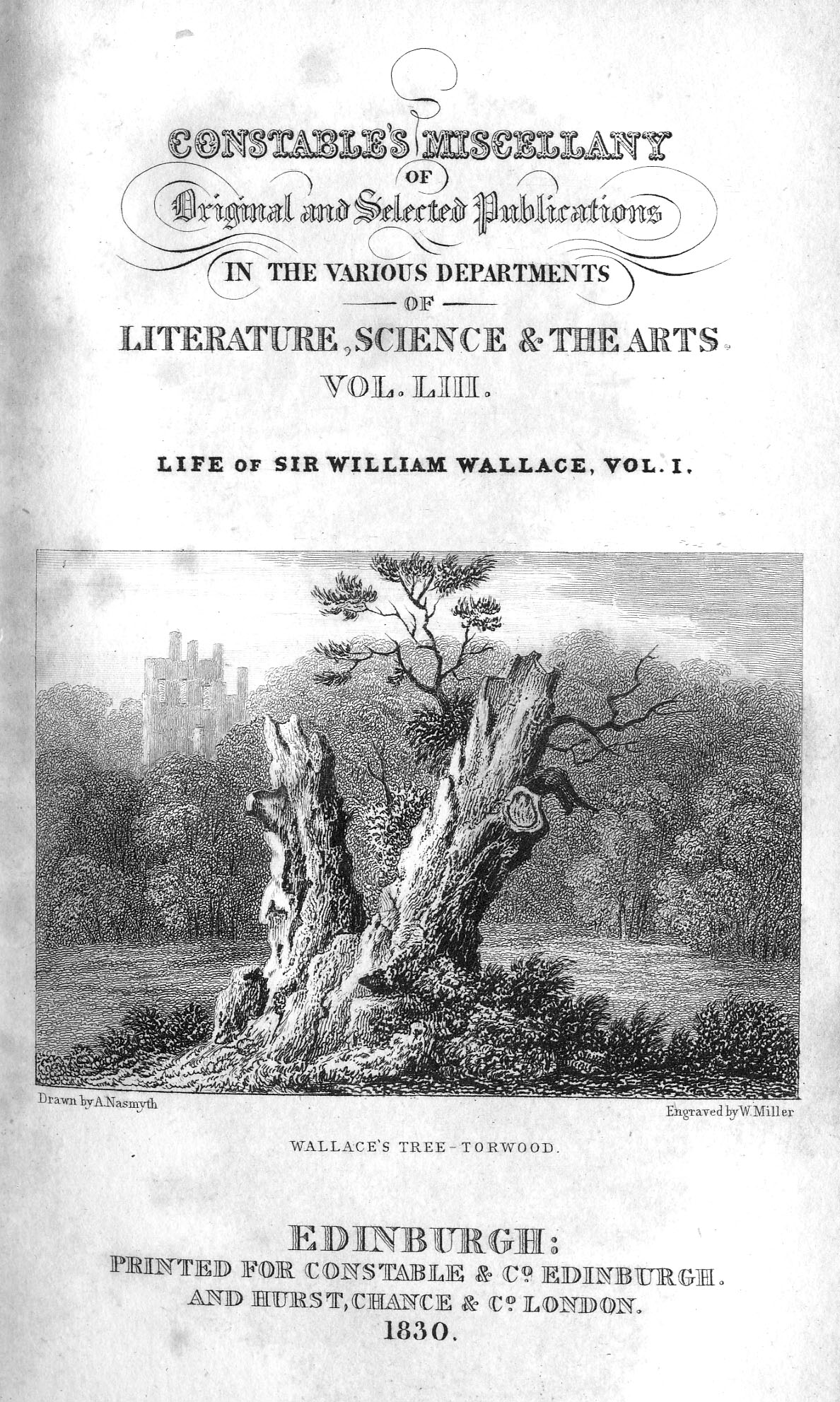
Wallace's Tree, Torwood
William Miller, after Alexander Nasmyth · 1830
An 1830 engraving of a tree at Torwood traditionally associated with places where Wallace was said to have hidden.
Depicts a site traditionally linked to Wallace's hiding places during his resistance against England.
About this source
What it is
This is an engraving by William Miller, after a painting by Alexander Nasmyth, showing Wallace's Tree at Torwood. It was published in 1830 in Constable's Miscellany, alongside a biography of Wallace.
Why it matters
Sites like this tree became part of the folklore that grew up around Wallace long after his death, as people pointed to landscapes and claimed connections to his life and hiding places during the wars with England. It shows how legend and landscape combined to keep his memory alive.
Look closer
- Why might people want to connect a particular tree with Wallace's story?
- What does this engraving tell us about how landscapes can become part of a national legend?
- How reliable do you think traditions like this are as historical evidence?
This painting is part of the curated material that grounds the AI version of William Wallace on Humy.ai — when students ask about related events, the AI can quote it and cite it.
More William Wallace sources
Browse all 87 →Primary source
Lübeck Letter
Andrew Moray and William Wallace · 11 October 1297
 Artifact
Secondary source
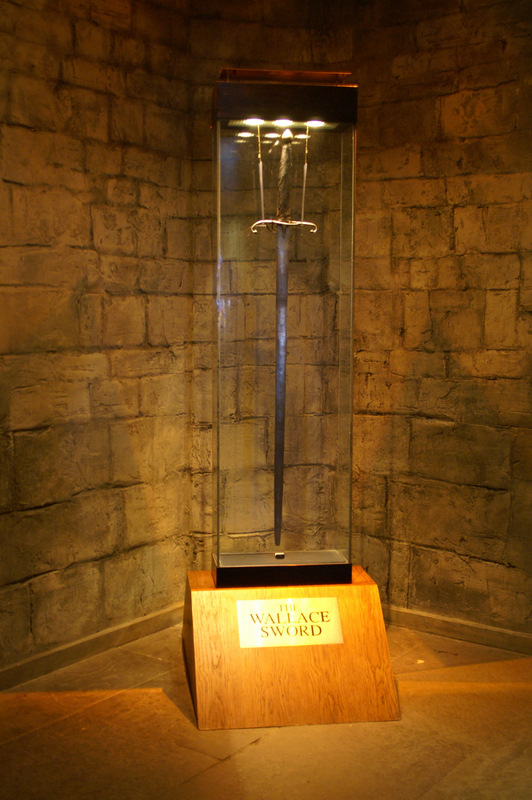
Wallace Sword
traditionally c. 1297 (much altered later)
 Document
Primary source
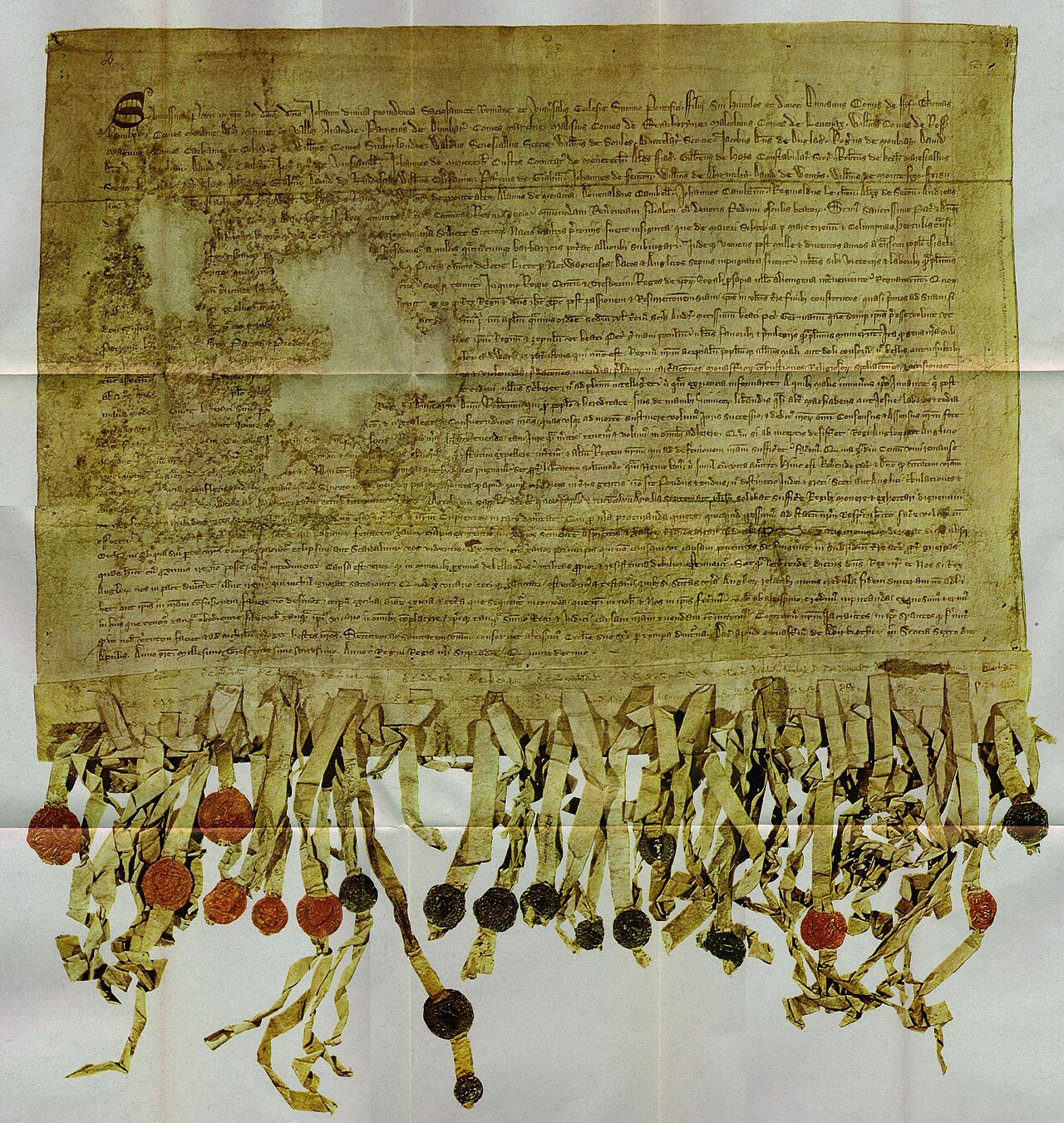
Declaration of Arbroath
Bernard of Kilwinning (attributed) · 6 April 1320
 Speech
Secondary source
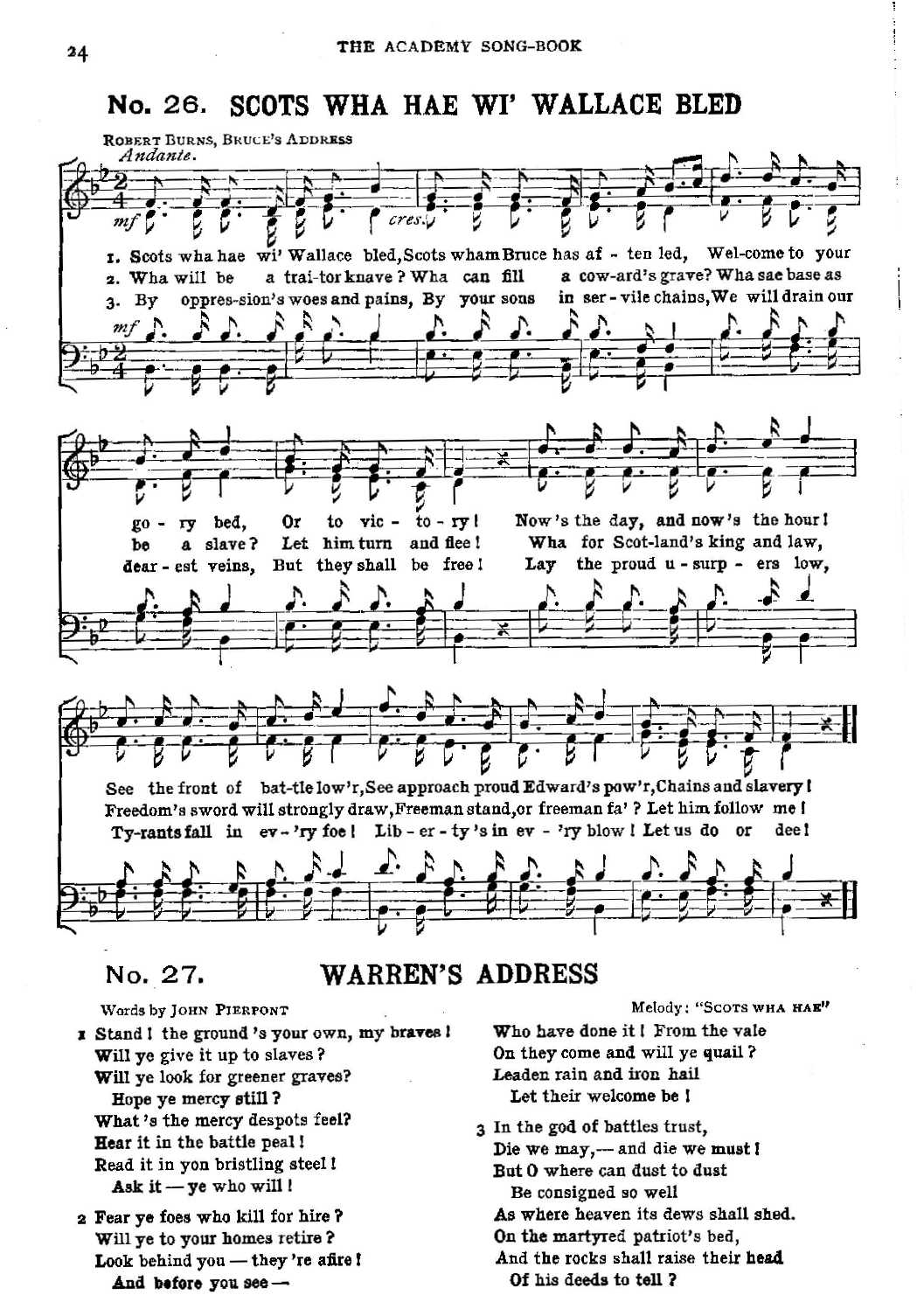
Scots Wha Hae
Robert Burns · 1793

Free account
Read every William Wallace source
Sign up free →
Ready when you are
Start chatting with William Wallace now.
20 messages free · No credit card · Available in 50+ languages.