


Primary sourcePainting1830
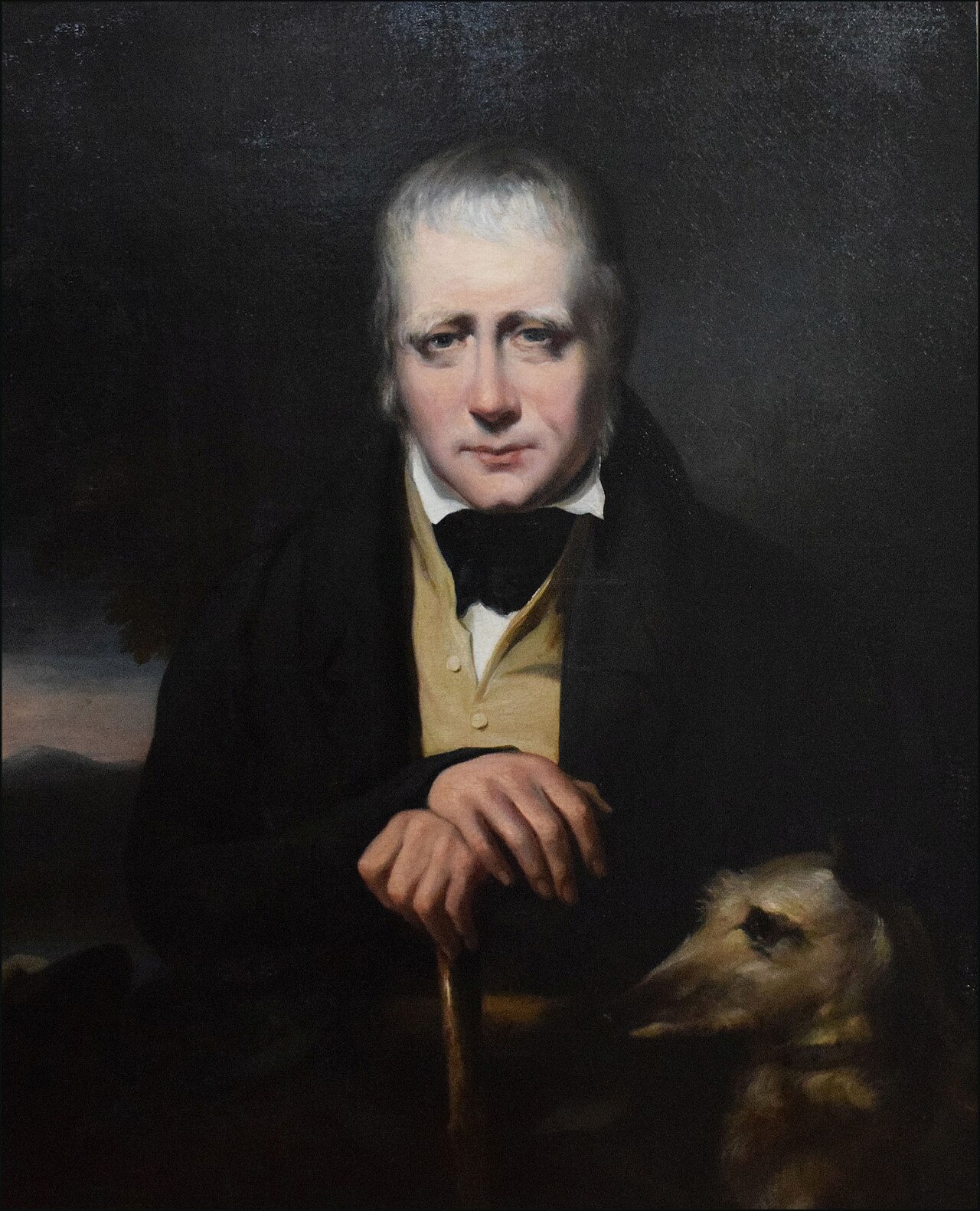
Walter Scott and his Deerhound Bran
Sir John Watson Gordon · 1830
A late 1830 portrait of Walter Scott with his deerhound Bran, painted after Scott's first stroke.
This late portrait shows Scott himself with his dog Bran, made after his first stroke.
About this source
What it is
This oil portrait by Sir John Watson Gordon, painted in 1830, shows Sir Walter Scott as an older man leaning on a walking stick, with his deerhound Bran seated beside him. It is one of the last likenesses made of Scott in his lifetime.
Why it matters
By 1830 Scott had suffered his first stroke, and this portrait records his decline alongside his beloved dog, a reminder of how illness shaped the final years of a hugely popular writer.
Look closer
- What does the walking stick tell us about Scott's health at this time?
- Why might the artist have included the dog Bran in the portrait?
- What mood does the dark background create around the figure?
This painting is part of the curated material that grounds the AI version of Walter Scott on Humy.ai — when students ask about related events, the AI can quote it and cite it.
More Walter Scott sources
Browse all 94 →
Ready when you are
Start chatting with Walter Scott now.
20 messages free · No credit card · Available in 50+ languages.