


Primary sourceSpeech18 November 1956
We Will Bury You
Nikita Khrushchev · 18 November 1956
Khrushchev's famous 1956 remark to Western ambassadors in Moscow, often read in the West as a nuclear threat but meant as a Marxist prediction of capitalism's fall.
Khrushchev's own words, delivered to Western diplomats, became the era's most quoted — and most misunderstood — line attributed to him.
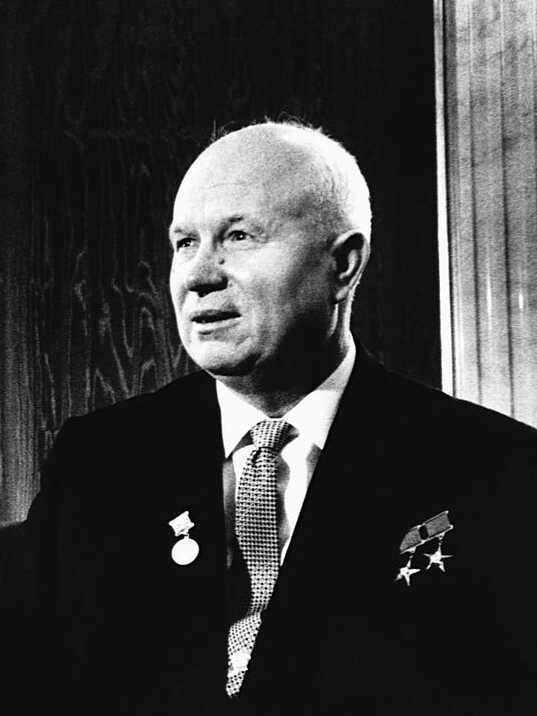
About this source
What it is
This is a quotation from a speech Nikita Khrushchev gave on 18 November 1956 at a reception at the Polish embassy in Moscow, addressing Western ambassadors in the presence of Polish leader Władysław Gomułka.
Why it matters
The phrase "We will bury you" became the most famous Cold War line linked to Khrushchev. Western diplomats walked out of the room, and many Americans took it as a threat of military destruction. Khrushchev and later translators said it actually echoed Marxist doctrine: that communism would outlast and 'bury' capitalism through history, not through war. The confusion shows how translation, gesture and Cold War fear could turn one sentence into a global scare.
Look closer
- Why might the same words sound like a threat to one audience and a prediction to another?
- How did the Cold War atmosphere shape the way people understood this remark?
- What does Khrushchev's later explanation add to how we should read the original quote?
This speech is part of the curated material that grounds the AI version of Nikita Khrushchev on Humy.ai — when students ask about related events, the AI can quote it and cite it.
More Nikita Khrushchev sources
Meet the AI Nikita Khrushchev →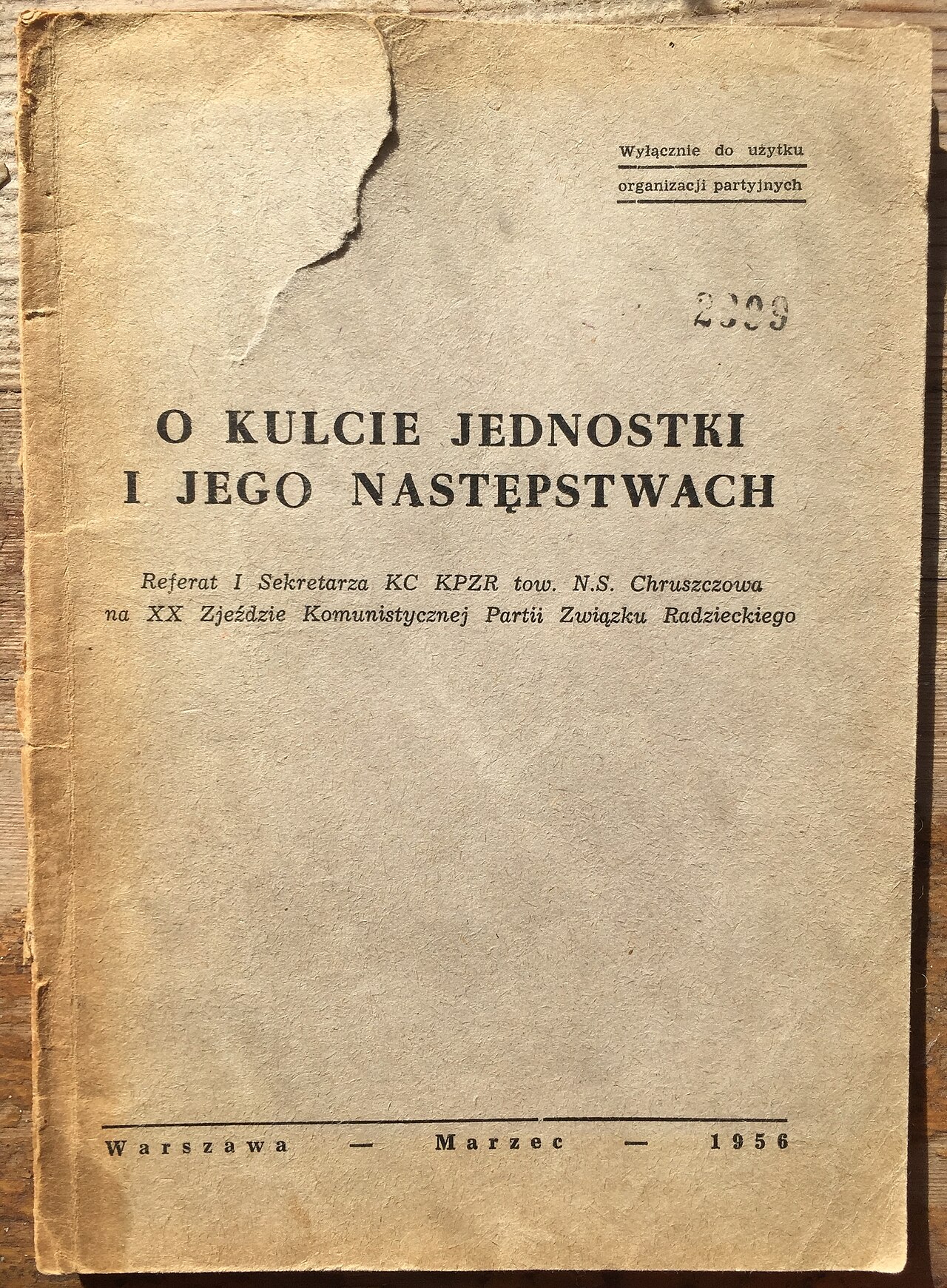 Speech
Primary source
On the Cult of Personality and Its Consequences
Nikita Khrushchev · 25 February 1956
Primary source
Letter From Chairman Khrushchev to President Kennedy
Nikita Khrushchev · 26-27 October 1962
Primary source
Khrushchev's Message to Kennedy of 27 October 1962
Nikita Khrushchev · 27 October 1962
 News clip
Primary source
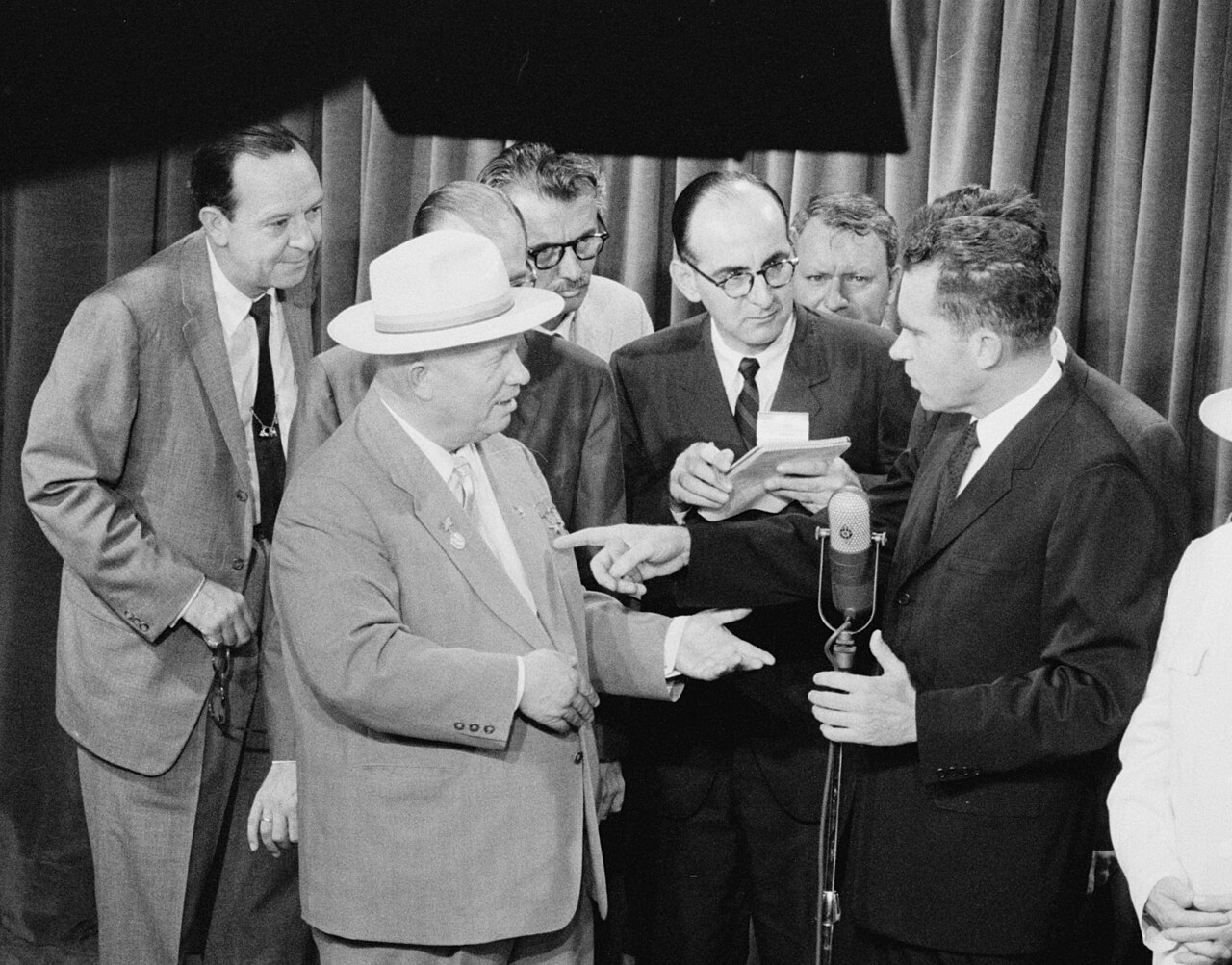
Kitchen Debate
24 July 1959
Primary source
Partial Nuclear Test Ban Treaty
5 August 1963
Ready when you are
Start chatting with Nikita Khrushchev now.
20 messages free · No credit card · Available in 50+ languages.