


Secondary sourcePainting1774-1781 (published 1782)
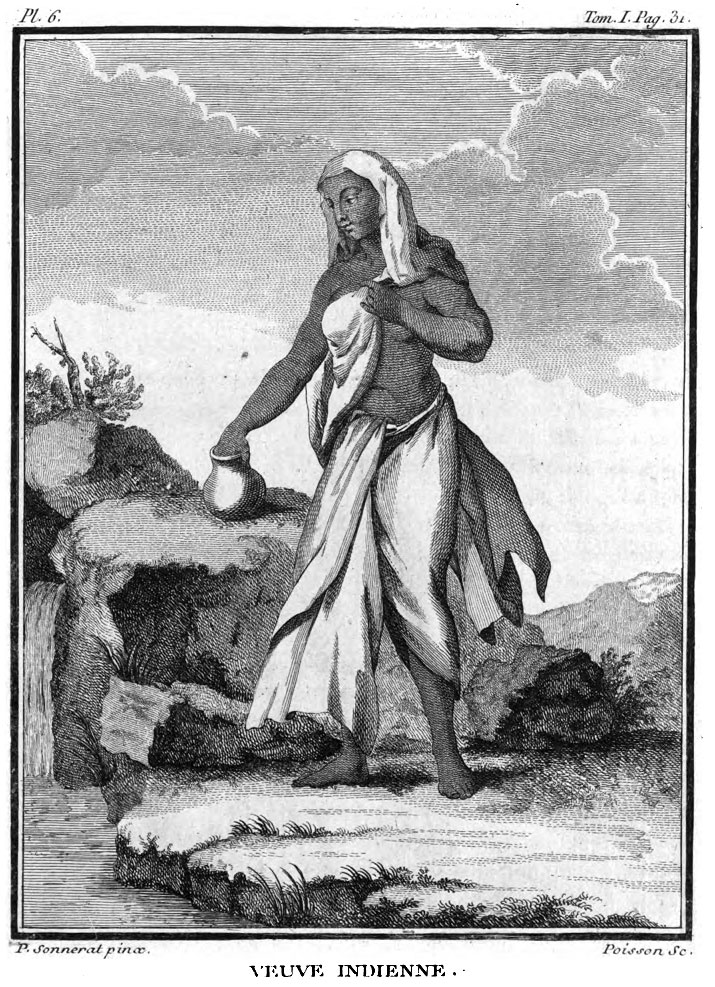
Widow India, engraving by Poison after Sonnerat, 1774-1781
Poison (engraver), after Pierre Sonnerat · 1774-1781 (published 1782)
An 1780s engraving of an Indian widow, made after a painting by Pierre Sonnerat for his French travel account. It shows the treatment of widows that Vidyasagar later opposed.
Shows the social treatment of widows in India that Vidyasagar later campaigned against, made decades before his birth.
About this source
What it is
This is an engraving titled Veuve Indienne, meaning Indian Widow, made by Poison after a painting by Pierre Sonnerat. It appeared as an illustration in Sonnerat's Voyage aux Indes Orientales et a la Chine, published in 1782 from travels made between 1774 and 1781. The image shows a standing woman in a headscarf and loose wrapped garments, holding a water pot in one hand and a cloth bundle at her chest, beside a stream on rocky ground.
The uploaded caption explains that widows with no sons to support them were often treated as outcasts and were no longer allowed to wear the traditional choli blouse under their saris.
Why it matters
The engraving was made before Vidyasagar was born, so it is not his own record. It shows an outsider's view of Indian widows in the late 1700s. Vidyasagar later campaigned against the treatment of widows in Bengal, so this image helps students see the social conditions he worked to change.
Look closer
- What does the woman carry, and what might her clothing and surroundings tell us about her situation?
- Why might a French traveler's book include an image like this, and who was it meant for?
- Whose voice is missing from this image, and how might an Indian widow have described her own life?
This painting is part of the curated material that grounds the AI version of Ishwar Chandra Vidyasagar on Humy.ai — when students ask about related events, the AI can quote it and cite it.
More Ishwar Chandra Vidyasagar sources
Browse all 41 →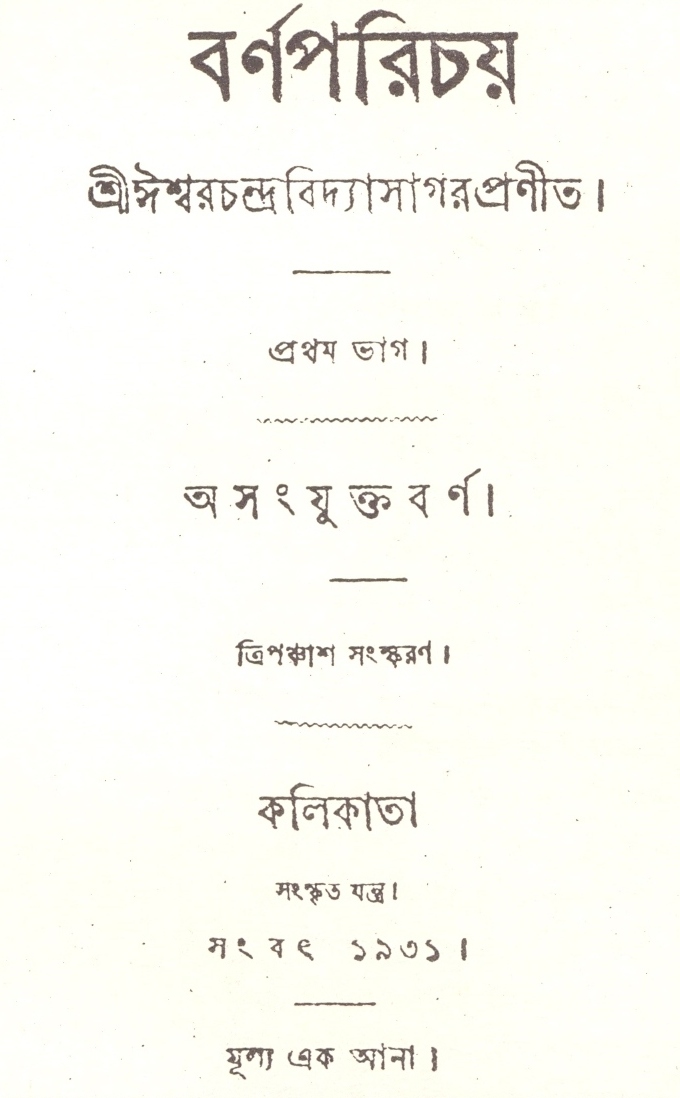 Book
Primary source
Barnaparichay
Ishwar Chandra Vidyasagar · 1855
 Photograph
Primary source
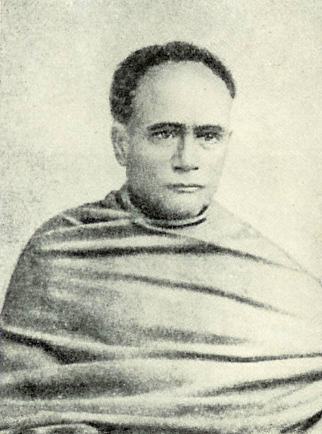
Portrait of Ishwar Chandra Vidyasagar
Primary source
Bahubibaha Rahit Haoa Uchit Kina Etadbishayak Bichar
Ishwar Chandra Vidyasagar · 1871
Primary source
Vidyasagar Charit
Ishwar Chandra Vidyasagar · 1891
Free account
Read every Ishwar Chandra Vidyasagar source
Sign up free →
Ready when you are
Start chatting with Ishwar Chandra Vidyasagar now.
20 messages free · No credit card · Available in 50+ languages.