


Primary sourceArtifact1524–1529
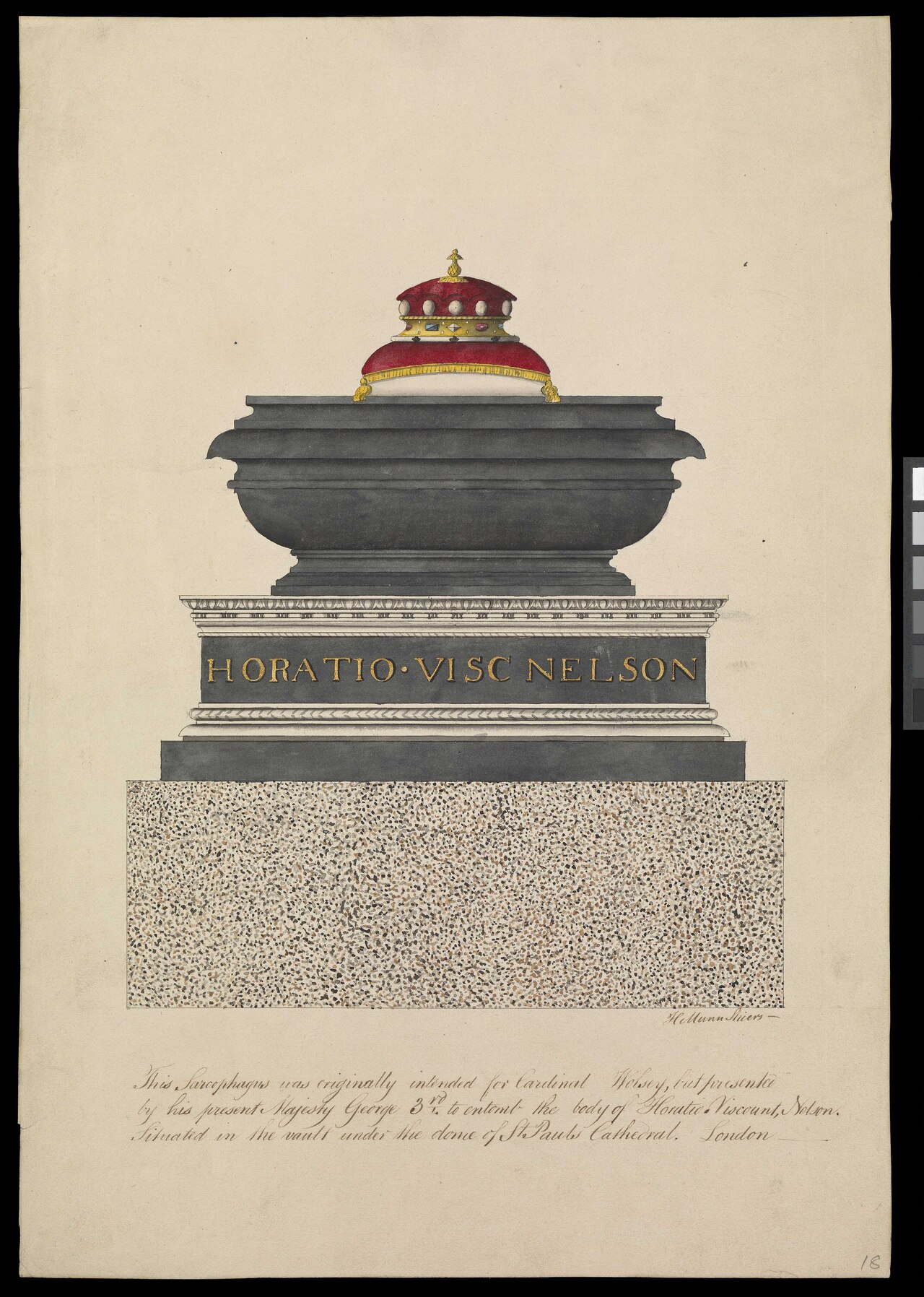
Wolsey's Sarcophagus (Tomb of Horatio Nelson)
Benedetto da Rovezzano · 1524–1529
A black marble sarcophagus made for Cardinal Wolsey's tomb, seized by Henry VIII and later used centuries after for Admiral Nelson's burial.
The sarcophagus Wolsey commissioned for his own tomb was seized by Henry VIII, showing his total loss of power after his fall.
Free Humy account · No credit card · 120,912 sources to read
About this source
What it is
This black marble sarcophagus was made by the sculptor Benedetto da Rovezzano between about 1524 and 1529 for Cardinal Wolsey's planned tomb. After Wolsey's fall, Henry VIII appropriated it for himself but never used it. Centuries later it was given by King George III to hold the body of Admiral Horatio Nelson, and it now lies in the crypt of St Paul's Cathedral.
Why it matters
The sarcophagus traces a remarkable chain: commissioned for Wolsey's self-glorification, seized by the crown, left unused through Henry's children's reigns, and finally reused for a national hero centuries later. It shows how completely Wolsey's grand possessions passed to the monarchy once he fell from favour, and that he himself was buried in an unknown grave after his disgrace.
Look closer
- What does the reuse of this object for someone else tell us about who truly held power?
- Why might Wolsey never have gotten the tomb he had planned?
- What does the inscription in the drawing reveal about how later generations remembered Wolsey?
This artifact is part of the curated material that grounds the AI version of Thomas Wolsey on Humy.ai — when students ask about related events, the AI can quote it and cite it.
More Thomas Wolsey sources
Browse all 73 → Artifact
Primary source
Hampton Court Palace
1515
 Painting
Primary source
The Field of the Cloth of Gold
1545
 Document
Secondary source
Eltham Ordinances
Thomas Wolsey · 1526
 Letter
Primary source
Letter from Henry VIII to Cardinal Wolsey
Henry VIII of England · c. 1519-1520
Free account
Read every Thomas Wolsey source
Sign up free →
Ready when you are
Start chatting with Thomas Wolsey now.
20 messages free · No credit card · Available in 50+ languages.