


Secondary sourcePainting1493
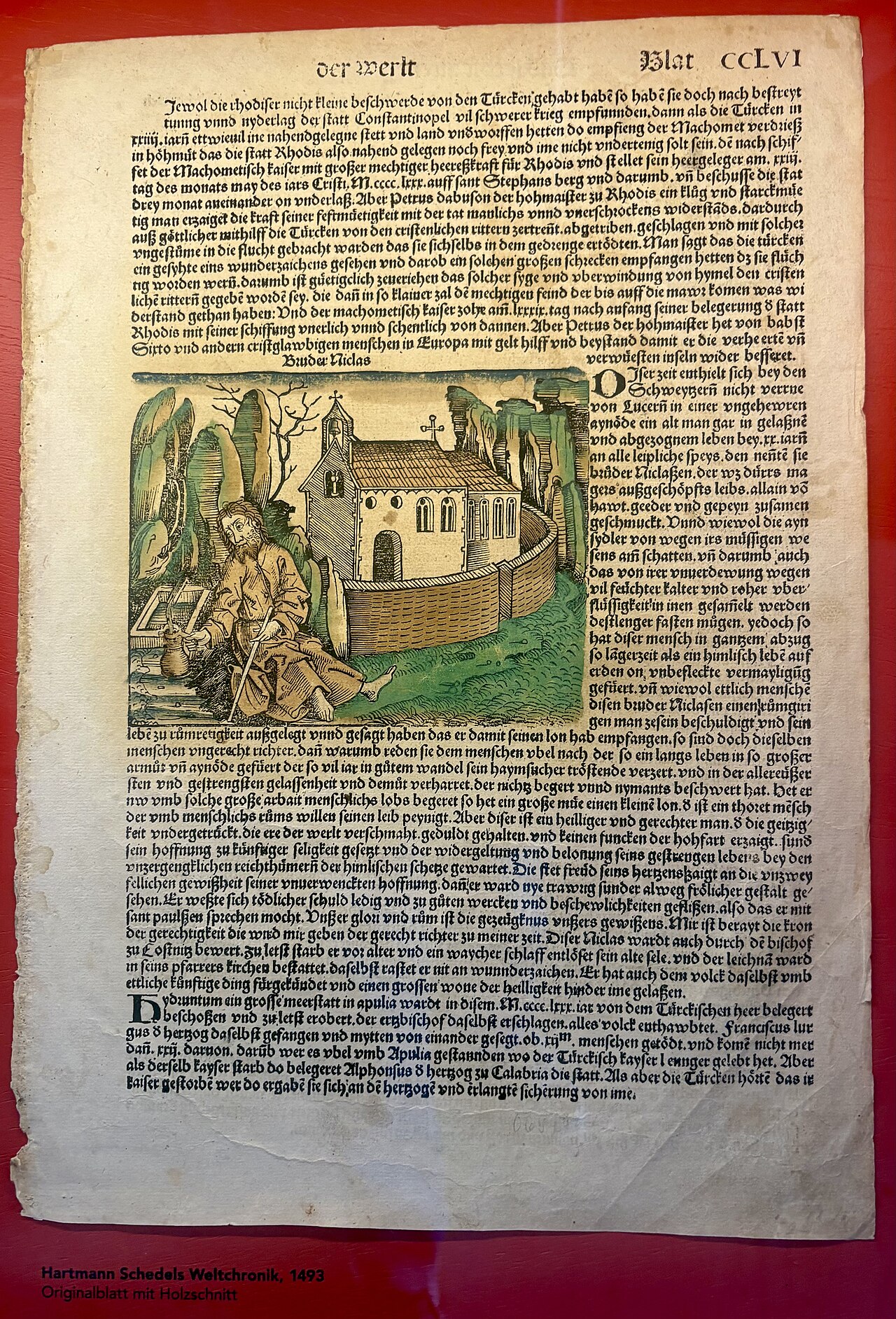
Woodcut of Nicholas of Flüe in the Nuremberg Chronicle
1493
A 1493 woodcut illustration in Hartmann Schedel's Nuremberg Chronicle showing Nicholas of Flüe as a hermit by his chapel.
This woodcut shows how Nicholas of Flüe's fame as a holy hermit spread across Europe soon after his death.
About this source
What it is
This woodcut appears in the Nuremberg Chronicle, a large illustrated history of the world printed in 1493 by Hartmann Schedel. It shows a hermit seated beside a small chapel with a wicker fence, accompanied by columns of German text.
Why it matters
Nicholas of Flüe died in 1487, only six years before this book was printed. Its inclusion shows how quickly his reputation as a wonder-working hermit spread across Europe, reaching audiences far from his home in Obwalden through one of the most widely circulated printed books of its time.
Look closer
- What details in the woodcut suggest the artist wanted viewers to see Nicholas as holy or set apart?
- Why might a European-wide chronicle choose to include a local Swiss hermit?
- What does the speed of his fame tell you about communication and printing in the late 1400s?
This painting is part of the curated material that grounds the AI version of Nicholas of Flüe on Humy.ai — when students ask about related events, the AI can quote it and cite it.
More Nicholas of Flüe sources
Browse all 83 →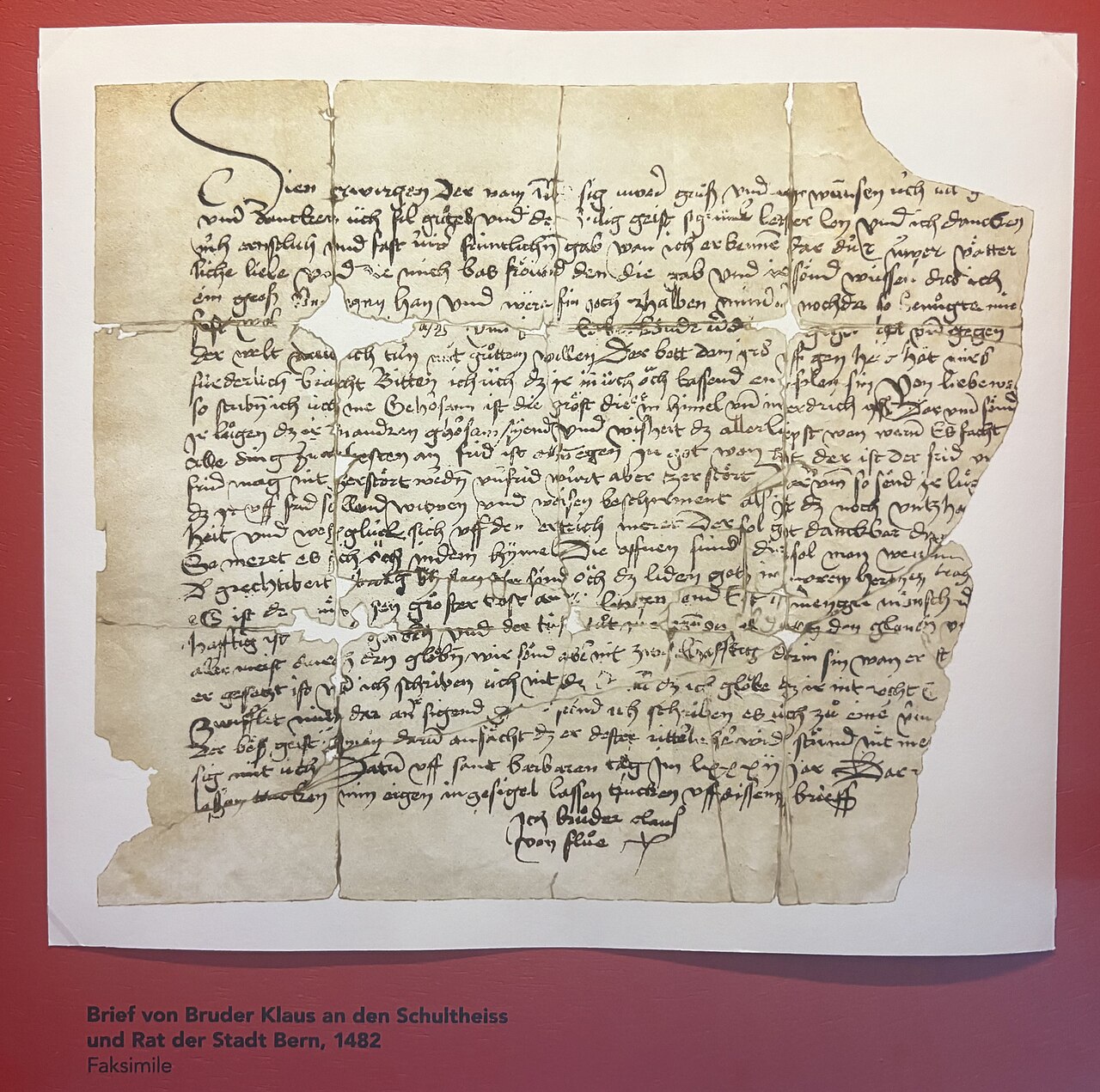 Letter
Primary source
Letter to the Council of Bern
1482
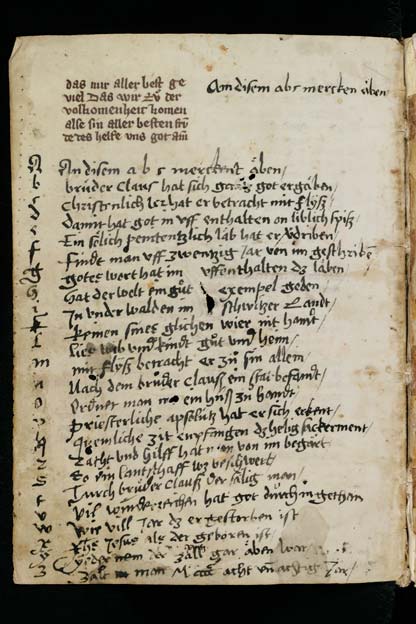 Book
Secondary source
Poem about Niklaus von Flüe in the Einsiedeln Codex
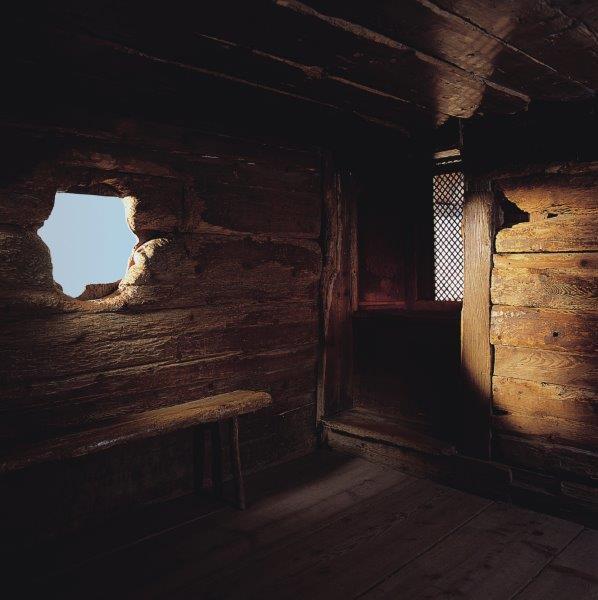 Artifact
Primary source
Hermit's Cell at Flüeli-Ranft
1468–1469
 Sculpture
Secondary source
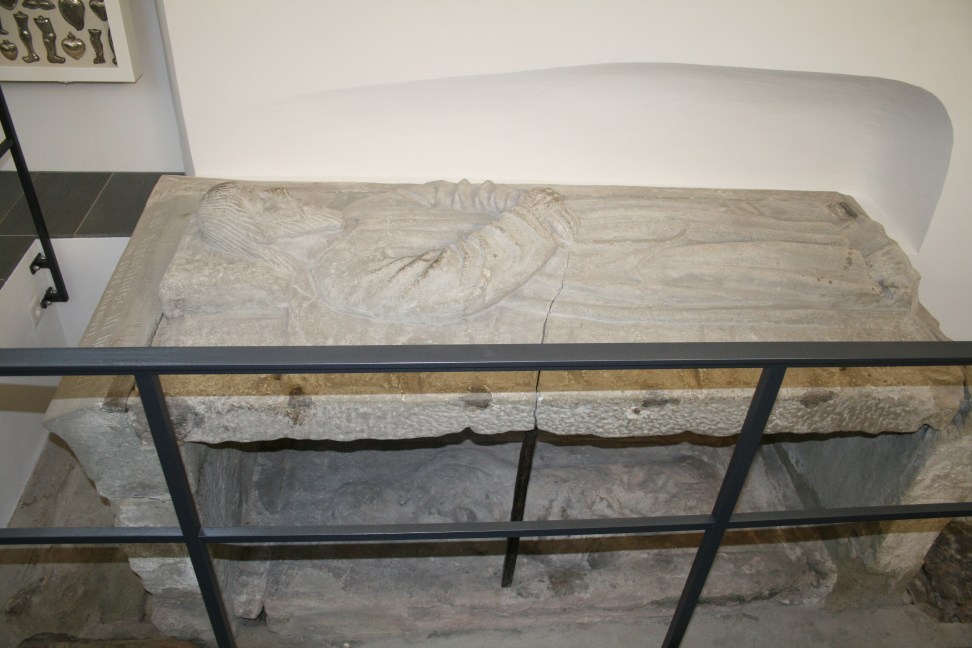
Grave Slab of Bruder Klaus
renewed by 1518
Free account
Browse every Nicholas of Flüe source
Sign up free →
Ready when you are
Start chatting with Nicholas of Flüe now.
20 messages free · No credit card · Available in 50+ languages.