


Secondary sourceDocument
Yearly Mortality Rates at Vienna's Obstetrical Clinics, 1833-1858
Power.corrupts
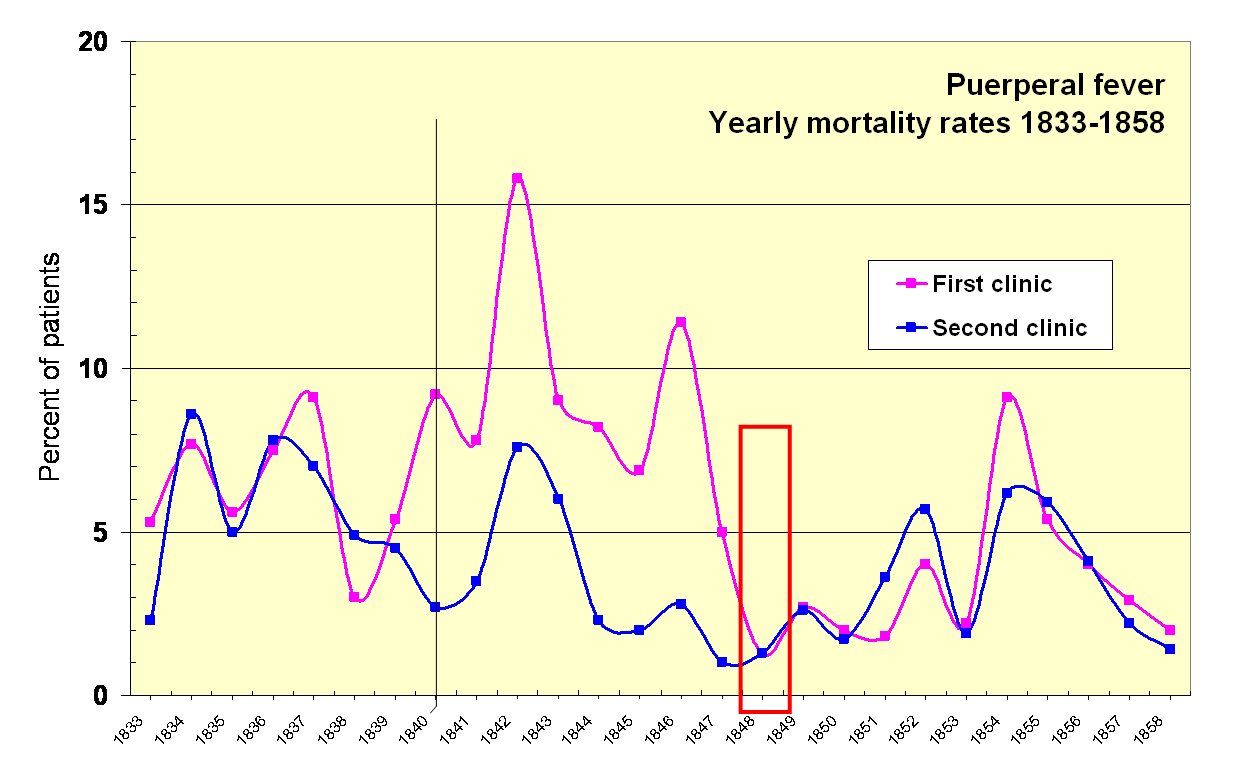
A modern chart analyzing childbed fever death rates at two Vienna maternity clinics, highlighting the period when Semmelweis enforced handwashing.
A modern chart highlighting the drop in mortality during Semmelweis's handwashing policy, the central evidence for his discovery.
About this source
What it is
This is a modern chart, made by a Wikimedia contributor, showing yearly puerperal fever mortality rates at the Vienna Maternity Institution's First and Second obstetrical clinics between 1833 and 1858. It marks the period when Semmelweis's handwashing policy was in effect, and the point when staff at the two clinics were separated.
Why it matters
This chart presents the key evidence behind Semmelweis's discovery: death rates dropped sharply once doctors began washing their hands with a chlorine solution before examining patients. It helps show, visually, why his findings were significant even though many of his contemporaries dismissed them at the time.
Look closer
- What happens to the death rate during the marked handwashing period?
- Why might comparing the two clinics, rather than just one, make the evidence more convincing?
- What questions would you want answered about how this data was originally collected?
This document is part of the curated material that grounds the AI version of Ignaz Semmelweis on Humy.ai — when students ask about related events, the AI can quote it and cite it.
More Ignaz Semmelweis sources
Browse all 93 →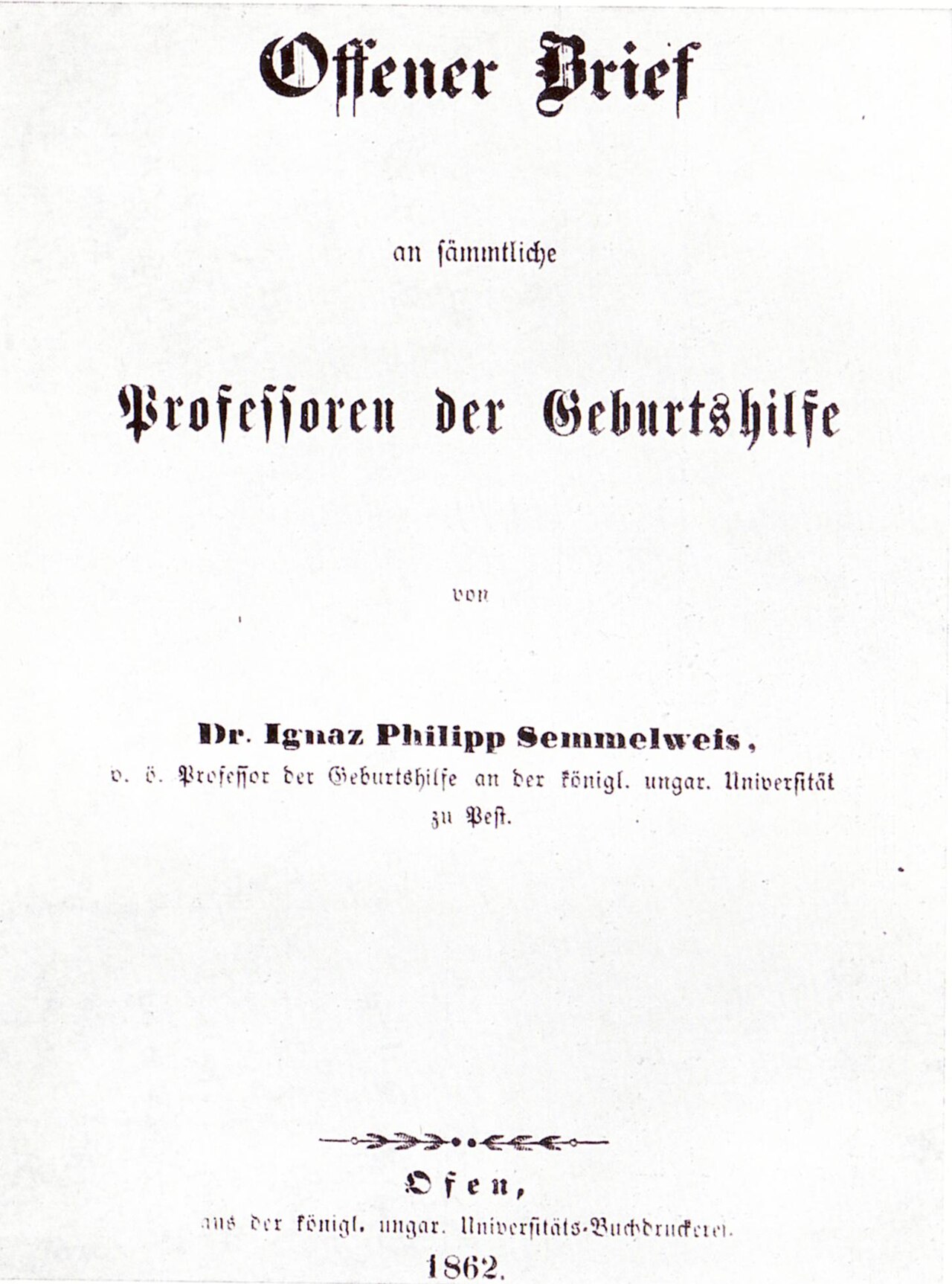 Letter
Primary source
Open Letter to All Professors of Obstetrics
Ignaz Semmelweis · 1862
 Document
Primary source
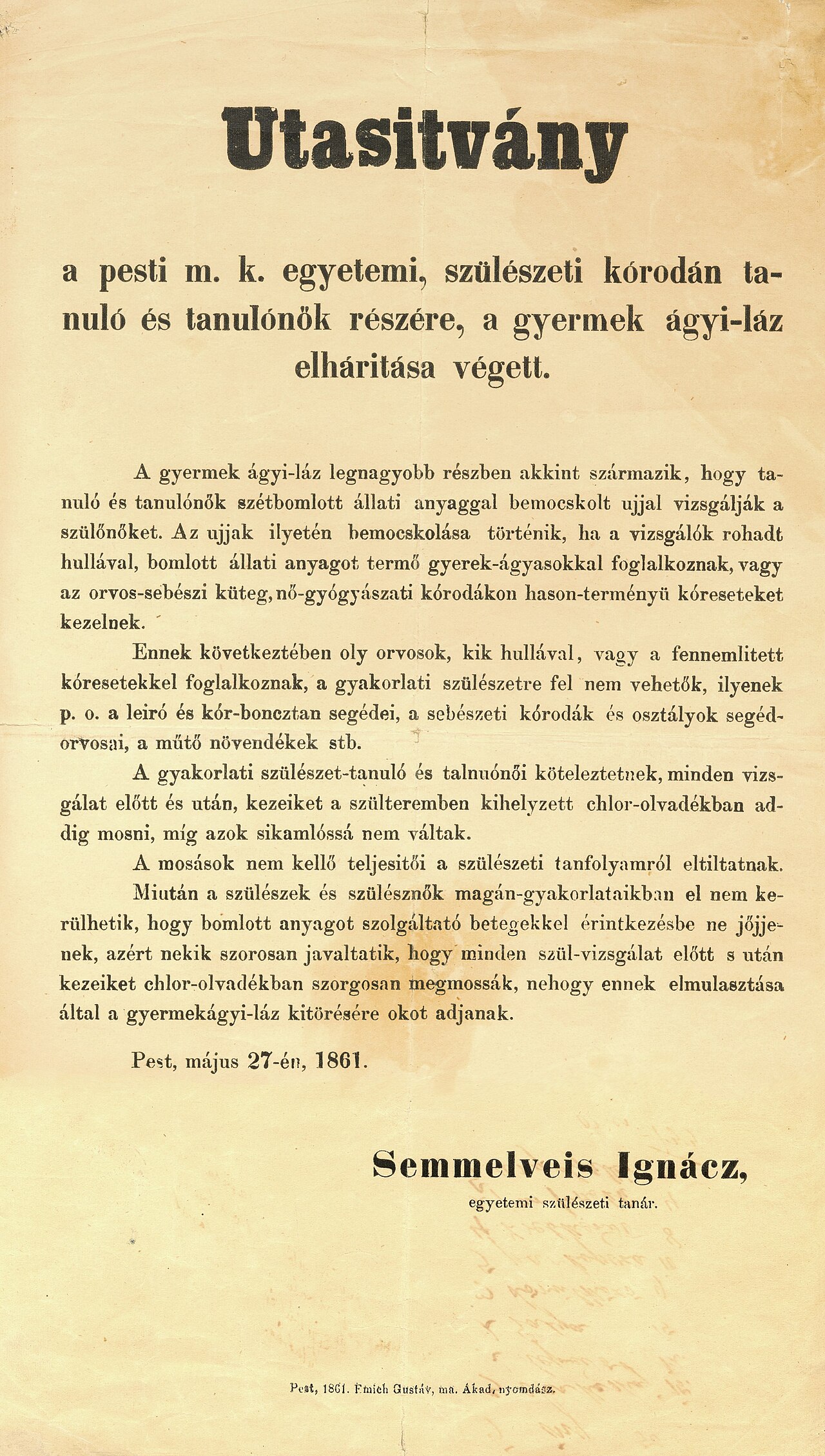
Instructions to Students at the Pest Obstetrics Clinic
Ignaz Semmelweis · 27 May 1861
 Photograph
Primary source
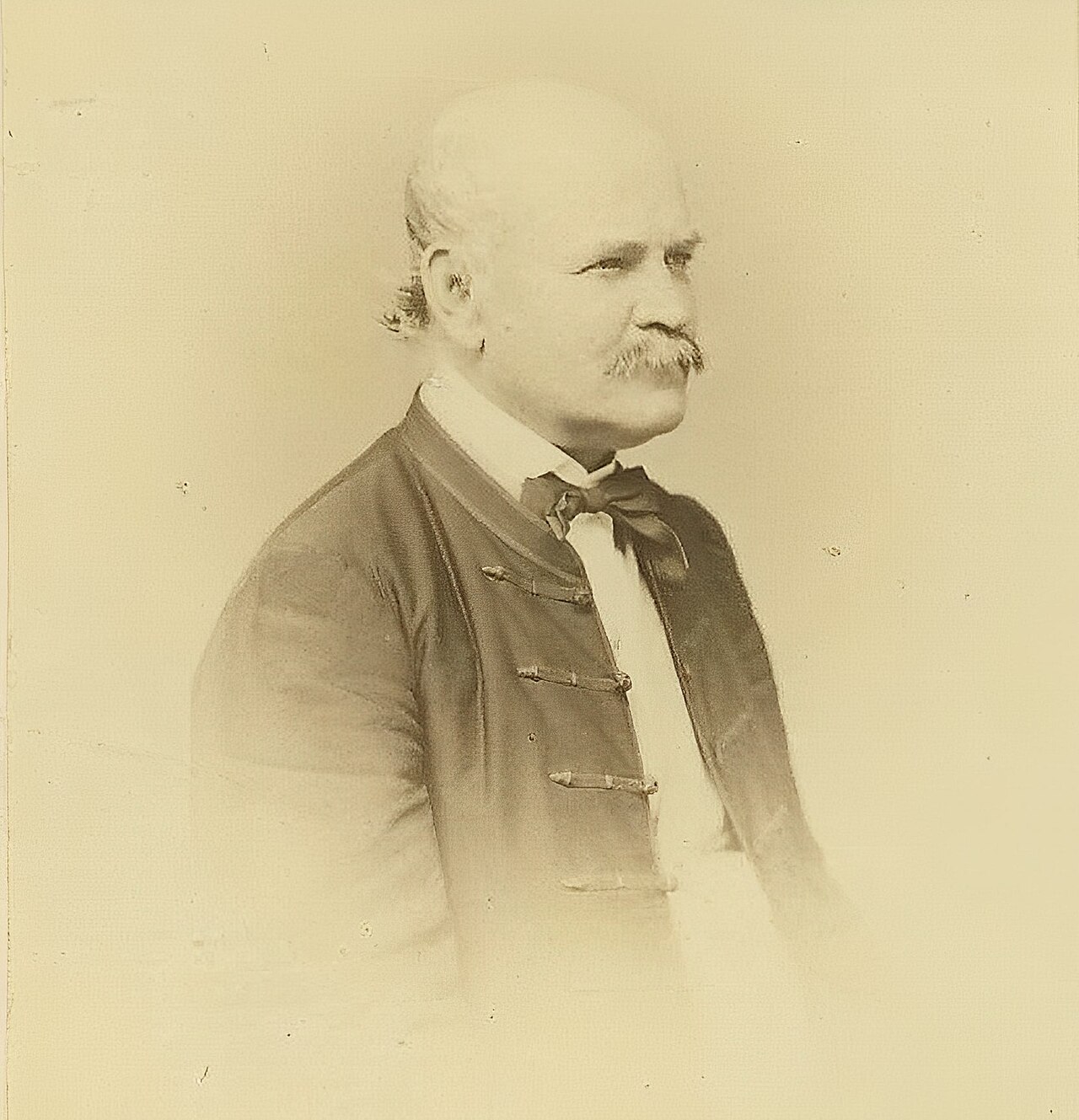
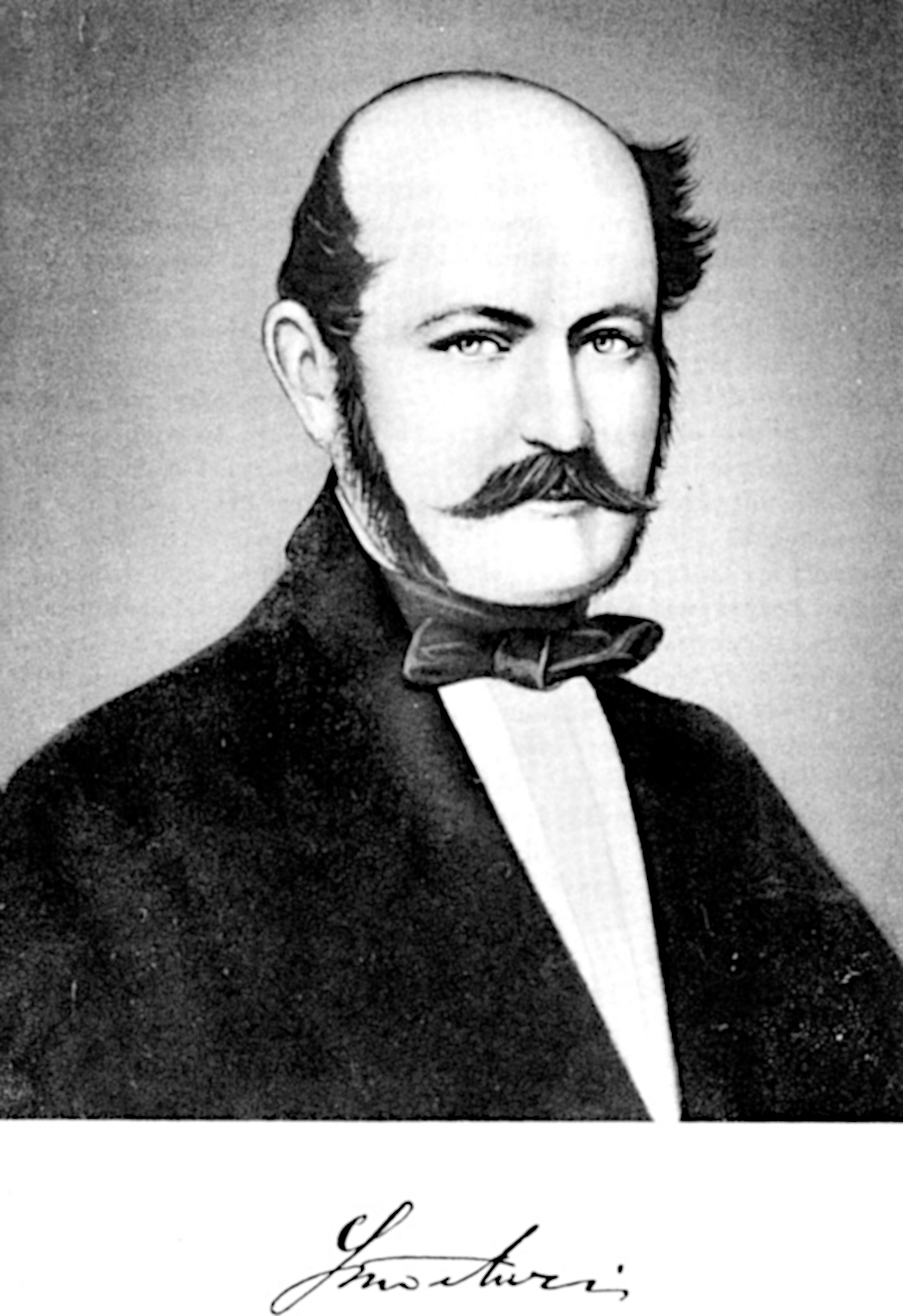
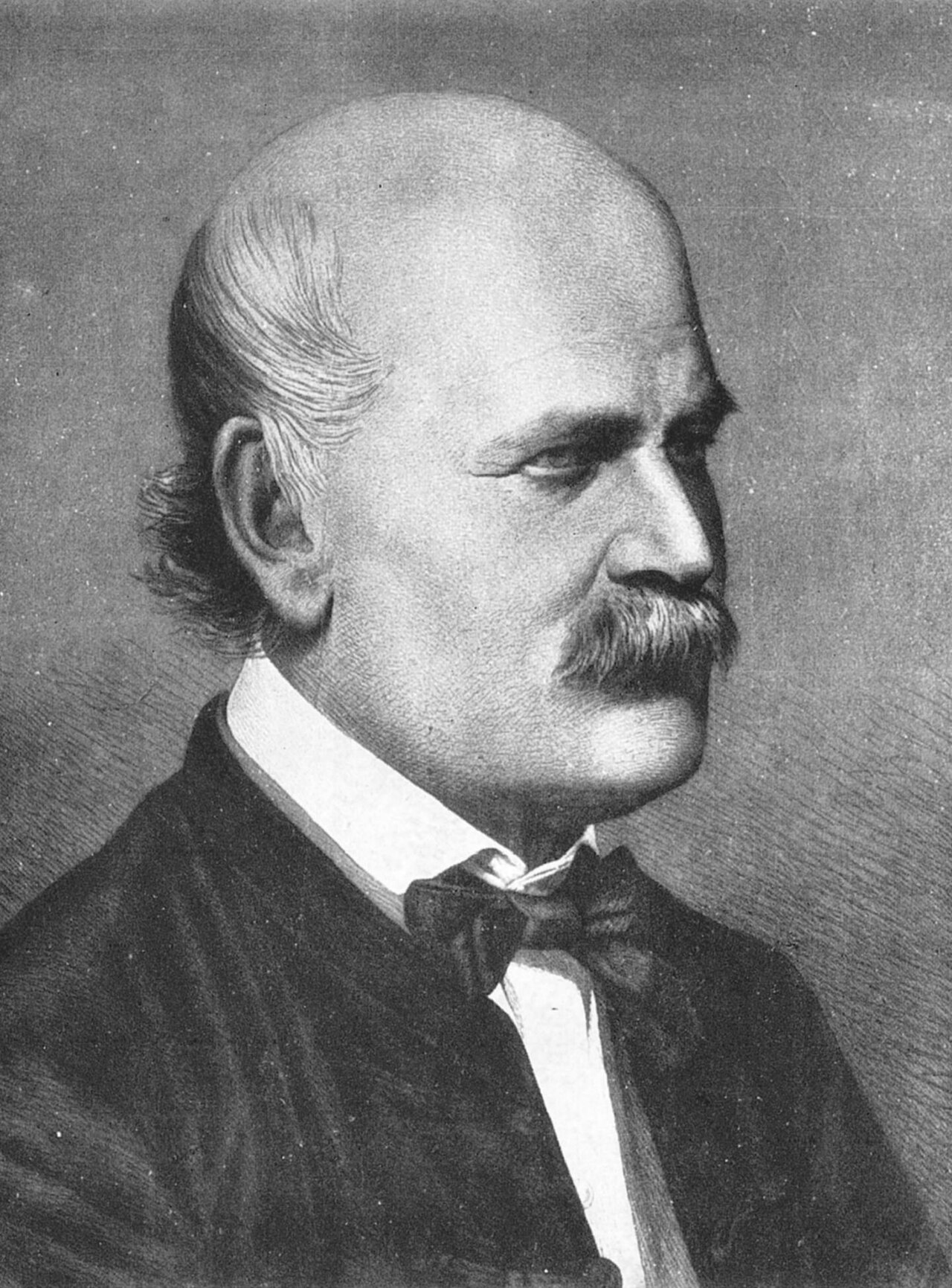
Portrait of Ignaz Semmelweis
Borsos & Doctor · 1860
 Letter
Primary source
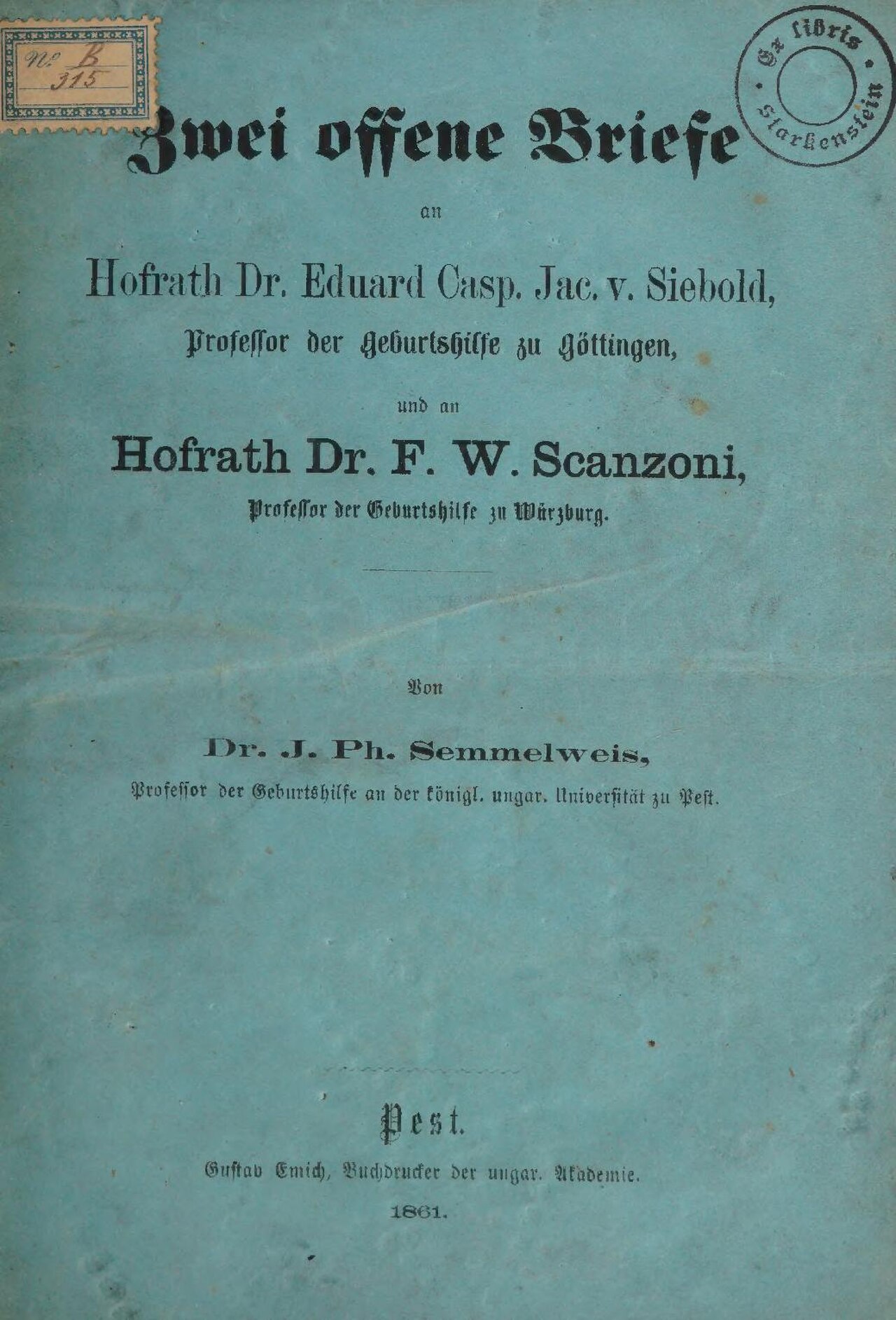
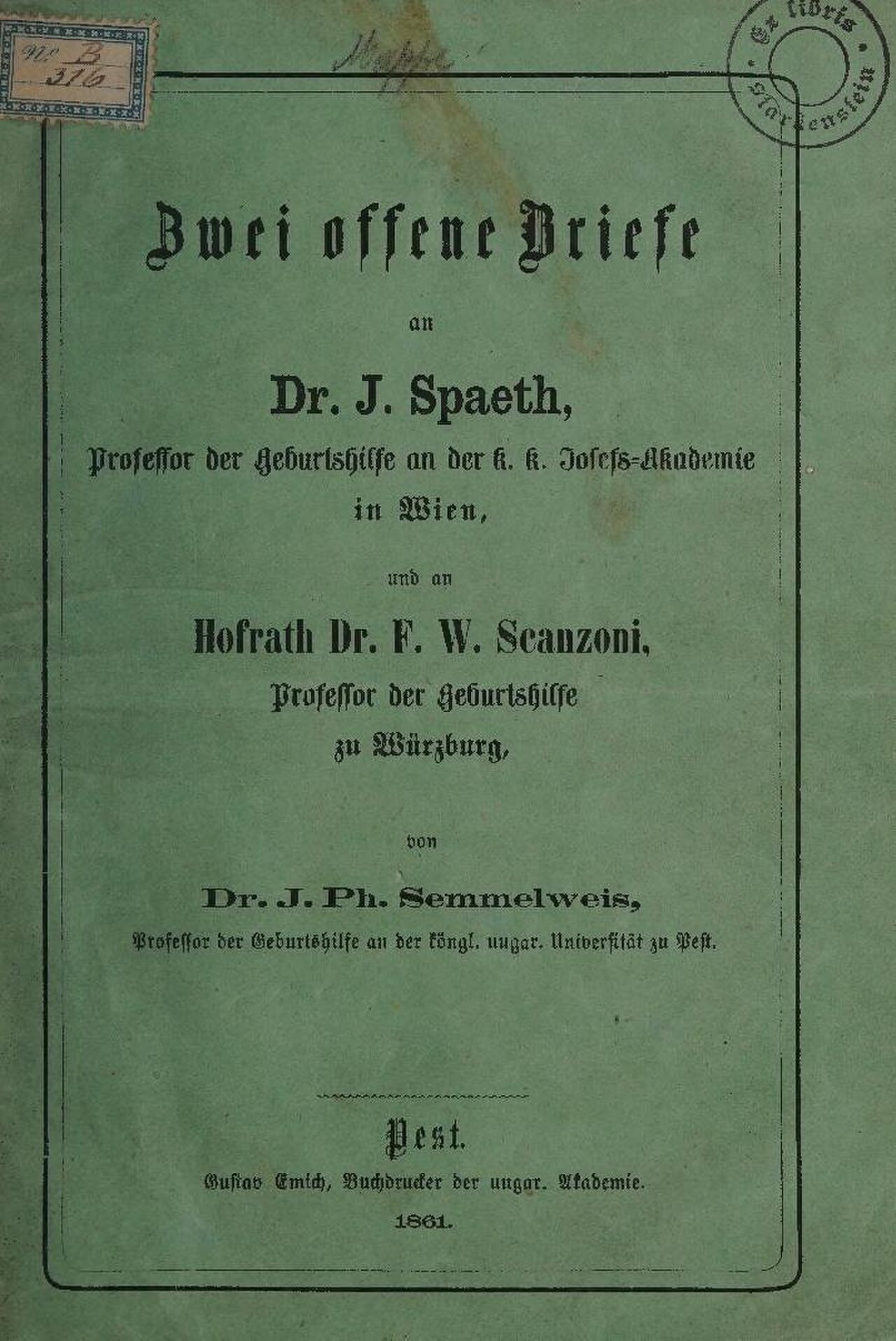
Two Open Letters to Siebold and Scanzoni
Ignaz Philipp Semmelweis · 1861
Free account
Read every Ignaz Semmelweis source
Sign up free →
Ready when you are
Start chatting with Ignaz Semmelweis now.
20 messages free · No credit card · Available in 50+ languages.