


Primary sourceArtifact1899
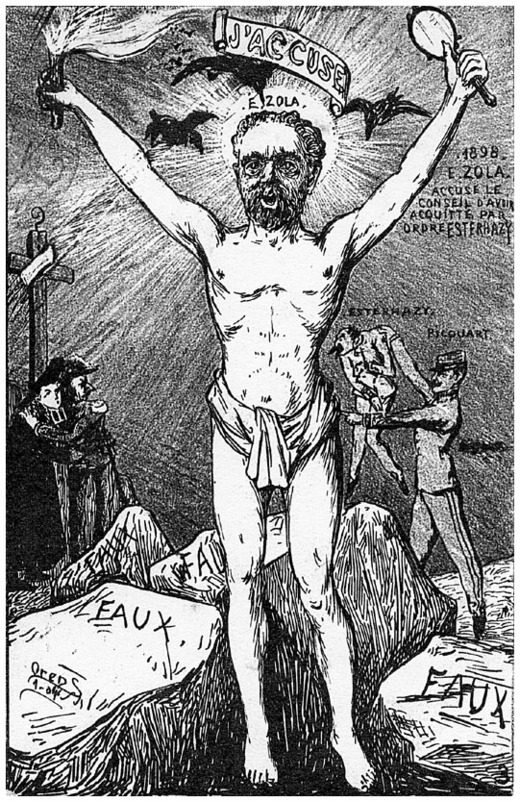
Zola accuses the council of war, from Le Calvaire Dreyfus
Orens (Bonaventure Charles Denizard) · 1899
A 1899 satirical caricature by Orens from the series Le Calvaire Dreyfus. It shows Émile Zola as a Christ-like figure accusing the military council of acquitting Esterhazy.
A satirical image of the Dreyfus affair that presents Zola's defence of Dreyfus, showing how the case was argued in print.
About this source
What it is
This is a black-and-white ink caricature from 1899, part of the series Le Calvaire Dreyfus, which means Dreyfus's calvary. It was drawn by Orens. It shows Émile Zola as a bearded man with a halo, bare-chested and in a loincloth, standing on rocks with arms raised, holding a torch and a bell. A banner reads J'ACCUSE, with E. ZOLA below. Figures in uniform stand at the sides, and the caricature says the council acquitted Commandant Esterhazy by order, while Colonel Picquart had named him as the real culprit.
Why it matters
Zola's open letter J'accuse, which accused the military council of covering up the truth, became one of the most famous moments of the affair. This caricature shows how the case was seen by supporters, who used religious images to present Dreyfus as a suffering innocent. It reveals how deeply the affair divided French public opinion.
Look closer
- Why does the artist show Zola in a Christ-like pose, and what does that suggest about how supporters saw him?
- Which figures are placed at the sides in uniform, and what does that tell you about who the artist blames?
- What does a satirical picture leave out, and how might a supporter of the army have drawn the same scene?
This artifact is part of the curated material that grounds the AI version of Alfred Dreyfus on Humy.ai — when students ask about related events, the AI can quote it and cite it.
More Alfred Dreyfus sources
Browse all 98 →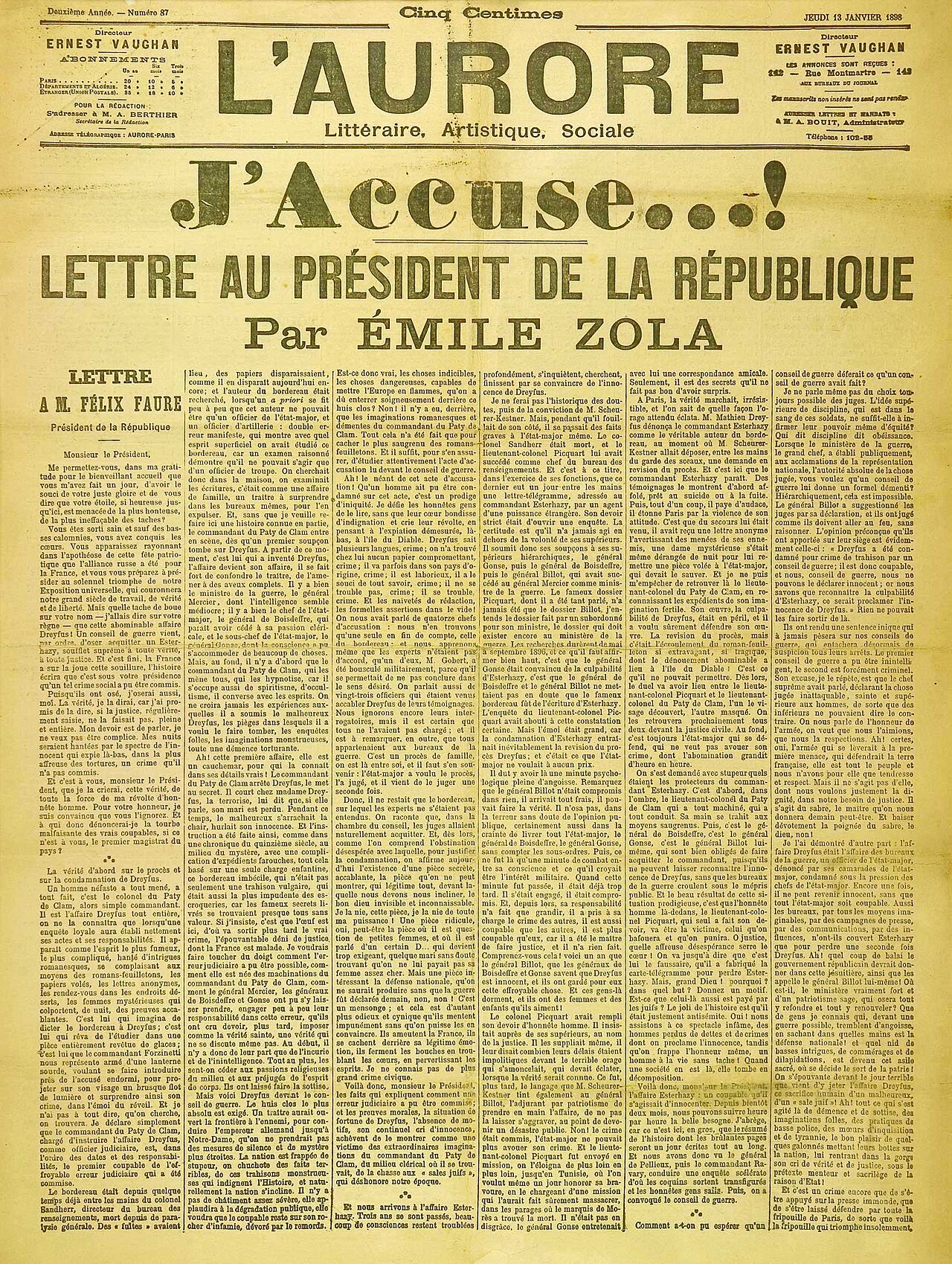 Newspaper article
Primary source
J'accuse…!
Émile Zola · 13 January 1898
 Painting
Primary source
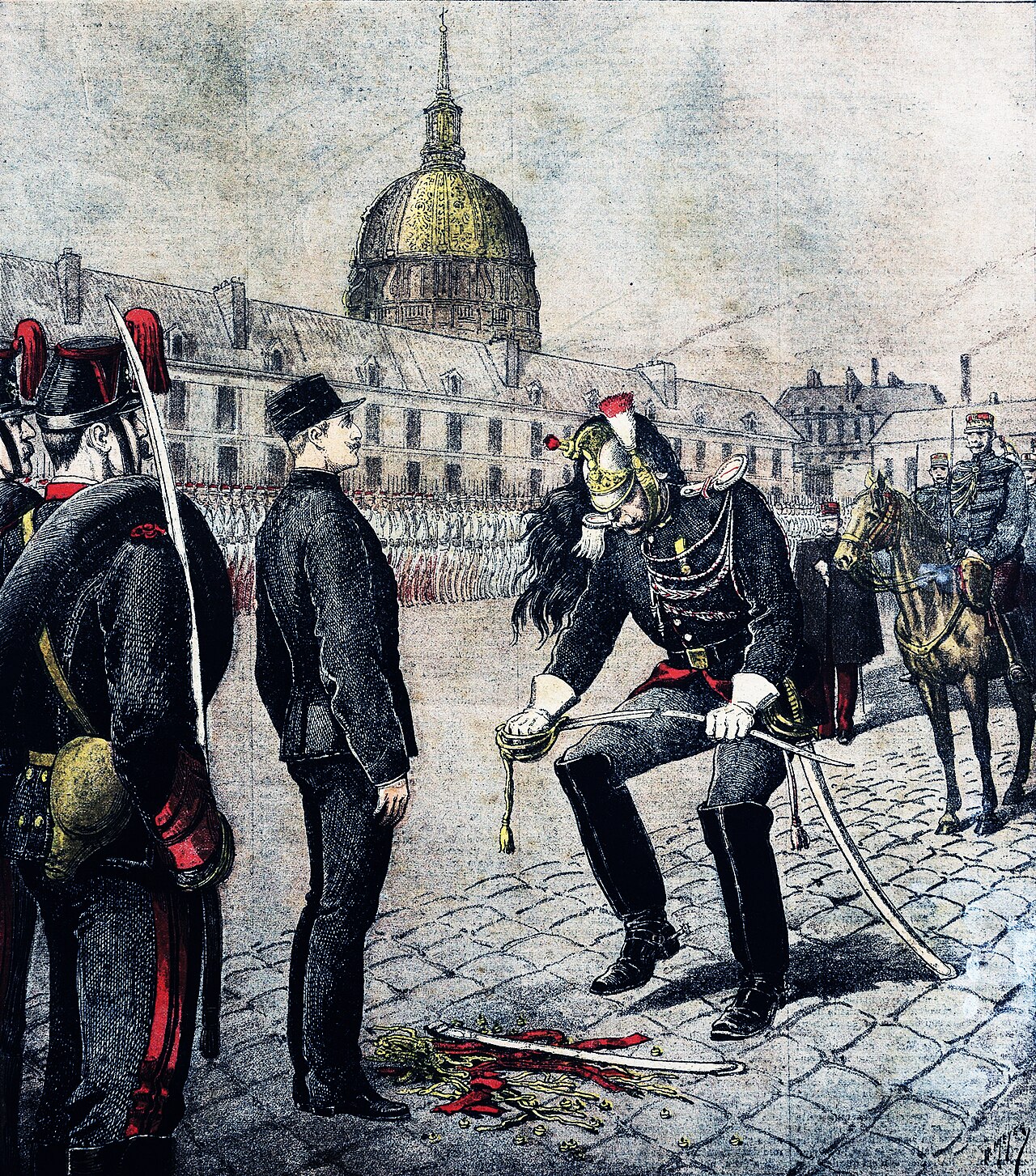
The Degradation of Alfred Dreyfus
Henri Meyer
Primary source
Cinq Années de ma vie
Alfred Dreyfus · 1901
 Letter
Primary source
Lettres d'un innocent
Alfred Dreyfus · 1894–1898 (published 1898)
Free account
Read every Alfred Dreyfus source
Sign up free →
Ready when you are
Start chatting with Alfred Dreyfus now.
20 messages free · No credit card · Available in 50+ languages.