






Dr. Michael Calvert
Assistant Superintendent, South Allegheny School District, Pennsylvania
Been using Humy in his district since 2024
“We enjoyed the program last year and used it frequently.”
Interview assignment
Choose from Alexander Hamilton, Thomas Jefferson and Mercy Otis Warren
A ready-made interview for College, shared by a teacher on Humy. Students question one of 3 AI figures in a live chat. Humy grades the conversation against the rubric below.
Free teacher account · 20 AI messages a month, shared with your students · No credit card
From British Tyranny to American Elite Rule: Interviewing the New Republic’s Architects and Critics
PreviewInteract responsibly with the AI and verify facts. Note that teachers have access to these conversations.
Choose a figure to interview
Hello, I'm Alexander Hamilton. I'm ready for your interview. What's your first question?
AN INQUIRY INTO THE EARLY REPUBLIC
A revolution can overthrow a distant ruler without settling who governs afterward. As Americans today debate wealth, political influence, and whose voices count, the founding era offers a difficult question: Did independence expand self-government, or replace British authority with the power of a new American elite?
Choose one interview candidate:
Alexander Hamilton — Revolutionary veteran and Treasury secretary whose plans for public credit and a national bank raise questions about financial power.
Thomas Jefferson — Author of the Declaration of Independence and advocate of agrarian republicanism whose defense of liberty must be examined alongside his enslavement of people.
Mercy Otis Warren — Revolutionary writer and critic of the proposed Constitution who challenged concentrated authority and demanded vigilance against new forms of domination.
YOUR MISSION: Discover how your figure defined tyranny, justified or challenged elite power, and understood who would benefit from the new republic.
Ask open-ended, historically specific questions; press for evidence, identify contradictions, and test the answers against what you know about the period. Treat the AI’s responses as interpretations to scrutinize, not sources to cite. Consider whose perspectives your figure might overlook.
Begin: Select your preferred figure, then click "start assignment" to begin the interview.
Students see this rubric before they start. Humy scores the conversation against it and writes feedback for each criterion.
Assess the student’s interview choices and historical reasoning—not the AI figure’s answers. Select one listed level per criterion.
Does the student question their chosen figure about the republic’s distribution of power?
| Exemplary · 5 points | Specific, open-ended questions probe tyranny, elite power, and beneficiaries through the chosen figure. |
|---|---|
| Proficient · 3 points | Open-ended questions address all three themes but lack historical specificity. |
| Developing · 1 point | Questions address only some themes or invite mostly brief answers. |
| Beginning · 0 points | Questions do not meaningfully investigate the figure or assigned themes. |
Does the student adapt to answers rather than submit a question list?
| Exemplary · 5 points | Sustains many turns; answer-based follow-ups corroborate or respectfully challenge claims. |
|---|---|
| Proficient · 3 points | Several exchanges include answer-based follow-ups and some claim checking. |
| Developing · 1 point | Mostly scripted questions show limited response-based follow-up or checking. |
| Beginning · 0 points | No substantive back-and-forth engages the figure’s answers. |
Does the student scrutinize the AI’s interpretations using historical knowledge?
| Exemplary · 5 points | Tests specific claims against period evidence; never treats AI answers as sources. |
|---|---|
| Proficient · 3 points | Checks claims against relevant historical knowledge without citing AI answers as evidence. |
| Developing · 1 point | Requests evidence but seldom tests answers against historical knowledge. |
| Beginning · 0 points | Accepts AI claims untested or presents AI answers as historical sources. |
Does the student press the gap between promised liberty and unequal power?
| Exemplary · 5 points | Challenges contradictions and excluded perspectives, including Jefferson’s enslavement when applicable. |
|---|---|
| Proficient · 3 points | Questions a relevant contradiction and asks whose interests or voices are missing. |
| Developing · 1 point | Mentions inequality or contradiction without pressing the figure to address it. |
| Beginning · 0 points | Does not examine contradictions or perspectives beyond the figure’s own. |
Maximum total: 20 points. Add the four criterion scores for the final score. Award 0 points for an empty submission; only the listed scores may be used for each criterion.
Students choose one of these figures to talk to. Each is an AI version grounded in a curated biography and selected historical sources. As with any AI, students should check important claims.

Founding father, first Secretary of the Treasury, and key figure in the creation of the United States' financial system.

Third President of the United States, principal author of the Declaration of Independence, and advocate for individual rights and limited government.

American writer and historian known for her contributions to the American Revolution.
In your classroom
Create a free teacher account, open this assignment and choose Copy to my assignments to make it yours.
Students open it and type their first name and last initial. No email, no password.
Each chat is scored against the rubric, with feedback for each criterion. You see every result.
Signed up but don't see it? Open Assignments → Community library.

Social Studies
with Alexander Hamilton and 5 more

Social Studies
with Andrew Jackson and 7 more
US History
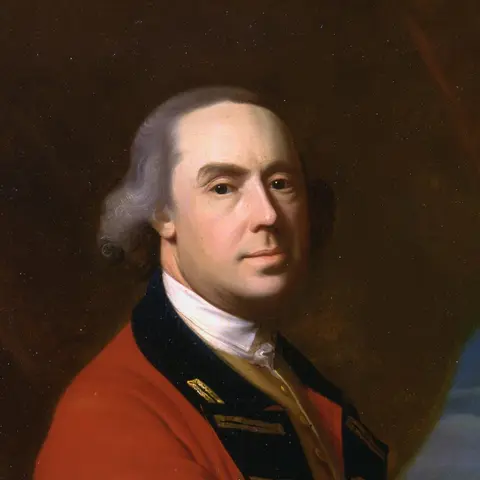
with Thomas Gage and 9 more
Paying customers



























Dr. Michael Calvert
Assistant Superintendent, South Allegheny School District, Pennsylvania
Been using Humy in his district since 2024
“We enjoyed the program last year and used it frequently.”

Jacob Chisom
World and American History, Monticello High School, Arkansas
Been using Humy in his classroom since 2024
“My students say it’s a welcome change of pace. I’m not a fan of the “sage on the stage” model, so I try to incorporate research-oriented and self-paced activities. With Humy, students have to take charge of their learning. They’ve become more adept at critical thinking, forming better questions, and improving their reading comprehension. The interview feature has been my go-to tool. I create assignments where students must ask historical figures a set number of questions, then summarize the responses to ensure they’re truly absorbing the material. This approach lets them actively explore the past rather than passively consuming information.”
Roger Campbell
7th-grade World History, Lancaster County, Pennsylvania
Been using Humy in his classroom since 2024
“Humy has helped me bring historical figures, sometimes long past, to life. When my students interact with these figures in real-time, it eliminates some of the perceived “ancient” characteristics of my curriculum. This has shifted my students’ thinking away from viewing history as abstract or irrelevant. Real-time interactions make historical figures relatable, even allowing students to ask off-topic questions that help put historical lives in a more relevant context for 13-year-olds. The feature I use the most is the interview feature. After teaching a topic, most recently Gandhi and Joan of Arc, I have the students ask pointed, focused questions. We practice good conversation techniques beforehand, teaching them to listen (or read) carefully and formulate thoughtful follow-up questions rather than just interrogating. It helps students practice effective conversation skills.”
Dr. Michael Calvert
Assistant Superintendent, South Allegheny School District, Pennsylvania
Been using Humy in his district since 2024
“We enjoyed the program last year and used it frequently.”
Jacob Chisom
World and American History, Monticello High School, Arkansas
Been using Humy in his classroom since 2024
“My students say it’s a welcome change of pace. I’m not a fan of the “sage on the stage” model, so I try to incorporate research-oriented and self-paced activities. With Humy, students have to take charge of their learning. They’ve become more adept at critical thinking, forming better questions, and improving their reading comprehension. The interview feature has been my go-to tool. I create assignments where students must ask historical figures a set number of questions, then summarize the responses to ensure they’re truly absorbing the material. This approach lets them actively explore the past rather than passively consuming information.”
Roger Campbell
7th-grade World History, Lancaster County, Pennsylvania
Been using Humy in his classroom since 2024
“Humy has helped me bring historical figures, sometimes long past, to life. When my students interact with these figures in real-time, it eliminates some of the perceived “ancient” characteristics of my curriculum. This has shifted my students’ thinking away from viewing history as abstract or irrelevant. Real-time interactions make historical figures relatable, even allowing students to ask off-topic questions that help put historical lives in a more relevant context for 13-year-olds. The feature I use the most is the interview feature. After teaching a topic, most recently Gandhi and Joan of Arc, I have the students ask pointed, focused questions. We practice good conversation techniques beforehand, teaching them to listen (or read) carefully and formulate thoughtful follow-up questions rather than just interrogating. It helps students practice effective conversation skills.”
FAQ
Ready when you are
Free teacher account · 20 AI messages a month, shared with your students · No credit card.