
Portrait of Clarence Darrow

AI Historical Figure

Clarence Darrow

Prominent American lawyer known for his defense in the Scopes "Monkey" Trial and other high-profile cases.

Chat with Clarence Darrow via text or voice — in 42 languages, drawing on a curated biography and 65 historical sources. Available 24/7.

Start chatting with Clarence Darrow20 messages free · No credit card
Lived
1857–1938
From
United States
Known for
Activism & reformLaw
Clarence Darrow

Clarence Darrow

Online · responds in seconds

Hello — I'm Clarence Darrow. Prominent American lawyer known for his defense in the Scopes "Monkey" Trial and other high-profile cases. What would you like to ask me?

20 messages free · No credit card · Powered by Humy.ai

Live preview · Switch between 42 languages above · Send a message to continue in the app

Multilingual

Talk to Clarence Darrow in 42 languages

Ask Clarence Darrow questions in any language below, and the rest of Humy's app speaks it too. Pick yours to open the chat in that language.

Also in German (Austria), German (Switzerland), English (UK), English (Australia), English (Canada).

The sources behind this AI

65 sources · 20 photographs · 15 books · 12 documents · 10 speeches · 4 newspaper articles · 2 artifacts · 1 painting · 1 letter

Clarence Darrow doesn’t improvise from thin air. The AI is grounded in 65 curated historical sources students can inspect. Open any of them to see what informs the conversation.

Book

Primary source

The Plea of Clarence Darrow

Clarence Darrow · 1924

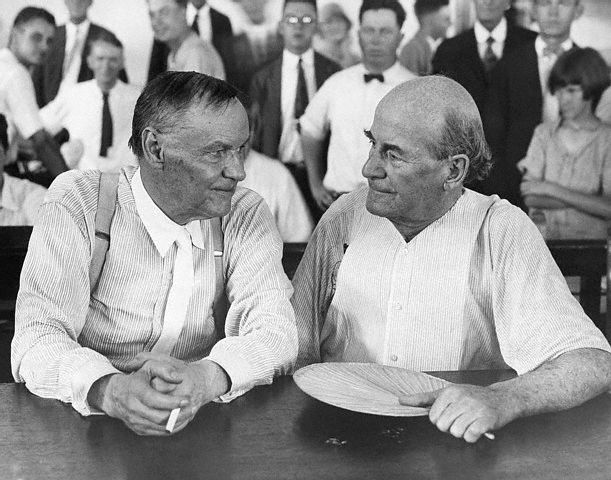
Black-and-white photo of two older men seated side by side at a courtroom table, leaning toward each other and talking. The man on the left wears a light striped shirt with a tie and suspenders and holds a cigarette in his clasped hands. The man on the right, bald with hair at the sides, wears a light shirt and holds a paper fan. Behind them, a crowd of spectators in suits and shirts stands and watches; a young girl is at the right edge.Photograph

Primary source

Scopes Trial Photograph of Darrow and Bryan

Brown Brothers · 1925

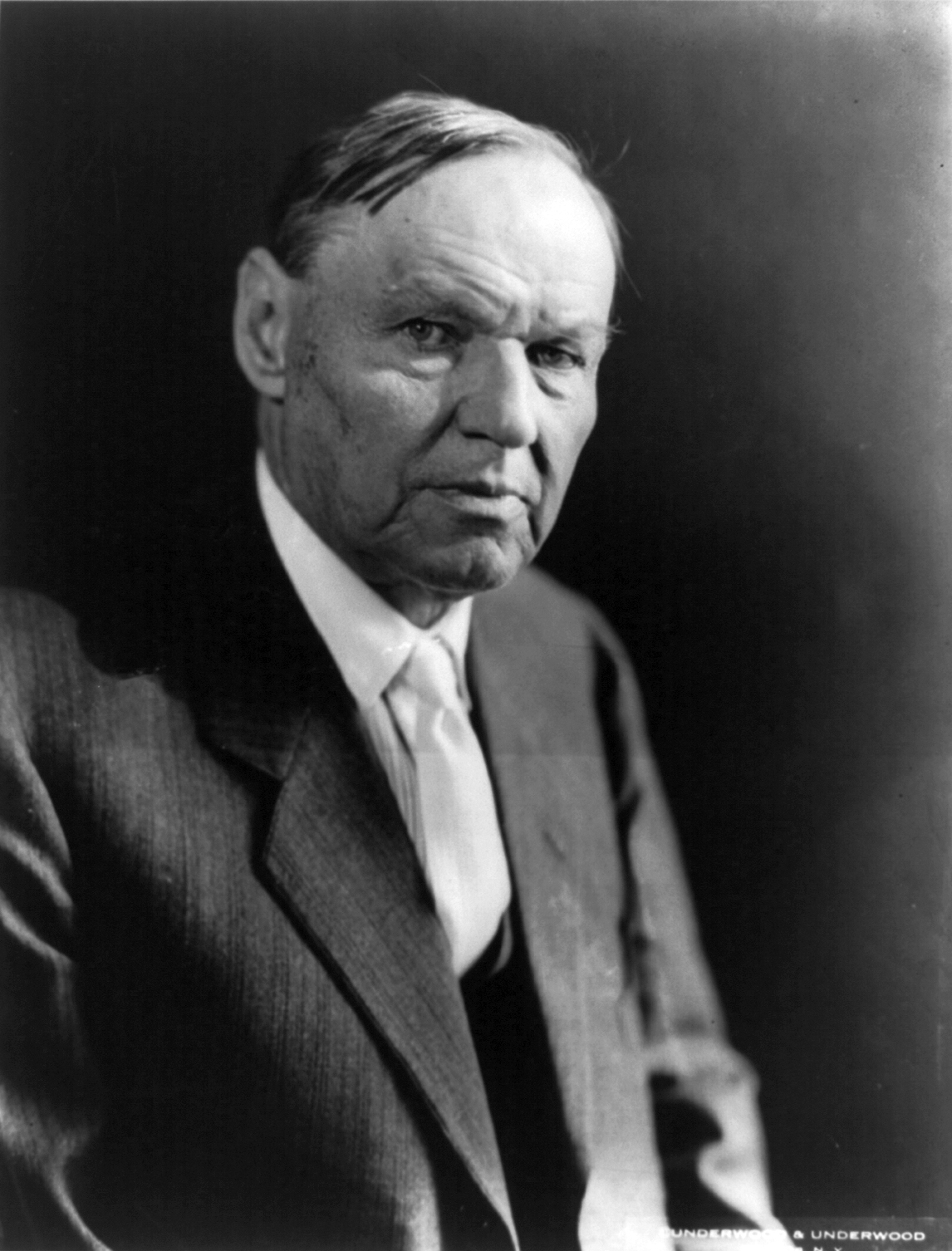
Black and white studio portrait of an older man with short combed-back hair, wearing a dark suit, white collared shirt and light tie, seated against a dark background, looking toward the viewer. Partial text in the lower right corner reads Underwood & Underwood.Photograph

Primary source

Portrait of Clarence Darrow

Underwood & Underwood

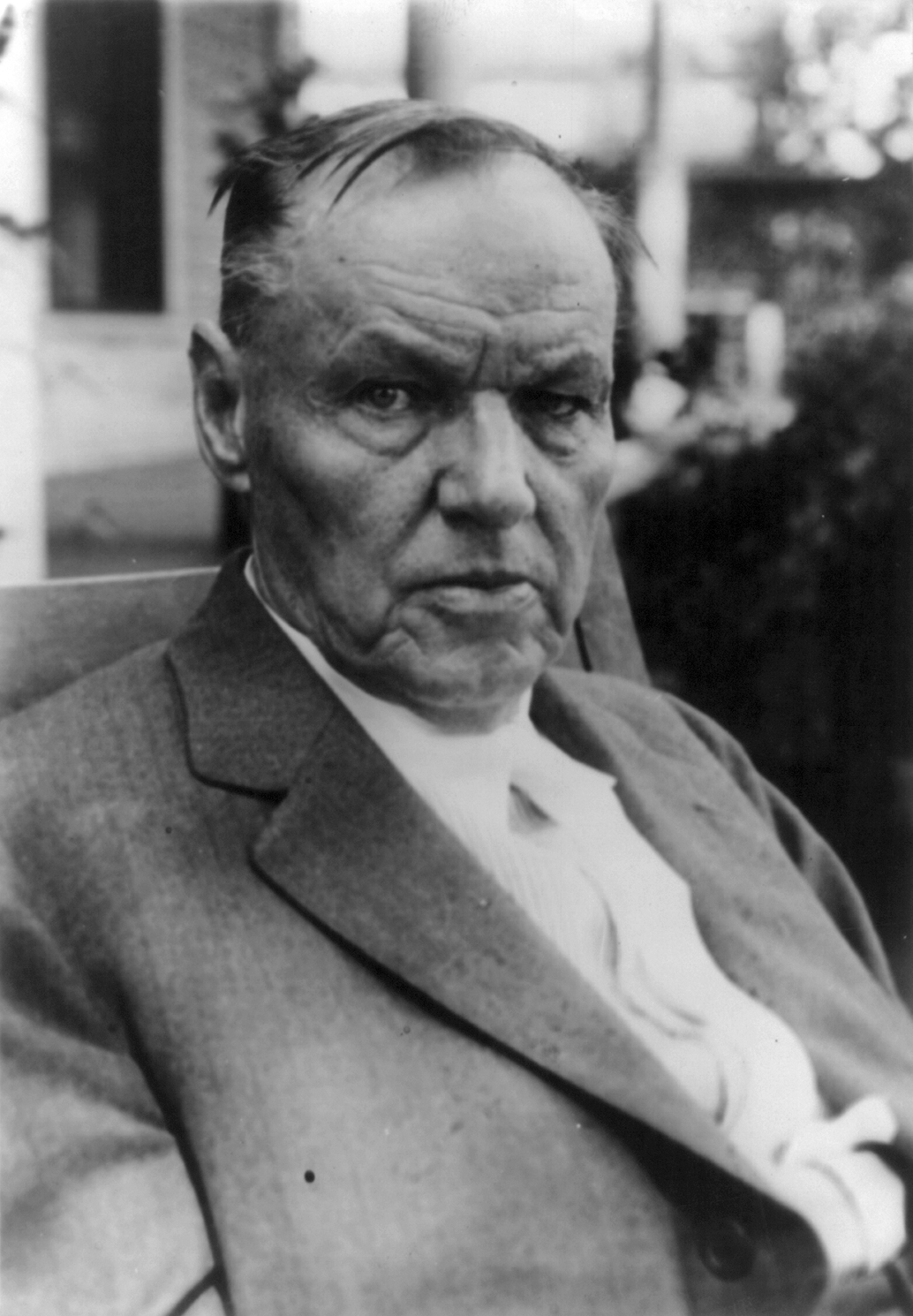
Black-and-white photograph of an older man with thinning, swept-back hair, seated and facing the camera with a serious expression. He wears a suit jacket over a white shirt and a blurred outdoor background.Photograph

Primary source

Clarence Darrow at the Scopes Trial

Underwood & Underwood · 1925

Plain red cloth book cover with faint vertical texture and a dark strip along the left spine edge. No title or text is visible on the cover.Book

Primary source

Crime: Its Cause and Treatment

Clarence Darrow · 1922

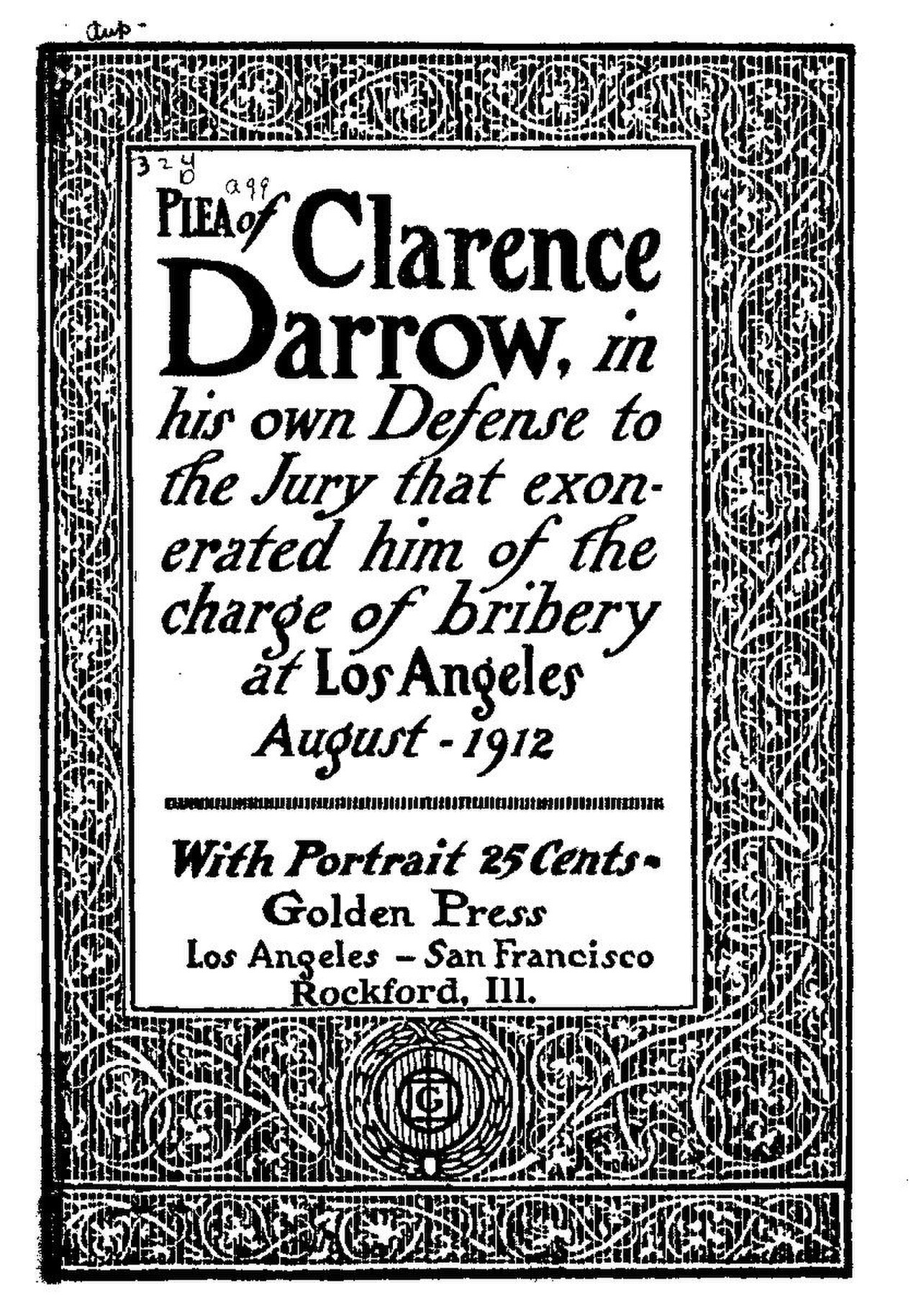
Title page of a pamphlet with decorative black-and-white ornamental border. Text reads: Plea of Clarence Darrow, in his own Defense to the Jury that exonerated him of the charge of bribery at Los Angeles, August 1912. With Portrait 25 Cents. Golden Press, Los Angeles, San Francisco, Rockford, Ill. Handwritten marks appear at top left.Speech

Primary source

Plea of Clarence Darrow in His Own Defense to the Jury at Los Angeles

Clarence Darrow · August 1912

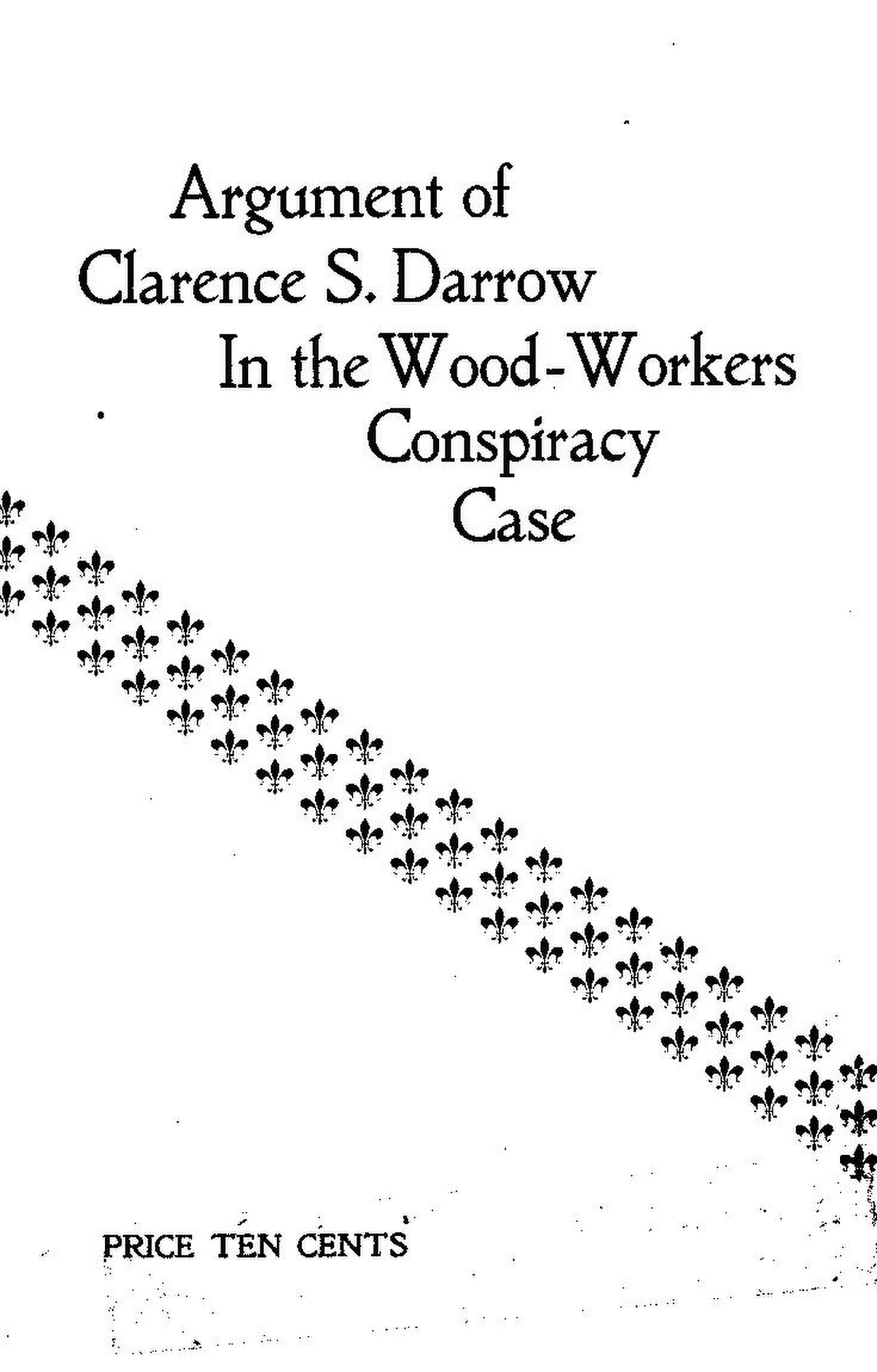
Title page of a pamphlet reading 'Argument of Clarence S. Darrow In the Wood-Workers Conspiracy Case' in black serif type, with a band of repeated fleur-de-lis ornaments running diagonally across the page and 'PRICE TEN CENTS' printed at the lower left.Speech

Primary source

Argument of Clarence Darrow in the Wood-Workers' Conspiracy Case

Clarence Darrow · 1898

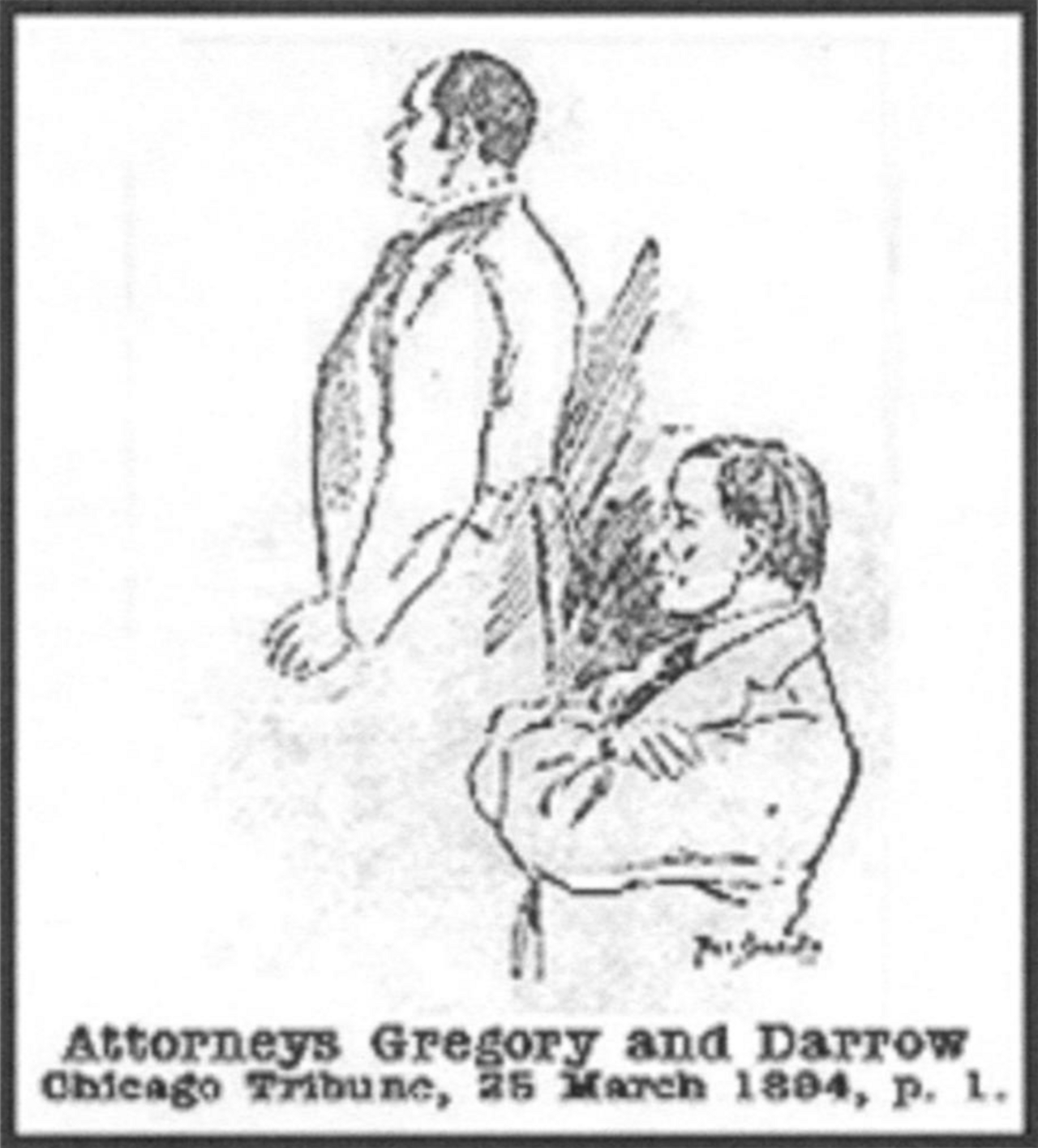
Black-and-white newspaper sketch of two men. A standing man in a suit with a sharp profile faces left, and a seated man in a jacket leans forward on a chair, looking up at him. Caption below reads: Attorneys Gregory and Darrow, Chicago Tribune, 25 March 1894, p. 1.Newspaper article

Primary source

Attorneys Gregory and Darrow

Unknown author · 25 March 1894

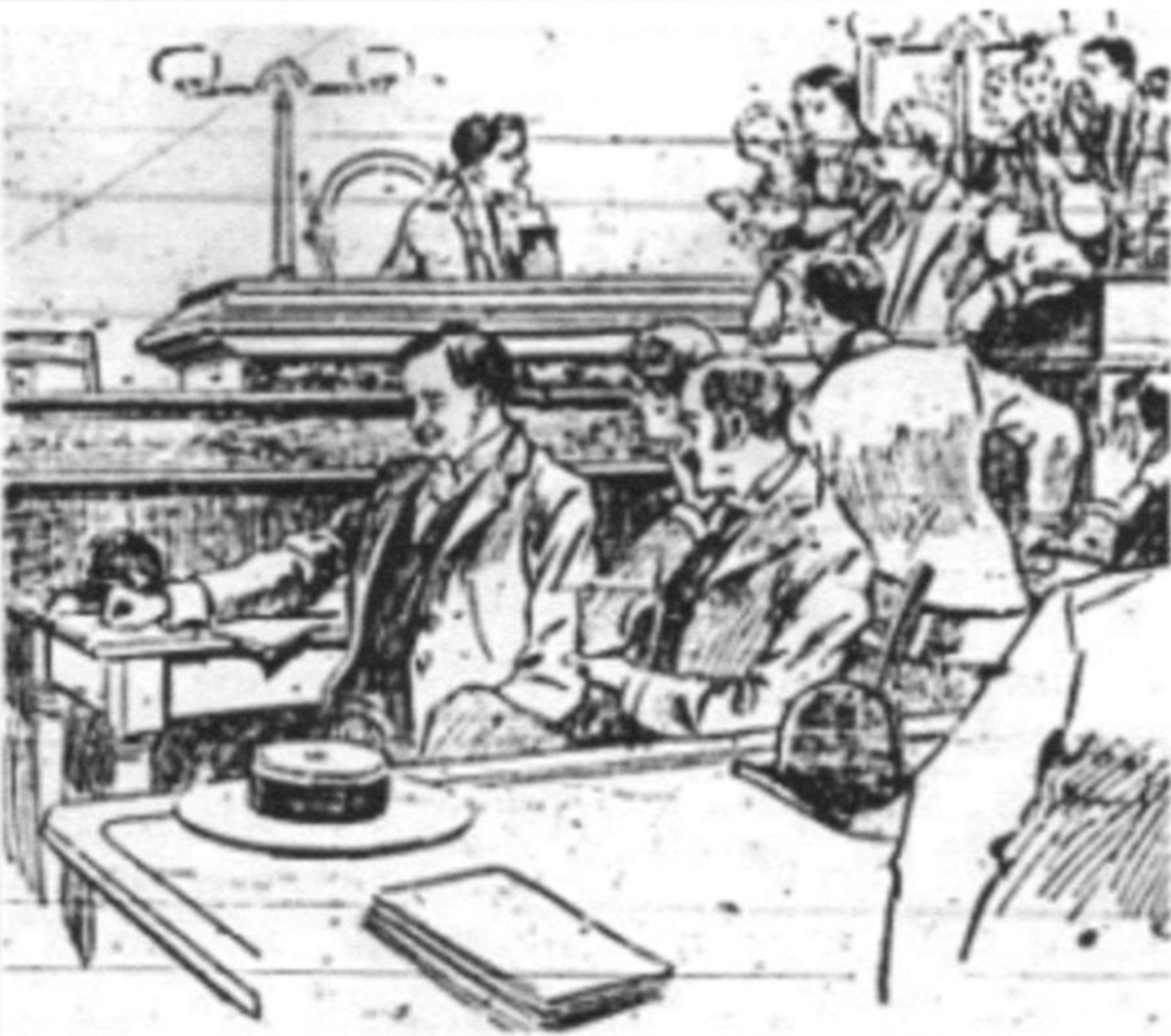
Black-and-white newspaper sketch of a courtroom. In the foreground, a man in a suit sits at a table beside another seated man, with a round object and a closed book on the table. Spectators crowd the background, and a judge sits on a raised bench.Newspaper article

Primary source

Mr. Darrow Hears the Verdict

Unknown author · 4 July 1894

Book

Primary source

Resist Not Evil

Clarence Darrow · 1903

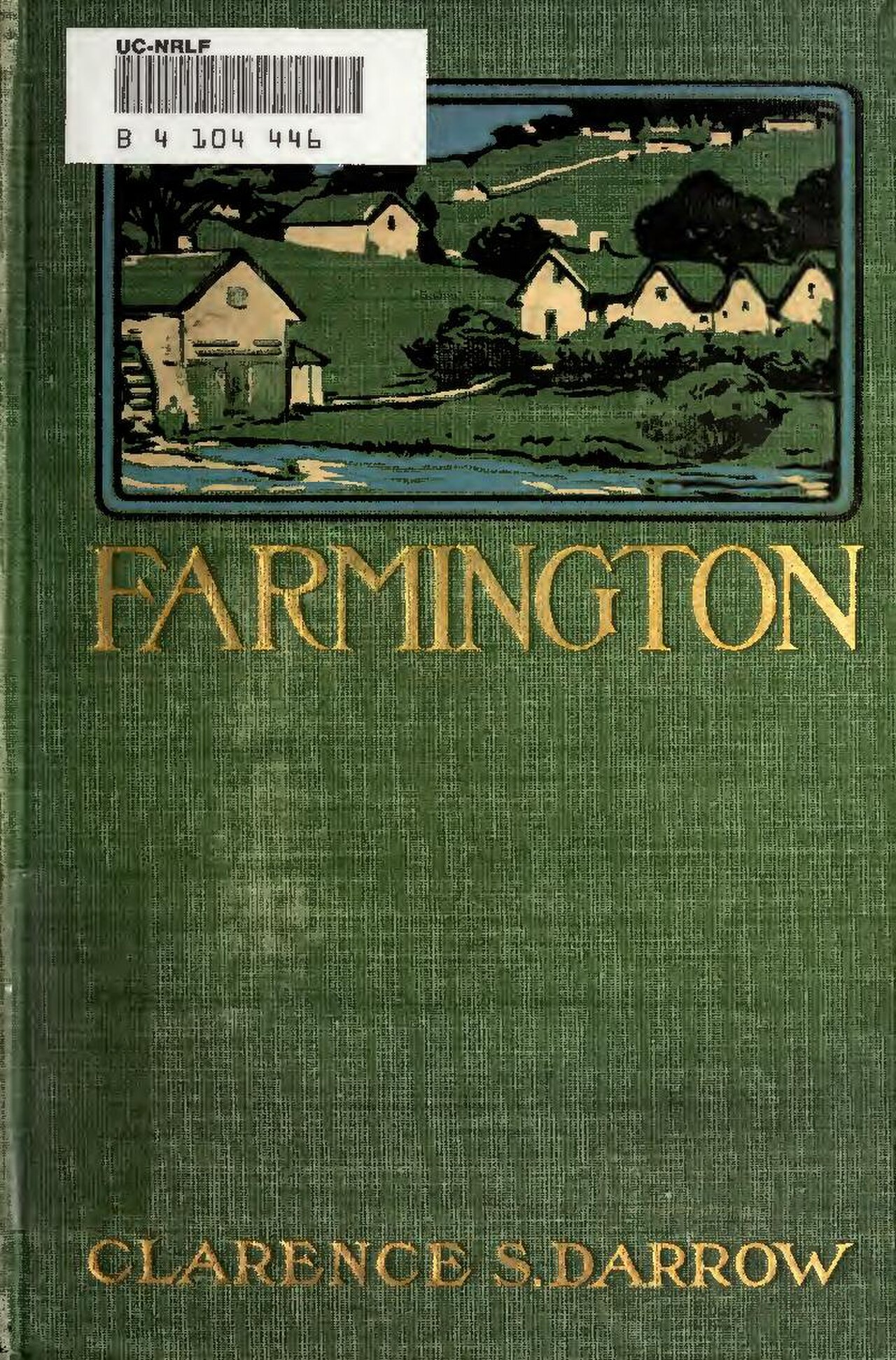
Front cover of the book Farmington by Clarence S. Darrow, green cloth binding with gold title lettering and a framed illustration of a village with cottages and a river. A library barcode label reading UC-NRLF is affixed at the top left.Book

Primary source

Farmington

Clarence Darrow · 1904

Speech

Primary source

War Prisoners

Clarence Darrow · 9 November 1919

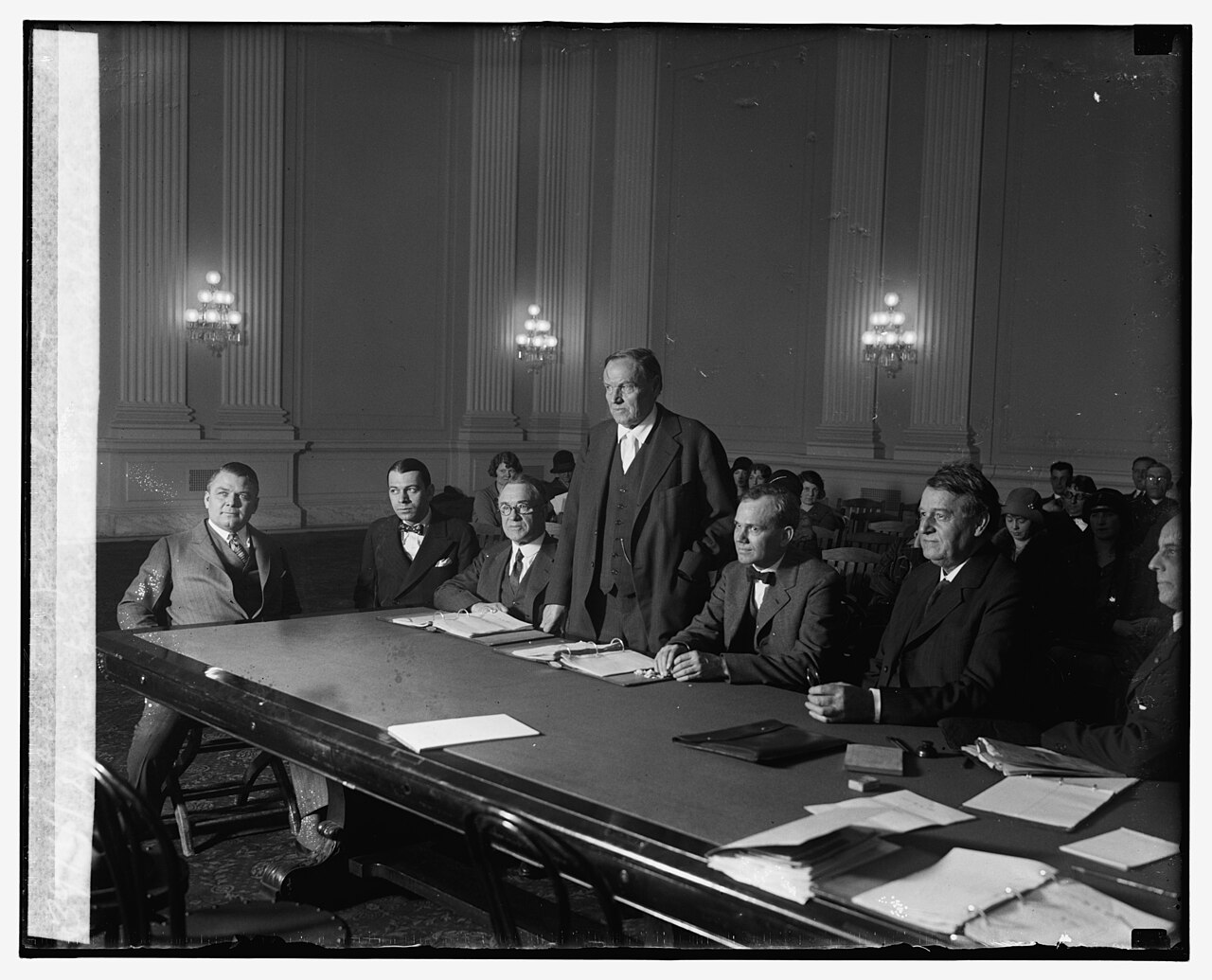
Black-and-white photo of a committee meeting: about six men sit and stand around a long conference table with papers in a formal hall with pilasters and wall sconces. A standing man in a suit is at center; spectators sit behind.Photograph

Primary source

House District Com. on abolishing capital punishment

National Photo Company Collection · 1 February 1926

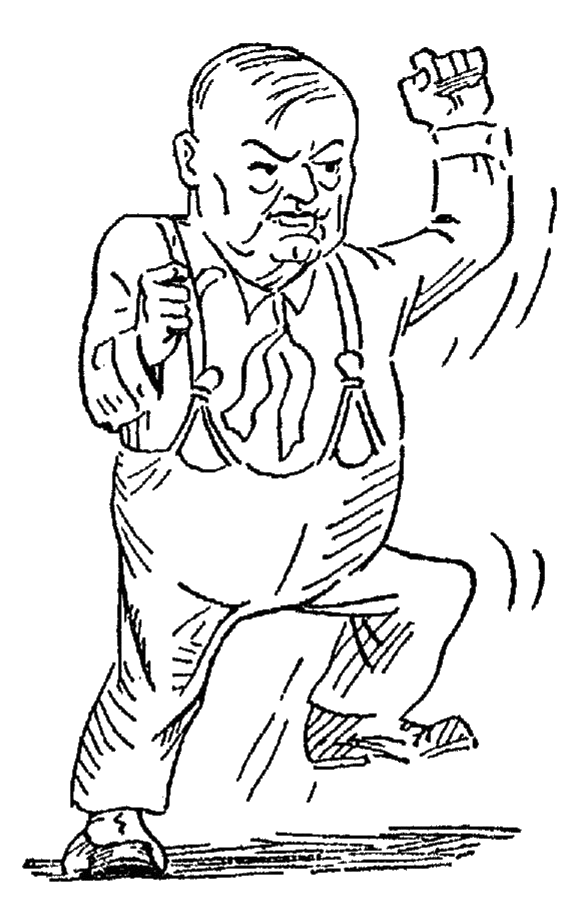
Black-and-white line drawing of a caricatured bald man in rolled-up overalls with suspenders, scowling, with one fist raised and the other fist clenched at his side, mid-stride as if in a fight.Painting

Primary source

The World's Most Famous Court Trial illustration

Unknown engraver · 1925

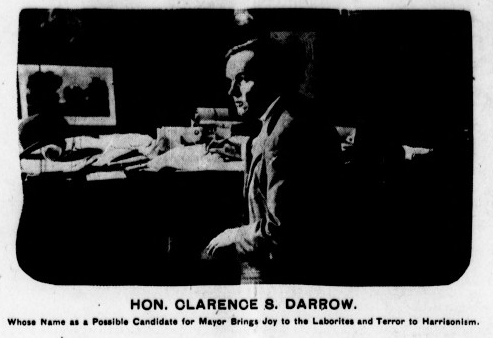
Black-and-white newspaper-style photograph of a man in a suit seated at a desk in a dim room, with a framed picture on the wall behind him. Caption reads: Hon. Clarence S. Darrow, Whose Name as a Possible Candidate for Mayor Brings Joy to the Laborites and Terror to Harrisonism.Photograph

Primary source

Clarence Darrow 1902 portrait

Henry Donovan · 1902

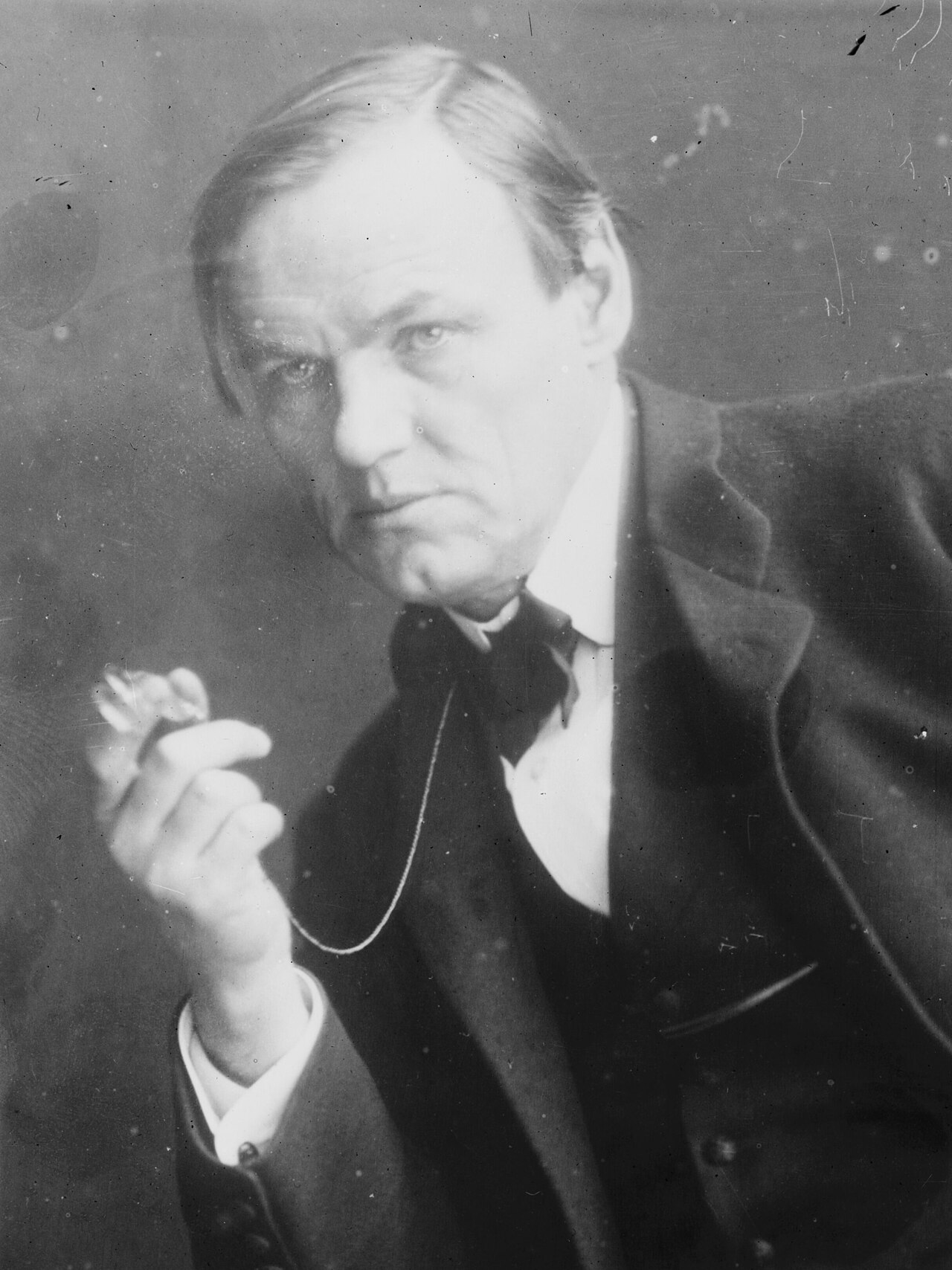
Black-and-white photograph, head and upper body of a middle-aged man with slicked-back hair, dark suit jacket, vest, white collar and dark bow tie. He looks toward the viewer, gesturing with his right hand raised near chest height. A thin chain hangs from his vest.Photograph

Primary source

Clarence Darrow, 3/4 standing, one leg raised

Bain News Service

Black handwritten cursive signature on a white background reading 'Clarence Darrow', with a large looping capital D at the end of the surname.Document

Primary source

Signature of Clarence Darrow

Clarence Darrow

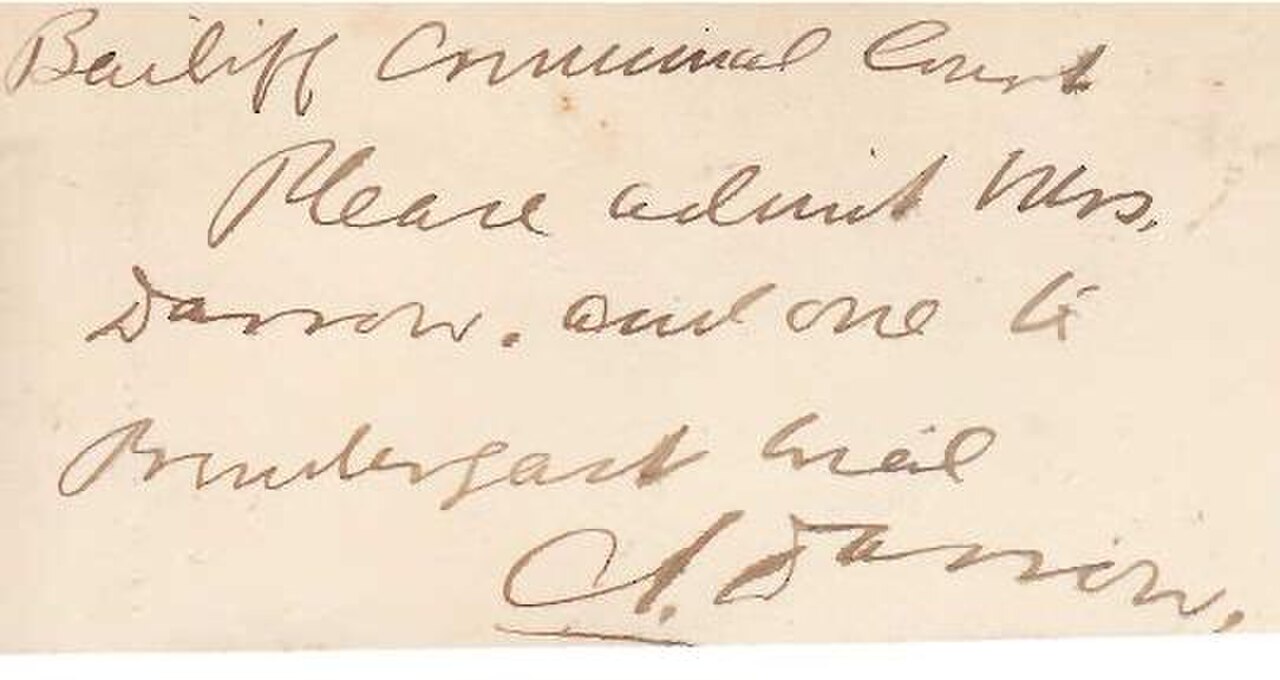
Handwritten note in brown ink on aged cream paper reading: 'Bailiff Criminal Court, Please admit Mrs. Darrow, and one friend' (the last line is hard to read), signed with a cursive signature 'Clarence Darrow' with an underline.Letter

Primary source

Clarence Darrow Papers

Clarence Darrow

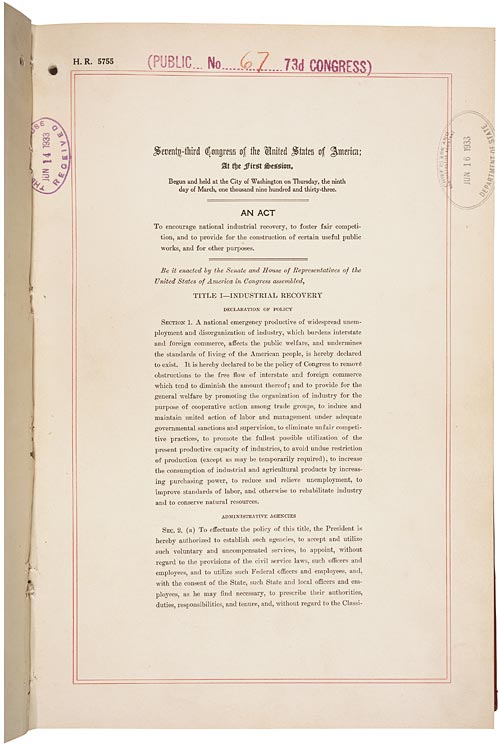
Scanned first page of the enrolled National Industrial Recovery Act, H.R. 5755, 73rd Congress, with the printed title 'An Act to encourage national industrial recovery' and the opening declaration of policy. Purple receiving stamps from June 14 and June 16, 1933 appear on the left and right edges.Document

Primary source

National Industrial Recovery Act

United States Congress · 16 June 1933

Book

Primary source

Realism in Literature and Art

Clarence Darrow · 1899

Book

Primary source

An Eye for an Eye

Clarence Darrow · 1905

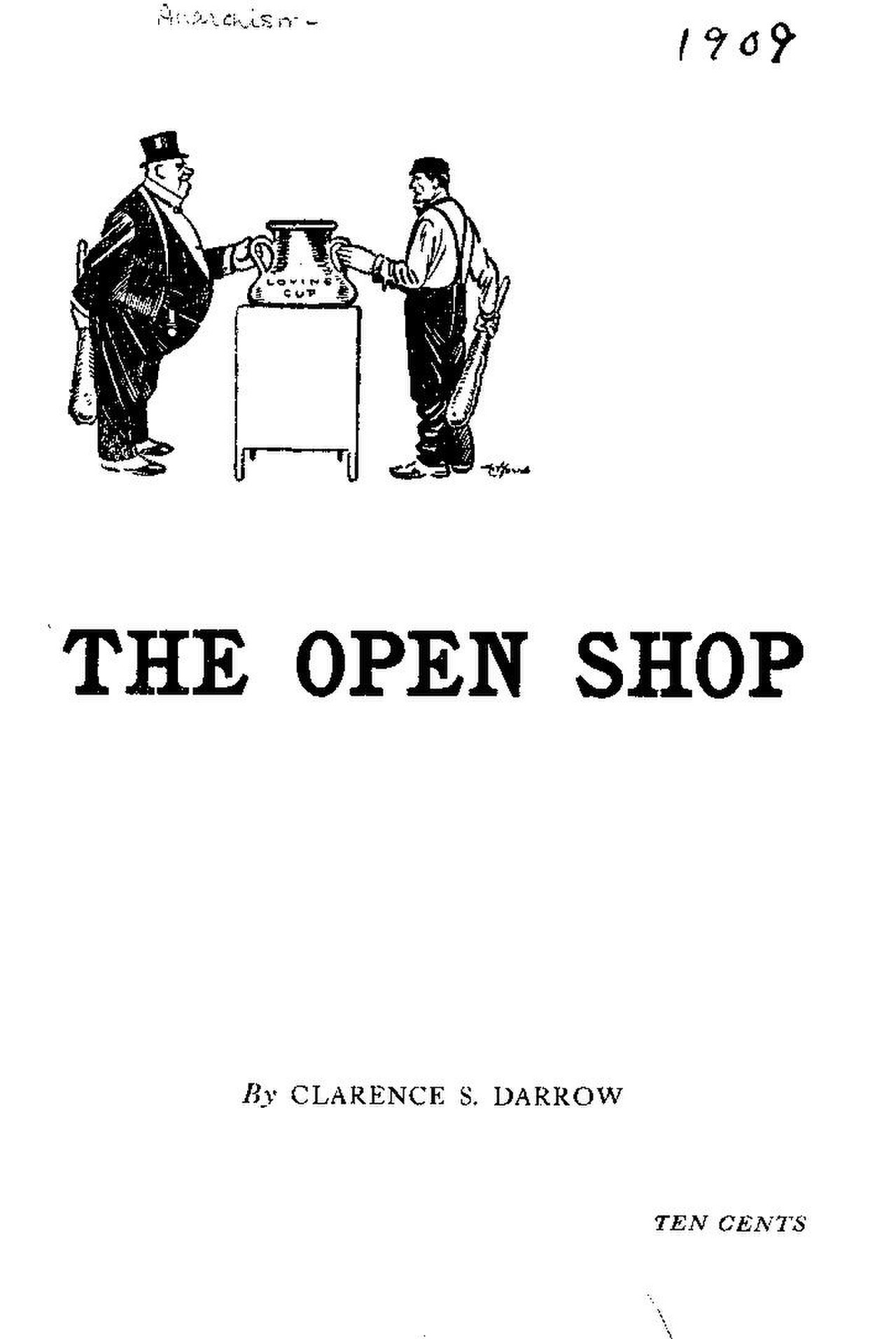
Title page of the pamphlet 'The Open Shop' by Clarence S. Darrow. Handwritten notes read 'Anarchism' and '1909'. A cartoon shows a top-hatted man handing a 'Loving Cup' to a workman across a pedestal. Text reads 'Ten Cents'.Book

Primary source

The Open Shop

Clarence Darrow · 1904

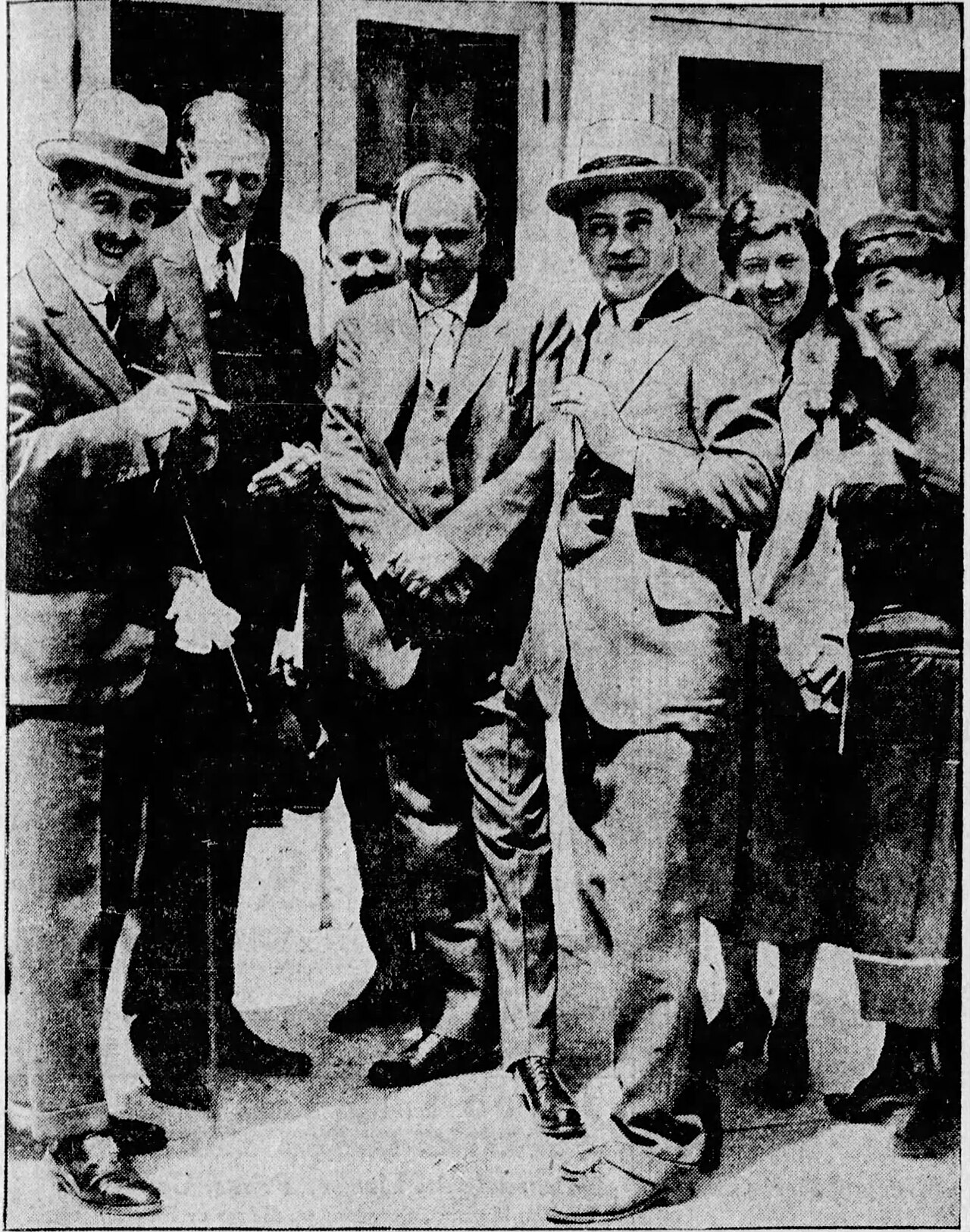
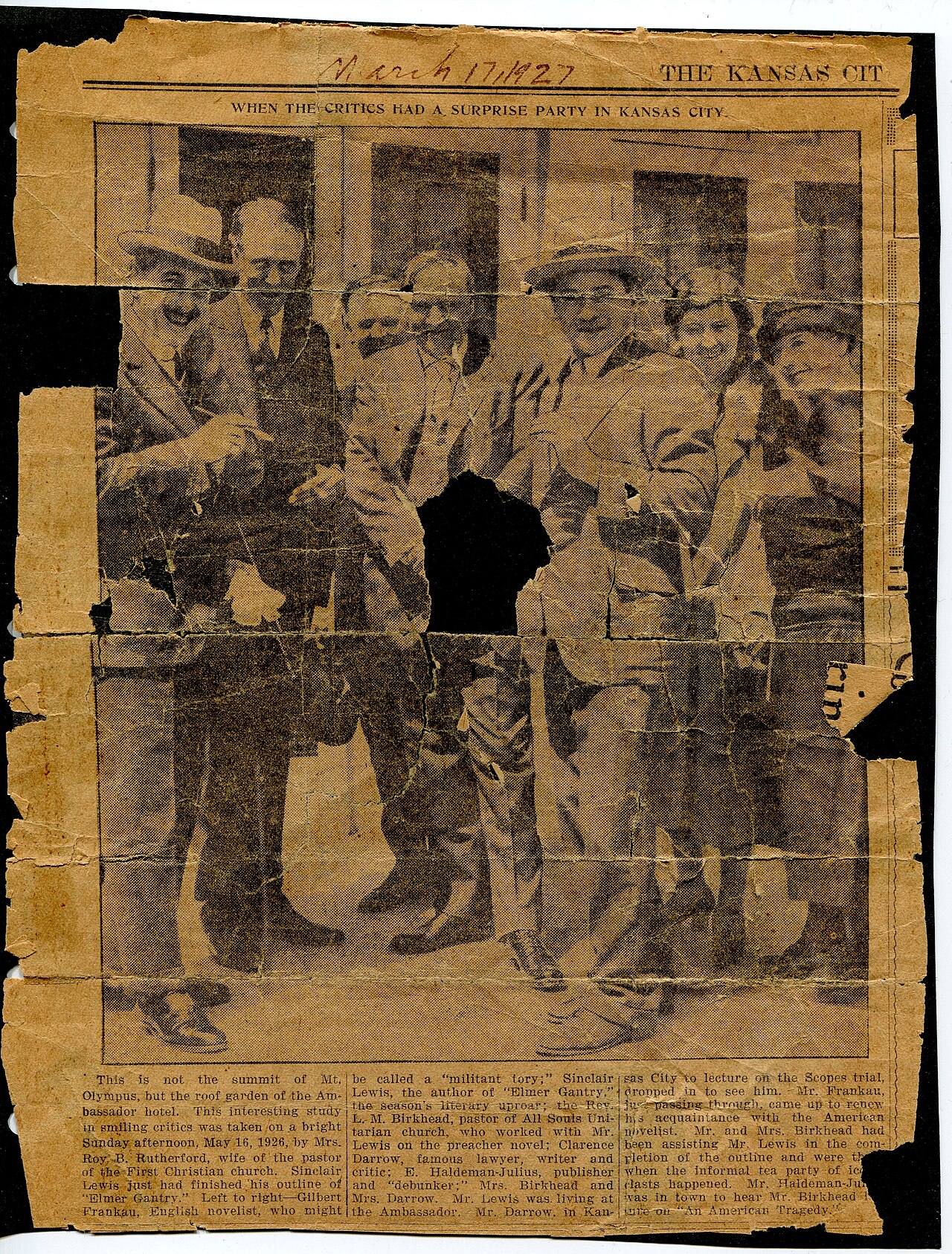
Black-and-white newspaper photo of six men and two women standing outdoors near a building with windows. A man in a hat on the left points, and a man in a light straw boater hat in the center holds another man's jacket sleeve. The women at right smile.Newspaper article

Primary source

When the Critics Had a Surprise Party in Kansas City

17 March 1927

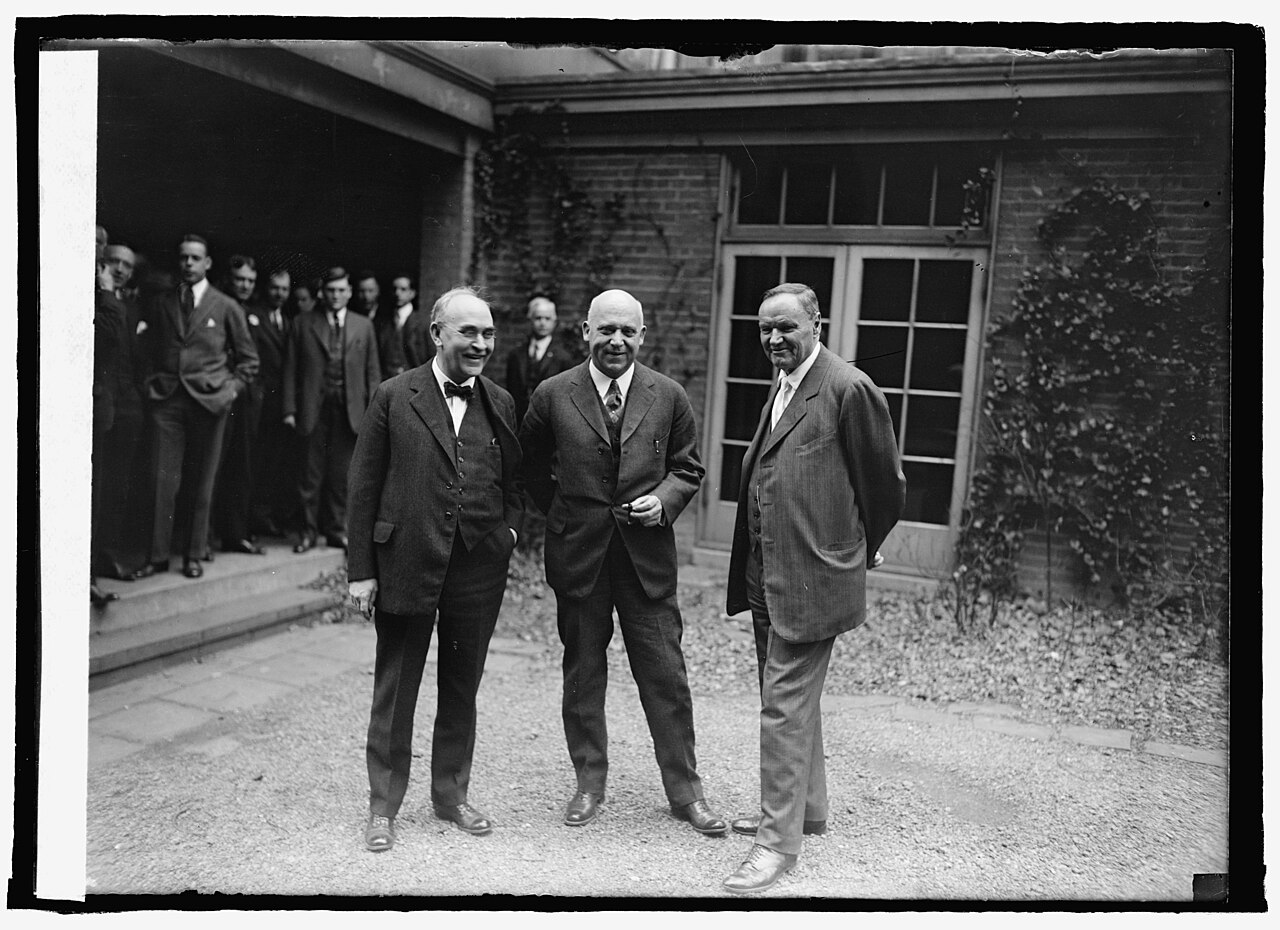
Black and white photograph of three smiling men in suits standing on a gravel courtyard in front of a brick building with tall-paned French doors and ivy. Behind them, a group of men stands under a covered entrance and on steps.Photograph

Primary source

Dr. W.A. White, Ex. Sen. Stanley of Ken. and Clarence Darrow

National Photo Company Collection · 14 March 1925

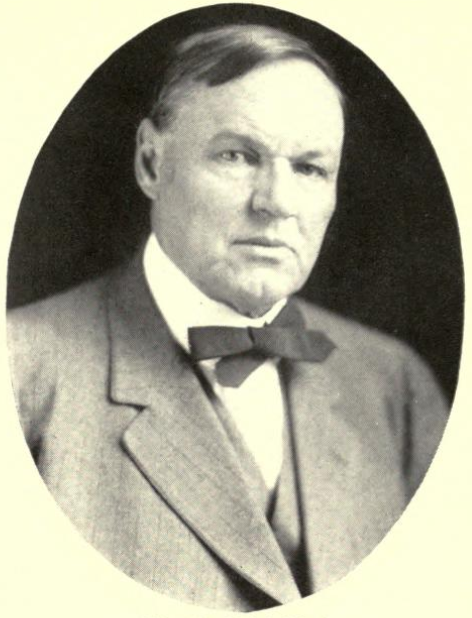
Oval-framed black and white portrait of an older man with short graying hair, wearing a suit jacket, white collar, and dark bow tie, looking toward the viewer against a dark background.Photograph

Primary source

Clarence Darrow, 1920 Portrait by Mabel Sykes

Mabel Sykes · 1920

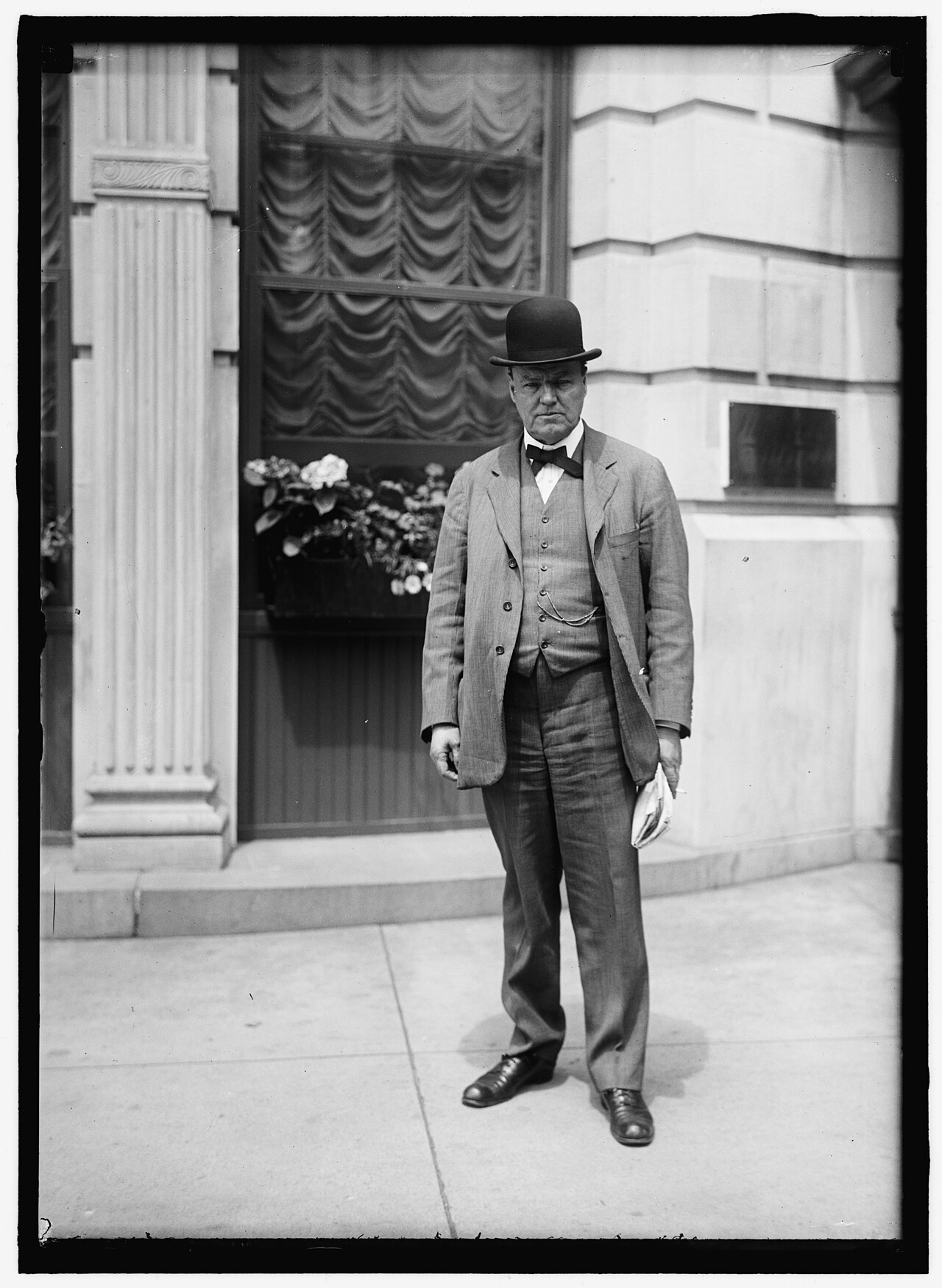
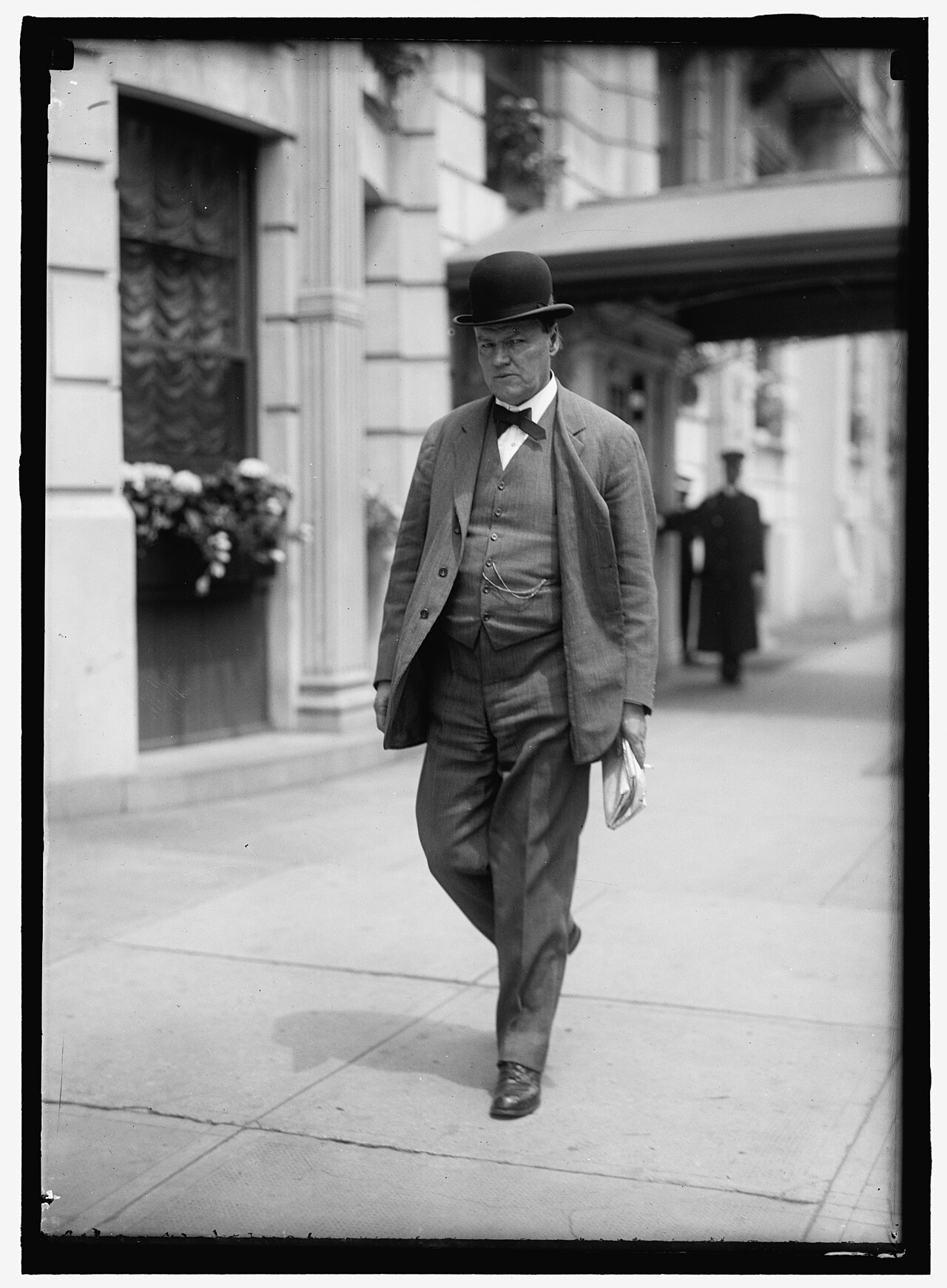
Black-and-white full-length photograph of a man standing on a sidewalk in front of a stone building with a column and a flower box. He wears a bowler hat, a light suit with vest, a pocket watch chain, a bow tie, and holds a folded paper in one hand.Photograph

Primary source

Darrow, Clarence, Attorney

Harris & Ewing

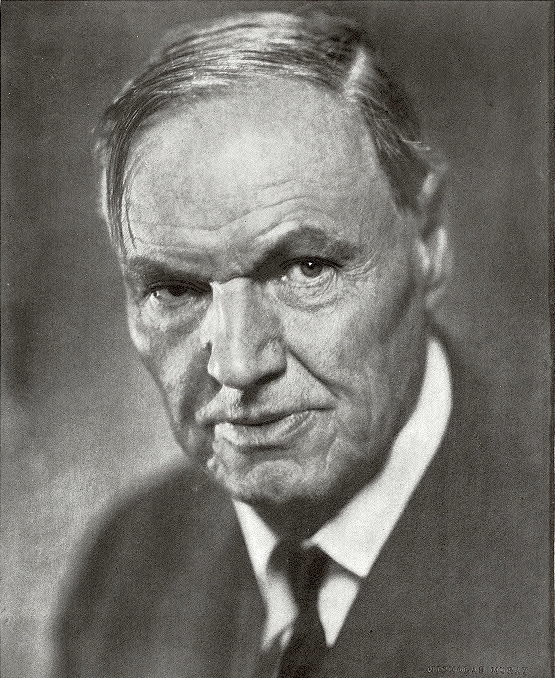
Black and white portrait photograph of an older man with slicked-back hair, furrowed brow, and a pensive, slightly frowning expression. He wears a dark suit, white collar, and dark tie, against a dark background.Photograph

Primary source

Clarence S. Darrow Portrait

Unknown · 1920s

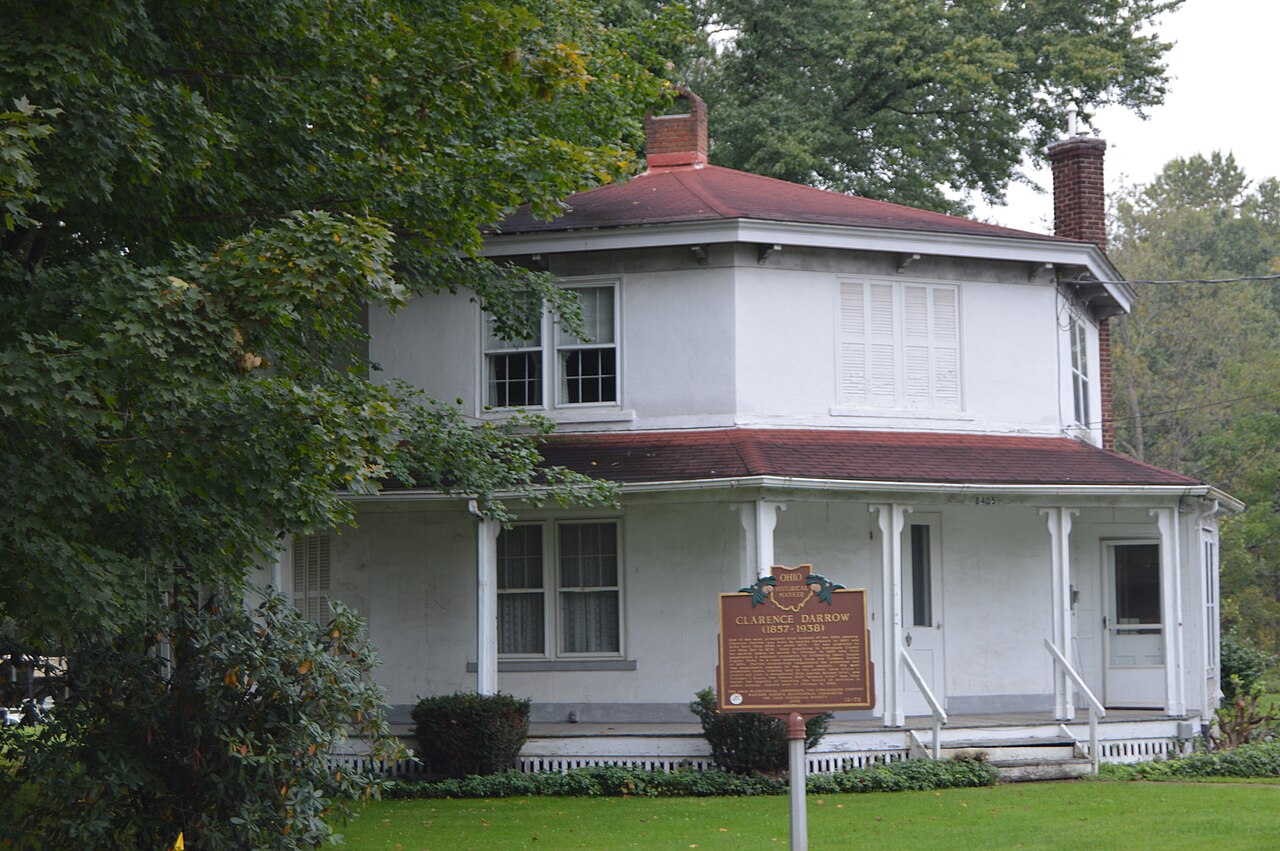
Two-story white octagonal house with a red hip roof, a wraparound front porch, and a brick chimney. A brown historical marker stands on the front lawn; a large tree is at left.Artifact

Secondary source

Clarence Darrow Octagon House

Amirus Darrow · 1854

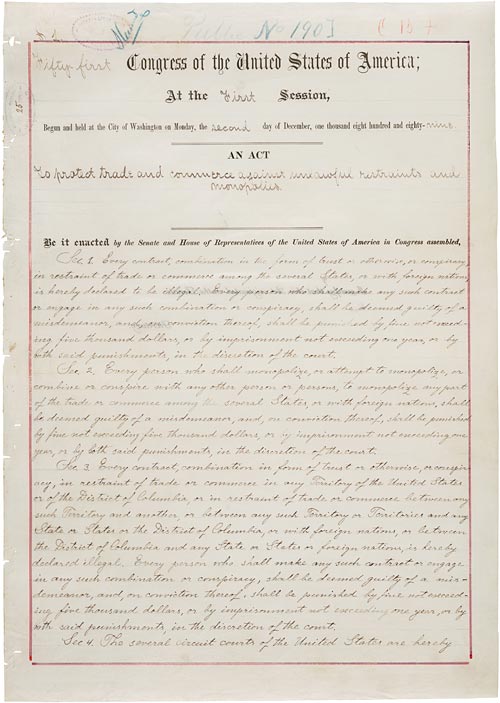
Handwritten enrolled manuscript of the Act of July 2, 1890, headed 'Fifty-first Congress of the United States of America; At the First Session' with the title 'An Act to protect trade and commerce against unlawful restraints and monopolies,' and the opening sections written in long-hand script.Document

Primary source

Sherman Anti-Trust Act

2 July 1890

Book

Primary source

A Persian Pearl and Other Essays

Clarence Darrow · 1899

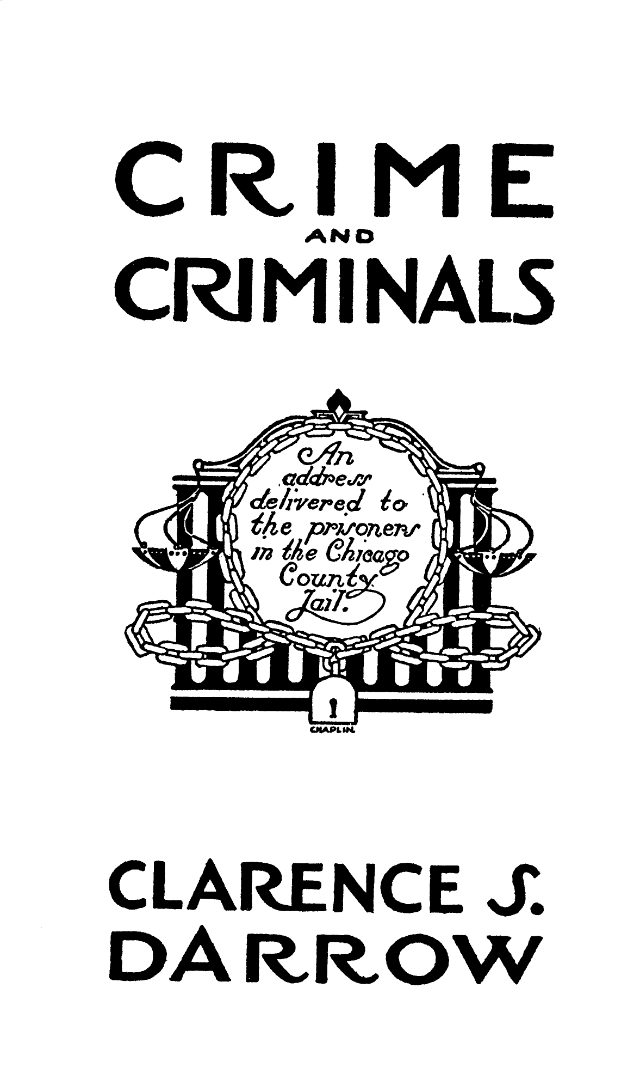
Crime and Criminals: Address to the Prisoners in the Cook County JailSpeech

Primary source

Crime and Criminals: Address to the Prisoners in the Cook County Jail

Clarence Darrow · 1910

Debate: Is Man a Machine?Speech

Primary source

Debate: Is Man a Machine?

Clarence Darrow · 1927

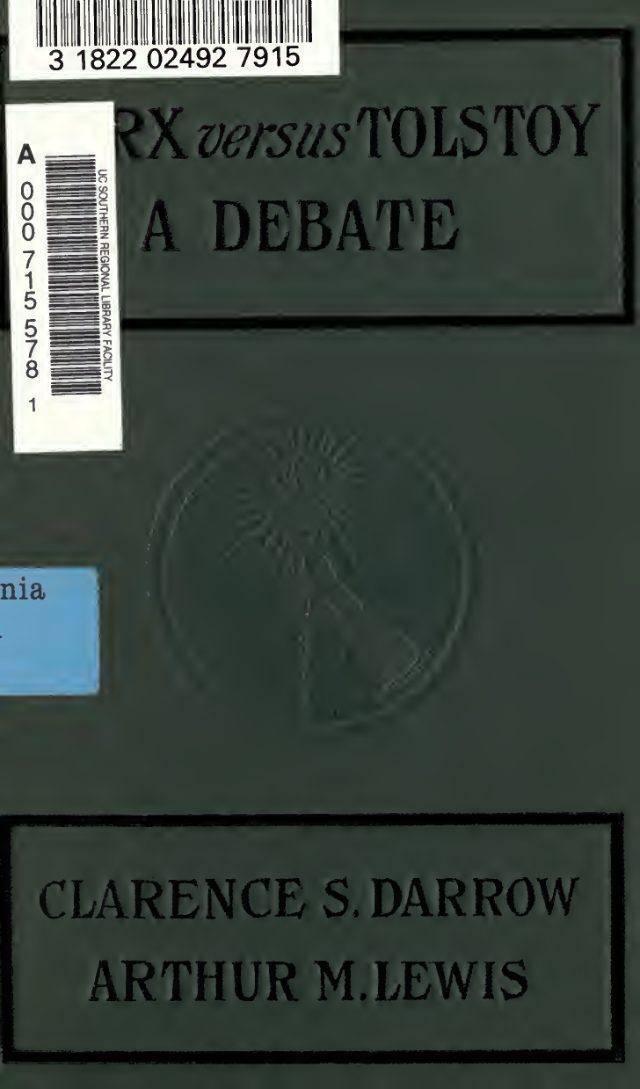
Marx versus Tolstoy: A DebateSpeech

Primary source

Marx versus Tolstoy: A Debate

Clarence Darrow · 1911

Book

Primary source

Complete Work of Clarence Darrow

Clarence Darrow · 1919

Speech

Primary source

In Memory of John P. Altgeld: Address at the Funeral

Clarence Darrow · 1902

Document

Primary source

The World's Most Famous Court Trial, Day 7

1925

Voltaire: A LectureSpeech

Primary source

Voltaire: A Lecture

Clarence Darrow · 1925

Address of Clarence Darrow in the Trial of Arthur PersonDocument

Primary source

Address of Clarence Darrow in the Trial of Arthur Person

Clarence Darrow · 24 April 1920

The Skeleton in the ClosetBook

Primary source

The Skeleton in the Closet

Clarence Darrow · 1914

In Memoriam: John Peter AltgeldDocument

Primary source

In Memoriam: John Peter Altgeld

Clarence Darrow · 1902

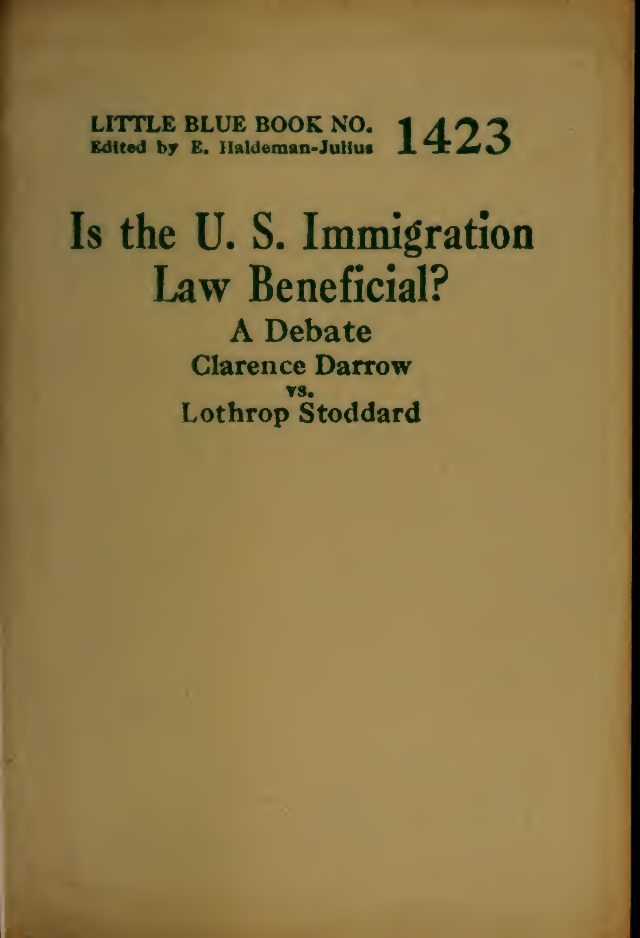
Is the U.S. Immigration Law Beneficial? A DebateBook

Primary source

Is the U.S. Immigration Law Beneficial? A Debate

Clarence Darrow · 1929

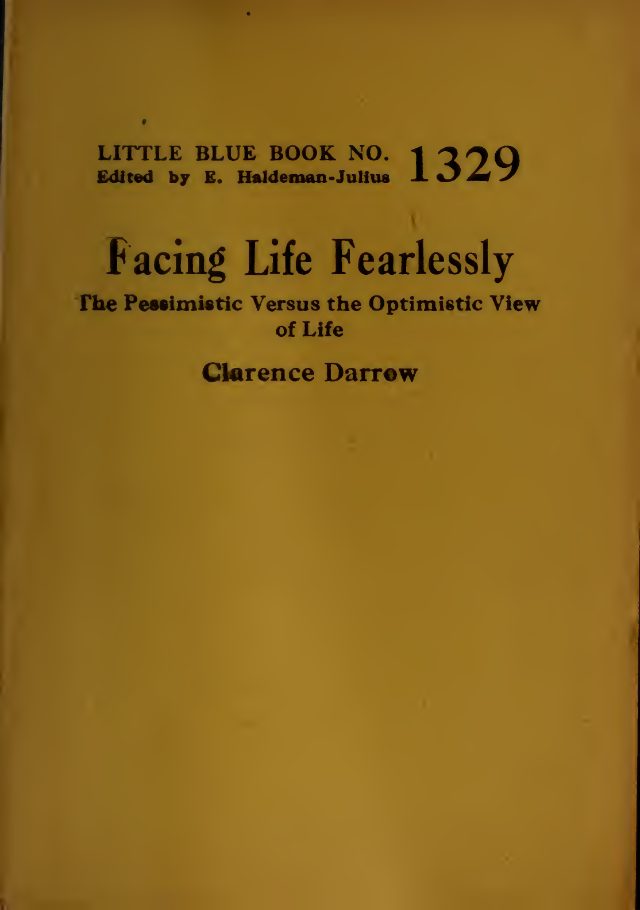
Facing Life Fearlessly: The Pessimistic Versus the Optimistic View of LifeSpeech

Primary source

Facing Life Fearlessly: The Pessimistic Versus the Optimistic View of Life

Clarence Darrow · 1929

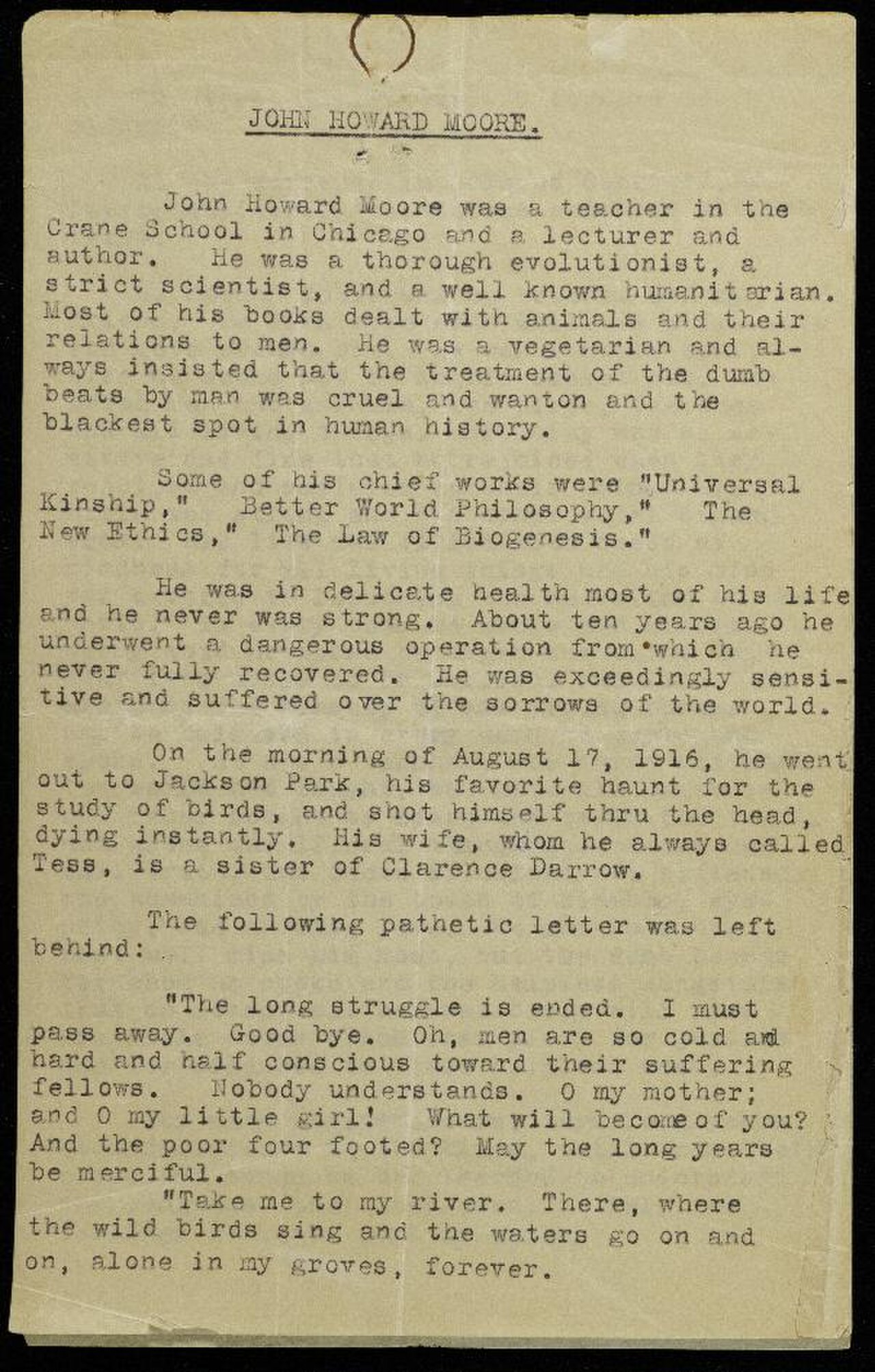
Typed page titled 'JOHN HOWARD MOORE' describing Moore as a Chicago teacher, evolutionist, and humanitarian, listing his works, and recounting his death in Jackson Park in 1916 with a farewell letter quoted. Yellowed paper with a circular mark at top.Document

Primary source

Eulogy for J. Howard Moore

Clarence Darrow · 1916

Newspaper clipping from The Kansas Citizen, March 17, 1927, headed 'When the Critics Had a Surprise Party in Kansas City.' A group of smiling men and women in hats and suits stands on a rooftop, with a caption describing the roof garden of the Ambassador hotel below the photo.Photograph

Primary source

Critics' Surprise Party in Kansas City

Tzetzes · 1926 (published 1927)

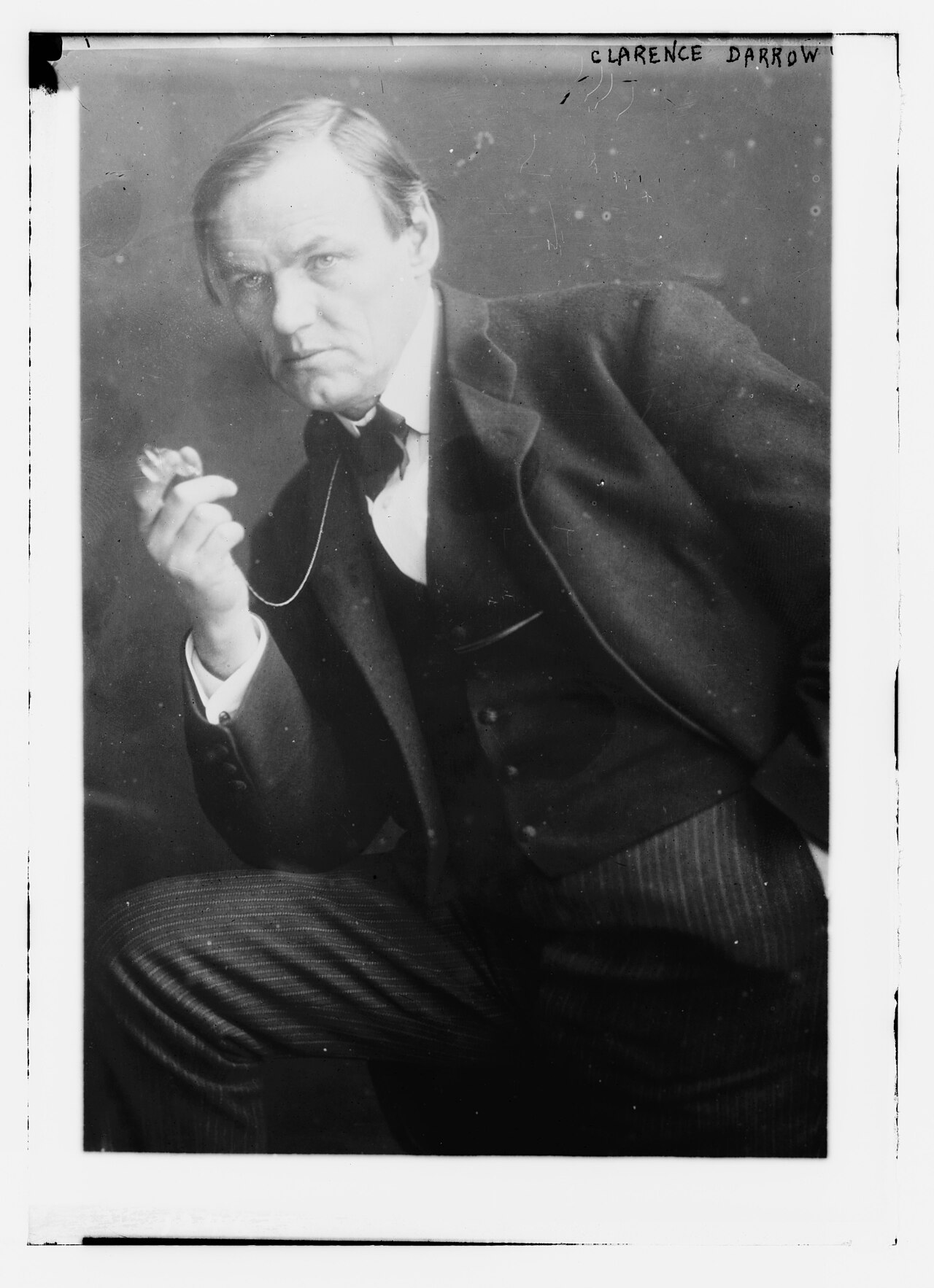
Black and white photograph of a man seated with one leg crossed over the other, holding a cigarette or small object in his raised right hand. He wears a dark suit, vest, bow tie, and a watch chain, and gazes toward the camera. The name CLARENCE DARROW is written in the top right corner of the image.Photograph

Primary source

Clarence Darrow, Three-Quarter Standing, One Leg Raised

Bain News Service · c. 1900

The Ordeal of ProhibitionBook

Primary source

The Ordeal of Prohibition

Clarence Darrow · 1925

Why I Am an AgnosticBook

Primary source

Why I Am an Agnostic

Clarence Darrow · 1929

Book

Primary source

Autobiography of Mother Jones

Mary Field Parton (editor) · 1925

Speech

Primary source

Industrial Conspiracies

Clarence Darrow · 10 September 1912

Black-and-white photograph of a heavyset man in a bowler hat, dark suit with vest, bow tie, and watch chain, walking on a city sidewalk carrying a folded paper. A uniformed doorman stands in the background beside a building entrance.Photograph

Primary source

Clarence Darrow, Attorney

Harris & Ewing · 1915

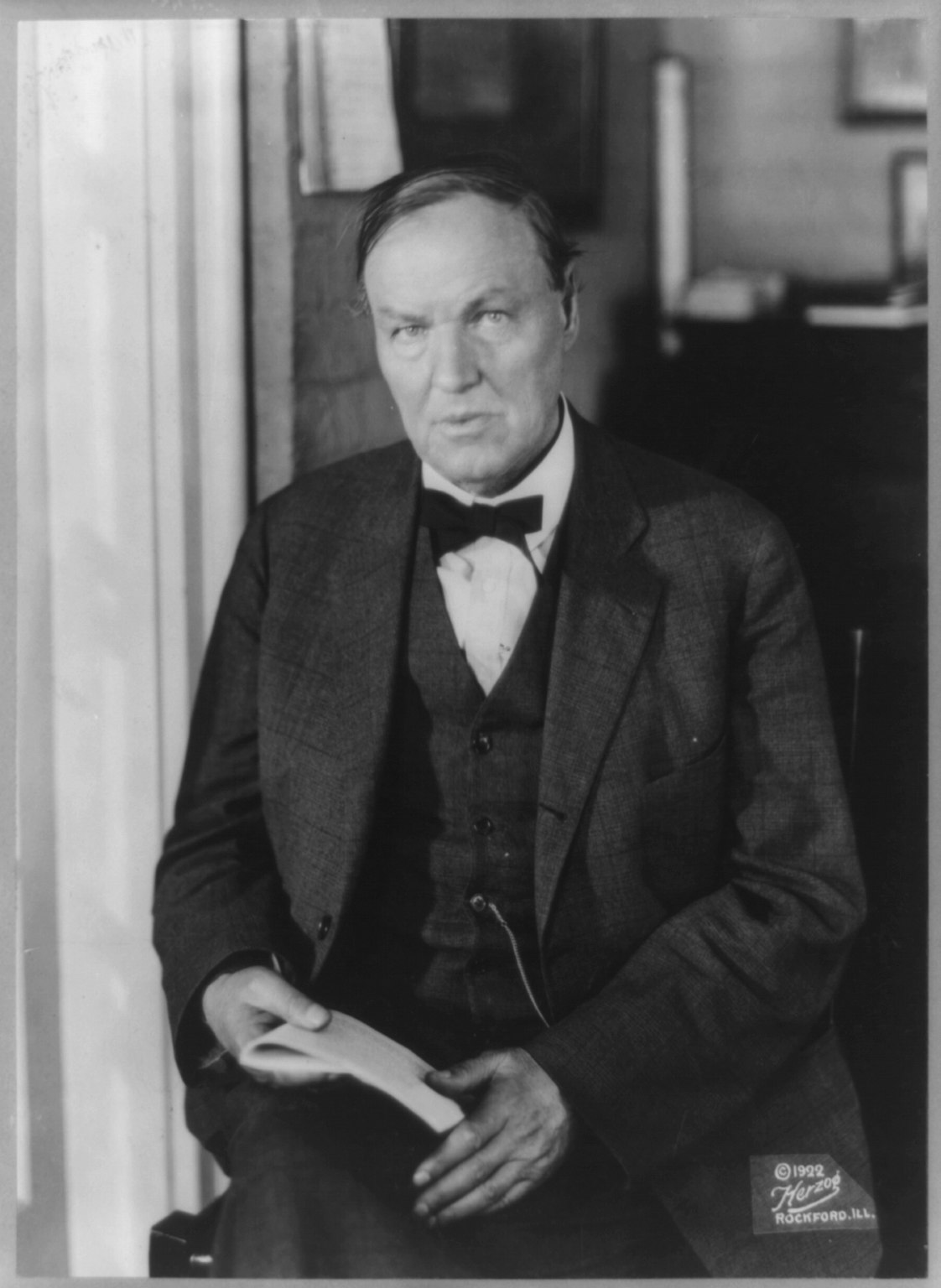
Black and white photograph of an older man with receding hair seated in a dark suit, vest, and bow tie, holding a folded paper in his hands. A curtain is on the left and a dark room is behind him. A copyright stamp reads 1922 Herzog Rockford, Ill.Photograph

Primary source

Clarence Darrow, 1857-1938

Herzog, Rockford, Illinois · 1922

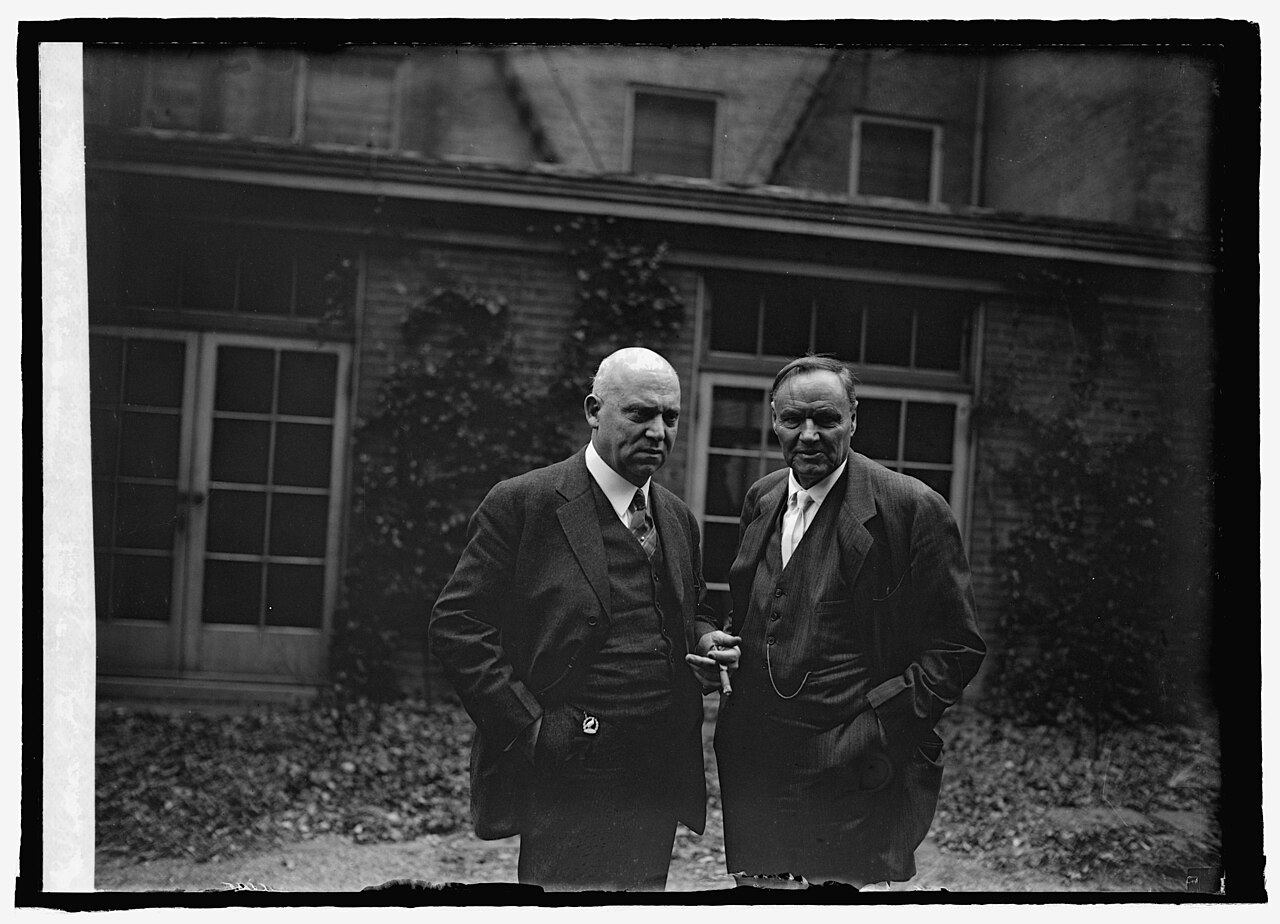
Black and white photograph of two men in dark suits standing outdoors in front of a brick building with large multi-pane windows and ivy on the wall. The man on the left is bald with a light-colored shirt and tie, and holds a cigar. The man on the right has gray hair, a striped tie, and hands in his pockets.Photograph

Primary source

Ex-Senator Stanley and Clarence Darrow, Washington

National Photo Company Collection · 14 March 1925

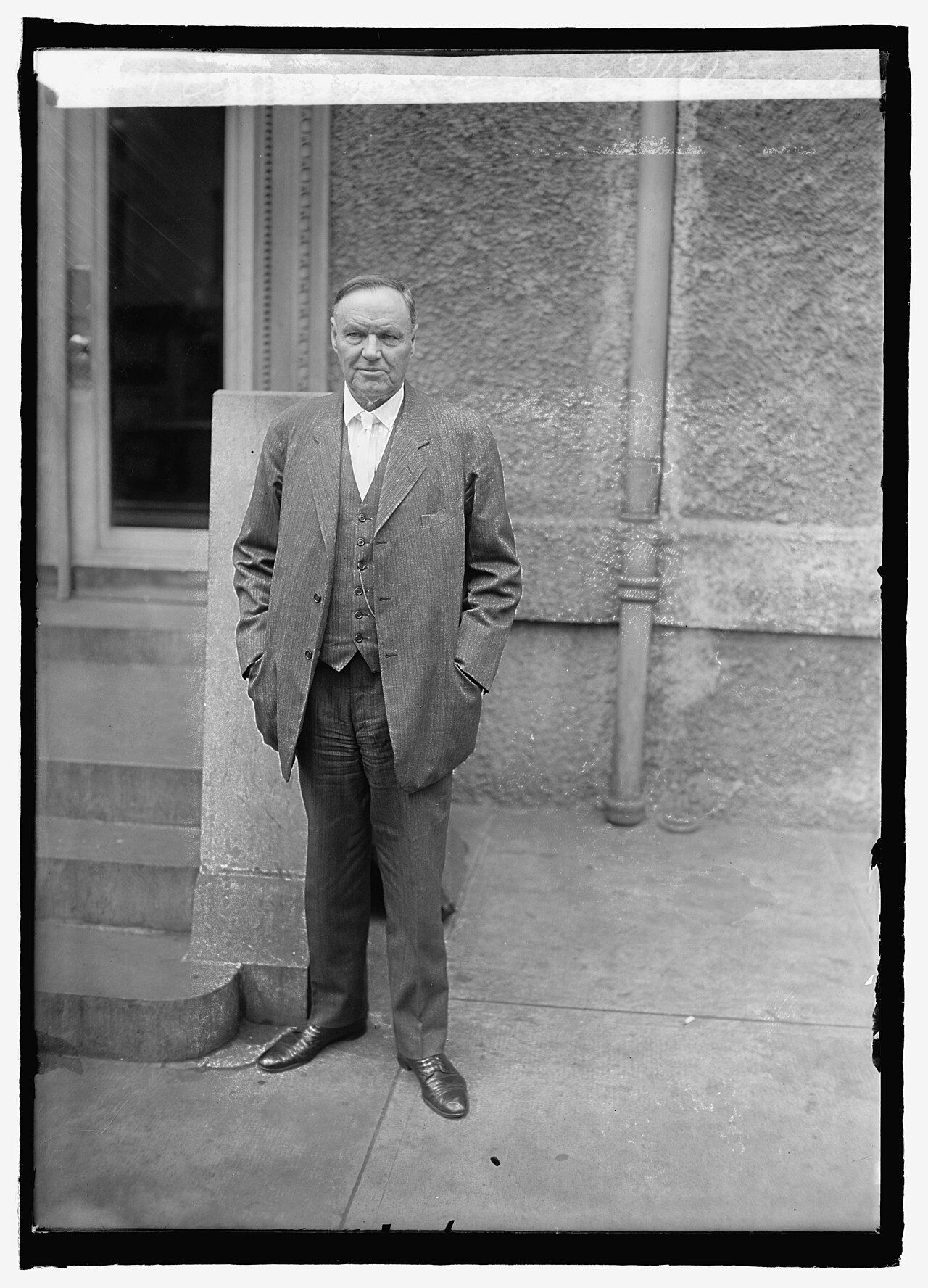
Black and white photograph of an older man in a pinstriped three-piece suit and light tie, standing with his hands in his pockets in front of a stone wall and a doorway with steps. He is leaning slightly against a stone pillar.Photograph

Primary source

Clarence Darrow at Cosmos Club, Washington

National Photo Company Collection · 14 March 1925

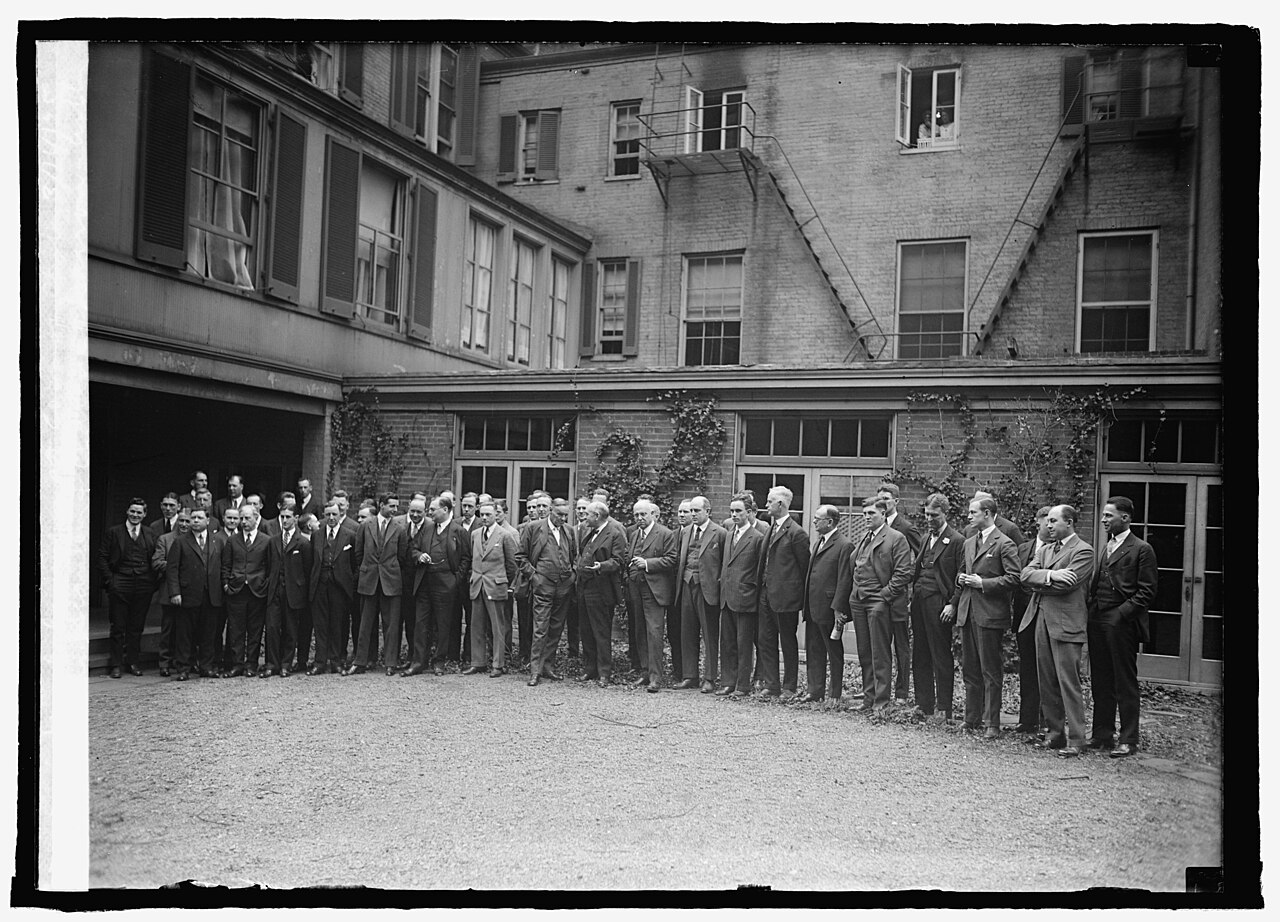
Black-and-white photograph of a large group of about 40 men in dark suits and hats standing in a gravel courtyard before a multi-story brick building with fire escapes and glass-paneled doors. The men are arranged in several rows, some gazing toward the camera.Photograph

Primary source

Ex-Senator Stanley and Darrow with Washington Lawyers, Cosmos Club

National Photo Company Collection · 14 March 1925

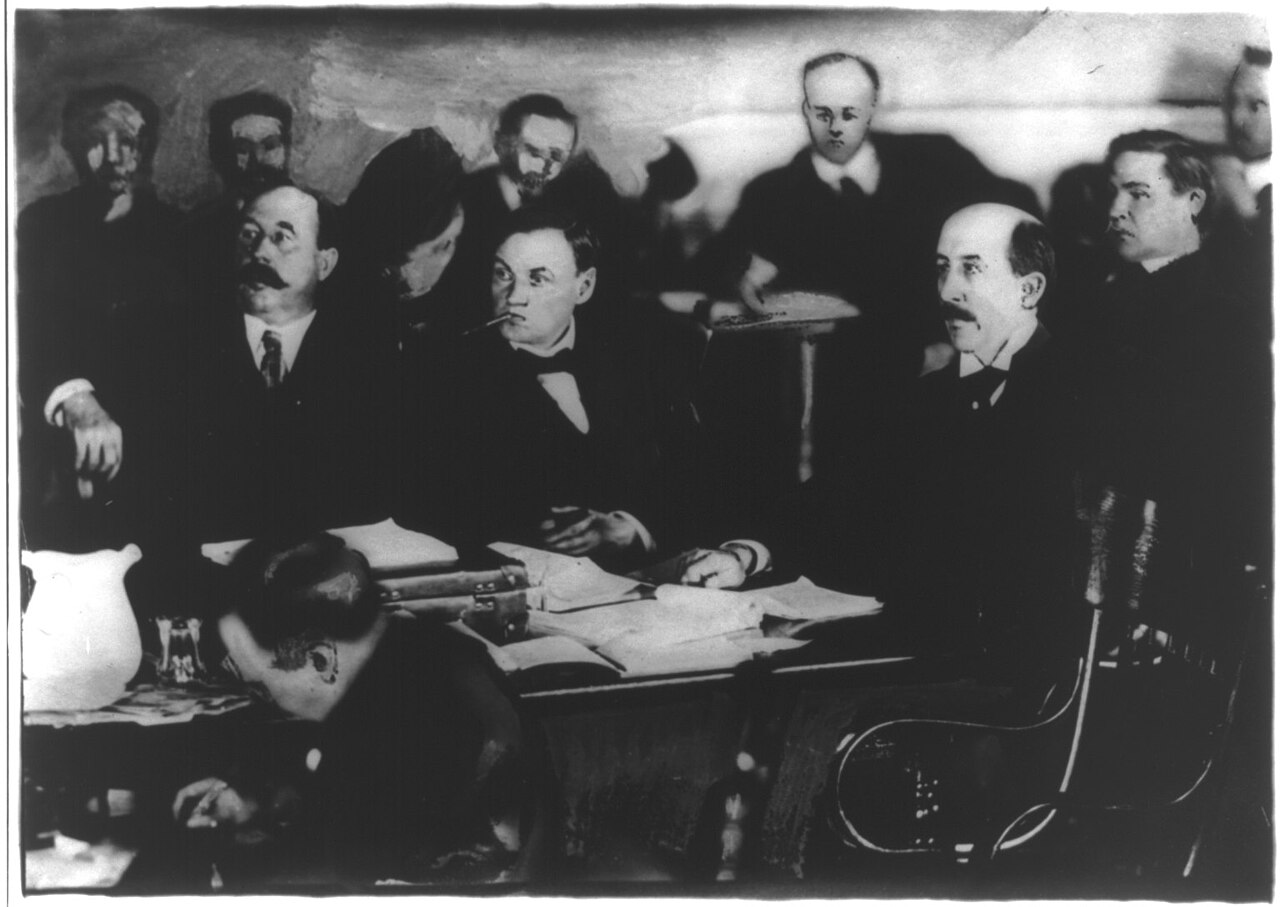
Black-and-white photograph of a courtroom scene with several men seated at a table covered with papers, one in the center smoking a cigarette, and others standing or seated behind them in dark suits.Photograph

Primary source

Bill Haywood with Defense Counsel Darrow, Wilson and Richardson

George Grantham Bain Collection · 1915

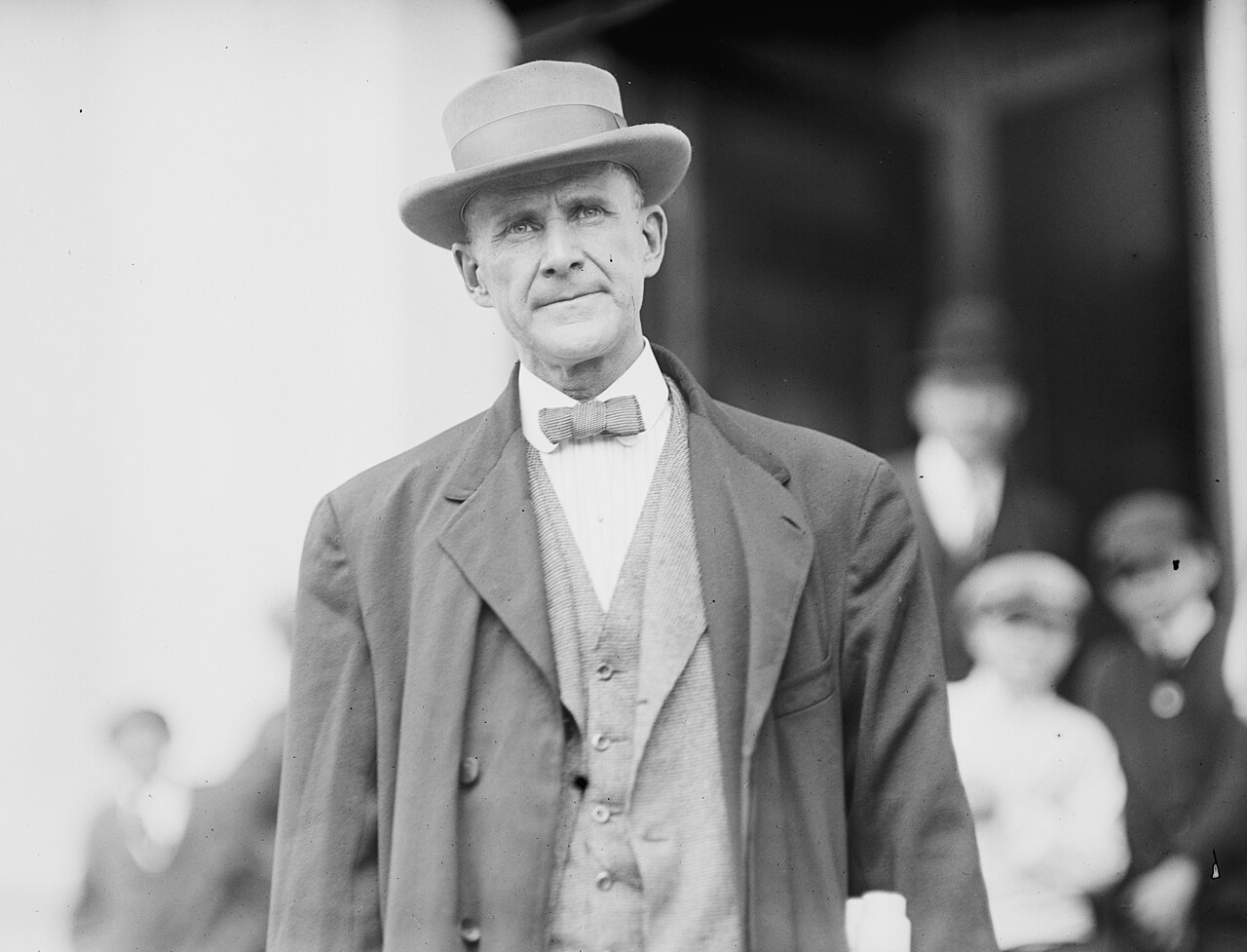
Black-and-white photograph of a man in a wide-brimmed hat, bow tie, and long overcoat over a vest, looking toward the camera. Blurred people stand behind him in an outdoor setting.Photograph

Primary source

Eugene Debs, 1912 Campaign Portrait

1912

Document

Primary source

Pettibone v. Nichols, Supreme Court Opinion

3 December 1906

Document

Primary source

Blair v. Chicago

2 April 1906

Document

Primary source

United States ex rel. Turner v. Williams

16 May 1904

The Chicago Anarchists of 1886: The Crime, the Trial, and the PunishmentDocument

Primary source

The Chicago Anarchists of 1886: The Crime, the Trial, and the Punishment

Joseph E. Gary · April 1893

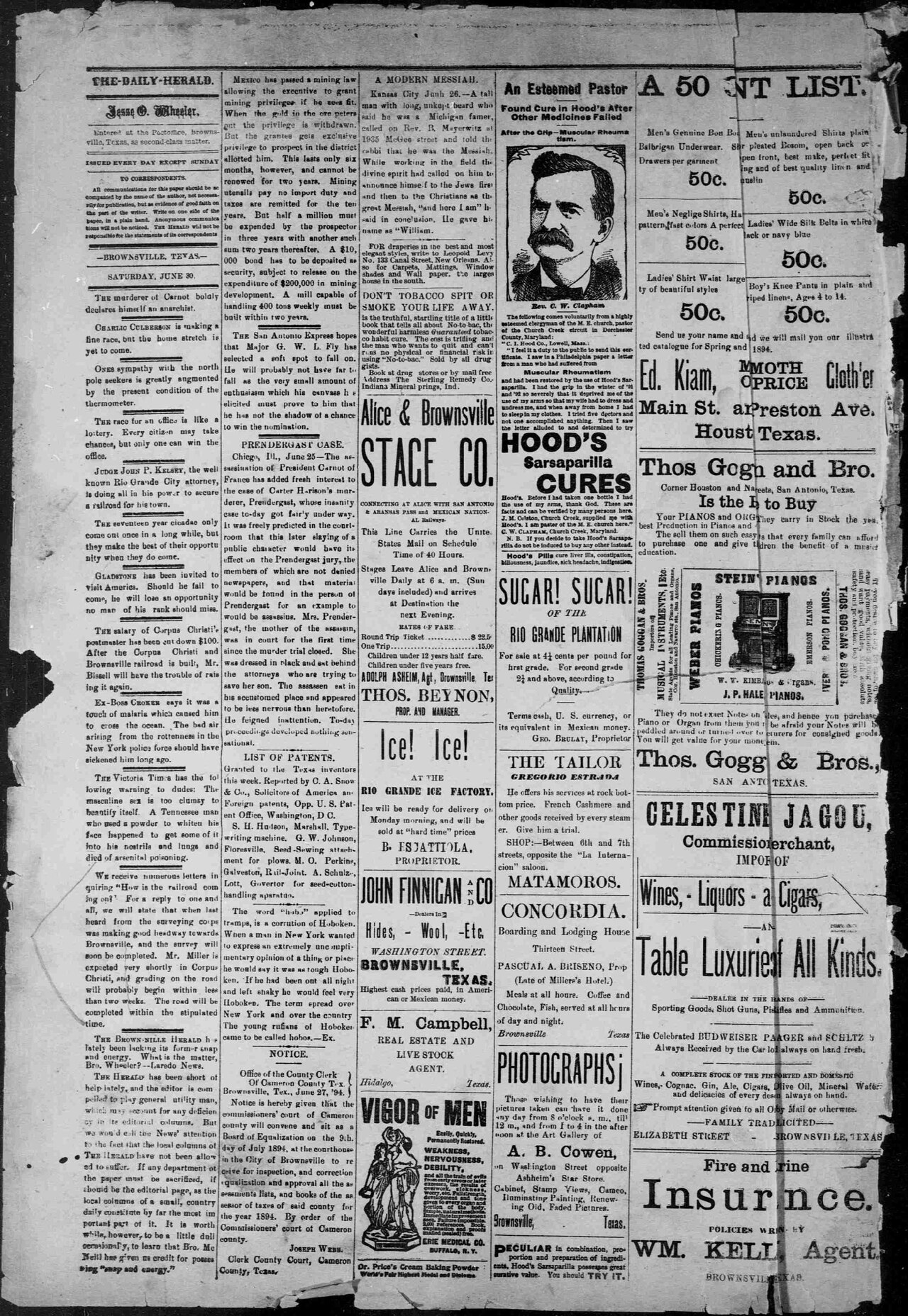
Full front page scan of the Daily Herald newspaper from Brownsville, Texas, dated June 30, 1894, with many columns of text, advertisements, and headlines including an article titled Prendergast Case, and a masthead reading The Daily Herald, Jesse O. Wheeler.Newspaper article

Primary source

Daily Herald (Brownsville, Texas), 30 June 1894, Prendergast case

30 June 1894

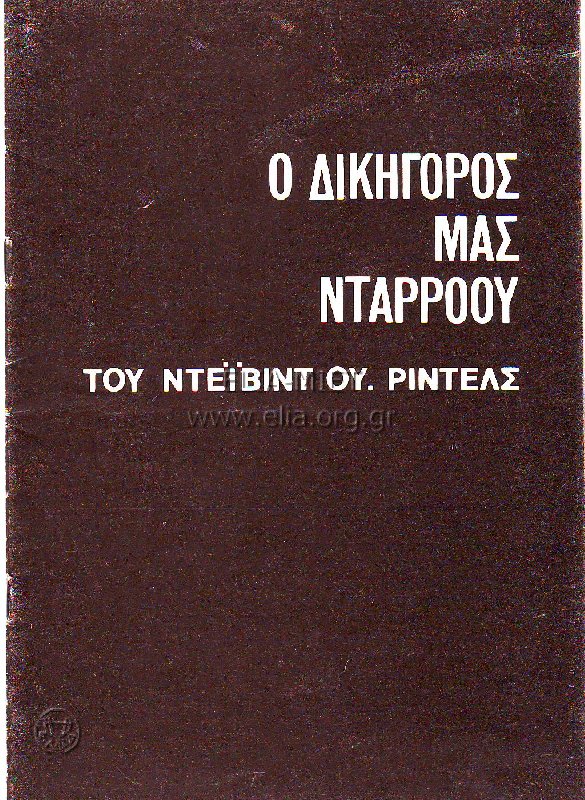
Front cover of a dark brown booklet with white Greek capital lettering reading 'Ο ΔΙΚΗΓΟΡΟΣ ΜΑΣ ΝΤΑΡΡΟΟΥ' and beneath it 'ΤΟΥ ΝΤΕΪΒΙΝΤ ΟΥ. ΡΙΝΤΕΛΑΣ'. A faint watermark reads www.elia.org.gr and a small circular emblem appears in the lower left corner.Book

Secondary source

Our Lawyer Darrow

David Rintels

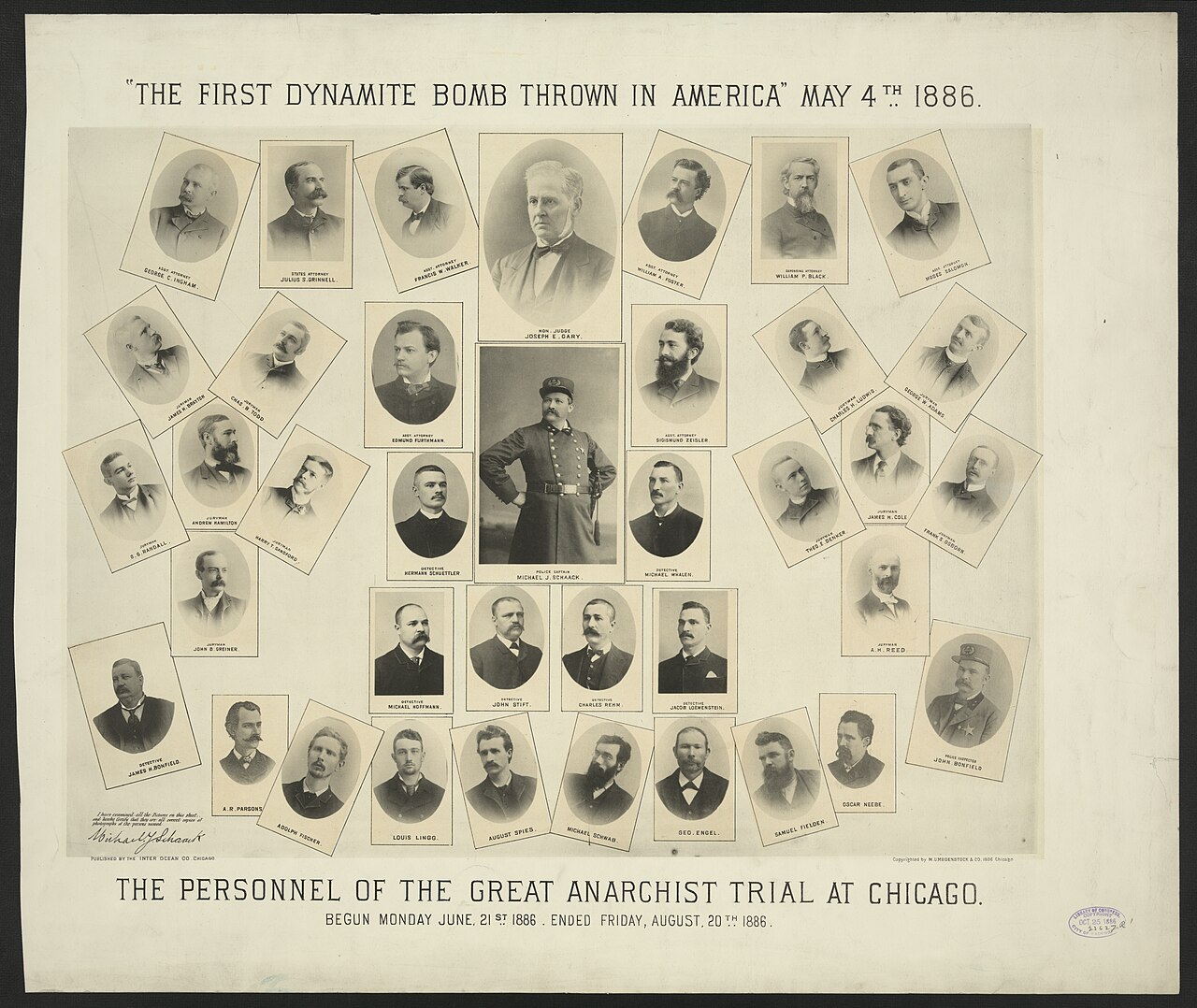
Lithographic print titled 'The first dynamite bomb thrown in America, May 4th 1886, The personnel of the great anarchist trial at Chicago.' It arranges oval and framed portrait photographs of trial figures in a loose ring around central portraits of Judge Joseph E. Gary and Police Captain Michael J. Schaack, with names printed beneath each. Caption text runs across the top and bottom, with a publisher credit and a small signature at lower left.Artifact

Primary source

The First Dynamite Bomb Thrown in America

Popular Graphic Arts · 1886

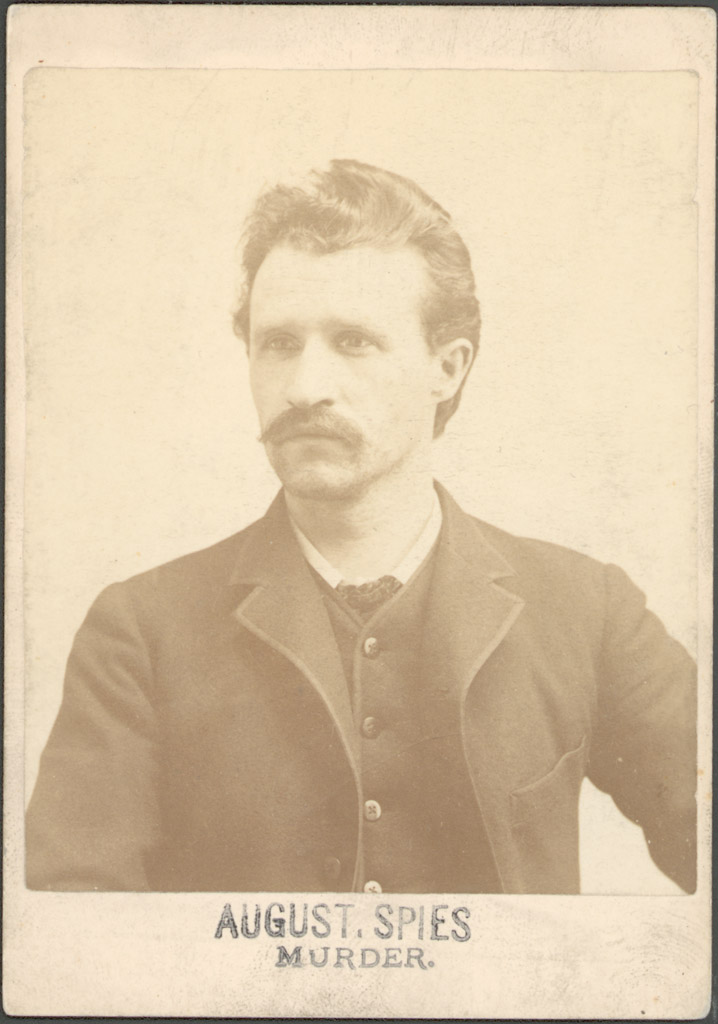
Sepia-toned photographic portrait of a man with swept-back hair and a handlebar mustache, wearing a dark jacket, vest, and tie, looking to his left. Printed below him in capital letters are the words AUGUST SPIES and MURDER.Photograph

Primary source

Portrait of August Spies

1886

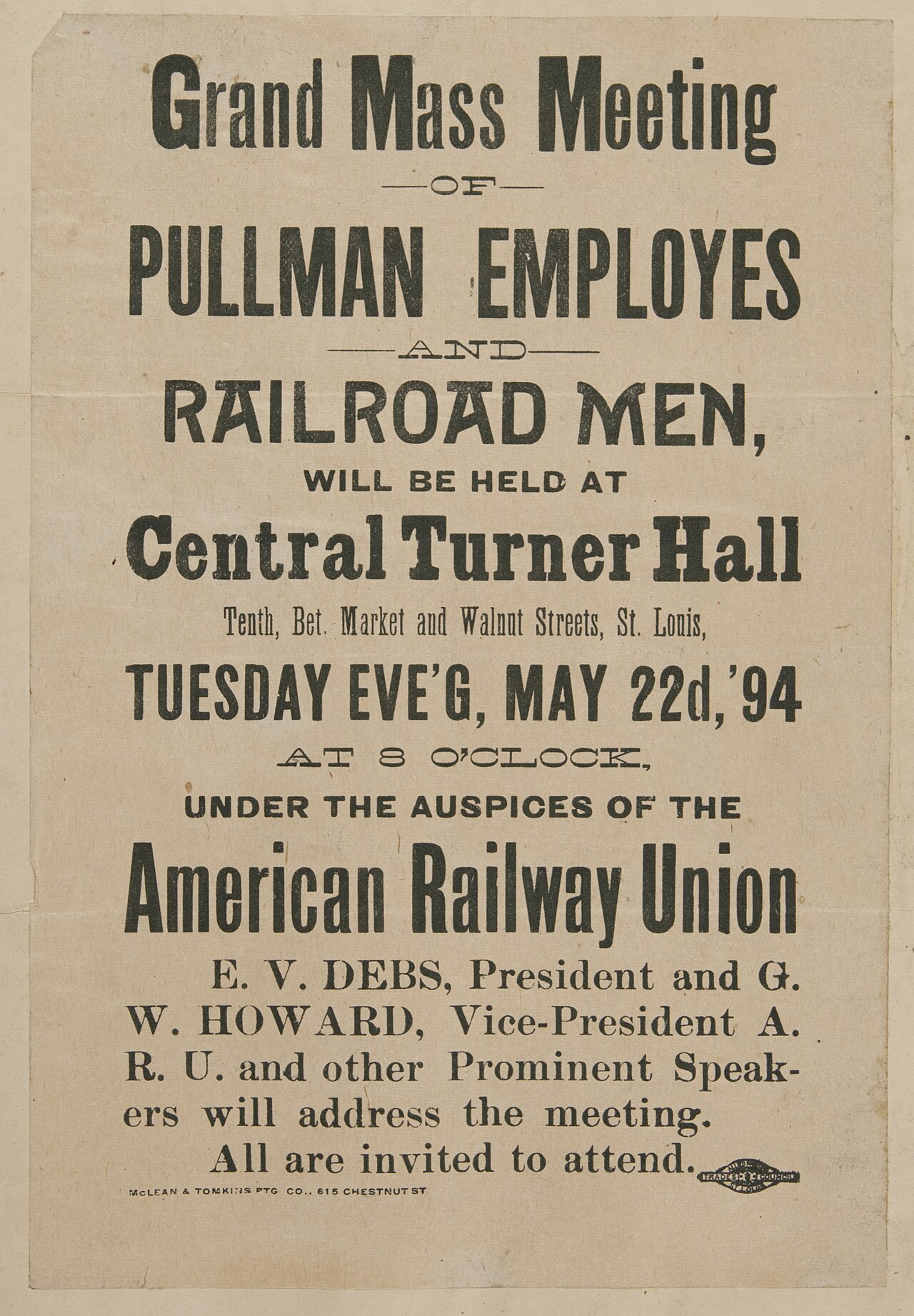
Printed broadside titled 'Grand Mass Meeting of Pullman Employes and Railroad Men' announcing a meeting at Central Turner Hall, Tenth between Market and Walnut Streets, St. Louis, Tuesday evening May 22, 1894 at 8 o'clock, under the auspices of the American Railway Union, with speakers E. V. Debs and G. W. Howard. Printed by McLean & Tomkins, 615 Chestnut St.Document

Primary source

Pullman Strike Mass Meeting Broadside

American Railway Union · 1894-05-22

Want the full shelf? Chat with Clarence Darrow in the app and open the Sources panel — every quote links back to the original.

Use Clarence Darrow in class

1 collection

A ready-made collection from the Humy team that features Clarence Darrow. Preview it, then try it free.

Trusted by educators worldwide

Conversations
375,000+
Real exchanges between students and historical figures
Messages exchanged
4,142,000+
Across every figure, classroom and language
Historical figures
100,000+
Each informed by a curated biography and selected sources
Languages supported
50+
From English and Spanish to Arabic and Korean

Paying customers

Used by 98 schools and universities

Partner school logo
Tecnológico de Monterrey logo
Hyper Island logo
Partner school logo
Chambersburg Area School District logo
Broward County Public Schools logo
Nebo School District logo
National Louis University logo
South Florida PBS logo
Punahou School logo
University of Wisconsin–River Falls logo
Partner school logo
Partner school logo
Archbishop Mitty High School logo
Kingsburg High School logo
Norwalk Public Schools logo
Partner school logo
Connections logo
Partner school logo
Moore Public Schools logo
Partner school logo
Partner school logo
Partner school logo
Partner school logo
Robbinsville Public Schools logo
Partner school logo
Partner school logo
Partner school logo
Tecnológico de Monterrey logo
Hyper Island logo
Partner school logo
Chambersburg Area School District logo
Broward County Public Schools logo
Nebo School District logo
National Louis University logo
South Florida PBS logo
Punahou School logo
University of Wisconsin–River Falls logo
Partner school logo
Partner school logo
Archbishop Mitty High School logo
Kingsburg High School logo
Norwalk Public Schools logo
Partner school logo
Connections logo
Partner school logo
Moore Public Schools logo
Partner school logo
Partner school logo
Partner school logo
Partner school logo
Robbinsville Public Schools logo
Partner school logo
Partner school logo

What educators are saying

“We enjoyed the program last year and used it frequently.”
“My students say it’s a welcome change of pace. I’m not a fan of the “sage on the stage” model, so I try to incorporate research-oriented and self-paced activities. With Humy, students have to take charge of their learning. They’ve become more adept at critical thinking, forming better questions, and improving their reading comprehension. The interview feature has been my go-to tool. I create assignments where students must ask historical figures a set number of questions, then summarize the responses to ensure they’re truly absorbing the material. This approach lets them actively explore the past rather than passively consuming information.”
“Humy has helped me bring historical figures, sometimes long past, to life. When my students interact with these figures in real-time, it eliminates some of the perceived “ancient” characteristics of my curriculum. This has shifted my students’ thinking away from viewing history as abstract or irrelevant. Real-time interactions make historical figures relatable, even allowing students to ask off-topic questions that help put historical lives in a more relevant context for 13-year-olds. The feature I use the most is the interview feature. After teaching a topic, most recently Gandhi and Joan of Arc, I have the students ask pointed, focused questions. We practice good conversation techniques beforehand, teaching them to listen (or read) carefully and formulate thoughtful follow-up questions rather than just interrogating. It helps students practice effective conversation skills.”

FAQ

Frequently asked questions

Who is Clarence Darrow?
Prominent American lawyer known for his defense in the Scopes "Monkey" Trial and other high-profile cases. On Humy.ai you can chat with an AI version of Clarence Darrow that draws on a short biography and 65 historical sources during the conversation — by text or voice, in 42 languages.
Is Clarence Darrow AI free?
Clarence Darrow is part of Humy's full library of more than 100,000 figures, which comes with a paid plan. A free account (no credit card) includes 20 messages a month with the free library's figures, so you can try how the conversations work first.
What sources does the Clarence Darrow AI use?
It draws on a short biography and 65 historical sources (photographs, books and documents), including “The Plea of Clarence Darrow”, “Scopes Trial Photograph of Darrow and Bryan” and “Portrait of Clarence Darrow”. Each source has its own page on Humy.ai.
How historically accurate is the AI version of Clarence Darrow?
Each figure uses a short biography and a small set of selected historical sources as context (retrieval-augmented generation), so answers stay closer to known material than the model's general knowledge alone. It isn't a citation-grade research tool — like any LLM, the AI can get details wrong or extrapolate. Treat it as a strong starting point for inquiry and cross-reference important claims.
Can I talk to Clarence Darrow by voice?
Yes. In addition to text chat, you can call Clarence Darrow and hear their voice respond in real time — useful for auditory learners, interview practice and Socratic dialogue.
Is Humy.ai safe and compliant for schools?
Yes. Humy.ai is used by more than 100 schools, universities and organisations. The platform is FERPA- and GDPR-aligned, supports SSO, and offers an IT-approval pack tailored for school procurement teams.

Cross-reference Clarence Darrow

Like any LLM, the AI version of Clarence Darrow can get details wrong. Open one of these sources in a new tab to verify what you’ve read.

Ready when you are

Start chatting with Clarence Darrow now.

20 messages free · No credit card · Available in 50+ languages.