


Primary sourceDocument1929
A Relation between Distance and Radial Velocity among Extra-Galactic Nebulae
Edwin Hubble · 1929
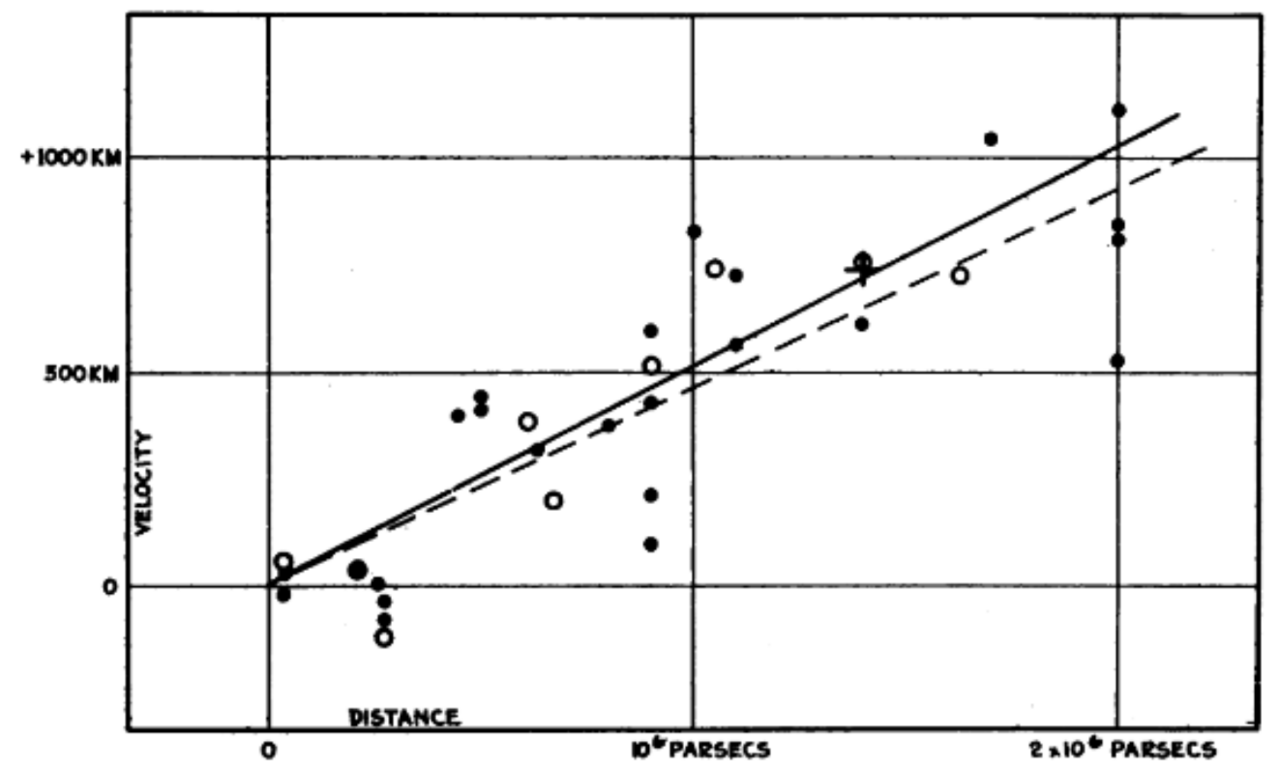
Hubble's 1929 scientific paper presenting the velocity-distance relation for galaxies, the founding evidence for the expanding universe.
Hubble wrote this paper, presenting his landmark velocity-distance plot that founded the evidence for the expanding universe.
About this source
What it is
This is a scientific paper written by Edwin Hubble and published in 1929 in the Proceedings of the National Academy of Sciences. It presents a re-examination of the motion of galaxies, using distances calculated from stars within them.
Why it matters
The paper includes a plot showing that the farther away a galaxy is, the faster it appears to be moving away from us. This relationship became known as Hubble's law, and it provided the first strong observational evidence that the universe is expanding. It changed how scientists understood the scale and history of the cosmos.
Look closer
- What does the pattern of dots on the graph suggest about the relationship between distance and velocity?
- Why did Hubble rely only on distances he considered 'fairly reliable'?
- What limitations does Hubble mention about the method used to measure these distances?
This document is part of the curated material that grounds the AI version of Edwin Hubble on Humy.ai — when students ask about related events, the AI can quote it and cite it.
More Edwin Hubble sources
Meet the AI Edwin Hubble →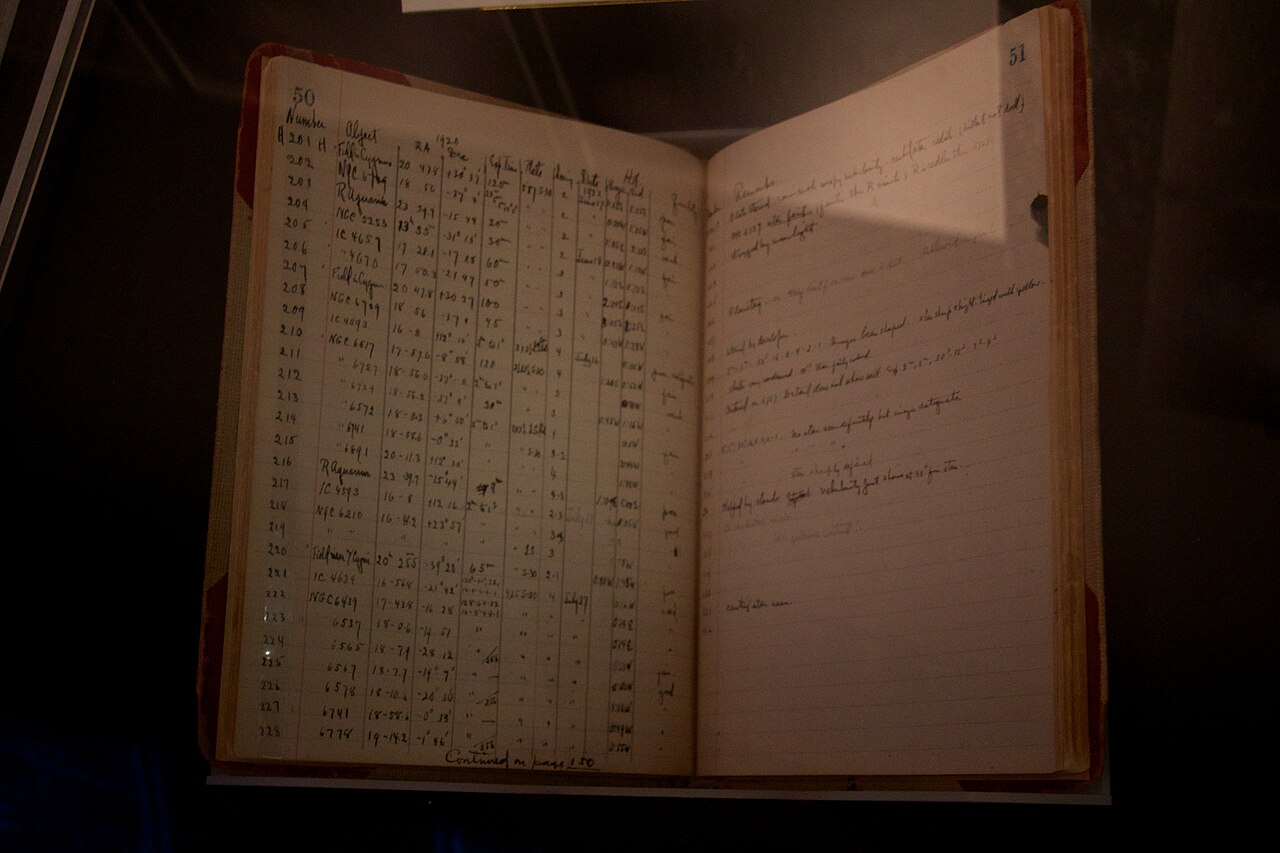 Document
Primary source
Edwin Hubble's Logbook for the 100-inch Telescope
Edwin Hubble · 1923
 Document
Primary source
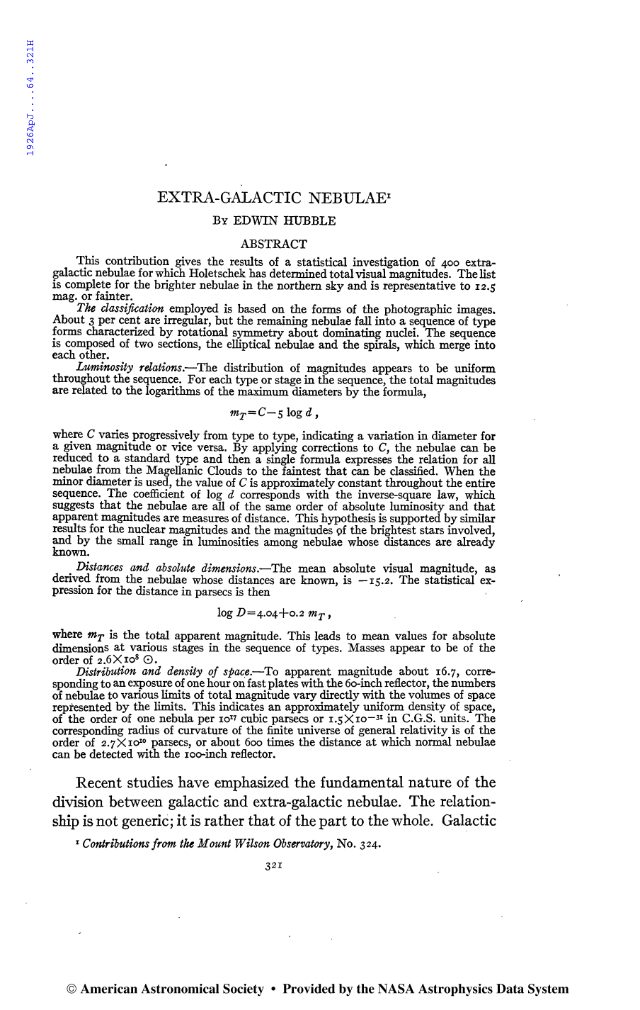
Extragalactic Nebulae
Edwin Hubble · December 1926
 Photograph
Primary source
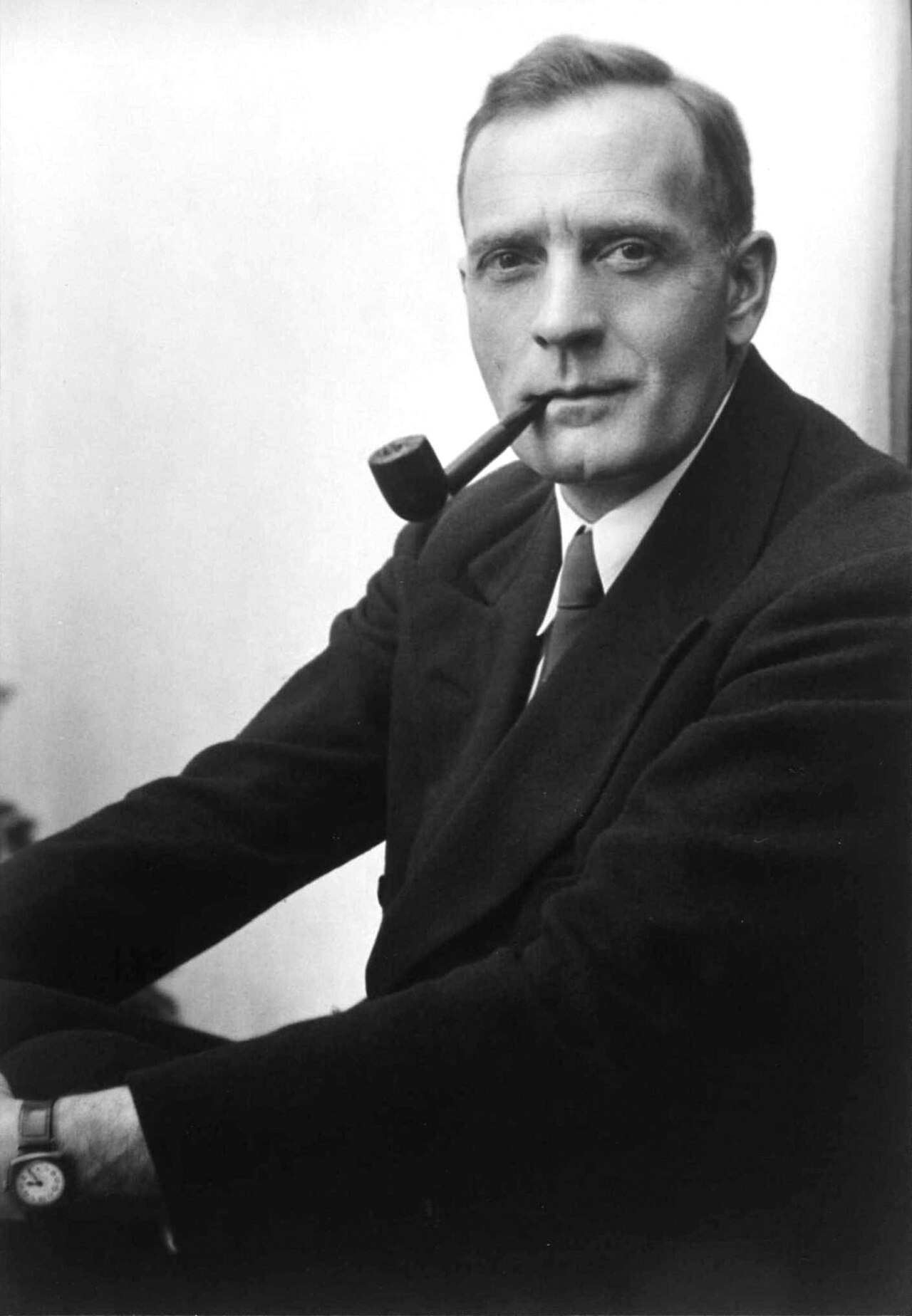
Studio Portrait of Edwin Powell Hubble
Johan Hagemeyer · 1931
 Photograph
Primary source
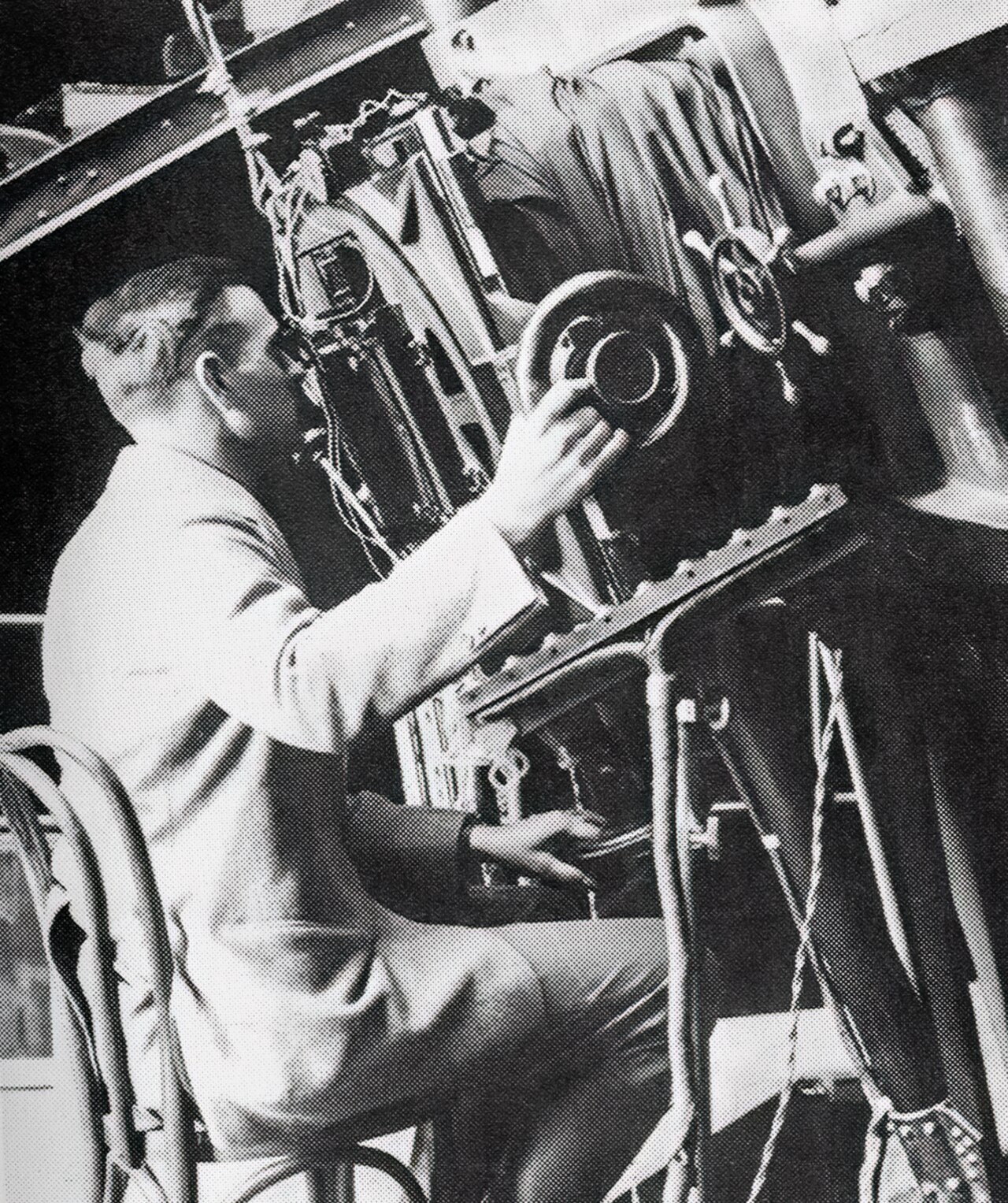
Hubble at the 100-inch Telescope
International Gemini Observatory/NOIRLab/NSF/AURA
 Document
Primary source
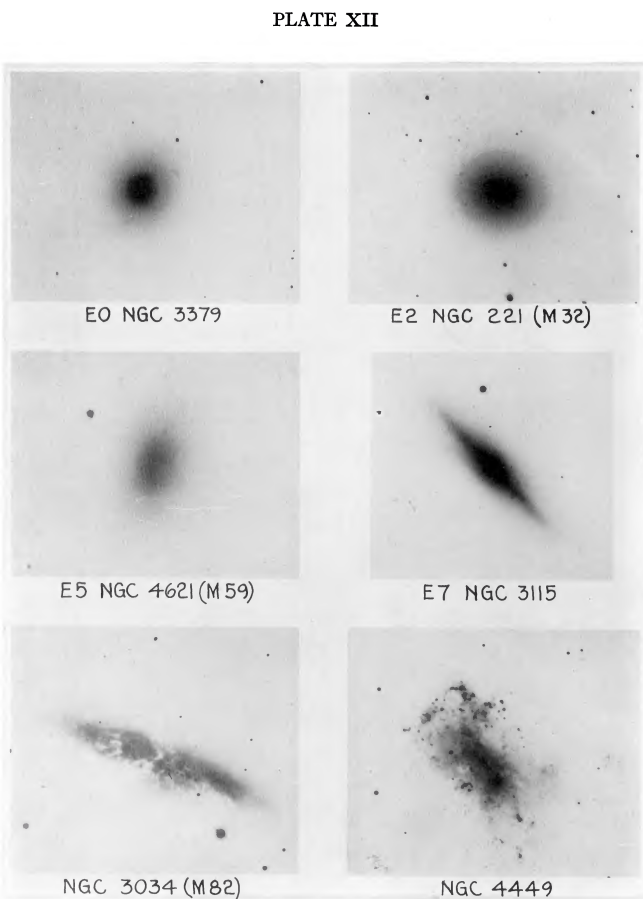
Extra-galactic Nebulae
Edwin Hubble · 1926
Ready when you are
Start chatting with Edwin Hubble now.
20 messages free · No credit card · Available in 50+ languages.