


Primary sourceDocument1701
Act of Settlement 1701
Parliament of England · 1701
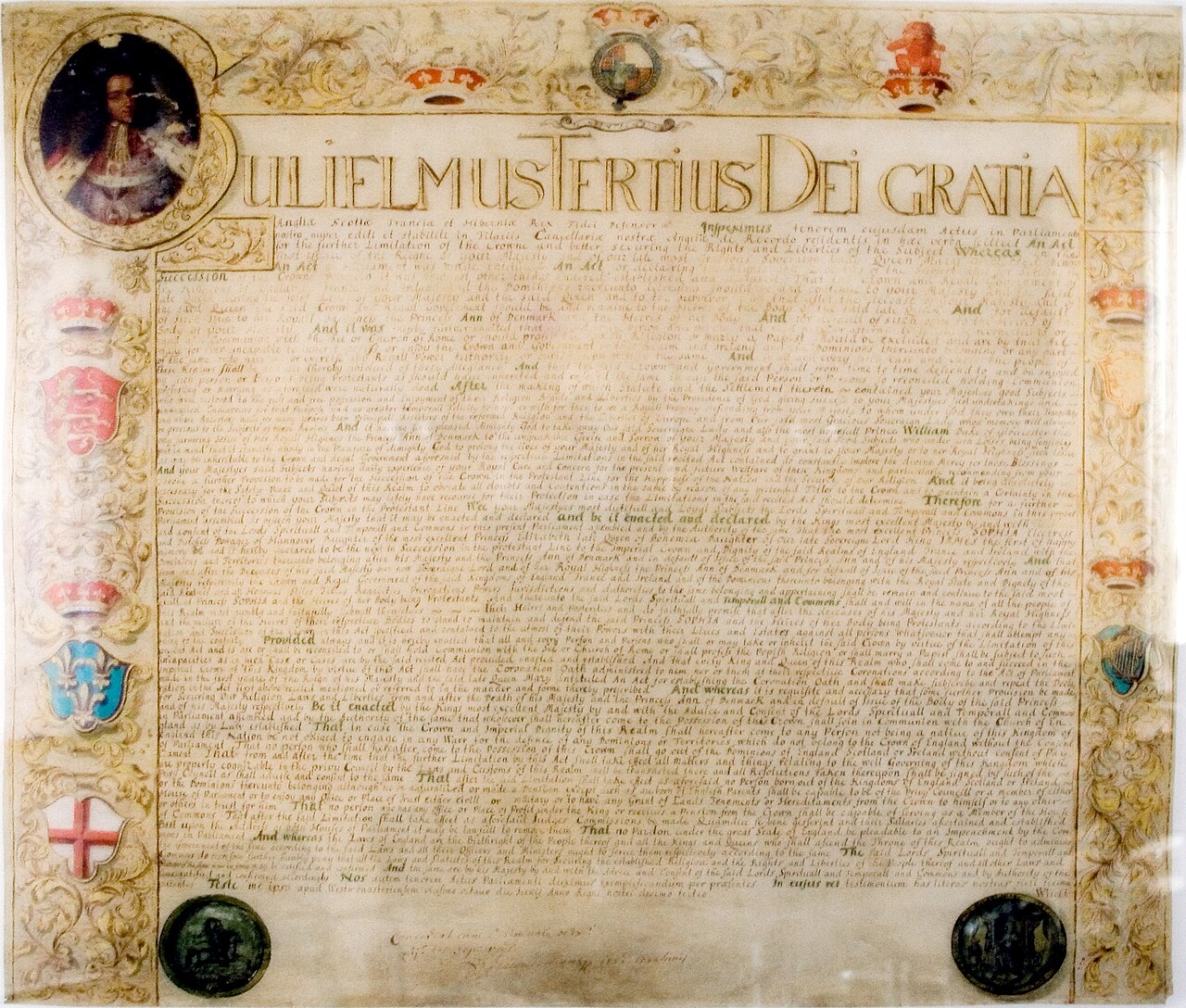
A copy of the 1701 Act passed under William III, which secured the Protestant Hanoverian succession after his childless reign.
Passed under William III, this Act decided who would succeed him after his childless reign.
About this source
What it is
This is an illuminated copy of the Act of Settlement, passed by the Parliament of England in 1701, headed with William III's name in Latin, 'Gulielmus Tertius Dei Gratia'. It carries a portrait of a man in armour, heraldic borders and wax seals.
Why it matters
The Act settled the succession to the English and Scottish thrones on the heirs of the Electress Sophia of Hanover, bypassing Catholic claimants. Because William and Mary had no surviving children, and his sister-in-law Anne's heirs had died, this Act decided who would rule after William. It also placed new restraints on future monarchs, especially those born outside England, reflecting continuing worries about foreign and absolute rule.
Look closer
- Why did Parliament feel it necessary to decide the succession so far in advance?
- What does the decoration and sealing of the document suggest about its importance?
- Who is excluded from the succession, and why?
This document is part of the curated material that grounds the AI version of William III on Humy.ai — when students ask about related events, the AI can quote it and cite it.
More William III sources
Browse all 92 →Primary source
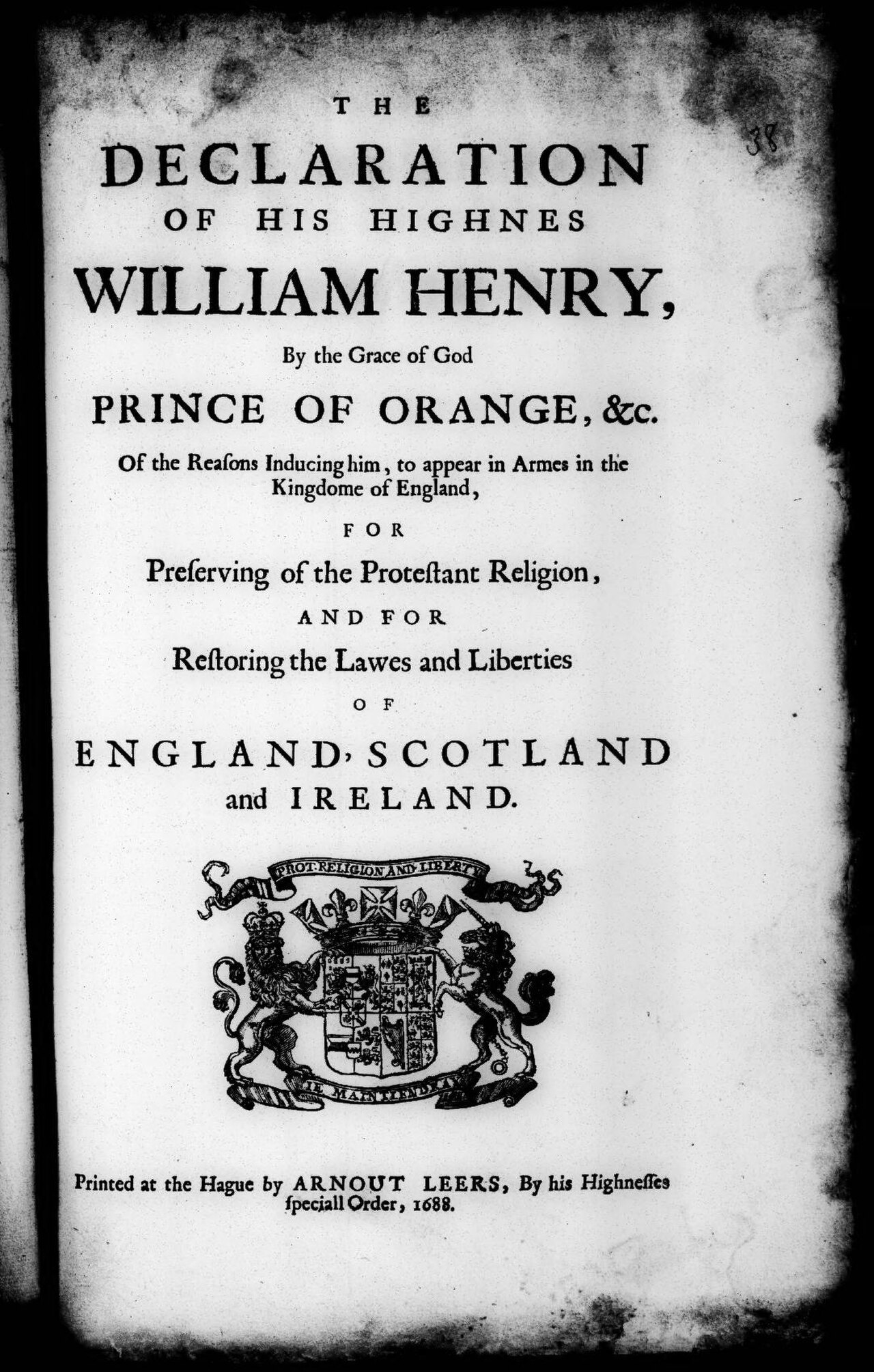
Declaration of Right
Parliament of England · 1689
 Document
Primary source
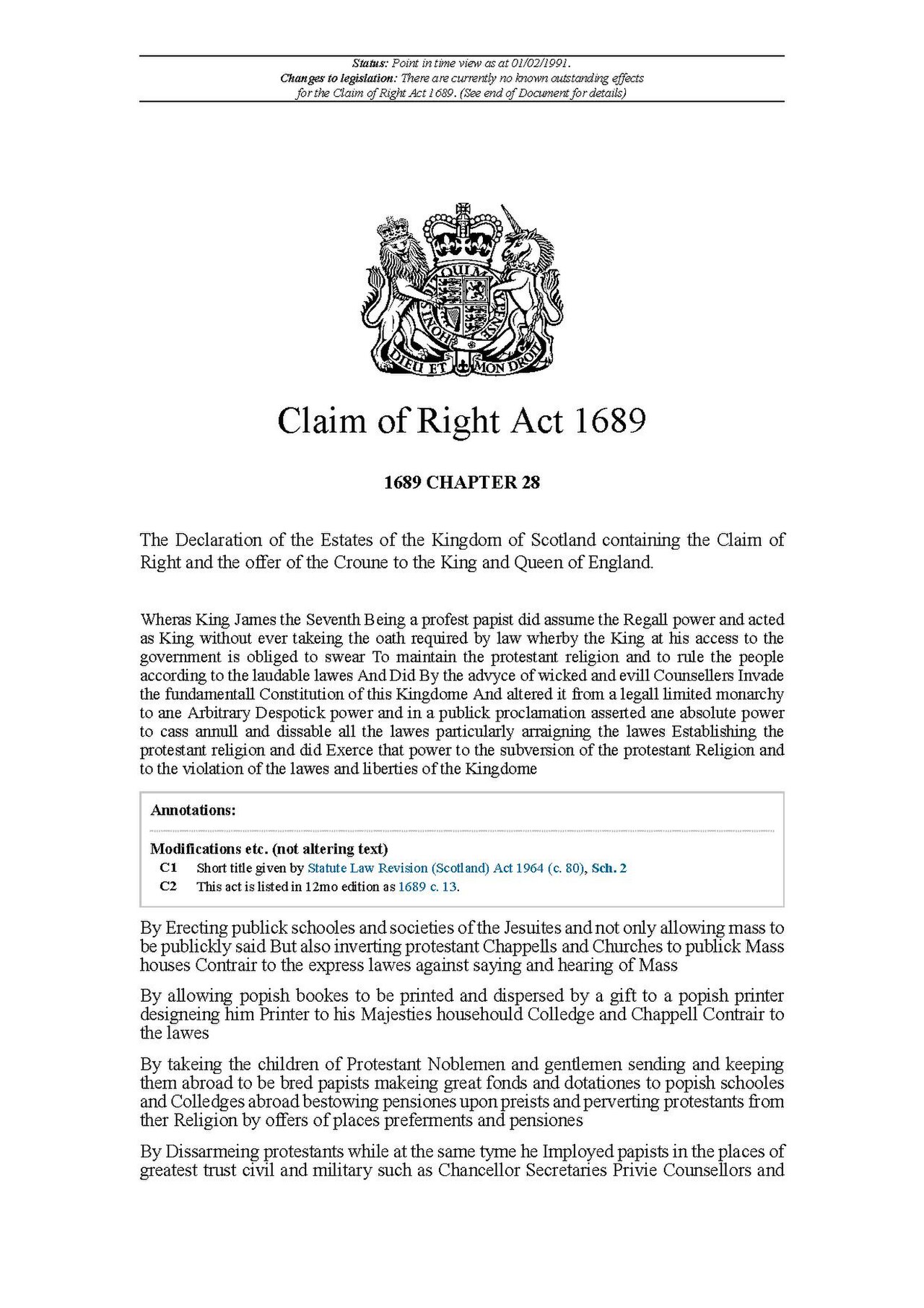
Declaration of the Prince of Orange
Gaspar Fagel · October 1688
 Document
Primary source
Claim of Right Act 1689
1689
 Painting
Primary source
William III (1650-1702) on horseback
Godfrey Kneller · 1701

Free account
Read every William III source
Sign up free →
Ready when you are
Start chatting with William III now.
20 messages free · No credit card · Available in 50+ languages.