


Primary sourceBook1766
An Address to the Committee of Correspondence in Barbados
John Dickinson · 1766
A 1766 pamphlet by Dickinson defending colonial rights during the Stamp Act crisis, grounding them in natural law and the British constitution.
Dickinson wrote this pamphlet himself, showing his developing arguments for colonial rights before his famous Farmer's Letters.

About this source
What it is
This is a 1766 pamphlet written by John Dickinson, responding to a letter sent by Barbados's Committee of Correspondence to their agent in London. It is held by the Library Company of Philadelphia.
Why it matters
Written during the Stamp Act crisis, the pamphlet defends American colonists against criticism from Barbados, arguing that colonial rights rest on both natural law and the British constitution. This argument anticipates the ideas Dickinson would develop more fully in his famous Letters from a Farmer in Pennsylvania, showing the early development of his political thought.
Look closer
- Why might colonists in different parts of the British Empire, like Barbados, have disagreed about how to respond to British policy?
- What kinds of arguments does Dickinson use to defend colonial rights?
- How does this pamphlet connect to Dickinson's later, more famous writings?
This book is part of the curated material that grounds the AI version of John Dickinson on Humy.ai — when students ask about related events, the AI can quote it and cite it.
More John Dickinson sources
Meet the AI John Dickinson →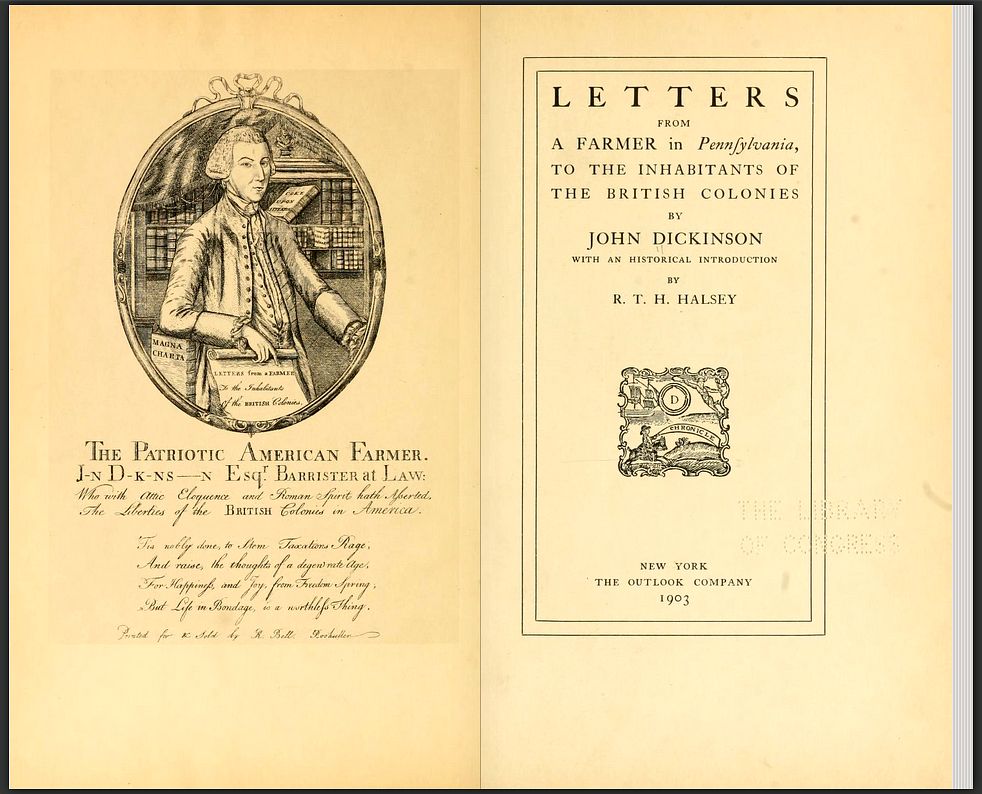 Book
Primary source
Letters from a Farmer in Pennsylvania
John Dickinson · 1767-1768
 Document
Primary source
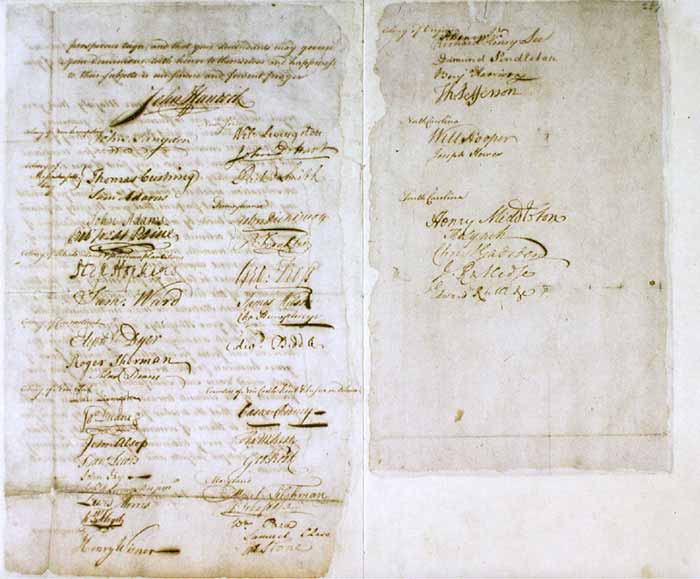
Olive Branch Petition
John Dickinson · 8 July 1775
Primary source
Declaration of the Causes and Necessity of Taking Up Arms
John Dickinson and Thomas Jefferson · 6 July 1775
 Document
Primary source
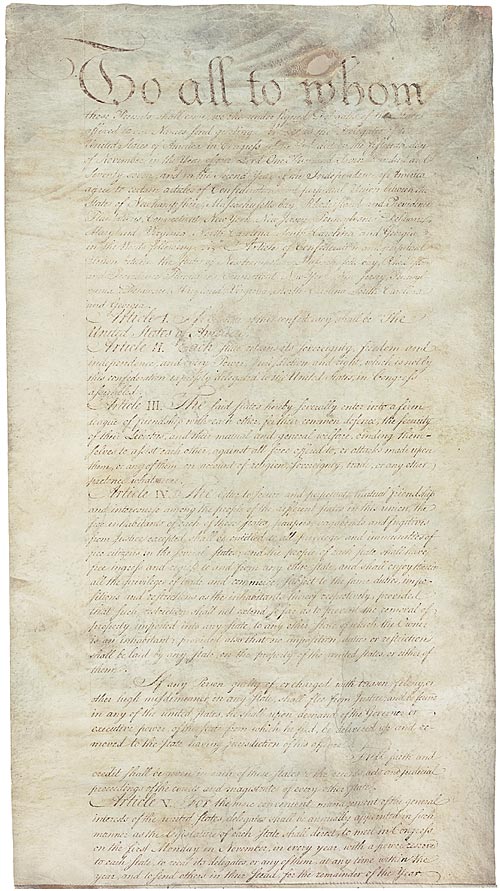
Articles of Confederation
Continental Congress · 1777
 Document
Primary source
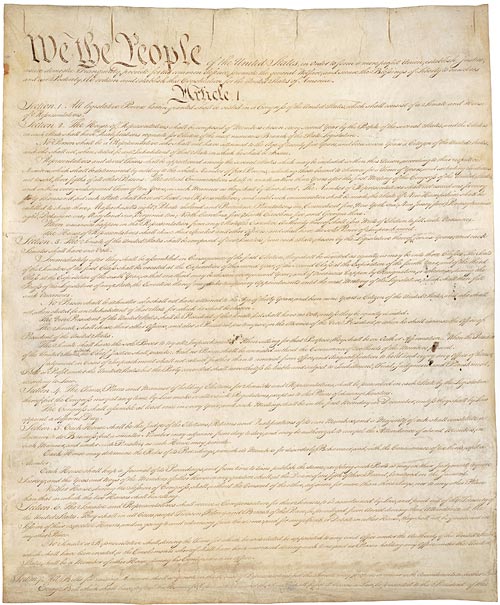
United States Constitution
Constitutional Convention · 17 September 1787
Ready when you are
Start chatting with John Dickinson now.
20 messages free · No credit card · Available in 50+ languages.