


Primary sourceBook1798 (6th ed. 1826)
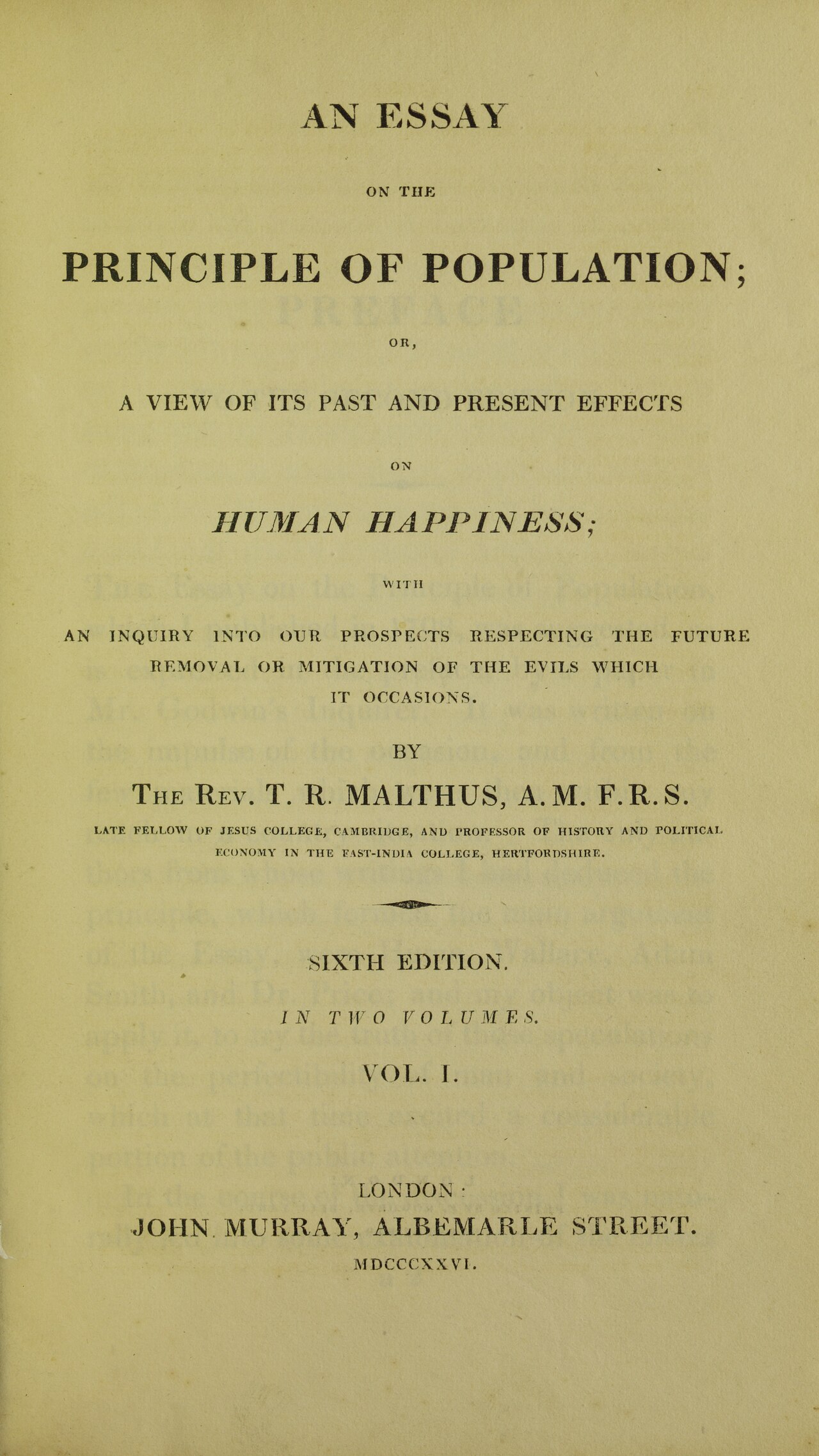
An Essay on the Principle of Population
Thomas Robert Malthus · 1798 (6th ed. 1826)
Malthus's anonymous 1798 treatise arguing that population grows faster than food supply, leading to poverty and famine unless checked.
This is Malthus's foundational and most famous work, setting out the population theory that made him famous.
About this source
What it is
This is Thomas Robert Malthus's treatise, first published anonymously in 1798 and revised through six editions, the last in 1826. It argues that population tends to increase geometrically while food production increases only arithmetically, creating a gap that leads to poverty and famine.
Why it matters
The book was written as a response to optimistic thinkers like William Godwin and the Marquis de Condorcet, who believed society could keep improving endlessly. Malthus's ideas fuelled debate about population size in Britain and helped bring about the first national census. Later, both Charles Darwin and Alfred Russel Wallace cited the sixth edition as a key influence on their theory of natural selection.
Look closer
- Why might Malthus have chosen to publish this essay anonymously at first?
- What kind of evidence does Malthus use to support his claims about population and food supply?
- How might someone optimistic about human progress, like Godwin, respond to this argument?
This book is part of the curated material that grounds the AI version of Thomas Malthus on Humy.ai — when students ask about related events, the AI can quote it and cite it.
More Thomas Malthus sources
Meet the AI Thomas Malthus →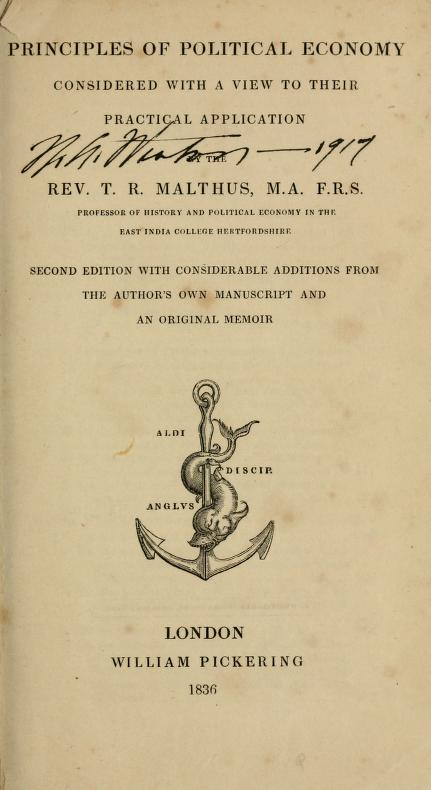 Book
Primary source
Principles of Political Economy
Thomas Robert Malthus · 1820 (2nd ed. 1836)
 Painting
Primary source
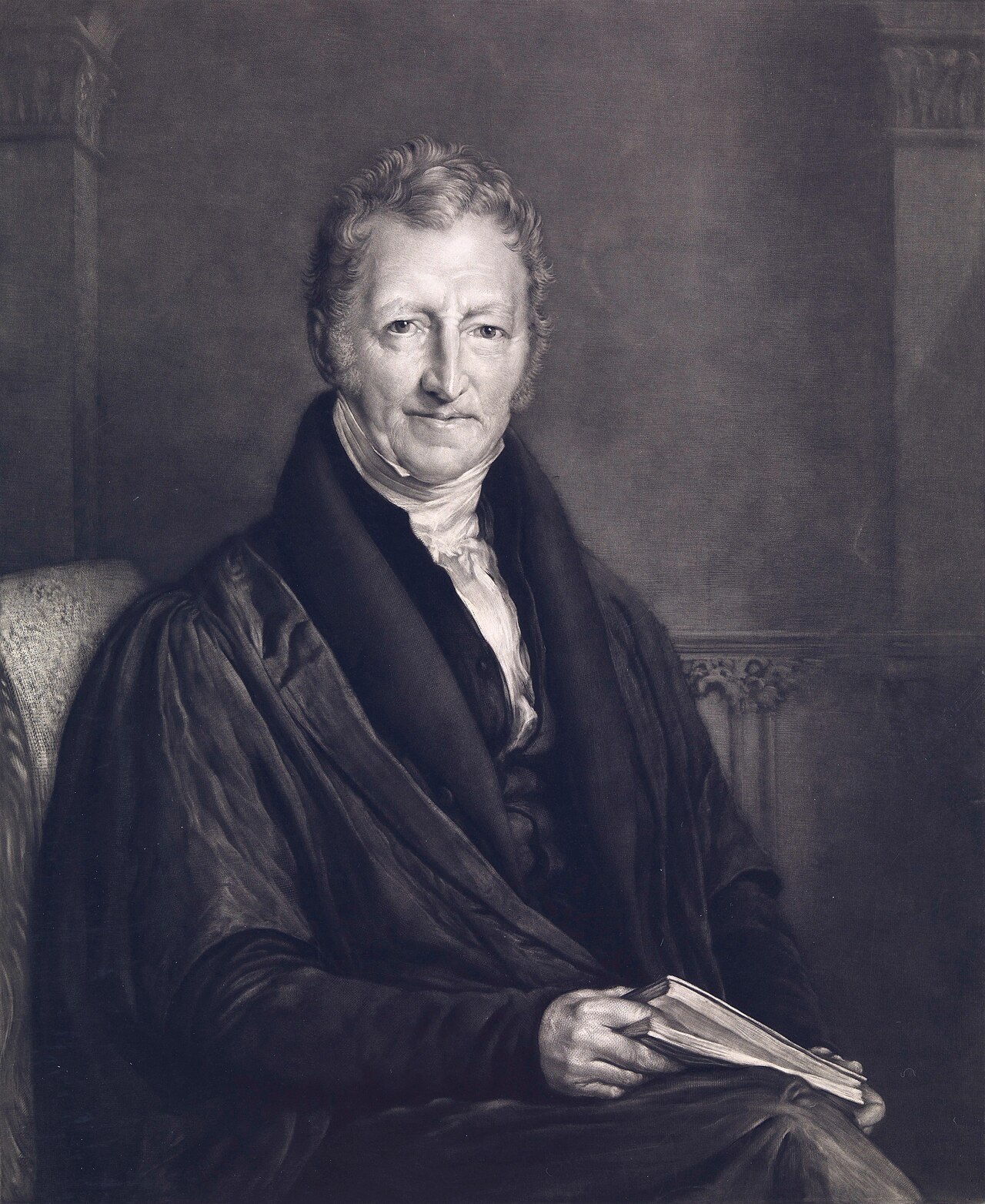
Portrait of Thomas Robert Malthus
John Linnell · after 1833
 Letter
Primary source
Correspondence between Malthus and David Ricardo
Thomas Robert Malthus; David Ricardo · 1811–1823
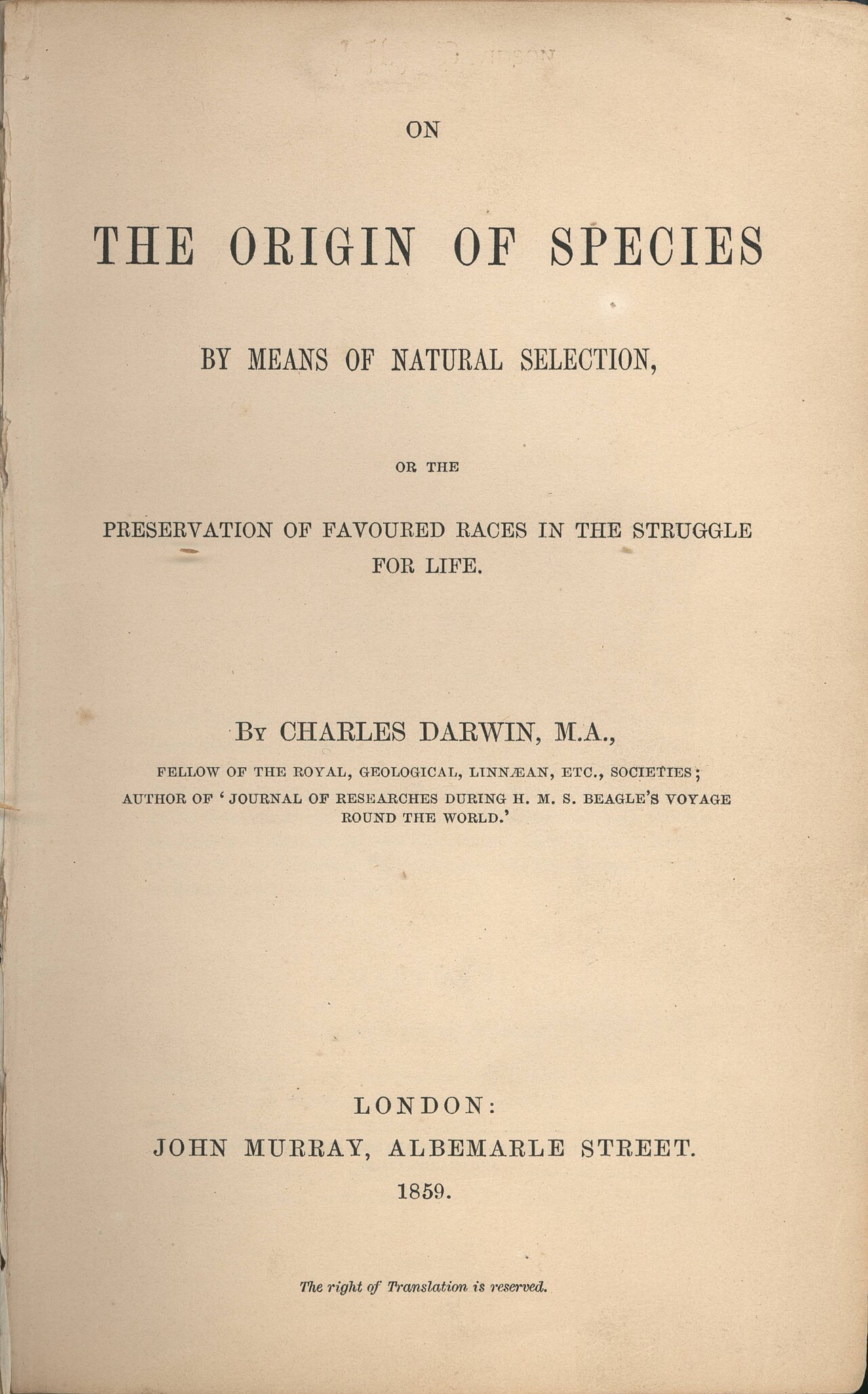 Book
Primary source
On the Origin of Species
Charles Darwin · 1859
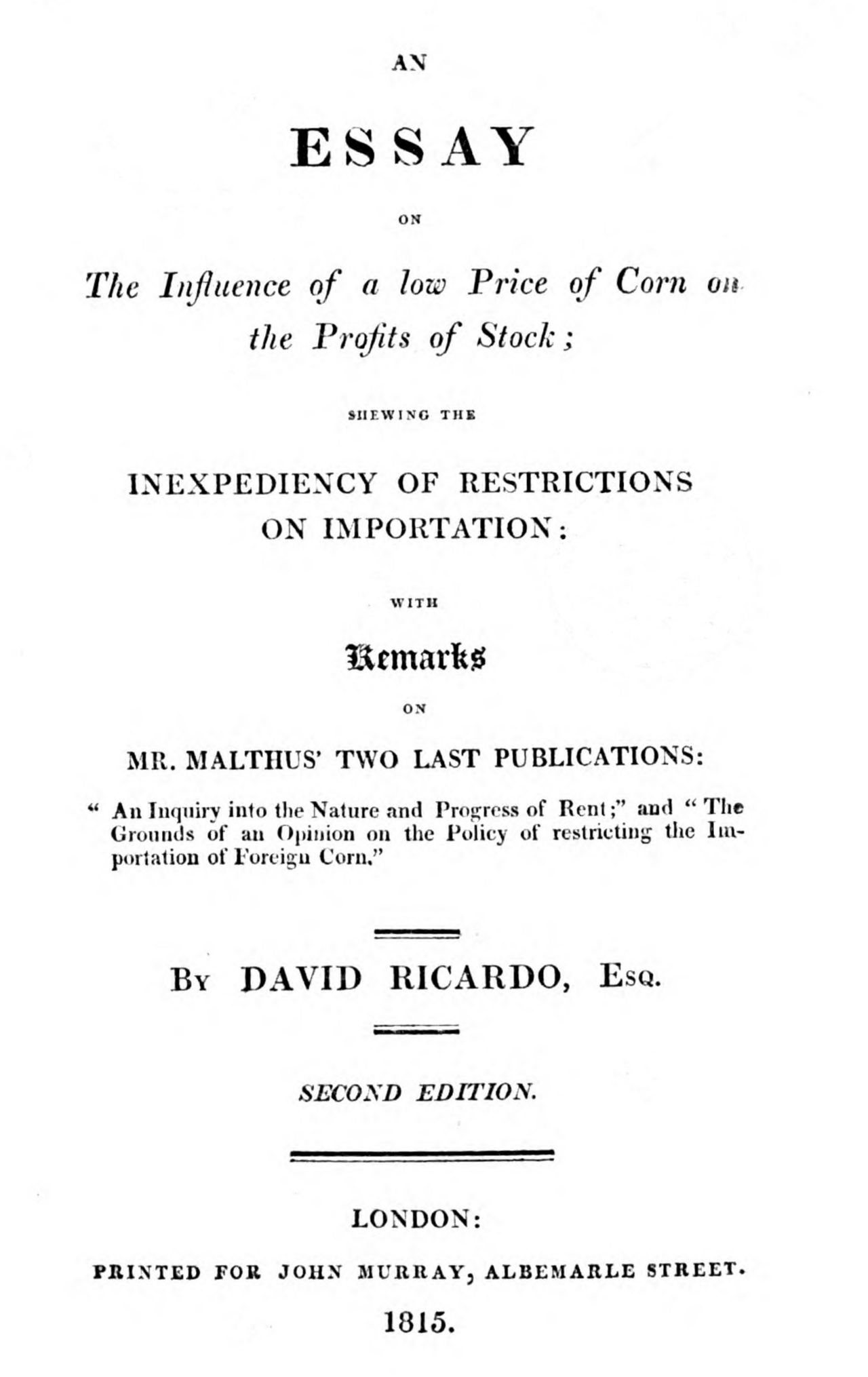 Book
Primary source
An Essay on the Influence of a Low Price of Corn on the Profits of Stock
David Ricardo · 1815
Ready when you are
Start chatting with Thomas Malthus now.
20 messages free · No credit card · Available in 50+ languages.