


Primary sourceBook1789 (printed 1780)
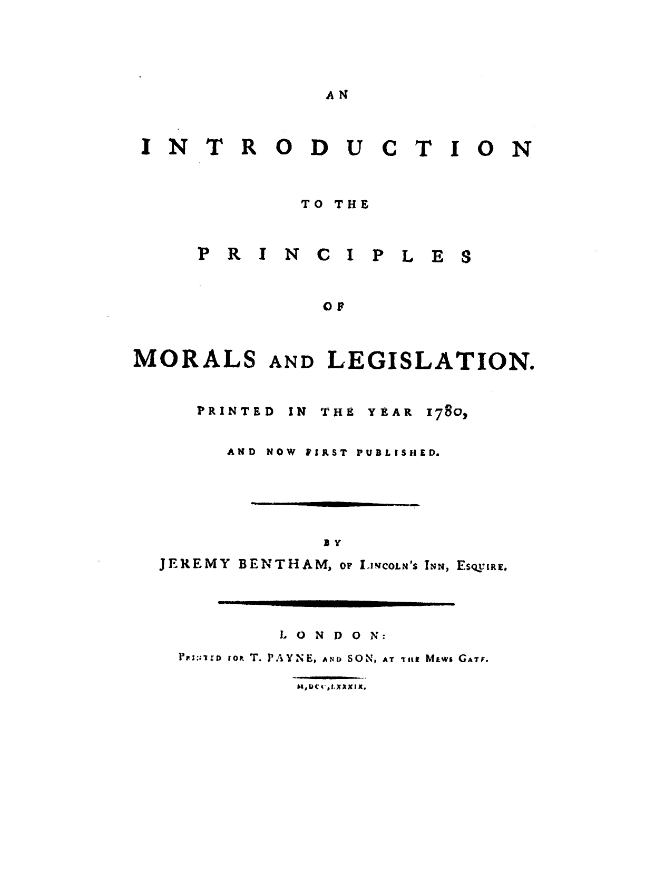
An Introduction to the Principles of Morals and Legislation
Jeremy Bentham · 1789 (printed 1780)
Bentham's foundational book on utilitarianism, arguing that pleasure and pain govern human action and should guide law and morality.
Bentham's own foundational work setting out the utilitarian theory for which he is best known.
About this source
What it is
This is a book by Jeremy Bentham, printed in 1780 and first published in 1789. It is considered his most important theoretical work and the first major book on utilitarianism.
Why it matters
In this book Bentham argues that pleasure and pain are the only true guides to right and wrong, and he tries to build a whole system of law on that idea. He proposes a method for weighing pleasures and pains called the felicific calculus. A footnote in the book, asking whether animals can suffer rather than whether they can reason, became one of his most famous statements and influenced later thinking about animal welfare. The book shows how Bentham wanted both ethics and the legal system to be reorganised on rational, measurable grounds.
Look closer
- Why might Bentham have chosen to measure right and wrong by pleasure and pain rather than by religious or traditional rules?
- What does the footnote about animal suffering tell you about the limits of ideas about rights in Bentham's time?
- How might a law based on this 'calculus' be difficult to apply in real life?
This book is part of the curated material that grounds the AI version of Jeremy Bentham on Humy.ai — when students ask about related events, the AI can quote it and cite it.
More Jeremy Bentham sources
Meet the AI Jeremy Bentham →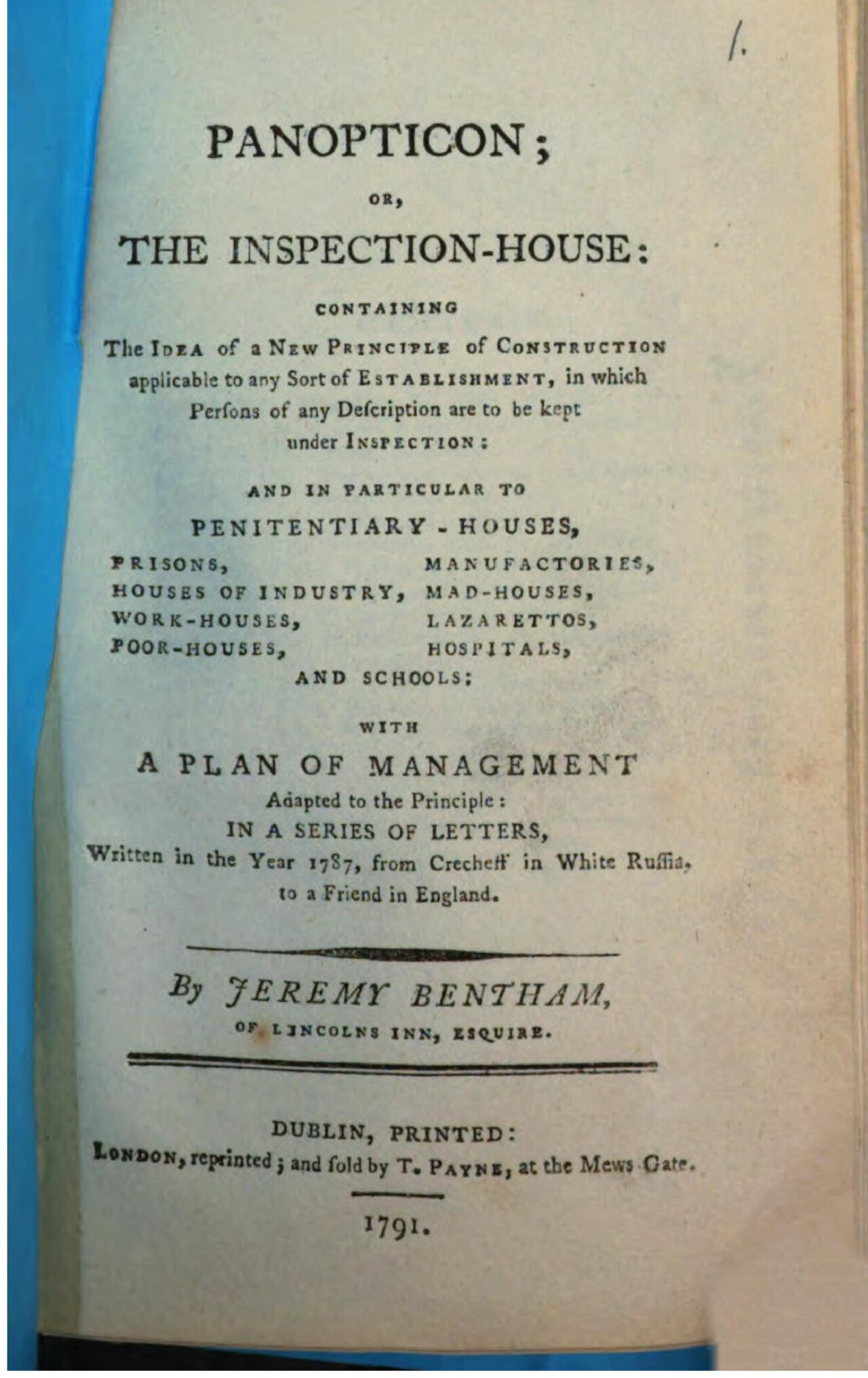 Book
Primary source
Panopticon; or, The Inspection-House
Jeremy Bentham · 1791 (letters written 1787)
 Artifact
Primary source
Auto-icon of Jeremy Bentham
Thomas Southwood Smith · 1832
 Book
Primary source
A Fragment on Government
Jeremy Bentham · 1776
 Painting
Primary source
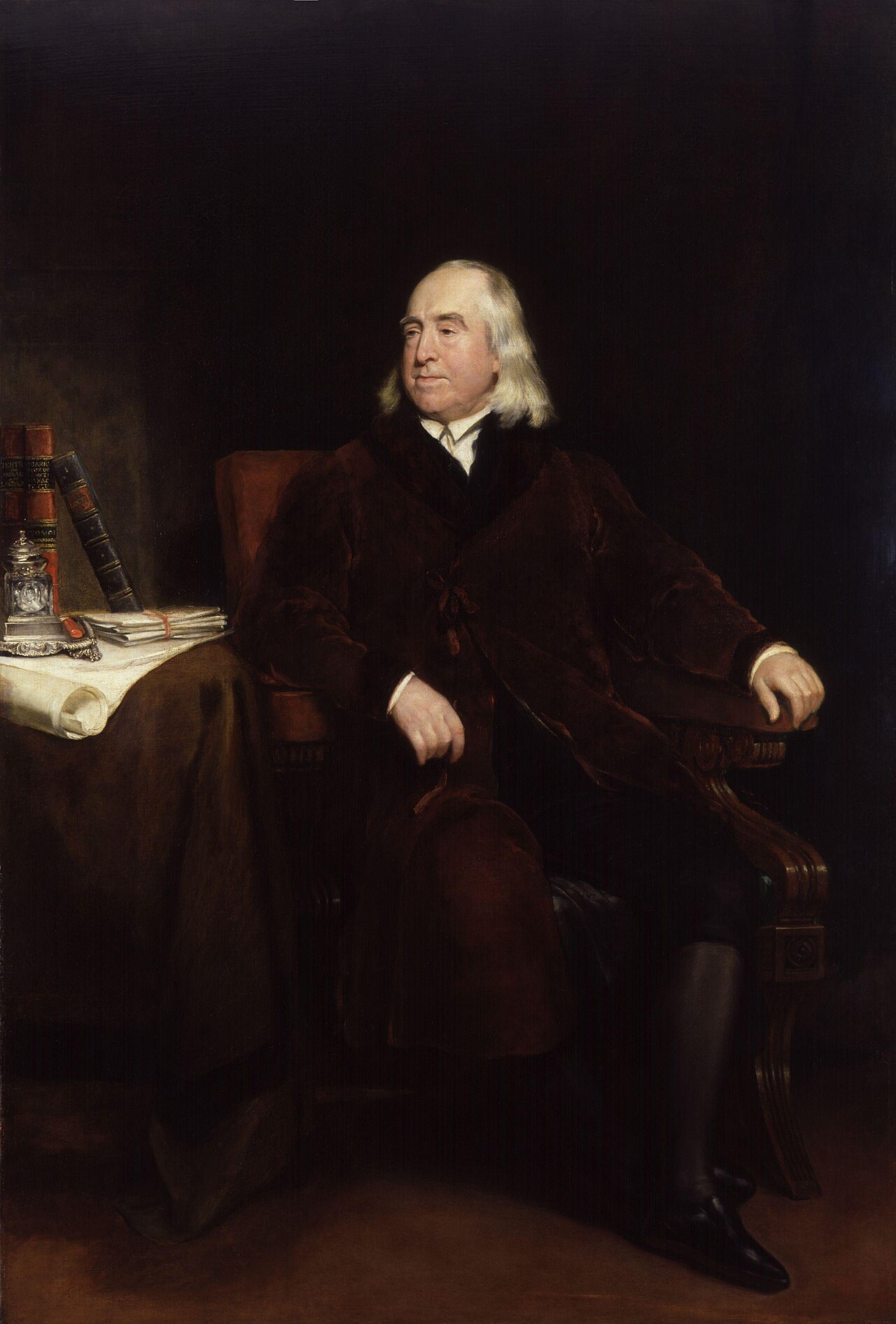
Jeremy Bentham
Henry William Pickersgill · c. 1829
 Sculpture
Primary source
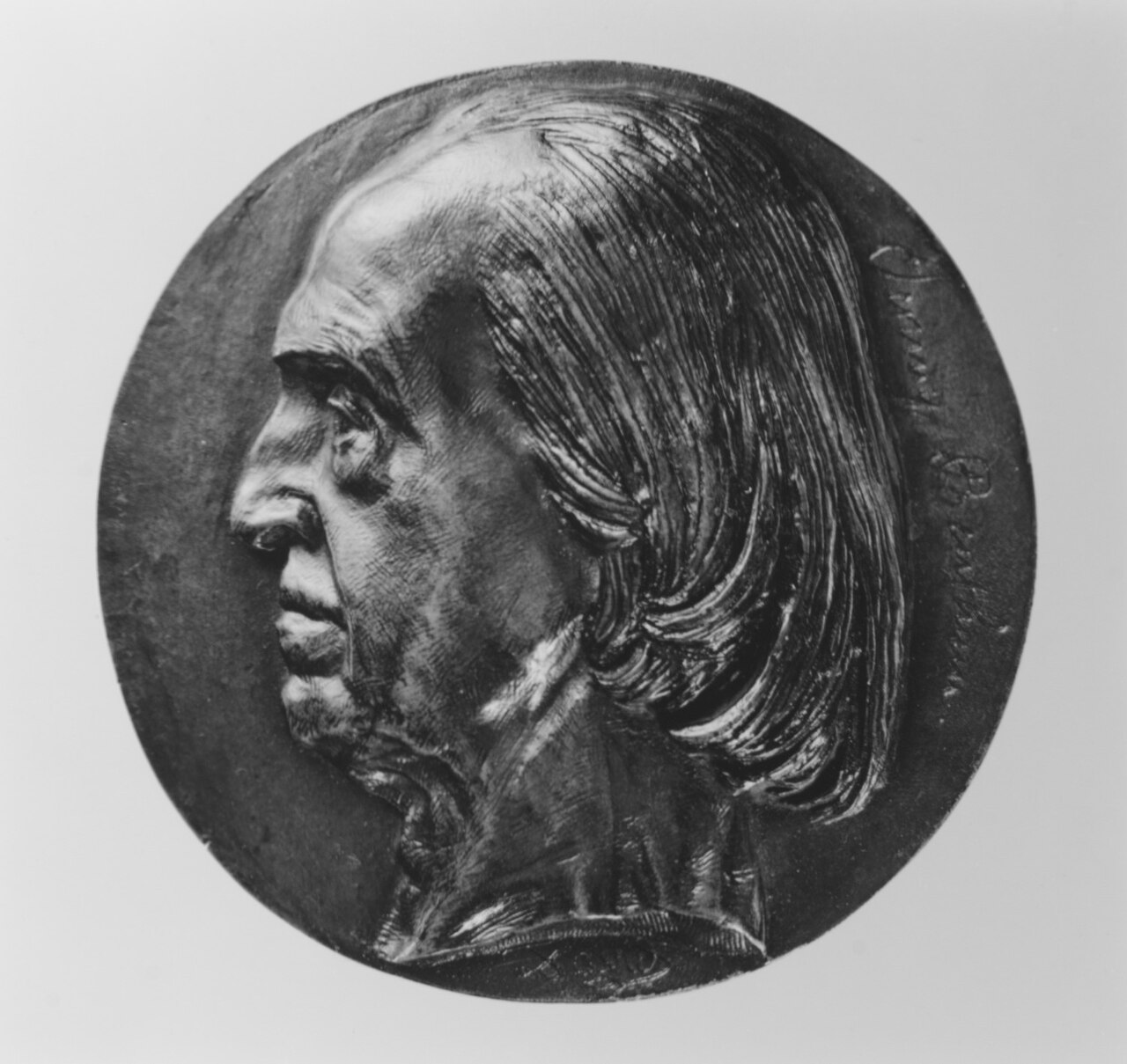
Jeremy Bentham Portrait Medallion
David d'Angers
Ready when you are
Start chatting with Jeremy Bentham now.
20 messages free · No credit card · Available in 50+ languages.