


Primary sourceSculpture1834-1835
Andrew Jackson
Hiram Powers · 1834-1835
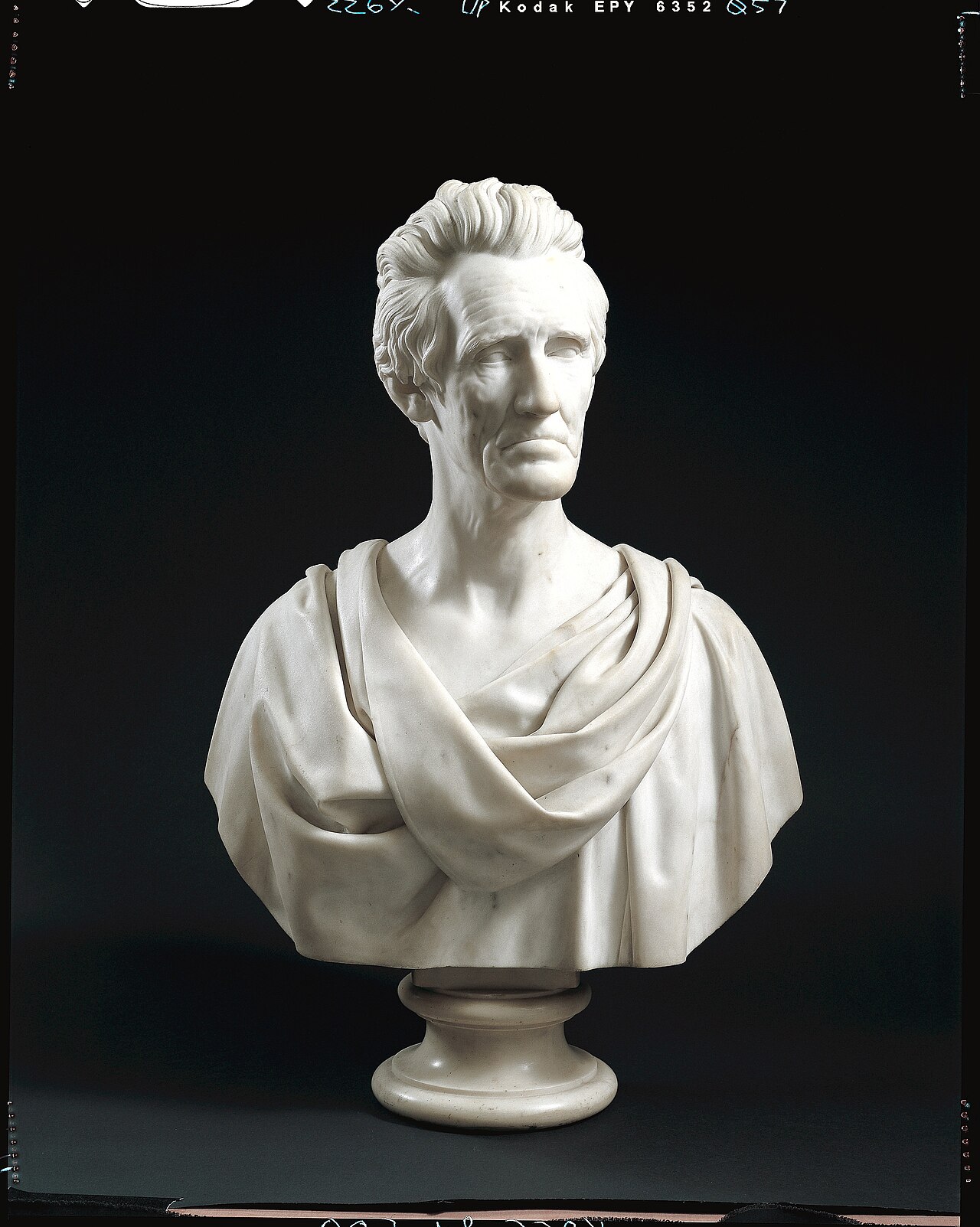
A marble bust of Jackson modeled from life by sculptor Hiram Powers at the White House in 1834–35, showing the aging president's features realistically.
This life-modeled bust captures Jackson's features realistically as an aging president.
About this source
What it is
This marble bust was sculpted by Hiram Powers, modeled from life while Jackson sat for him at the White House around 1834–35. It is now held at the Metropolitan Museum of Art. The bust shows an older man with swept-back hair, deep-set eyes, and a stern mouth, draped with a toga-like cloth over one shoulder.
Why it matters
Because Powers worked directly from the living Jackson, the bust is considered an unusually realistic record of his aging features as president, rather than an idealized image. Sculptures like this were often meant to connect American leaders to the dignity of classical antiquity through the toga-like drapery, while still capturing individual likeness.
Look closer
- What details in the face suggest the sculptor was trying to show Jackson's true appearance rather than flatter him?
- Why might the sculptor drape Jackson in cloth resembling a classical toga?
- What can a sculpture capture about a person that a painting cannot, and what can it not capture?
This sculpture is part of the curated material that grounds the AI version of Andrew Jackson on Humy.ai — when students ask about related events, the AI can quote it and cite it.
More Andrew Jackson sources
Meet the AI Andrew Jackson →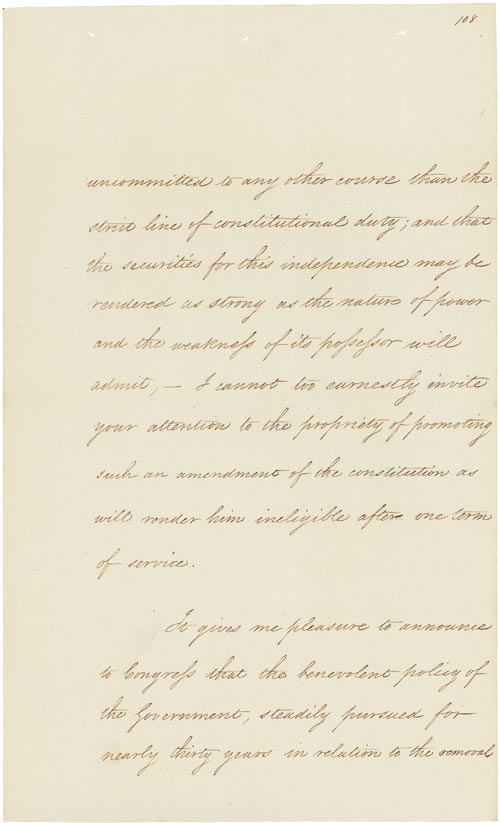 Speech
Primary source
Message to Congress On Indian Removal
Andrew Jackson · 6 December 1830
 Painting
Primary source
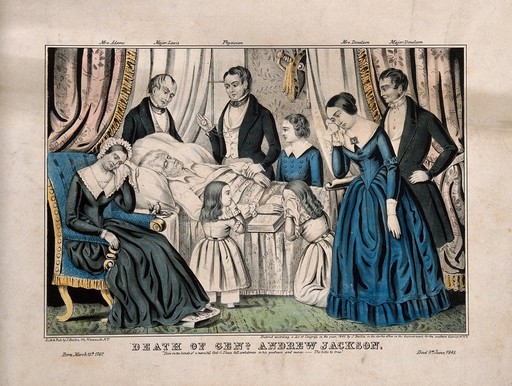
Death of General Andrew Jackson
1845
 Painting
Primary source
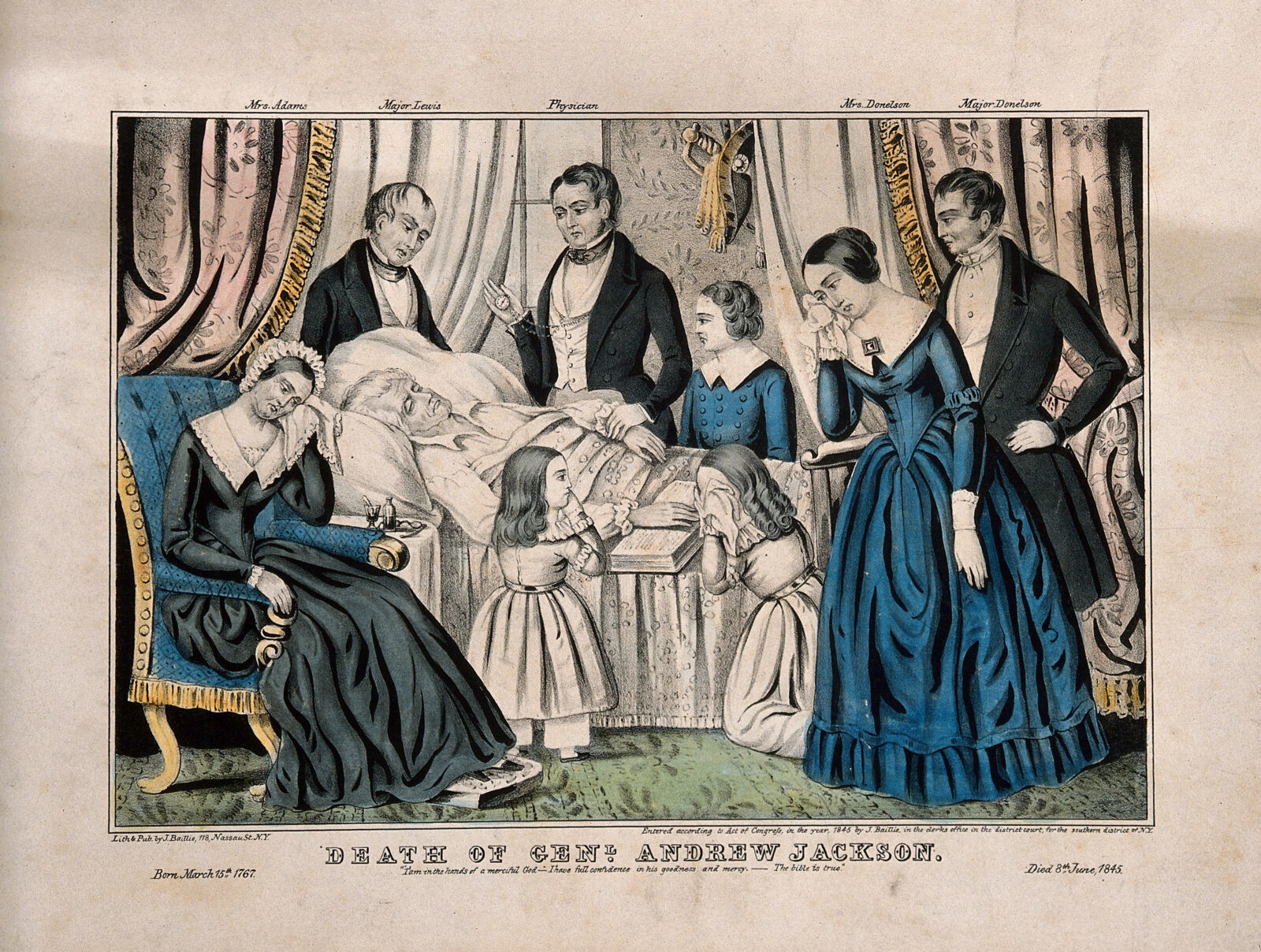
The Death of President Andrew Jackson
1845
Primary source
Indian Removal Act
United States Congress · 28 May 1830
 Photograph
Secondary source
Photograph of the Andrew Jackson Equestrian Statue, Lafayette Park
Clark Mills · c. 1880
Ready when you are
Start chatting with Andrew Jackson now.
20 messages free · No credit card · Available in 50+ languages.