


Primary sourceArtifactcompleted 1576
Anup Talao
completed 1576
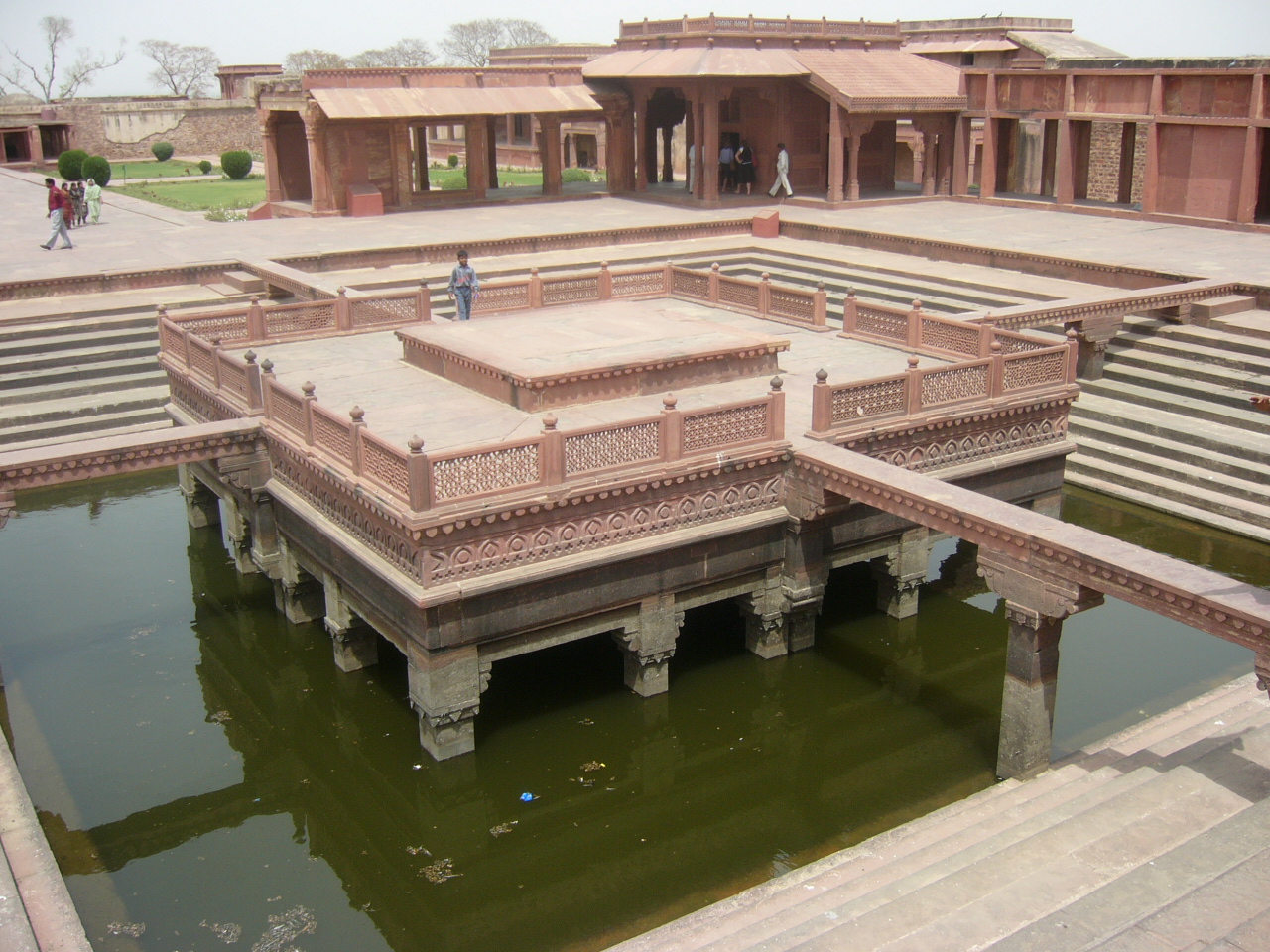
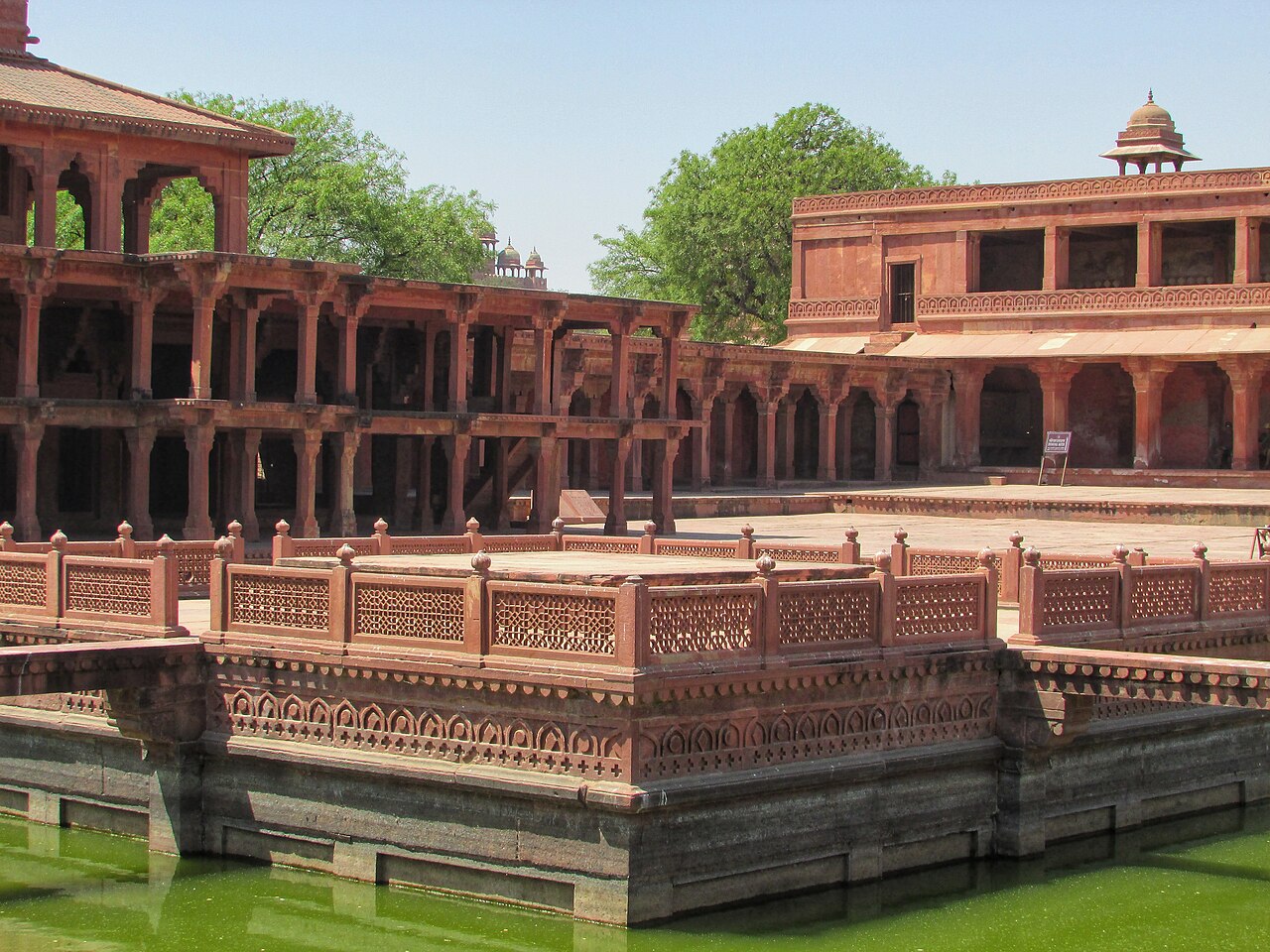
An ornamental water pavilion at Fatehpur Sikri built for Akbar, used for audiences and musical performances.
Akbar ordered this pavilion built and held audiences and musical gatherings there, including with the musician Tansen.
About this source
What it is
The Anup Talao, or 'peerless pool', is a red sandstone pavilion completed in 1576 in the centre of a tank in the courtyard of Fatehpur Sikri Fort, built on the orders of Emperor Akbar. A central platform, reached by four stone bridges, once held a chair under a canopy and served as a stage for performers.
Why it matters
The pavilion was both a practical feature, cooling the courtyard, and a stage for entertainment and ceremony, including performances by musicians such as Tansen, who served at Akbar's court. In 1578 Akbar had the tank filled with coins to be distributed to his community, a gesture that reflects his style of rule and relationship with his court and subjects.
Look closer
- Why might a ruler build something as elaborate as a pool just to hold audiences and music?
- What does filling the tank with coins to give away suggest about Akbar's relationship with his people?
- How do later changes to the site, like water level or drainage, affect how we see the structure today?
This artifact is part of the curated material that grounds the AI version of Akbar the Great on Humy.ai — when students ask about related events, the AI can quote it and cite it.
More Akbar the Great sources
Meet the AI Akbar the Great →
Ready when you are
Start chatting with Akbar the Great now.
20 messages free · No credit card · Available in 50+ languages.