


Primary sourceArtifact1775
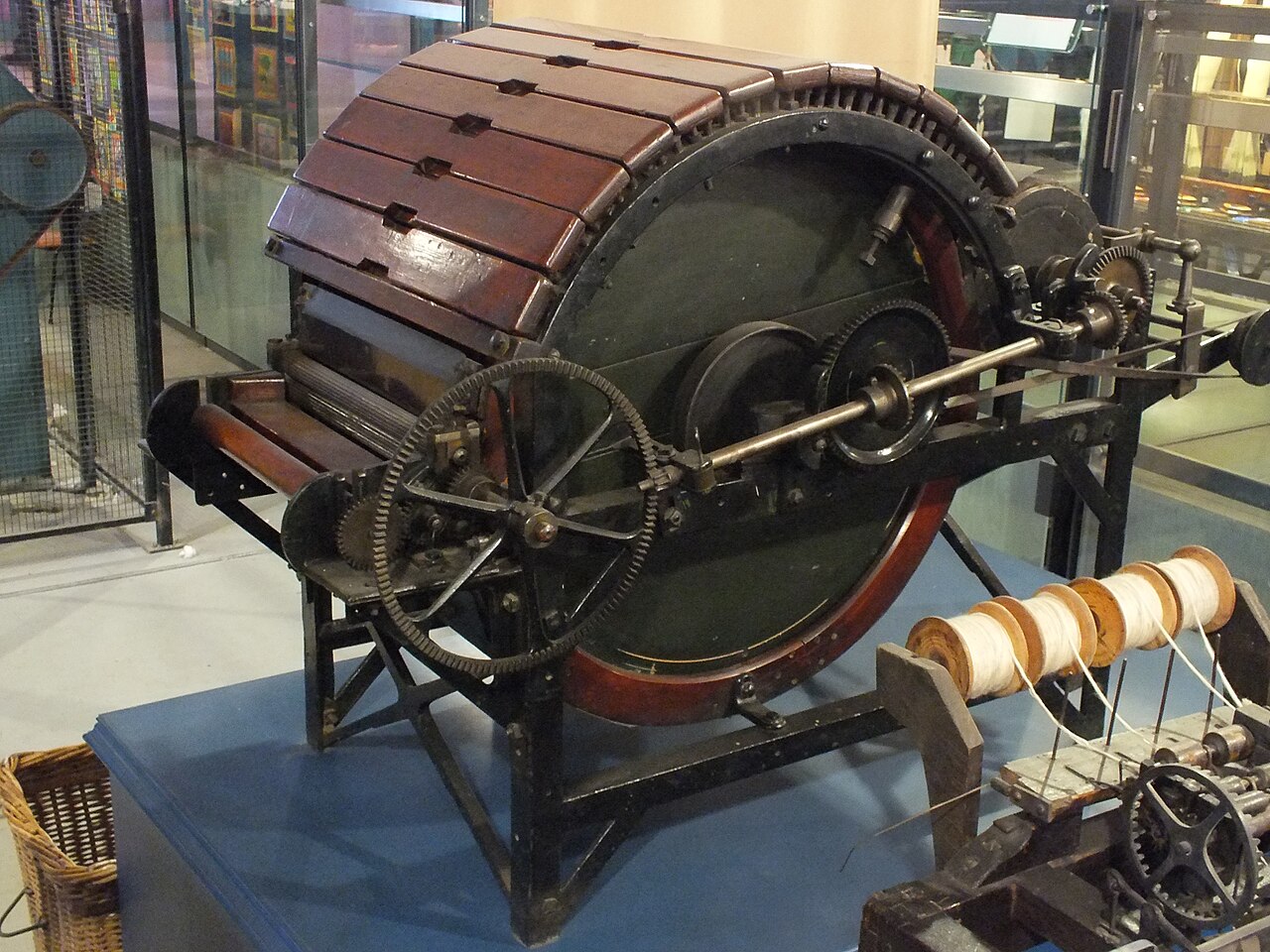
Arkwright's Carding Machine
1775
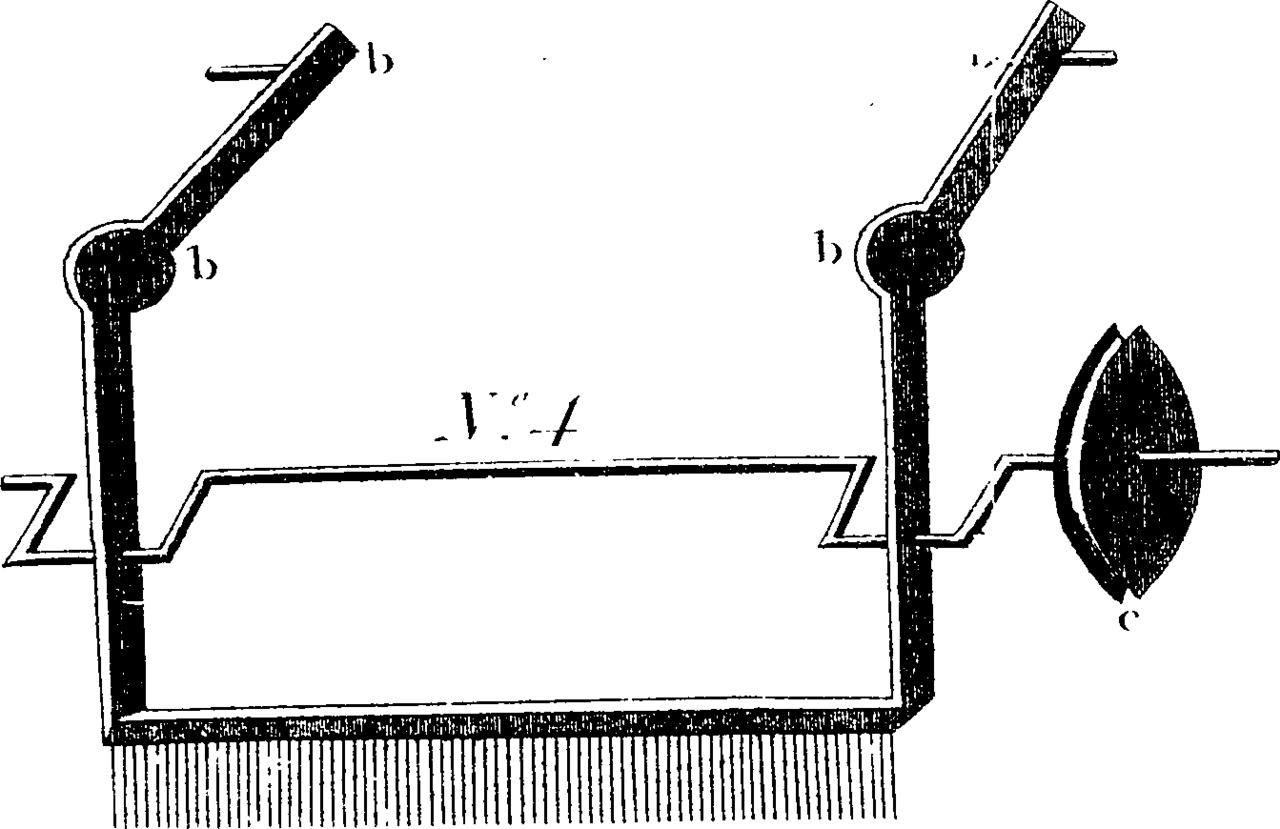
A carding engine of the type patented by Richard Arkwright in 1775, used to prepare raw cotton before spinning.
This carding machine reflects Arkwright's 1775 patent for preparing cotton for spinning in his mills.
About this source
What it is
This is a carding machine of the kind patented by Richard Arkwright in 1775. It is held in the collection of the Museum of Science and Industry in Manchester, which displays machines showing the whole cotton-mill process.
Why it matters
Carding machines mechanised the step of straightening and cleaning raw cotton fibres before they could be spun into thread. Combined with Arkwright's water frame, this kind of machine helped turn cotton processing from slow hand work into a continuous factory system.
Look closer
- What do the drum and gears suggest about how the machine worked?
- Why might combining carding and spinning in one mill have been important?
- What is missing from this photograph that would help you understand how the machine was actually used?
This artifact is part of the curated material that grounds the AI version of Richard Arkwright on Humy.ai — when students ask about related events, the AI can quote it and cite it.
More Richard Arkwright sources
Meet the AI Richard Arkwright →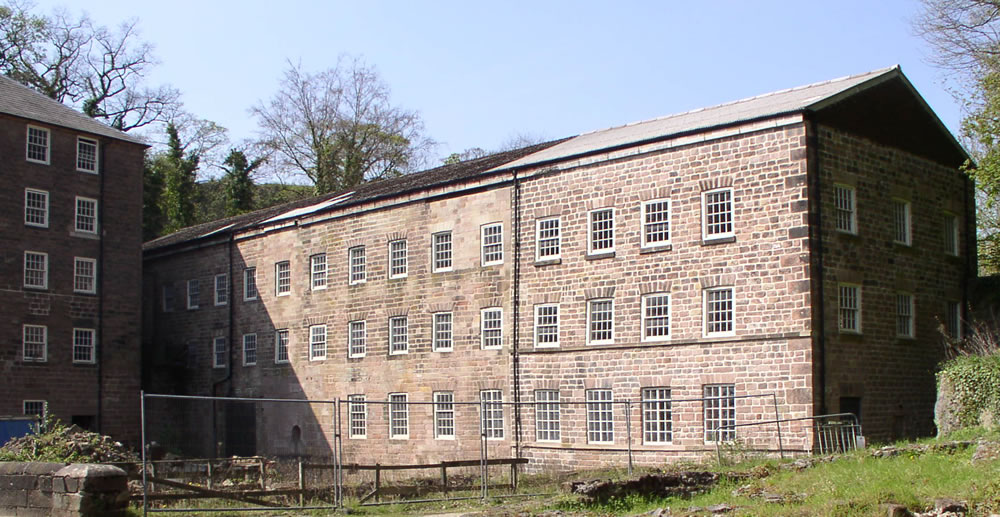 Artifact
Primary source
Cromford Mill
Richard Arkwright · 1771
 Painting
Primary source
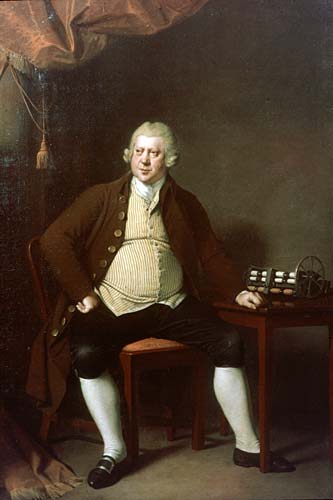
Portrait of Richard Arkwright
Joseph Wright of Derby · 1790
 Artifact
Primary source
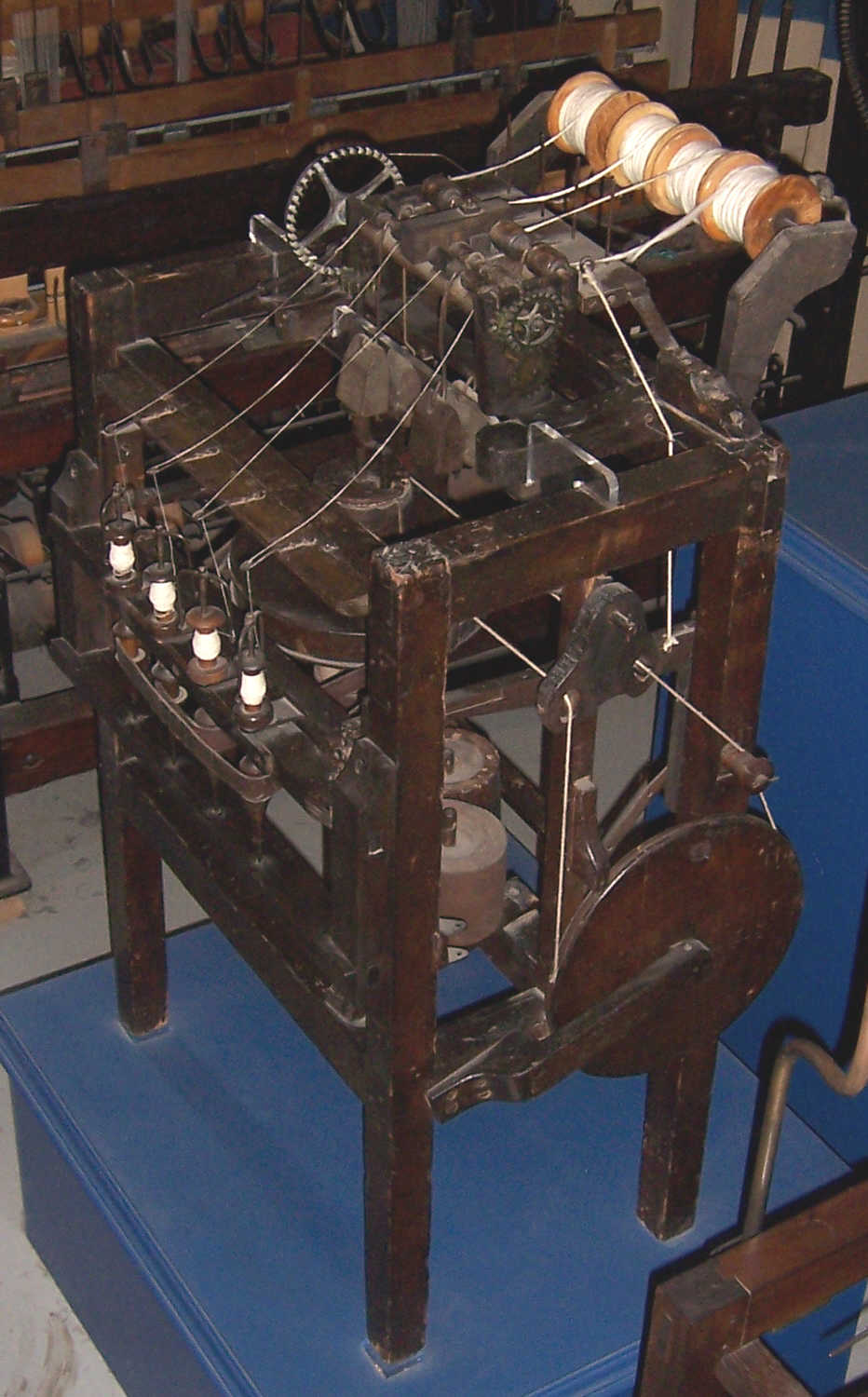
Arkwright Water Frame
1775
Primary source
The Case of Mr. Richard Arkwright and Co.
Richard Arkwright · 1782
 Document
Primary source
The Trial of a Cause Instituted by Richard Pepper Arden to Repeal a Patent Granted to Mr. Richard Arkwright
Court of King's Bench · 1785
Ready when you are
Start chatting with Richard Arkwright now.
20 messages free · No credit card · Available in 50+ languages.