


Primary sourceLetter1780
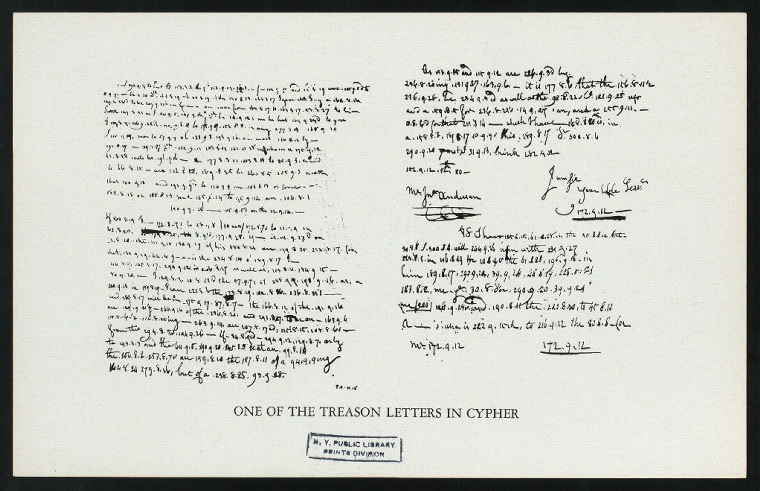
Arnold Treason Cipher Letter
Benedict Arnold; Peggy Shippen Arnold · 1780
A reproduction of a coded letter Arnold used with his wife's help to secretly negotiate with the British over surrendering West Point.
This coded letter was written by Arnold himself, with his wife's help, to negotiate his betrayal of West Point to the British.
About this source
What it is
This is a printed reproduction of one of Benedict Arnold's coded letters to the British, written partly in invisible ink. Lines by his wife, Peggy Shippen Arnold, appear between the coded sections written by Arnold himself. It dates from 1780, while Arnold was negotiating to hand over the American fort at West Point.
Why it matters
The letter is direct evidence of the secret plot that made Arnold's name a byword for treason in American history. It also shows that Peggy Shippen Arnold played a role in the scheme, helping disguise the message within her own handwriting.
Look closer
- Why would a letter about a military secret need two different kinds of writing mixed together?
- What does it suggest that Arnold needed his wife's handwriting to hide his message?
- What might the coded numbers and symbols have stood for?
This letter is part of the curated material that grounds the AI version of Benedict Arnold on Humy.ai — when students ask about related events, the AI can quote it and cite it.
More Benedict Arnold sources
Meet the AI Benedict Arnold →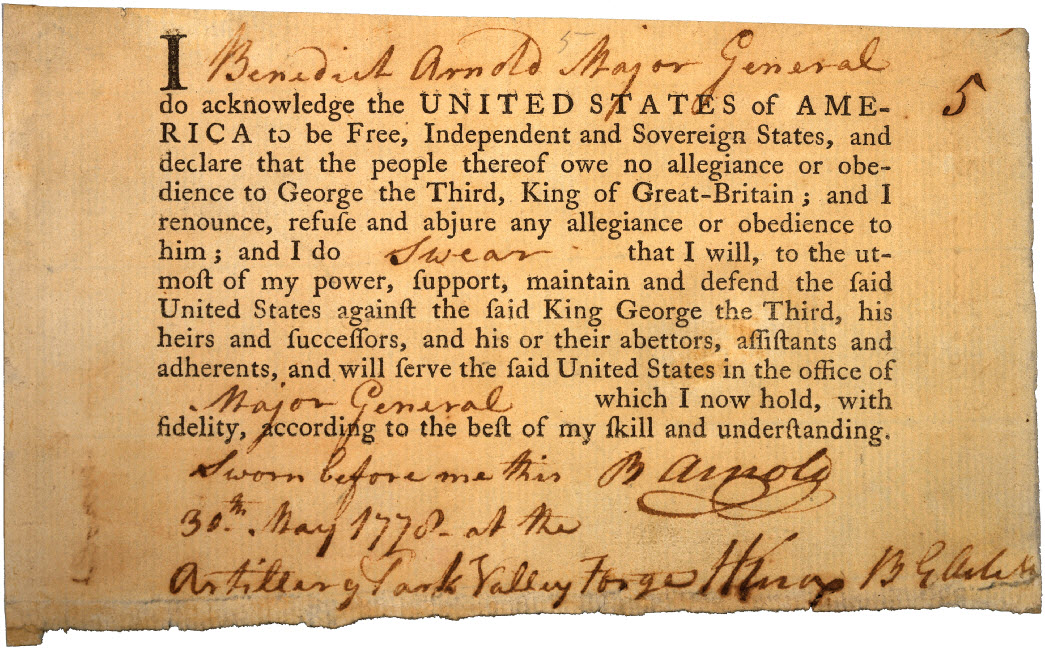 Document
Primary source
Benedict Arnold's Oath of Allegiance
Continental Congress · 30 May 1778
 Painting
Primary source
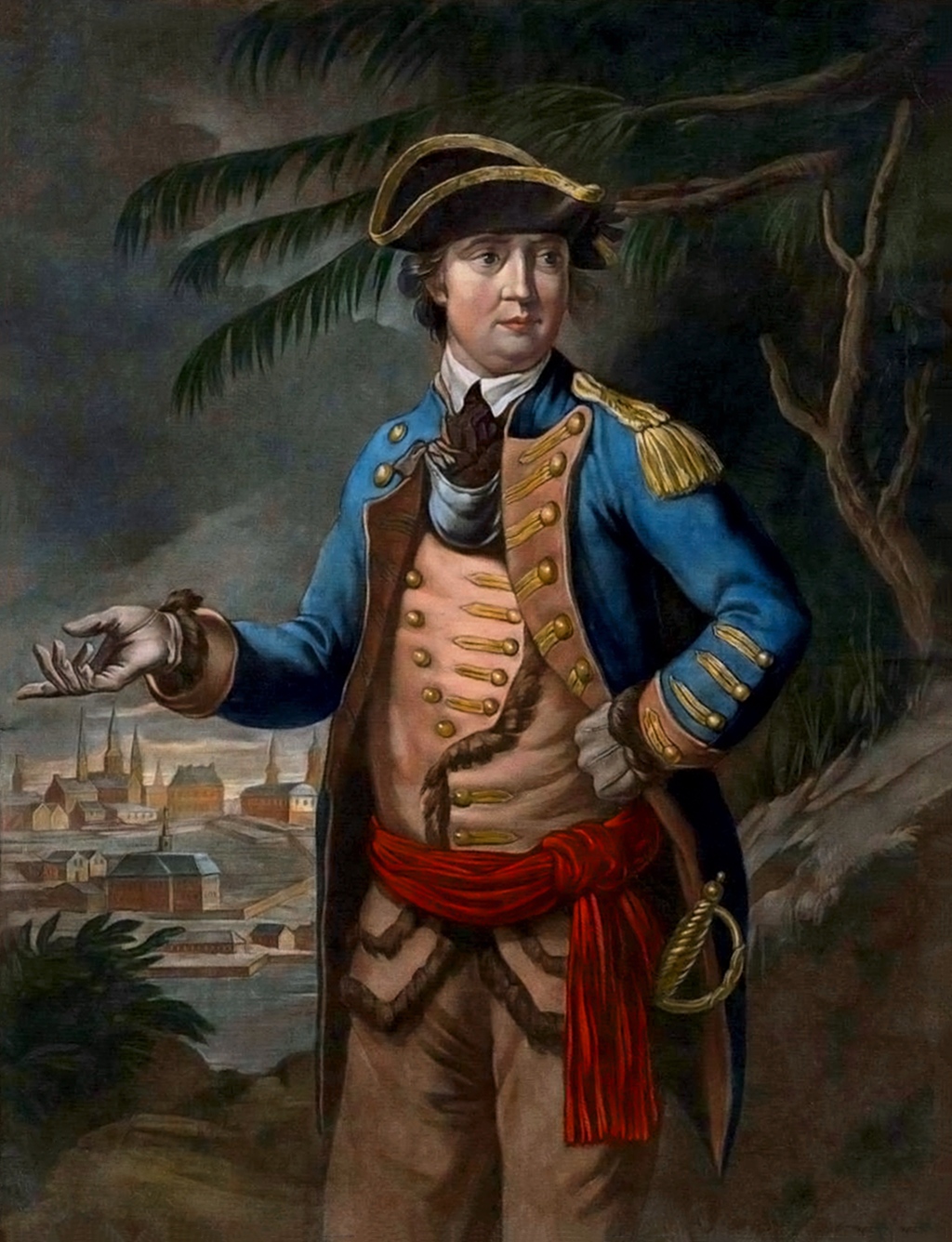
Portrait of Benedict Arnold
Thomas Hart · 26 March 1776
 Artifact
Primary source
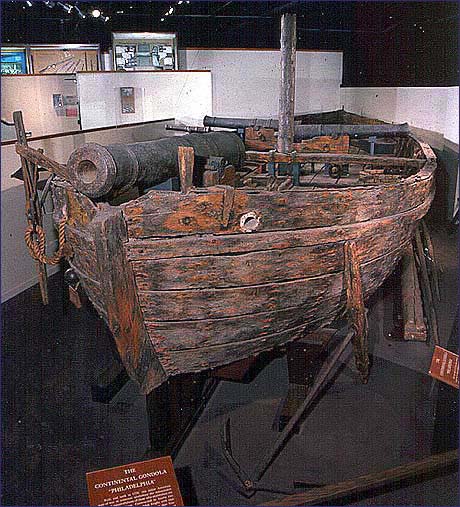
USS Philadelphia
1776
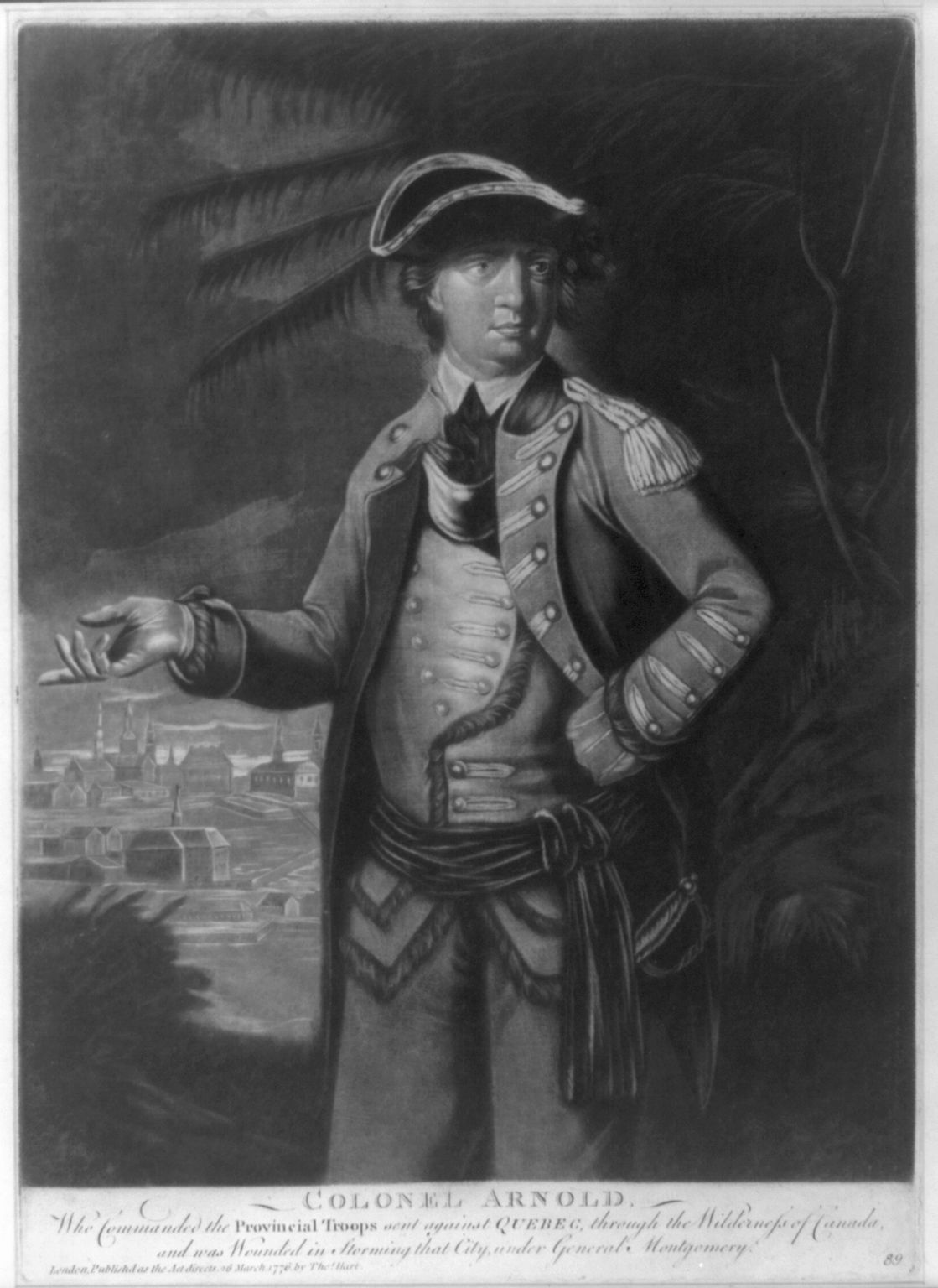 Painting
Primary source
Colonel Arnold
Thomas Hart · 1776
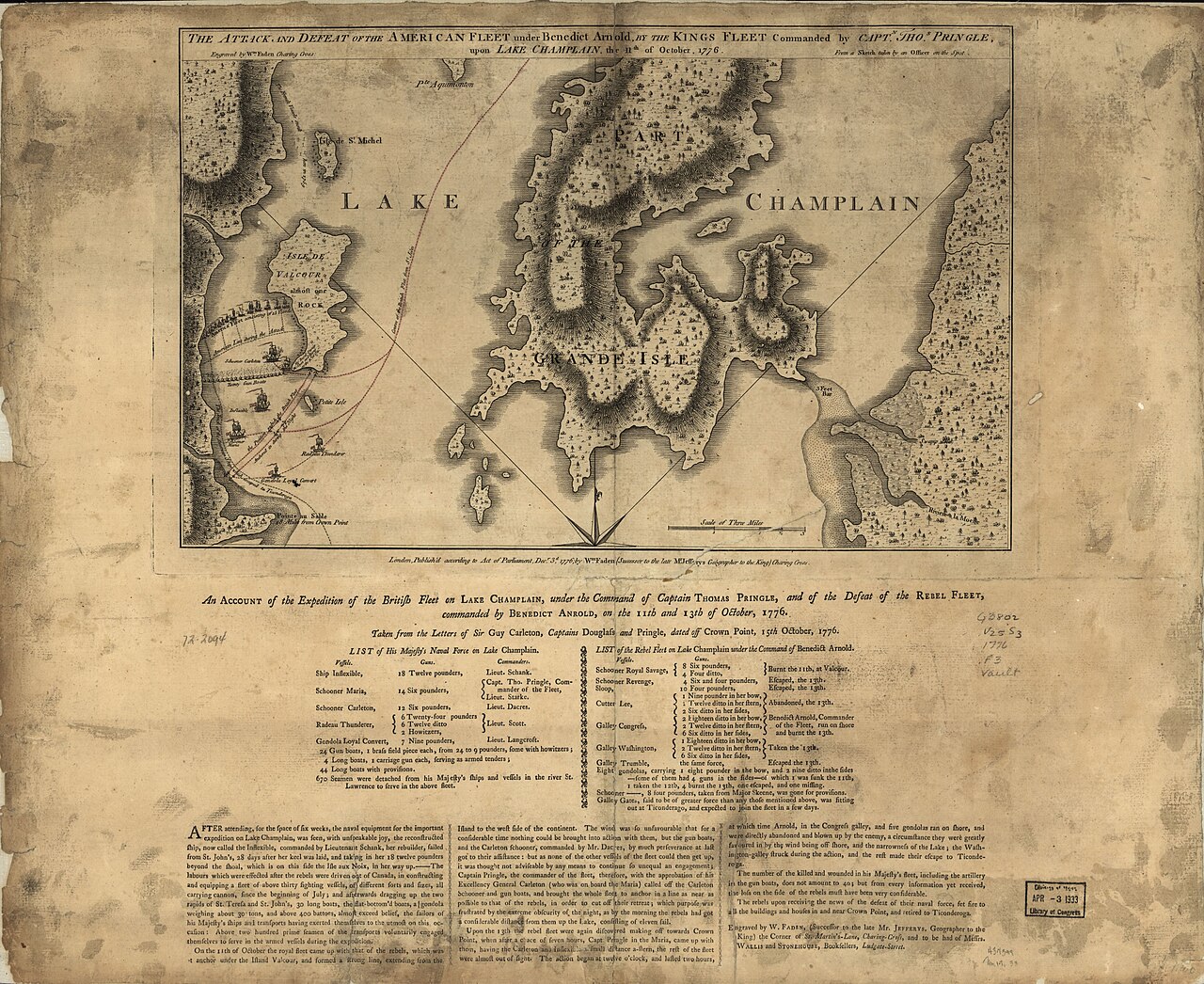 Document
Primary source
The Attack and Defeat of the American Fleet under Benedict Arnold upon Lake Champlain
William Faden · 1776
Ready when you are
Start chatting with Benedict Arnold now.
20 messages free · No credit card · Available in 50+ languages.