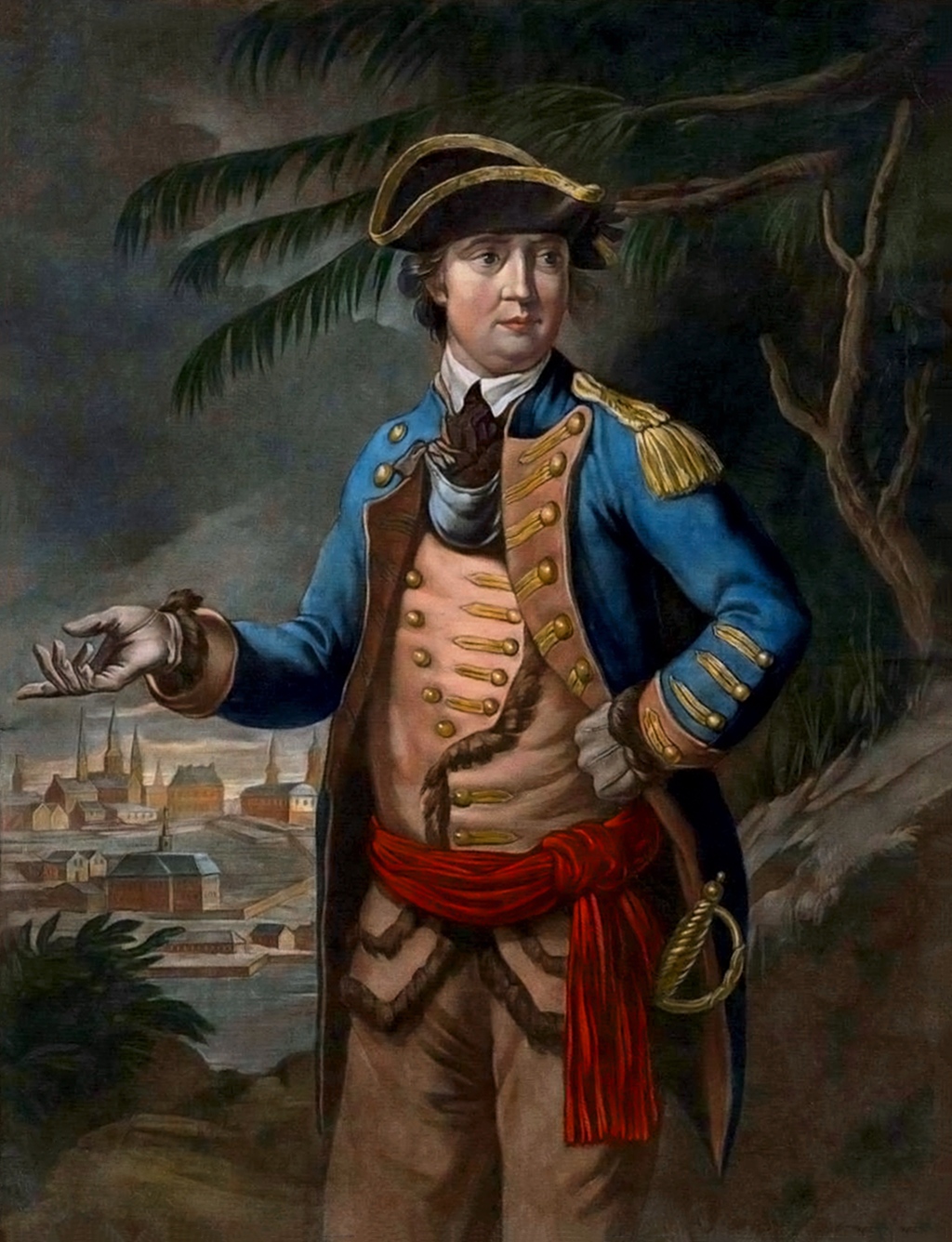
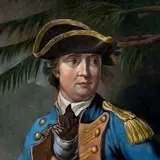
Portrait of Benedict Arnold

AI Historical Figure

Benedict Arnold

Revolutionary War general who defected to the British Army.

Chat with Benedict Arnold via text or voice — in 42 languages, drawing on a curated biography and 77 historical sources. Available 24/7.

Start chatting with Benedict Arnold20 messages free · No credit card
Lived
1741–1801
From
United States
Known for
Military
Benedict Arnold

Benedict Arnold

Online · responds in seconds

Hello — I'm Benedict Arnold. Revolutionary War general who defected to the British Army. What would you like to ask me?

20 messages free · No credit card · Powered by Humy.ai

Live preview · Switch between 42 languages above · Send a message to continue in the app

Multilingual

Talk to Benedict Arnold in 42 languages

Ask Benedict Arnold questions in any language below, and the rest of Humy's app speaks it too. Pick yours to open the chat in that language.

Also in German (Austria), German (Switzerland), English (UK), English (Australia), English (Canada).

The sources behind this AI

77 sources · 22 paintings · 16 documents · 15 photographs · 12 books · 5 artifacts · 3 letters · 3 diary entries · 1 sculpture

Benedict Arnold doesn’t improvise from thin air. The AI is grounded in 77 curated historical sources students can inspect. Open any of them to see what informs the conversation.

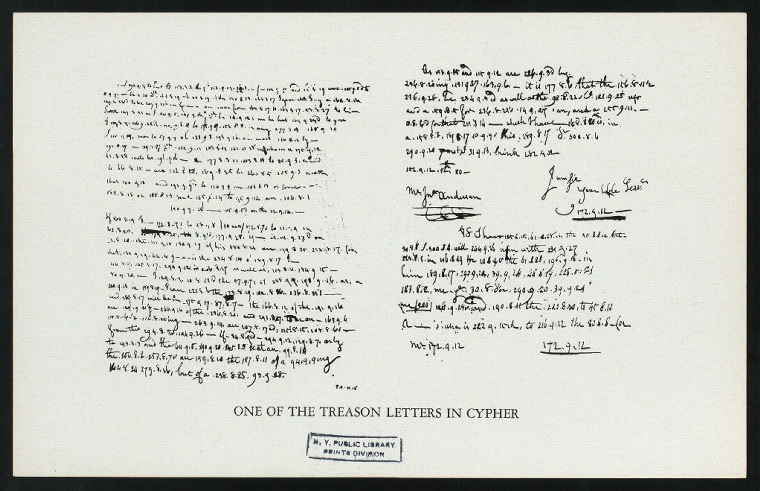
Printed reproduction of a handwritten page of cipher text on cream paper, with two columns of coded symbols and numbers, signatures at lower right, and the caption 'One of the Treason Letters in Cypher' beneath. A New York Public Library stamp appears at bottom.Letter

Primary source

Arnold Treason Cipher Letter

Benedict Arnold; Peggy Shippen Arnold · 1780

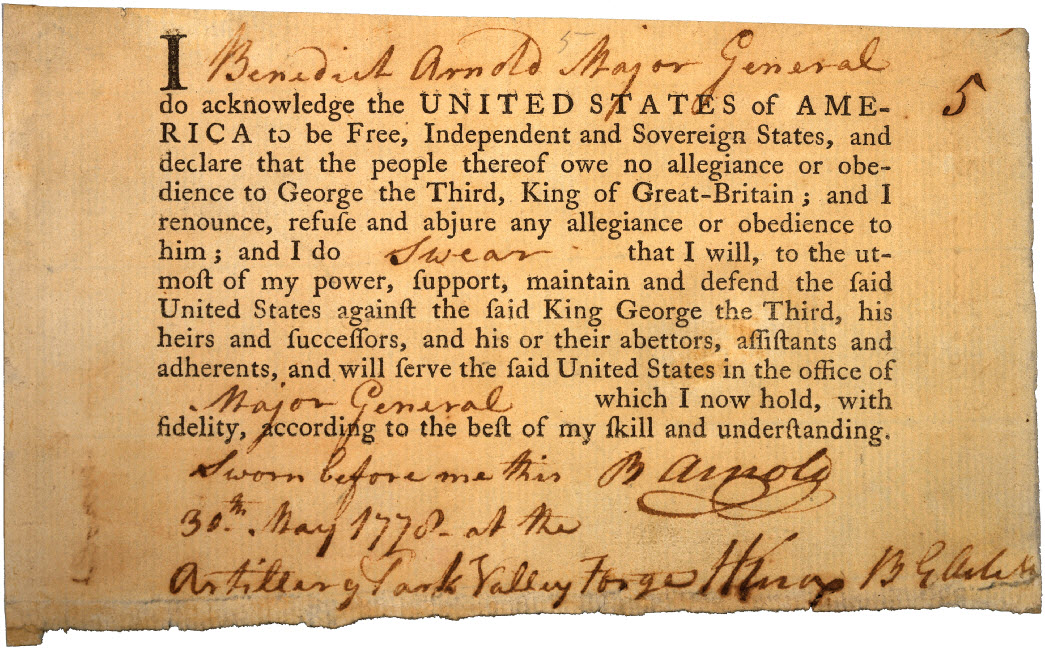
Scan of a handwritten oath of allegiance on aged, yellowed paper. Printed text declares allegiance to the United States of America and renounces King George the Third. Handwritten name 'Benedict Arnold, Major General' and office 'Major General' are filled in, with a signature 'B. Arnold' and a jurat reading 'Sworn before me this 30th May 1778 at the Artillery Park Valley Forge' signed by an officer.Document

Primary source

Benedict Arnold's Oath of Allegiance

Continental Congress · 30 May 1778

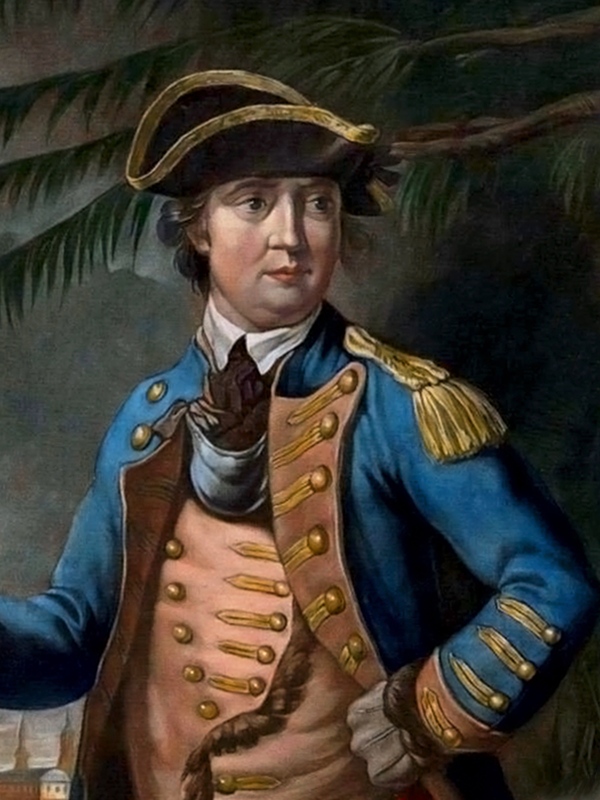
Colour print of a standing man in a tricorn hat with gold trim, a blue coat with gold epaulette and buttons, a tan waistcoat, a red sash, and a sword hilt. He gestures toward a town with church spires across a river, with palm fronds behind him.Painting

Primary source

Portrait of Benedict Arnold

Thomas Hart · 26 March 1776

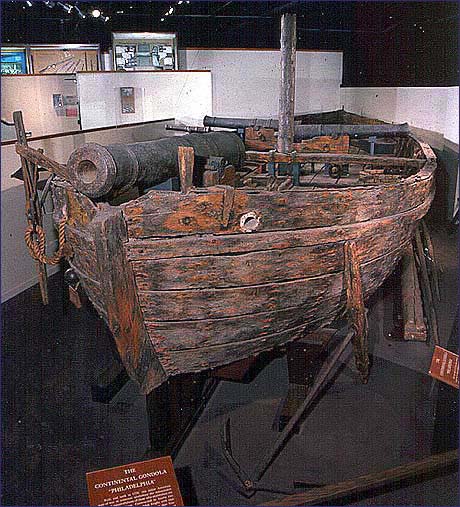
A weathered wooden gunboat displayed in a museum gallery, with a cannon at its bow, a mast, and a placard reading 'Continental Gondola Philadelphia' in the foreground. Its hull planks are dark and worn.Artifact

Primary source

USS Philadelphia

1776

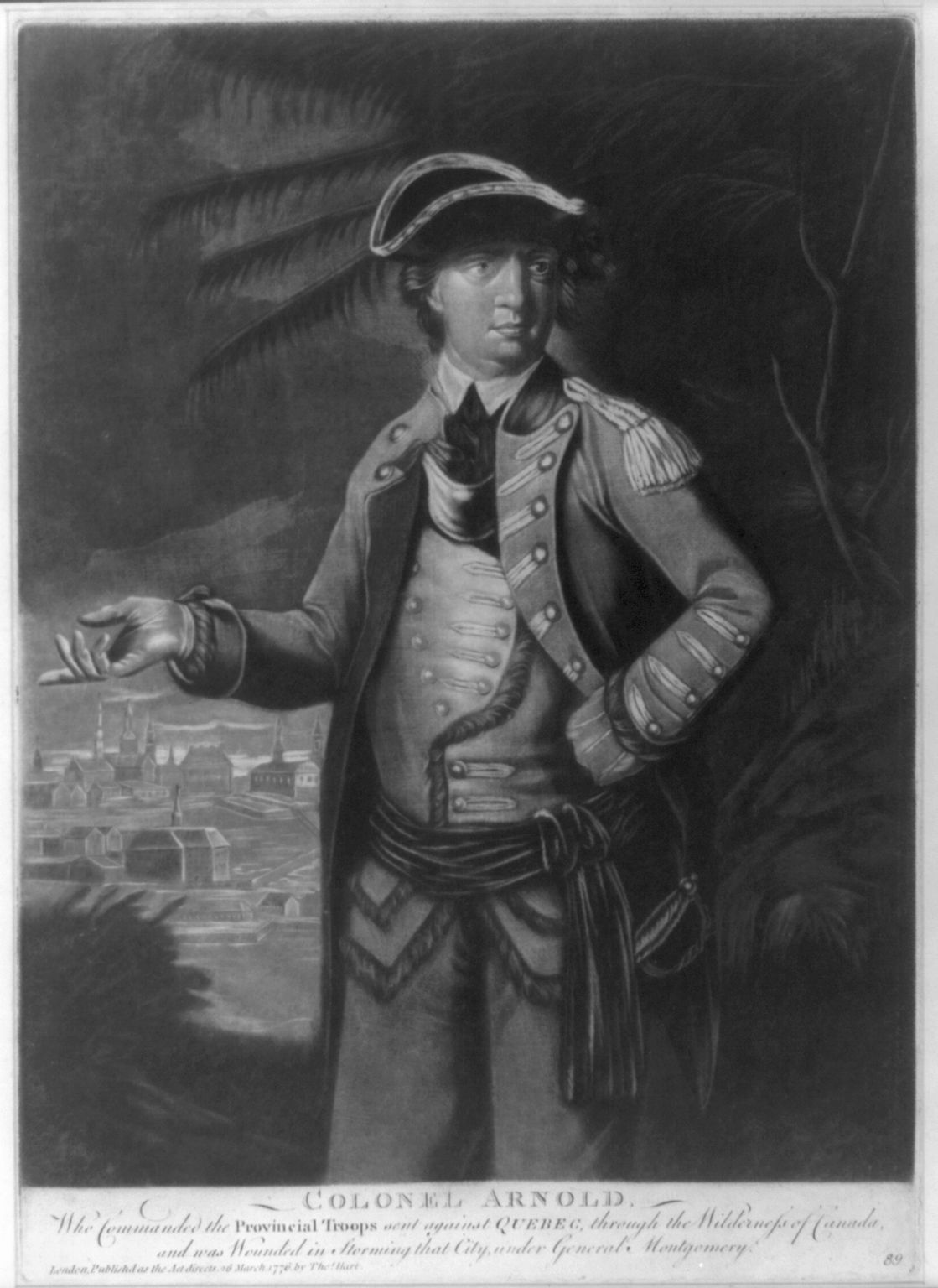
Black-and-white mezzotint portrait of a man in an 18th-century military uniform with a tricorn hat, standing before a dark wooded background and a town view on the left, gesturing with one hand. Caption text is printed below.Painting

Primary source

Colonel Arnold

Thomas Hart · 1776

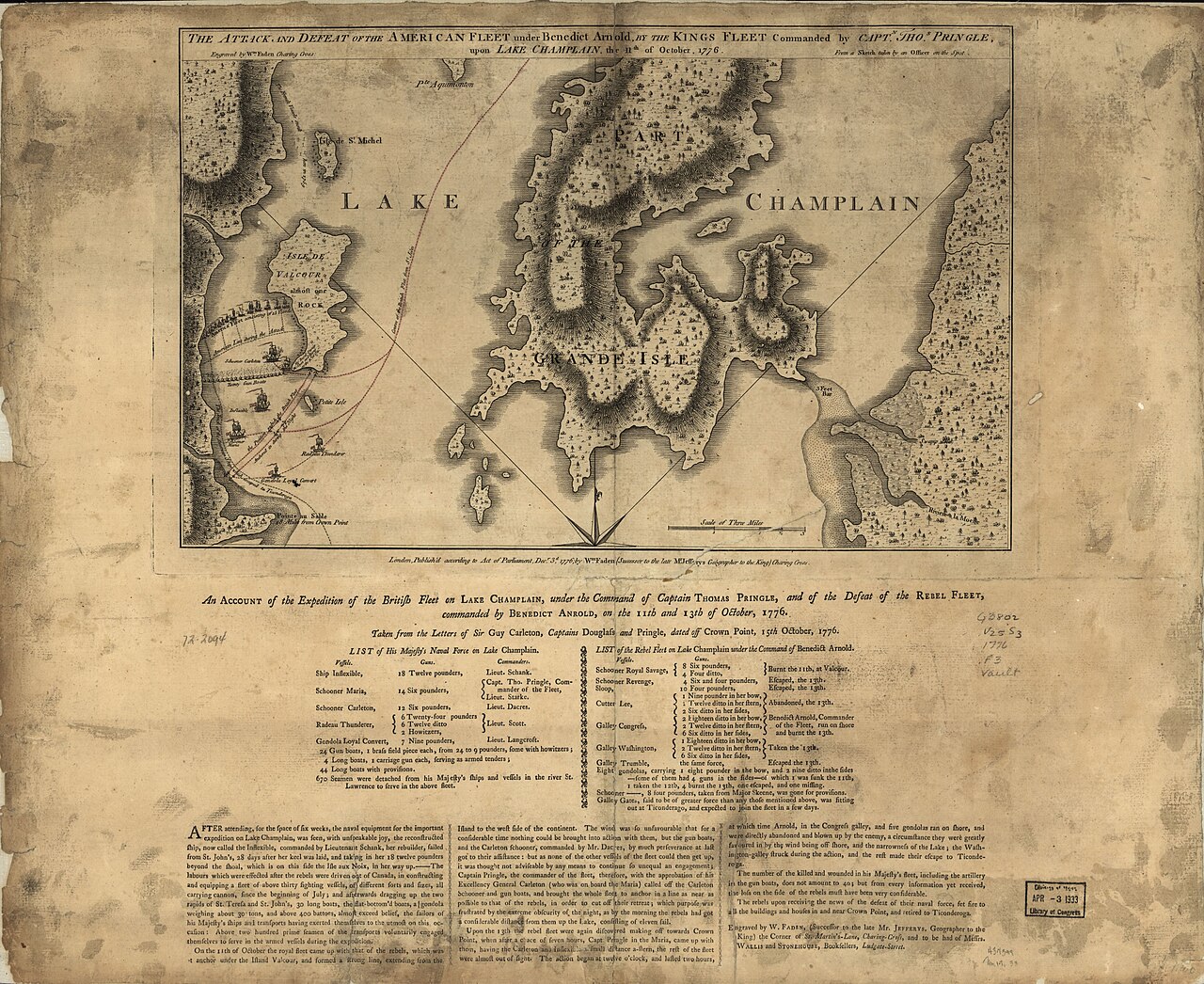
Engraved map titled The Attack and Defeat of the American Fleet under Benedict Arnold, by the Kings Fleet commanded by Captn. Thos. Pringle, upon Lake Champlain, 11th October 1776. Shows Lake Champlain with Grand Isle, the lake's islands and shorelines, hachured relief, ship positions, and a compass rose, with a printed account of the expedition in text columns below.Document

Primary source

The Attack and Defeat of the American Fleet under Benedict Arnold upon Lake Champlain

William Faden · 1776

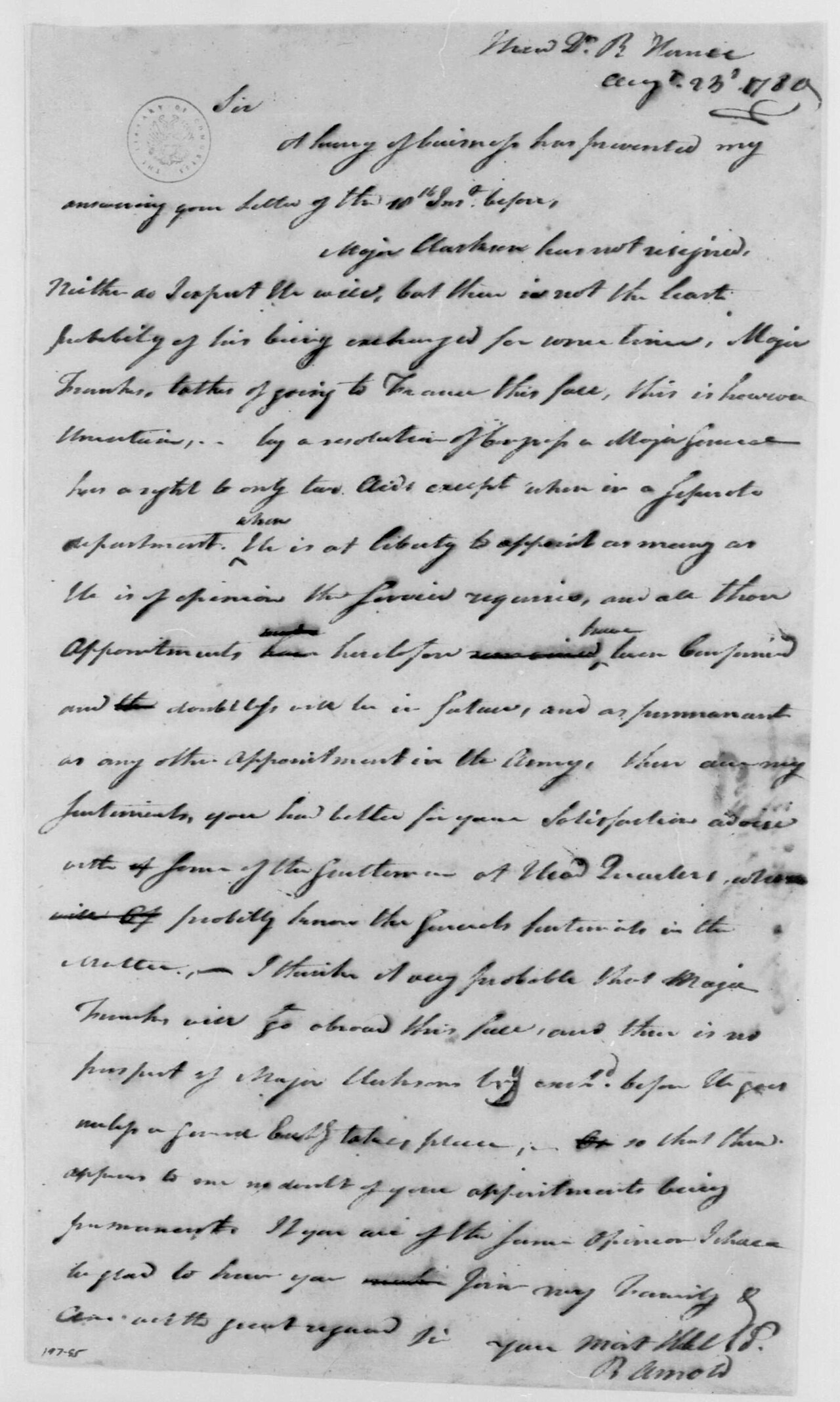
Handwritten manuscript letter on aged paper, dated August 23, 1780, addressed 'Sir' to Nicholas Gilman, New Hampshire, signed 'B Arnold' at bottom right. Includes a round library stamp at upper left and a catalog number at lower left.Letter

Primary source

Letter from Benedict Arnold to Nicholas Gilman

Benedict Arnold · 23 August 1780

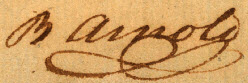
Cropped close-up of a handwritten signature in brown ink on aged paper, reading 'Benedict Arnold' in cursive with a long flourished underline beneath the letters.Document

Primary source

Signature of Benedict Arnold

Benedict Arnold · 30 May 1778

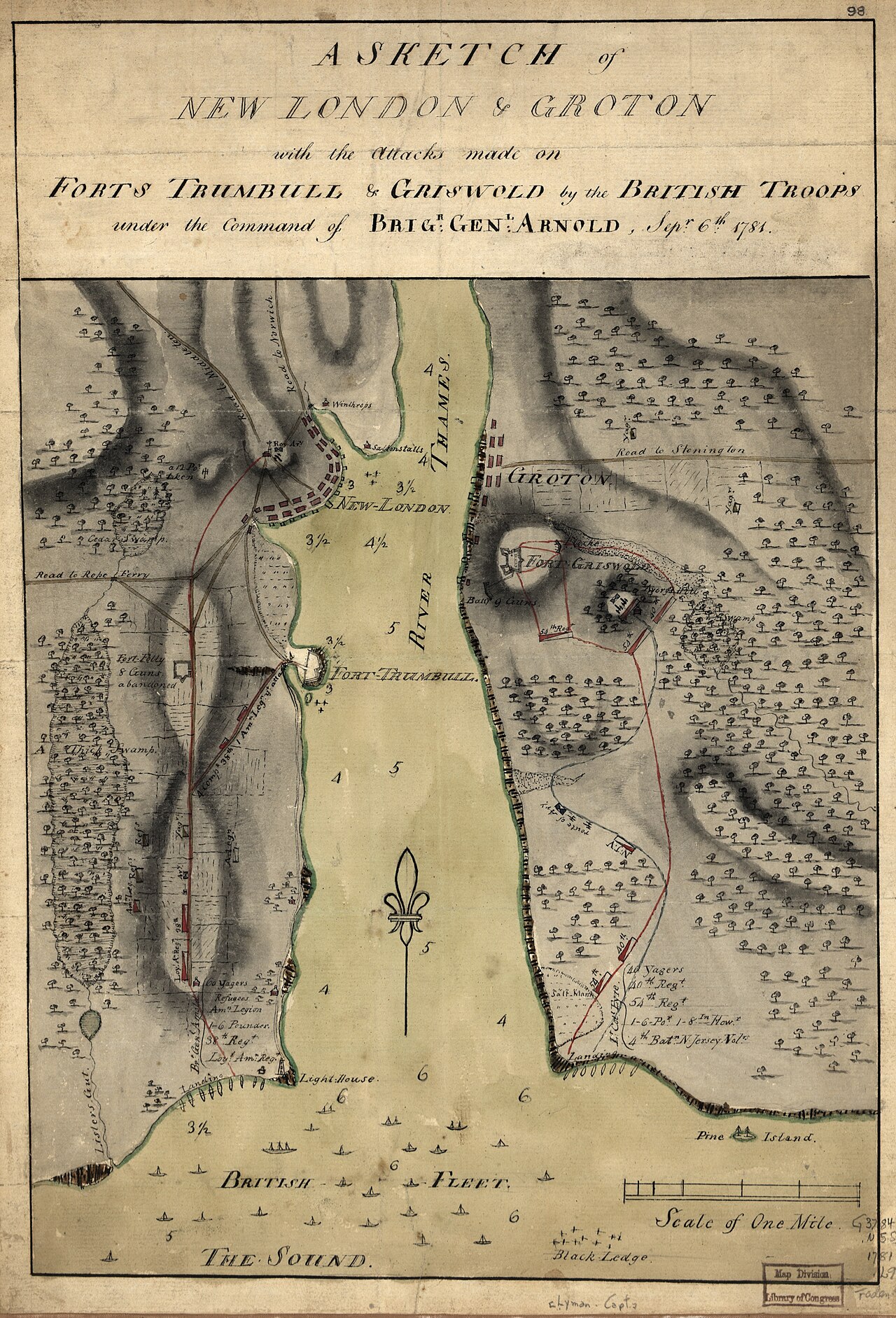
Hand-drawn colored military sketch map titled 'Asketch of New London & Groton' showing attacks on Forts Trumbull and Griswold by British troops under Brigadier General Arnold, September 6, 1781. Shows the Thames River, British fleet in The Sound, troop positions, and wooded terrain with scale bar.Document

Primary source

A Sketch of New London & Groton

Daniel Lyman · 1781

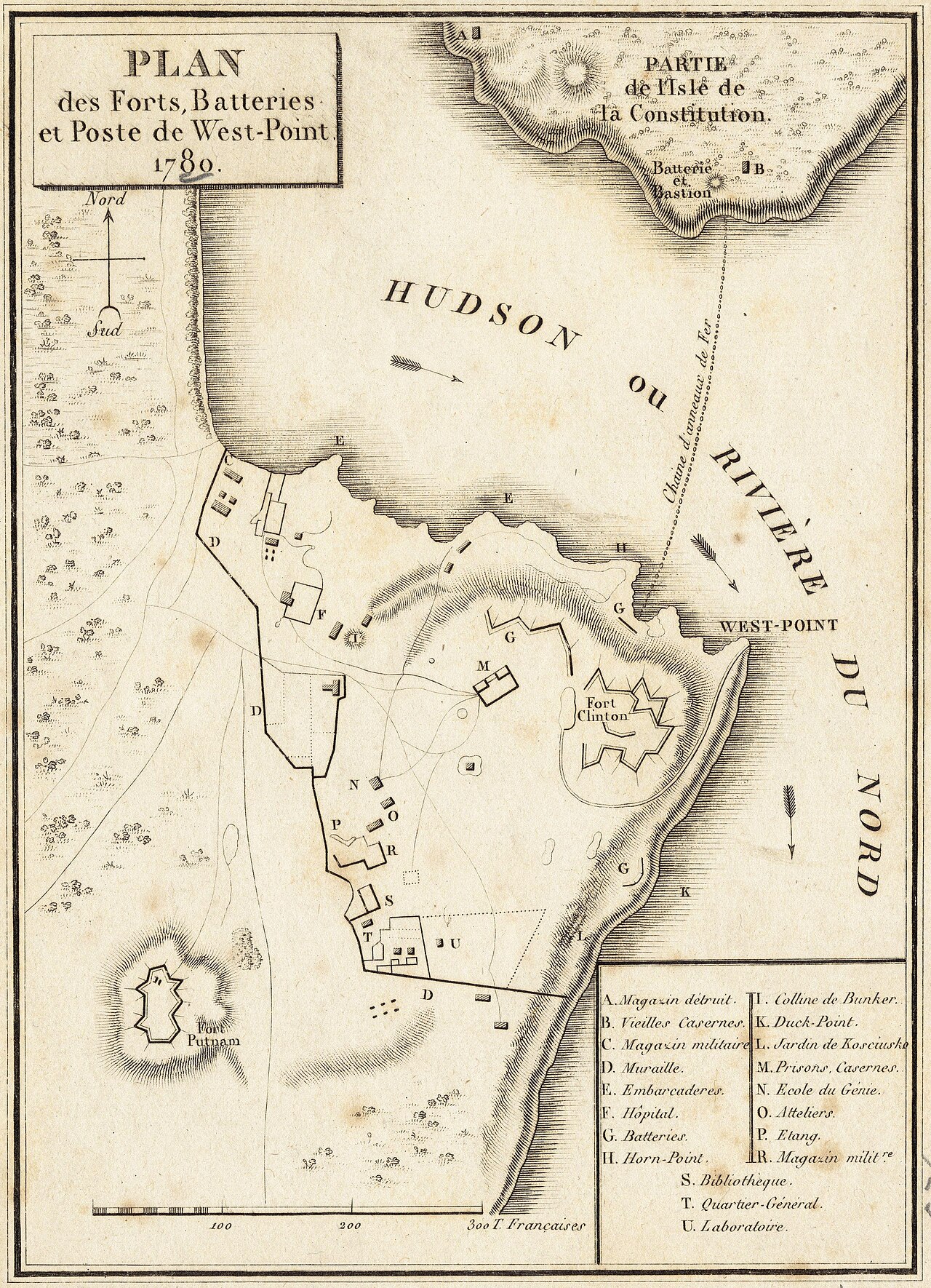
Engraved French map titled 'Plan des Forts, Batteries et Poste de West-Point, 1780'. It shows fortifications along the Hudson River, with labeled sites such as Fort Clinton, Fort Putnam, and a legend listing lettered locations, a scale bar in toises, and a compass arrow marking north.Document

Secondary source

Plan des Forts, Batteries et Poste de West-Point

Pierre Didot · 1780

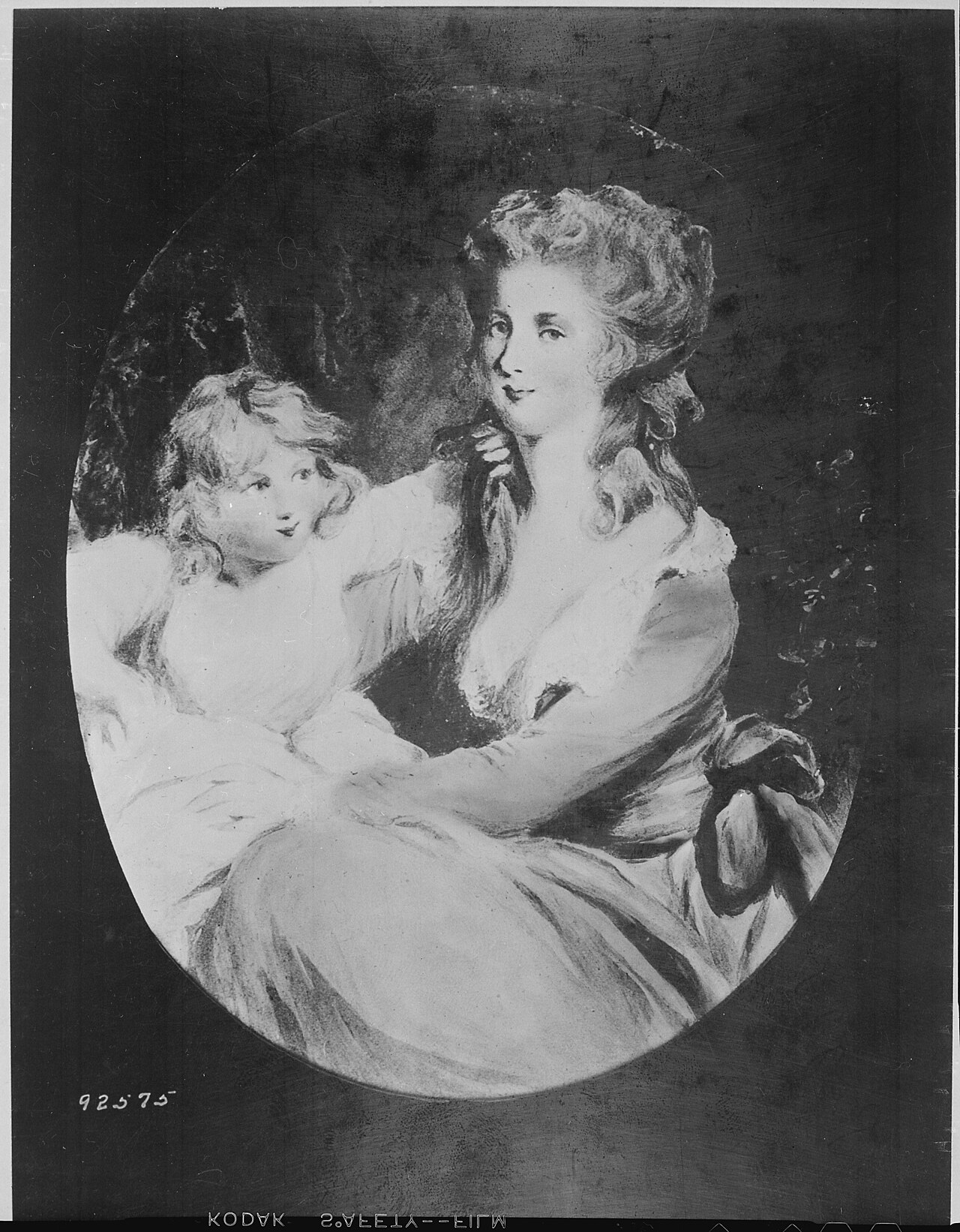
Black-and-white photographic reproduction of an oval painting: a woman with upswept curled hair in a low-cut gown sits turned toward the viewer, holding a child with curly hair who gazes out beside her. A film edge and catalog number appear at the bottom.Painting

Primary source

Portrait of Mrs. Benedict Arnold (Peggy Shippen) and Child

Daniel Gardner · c. 1783–1789

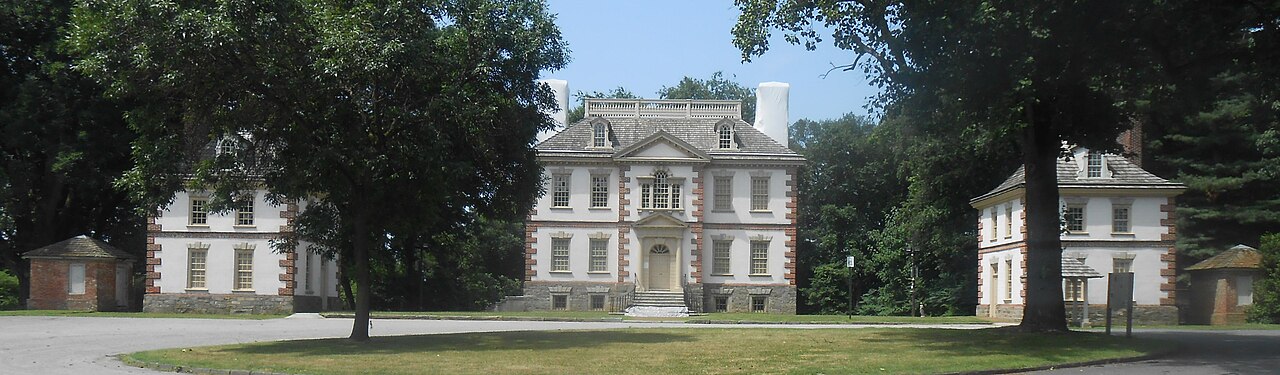
Wide view of a symmetrical two-and-a-half-story Georgian brick mansion with white trim, a central pedimented entrance, a hipped roof with dormers and a balustrade, flanked by trees, a gravel drive and lawn in summer.Artifact

Primary source

Mount Pleasant

Thomas Nevell · 1762

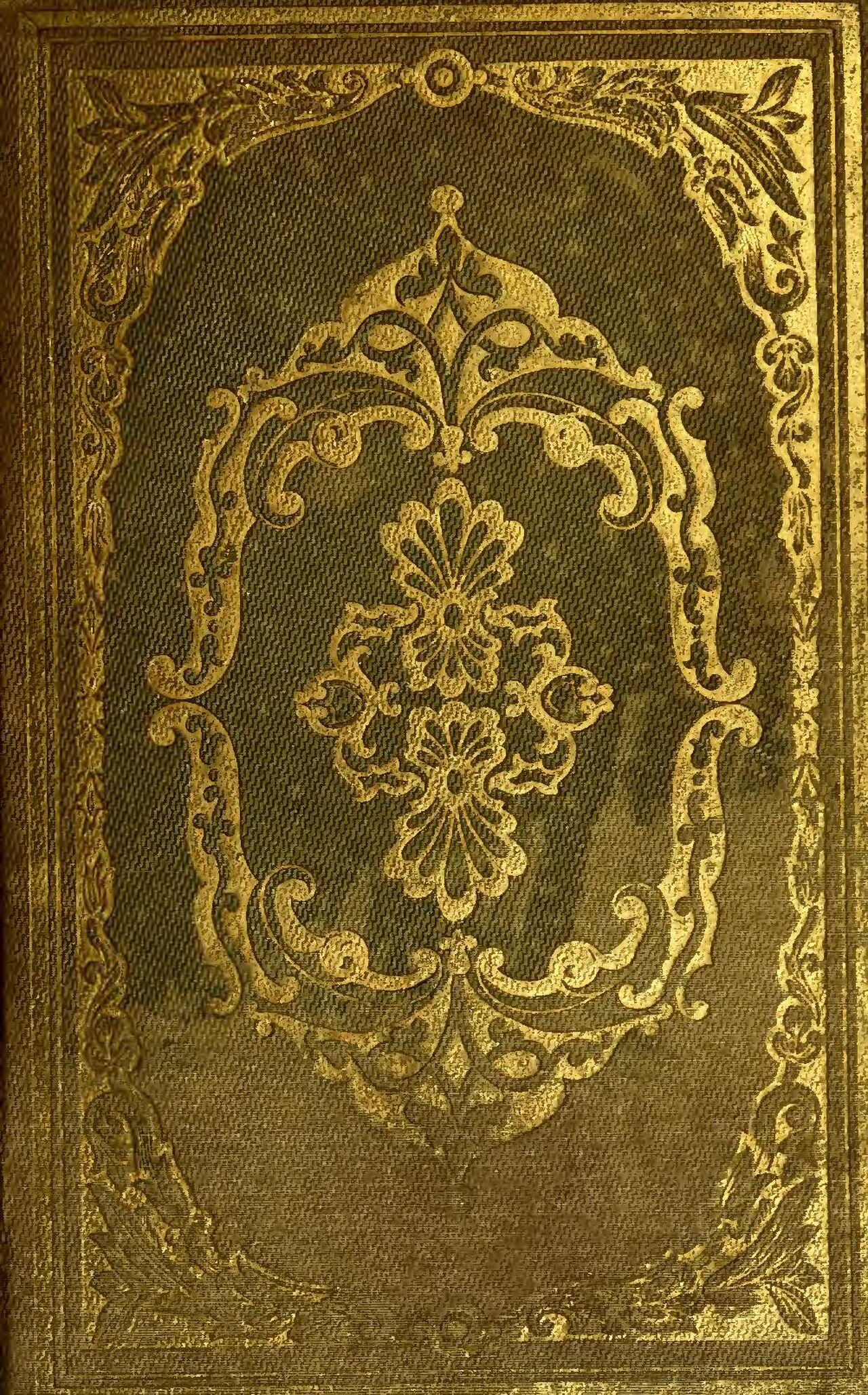
Front cover of a book bound in dark green cloth with an elaborate gold-stamped decorative border of scrolls and foliage, and a central gold ornamental cartouche with floral motifs.Diary entry

Primary source

A Military Journal during the American Revolutionary War

James Thacher · 1780 (published 1823)

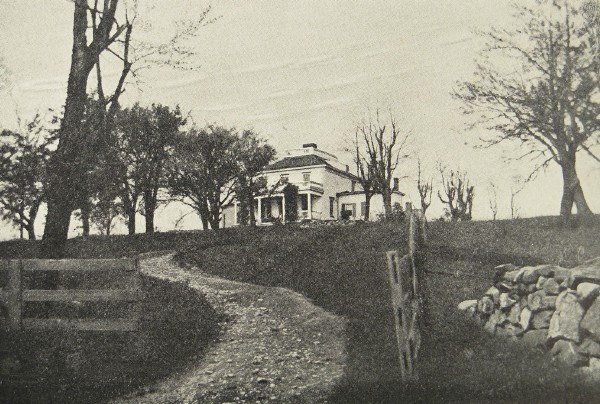
Black-and-white photograph of a two-story white house with a hipped roof and porch on a grassy hilltop, reached by a dirt road curving past a wooden fence and stone wall, with tall bare and leafy trees around it.Photograph

Secondary source

Joshua Hett Smith House, 'Treason House'

Clifton Johnson · 1915

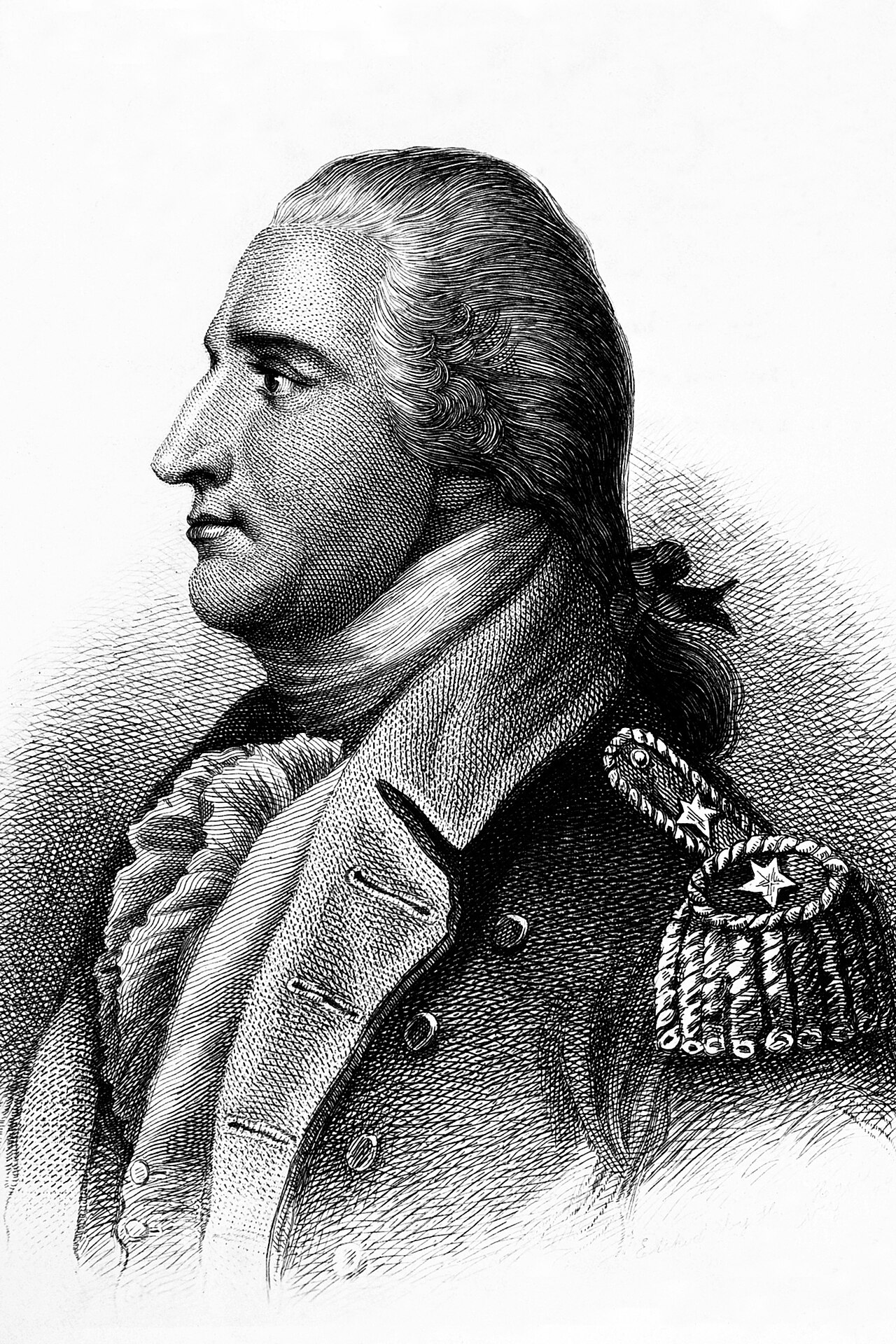
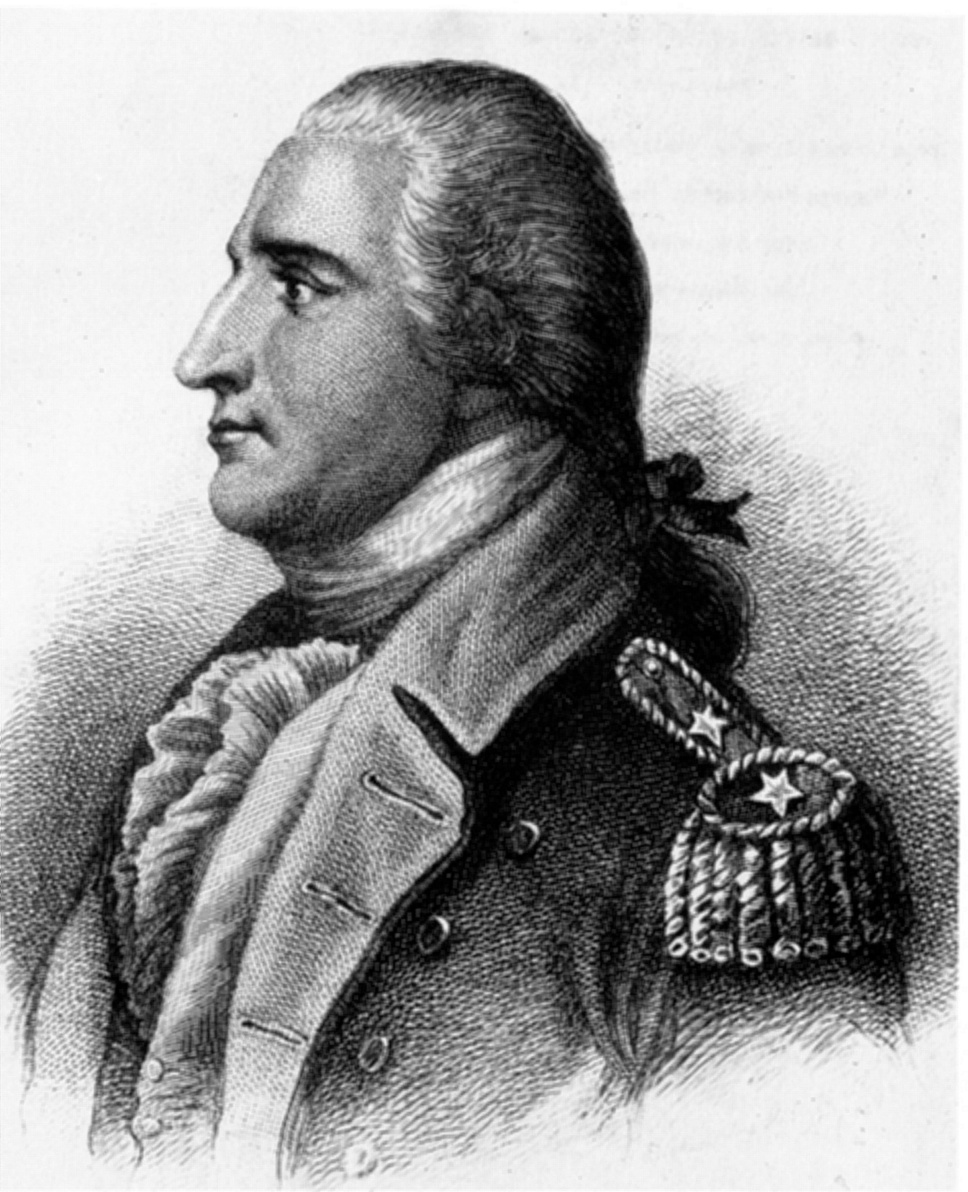
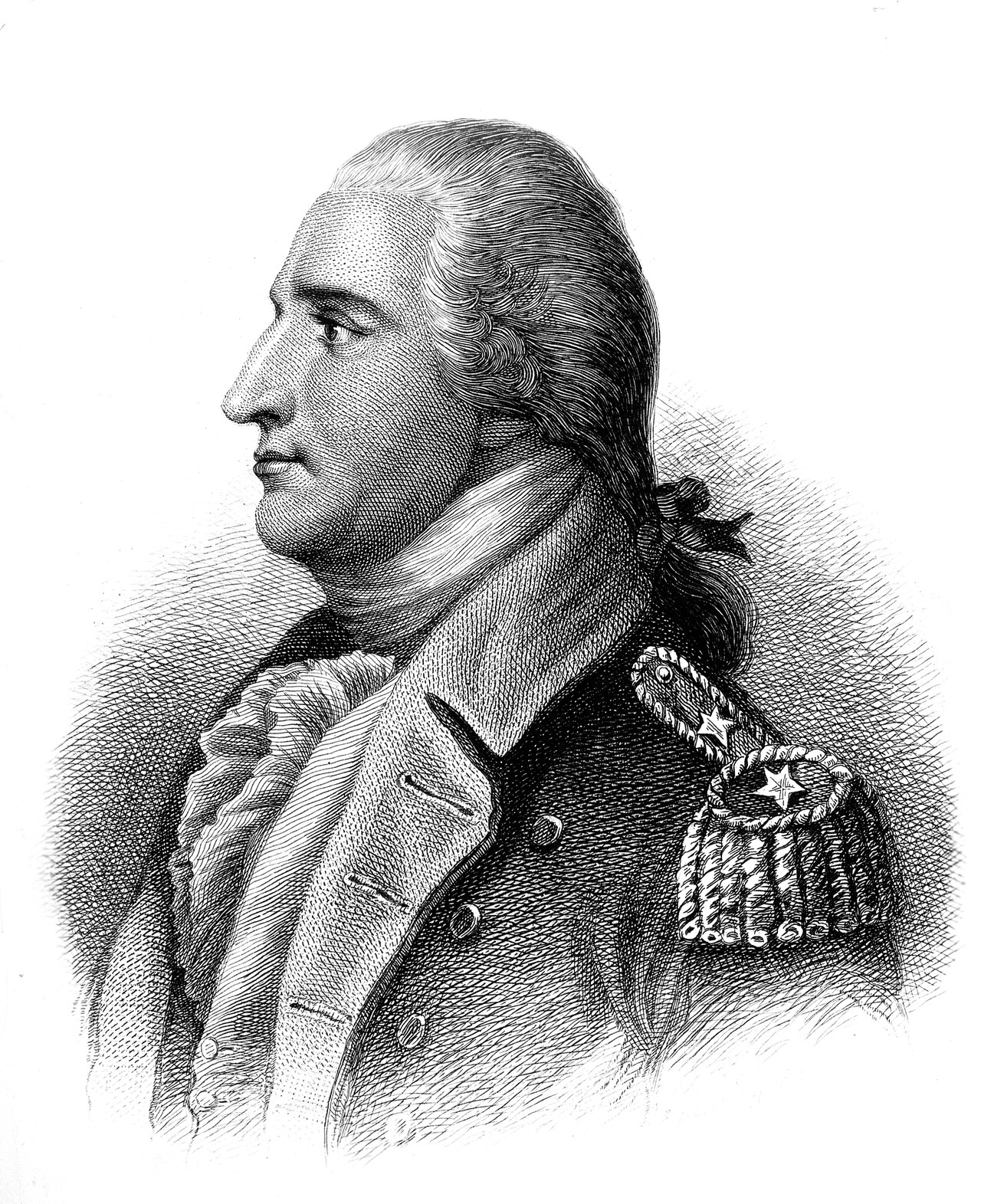
Black and white engraving in profile facing left of a man with powdered hair tied back, wearing a high cravat, a military coat with epaulettes bearing star insignia, and a ruffled shirt front.Painting

Secondary source

Benedict Arnold Illustration

Henry Bryan Hall, after John Trumbull

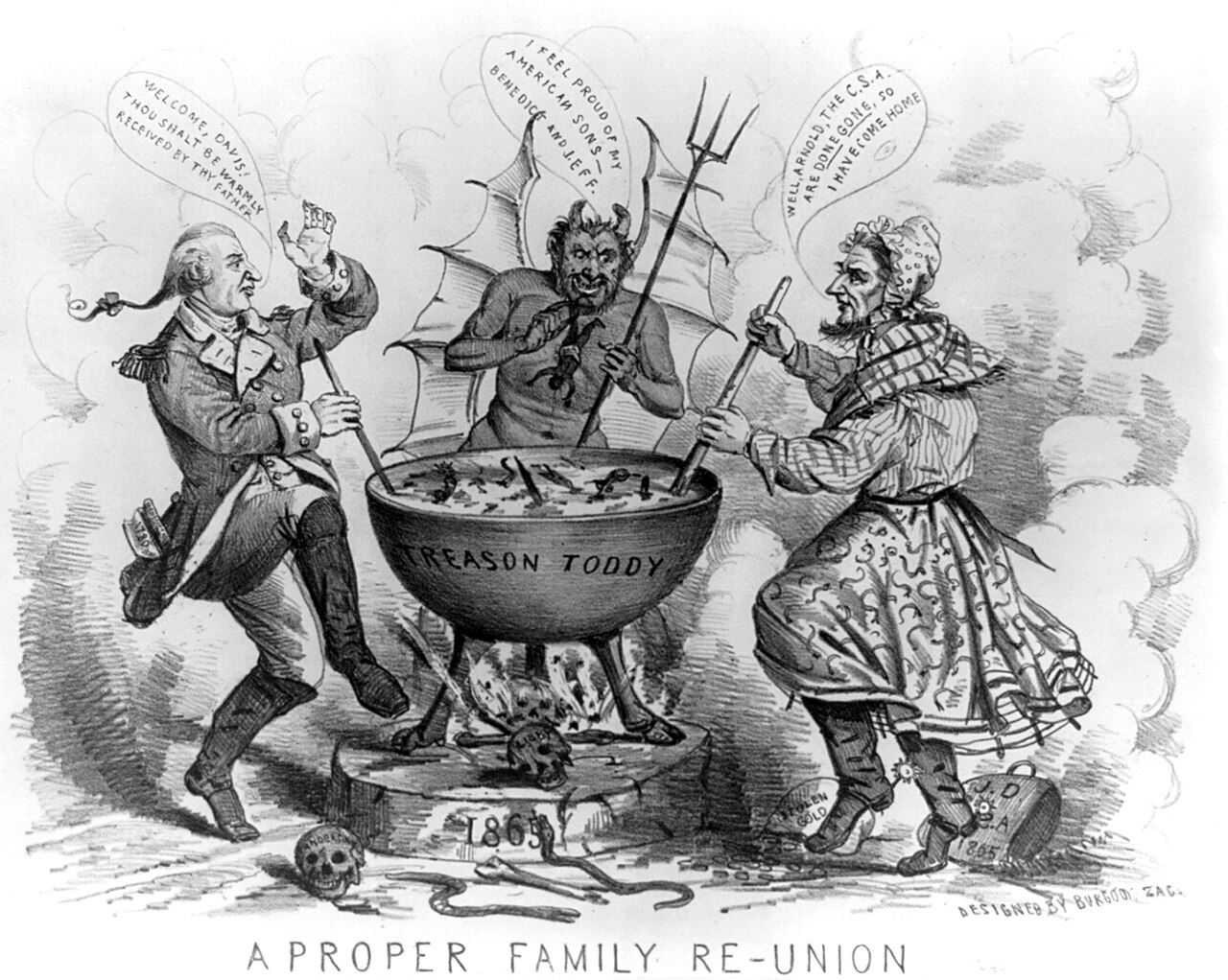
Black-and-white political cartoon titled 'A Proper Family Re-Union'. Satan stands center behind a cauldron labeled 'Treason Toddy' over a fire, with a 1865 marker. Benedict Arnold, in 18th-century uniform, gestures on the left, saying 'Welcome, Davis'. On the right, a woman in a patterned dress, labeled C.S.A., holds a stirring pole and says 'I have come home'. Skulls and bones lie in the foreground.Artifact

Secondary source

A Proper Family Re-Union

Oscar Henry Harpel ("Burgoo Zac") · 1865

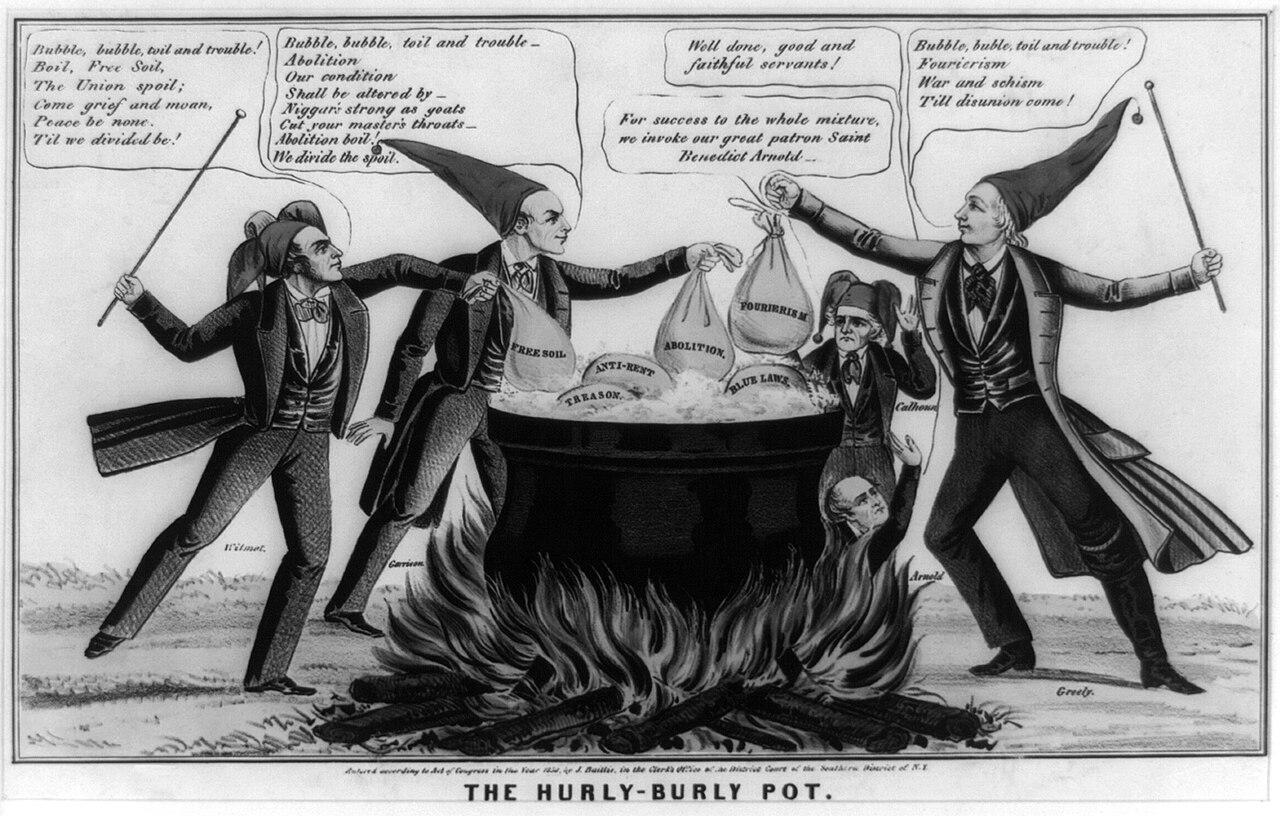
Political cartoon titled The Hurly-Burly Pot. Three caricatured men in witch-like pointed hats stir a large cauldron over a fire, with a fourth figure's head rising from the pot. Speech bubbles and labeled sacks read Abolition, Free Soil, Fourierism, Treason, Blue Laws, and Anti-Rent. Labels name figures including Wilmot, Garrison, Greeley, Calhoun, and Arnold.Painting

Secondary source

The Hurly-Burly Pot

James S. Baillie · 1850

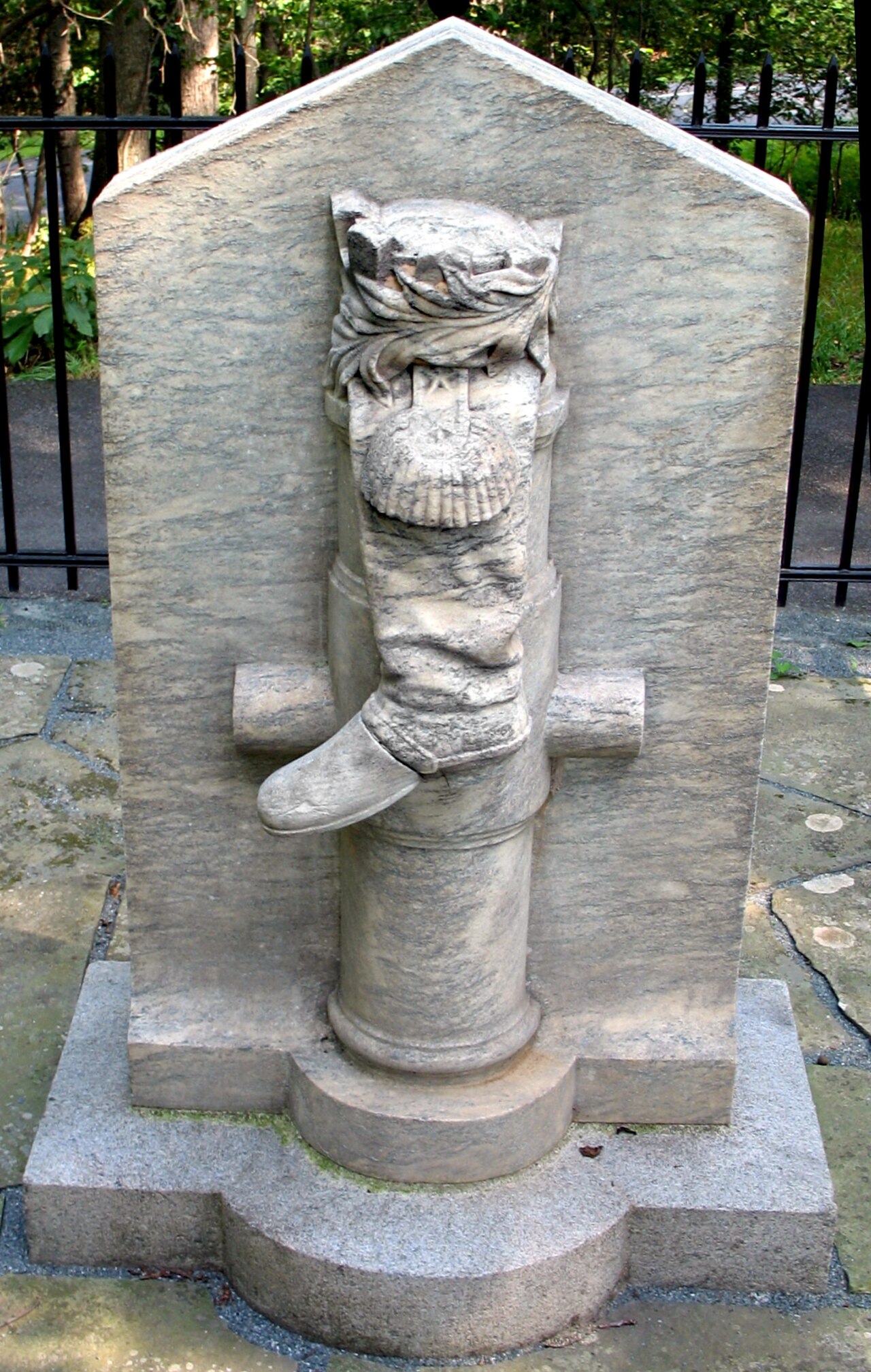
Photo of a grey stone monument with a pointed top, featuring a carved leg in a boot with a fur-trimmed top and a sculpted shell-like ornament, set on a cylindrical pedestal in front of a black iron fence and trees.Sculpture

Secondary source

Boot Monument

George Edwin Bissell · 1887

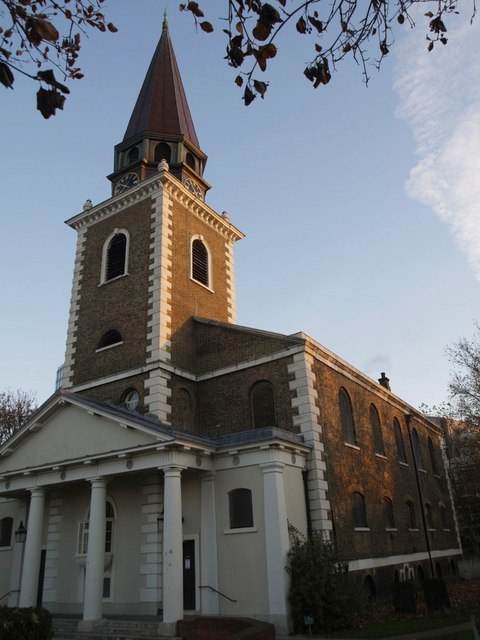
Exterior of a brick church with a tall spire atop a square tower with clock faces and arched windows, white-columned portico at the front, under a pale blue evening sky with bare branches in the foreground.Artifact

Secondary source

St Mary's Church, Battersea

Joseph Dixon (architect); John Hayward (window designer) · 801 (church site); window installed 1976

Plain dark red book cover or spine with a black vertical line along the left edge. No title, text, or figures are visible.Book

Primary source

An Authentic Narrative of the Causes which led to the Death of Major André

Joshua Hett Smith · 1808

Brown cloth book cover with a white library label at top left reading 'NYPL Research Libraries' above a barcode and the number 3 3433 08044645 7. No title is visible.Book

Primary source

An Accurate and Interesting Account of the Hardships and Sufferings of that Band of Heroes ... against Quebec

John Joseph Henry · 1812

Book

Primary source

A Journal of the Operations of the Queen's Rangers

John Graves Simcoe · 1787

Black-and-white engraved profile portrait of a man facing left, with powdered hair tied back, a high white cravat, ruffled jabot, and a military coat with epaulettes bearing star insignia.Painting

Secondary source

Benedict Arnold

Henry Bryan Hall, after John Trumbull

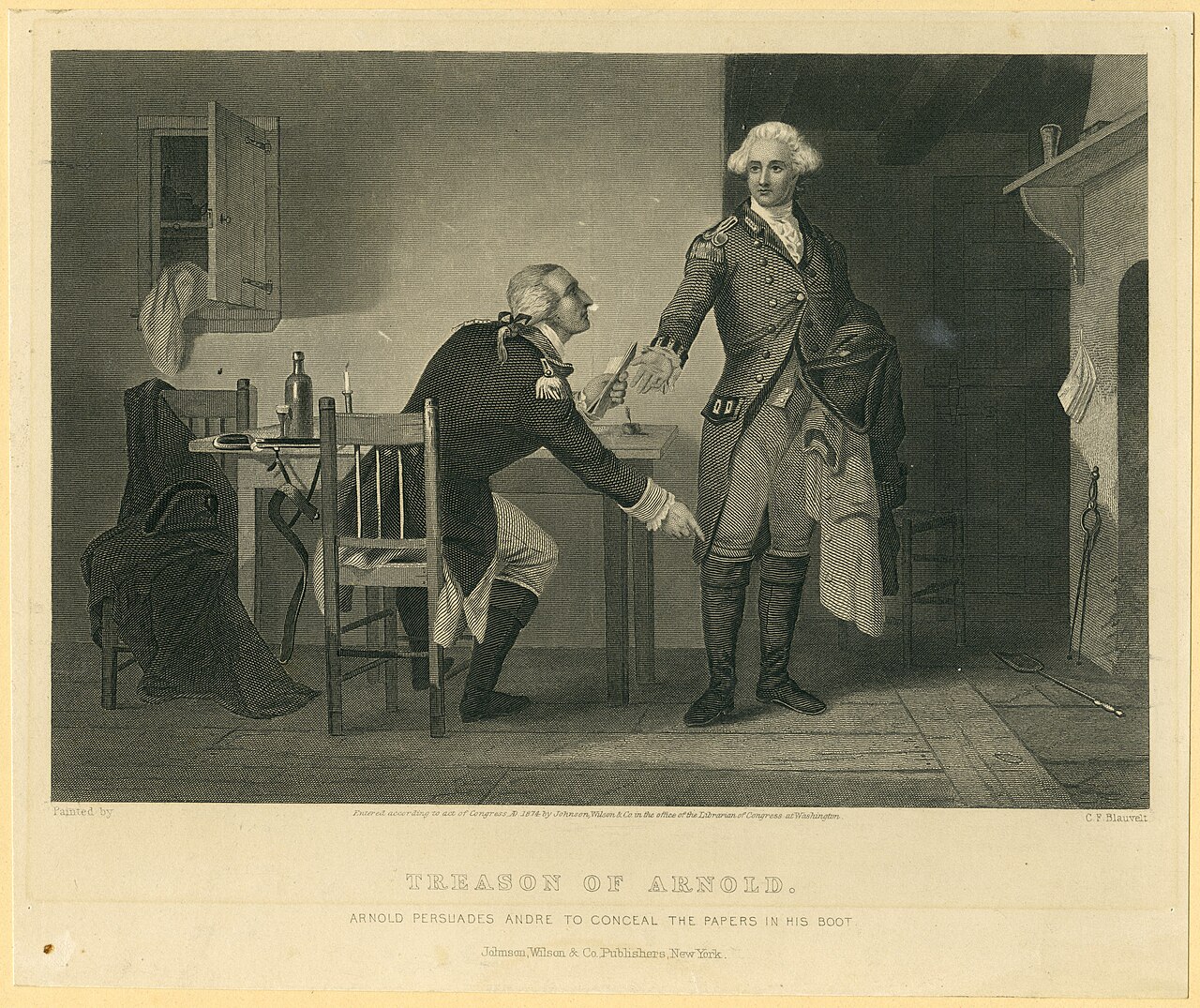
Engraved print titled 'Treason of Arnold', showing two men in 18th-century military coats in an interior room with a fireplace, table, and chairs. A seated officer leans toward a standing officer who reaches out and takes his hand. Caption below reads 'Arnold persuades Andre to conceal the papers in his boot'.Painting

Secondary source

Treason of Arnold: Arnold Persuades André to Conceal the Papers in His Boot

Charles F. Blauvelt

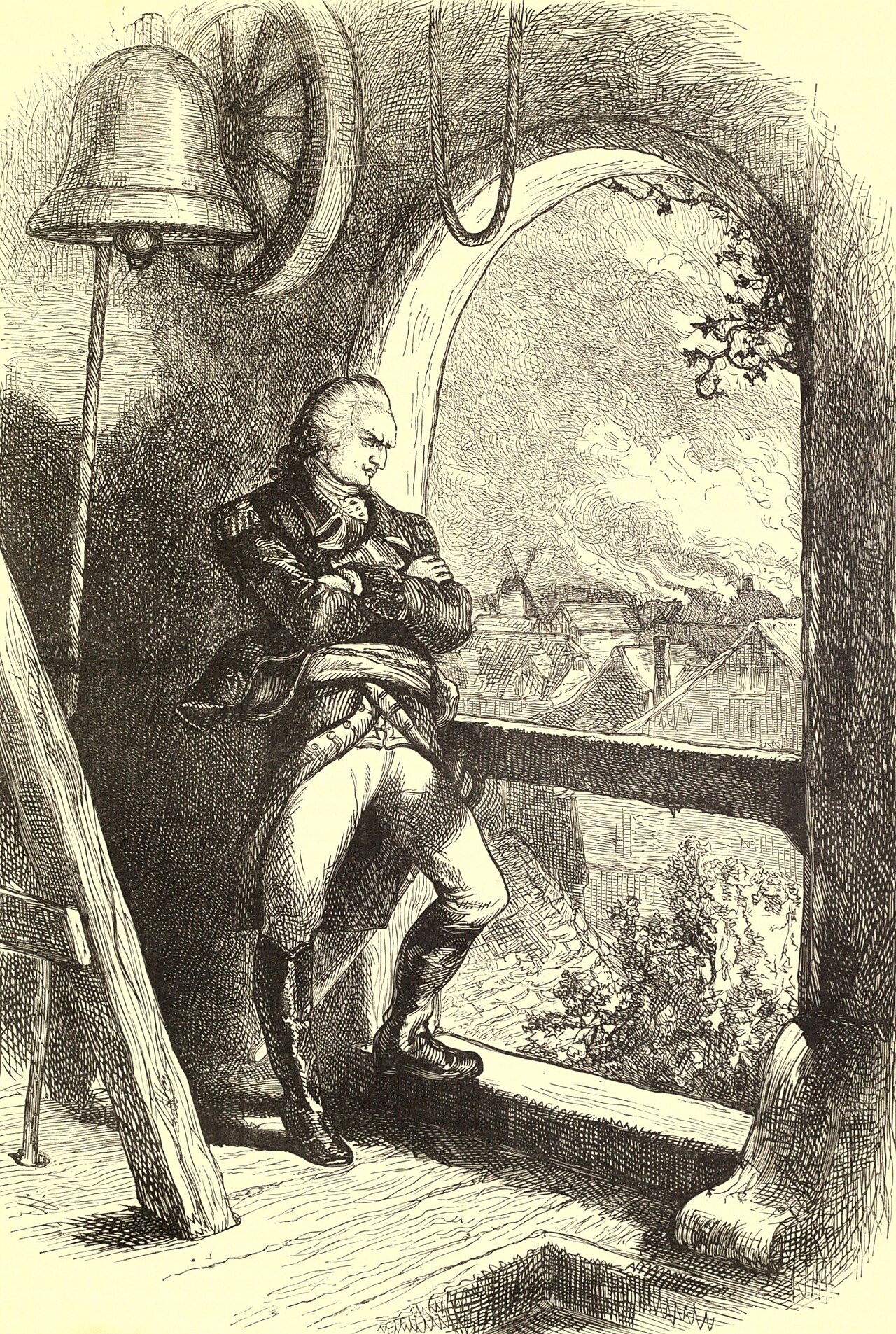
Black-and-white engraved illustration of a man in a military-style uniform with a high collar and tall boots, leaning against a wall beside a bell and a bell rope in a tower. He gazes out over a wooden railing at a town with rooftops, chimneys, a windmill, and smoke rising in the distance under a cloudy sky.Painting

Secondary source

Arnold Viewing the Destruction of New London (Battle of Groton Heights)

Unknown · depicts 1781

Book

Secondary source

The Life of Benedict Arnold: His Patriotism and His Treason

Isaac Newton Arnold · 1880

The Crisis of the Revolution: Arnold and AndréBook

Secondary source

The Crisis of the Revolution: Arnold and André

William Abbatt · 1899

Arnold's March from Cambridge to QuebecBook

Secondary source

Arnold's March from Cambridge to Quebec

Justin H. Smith · 1903

Letter

Primary source

Address To the Inhabitants of America

Benedict Arnold · 1780

Benedict Arnold: A BiographyBook

Secondary source

Benedict Arnold: A Biography

George Canning Hill · 1865

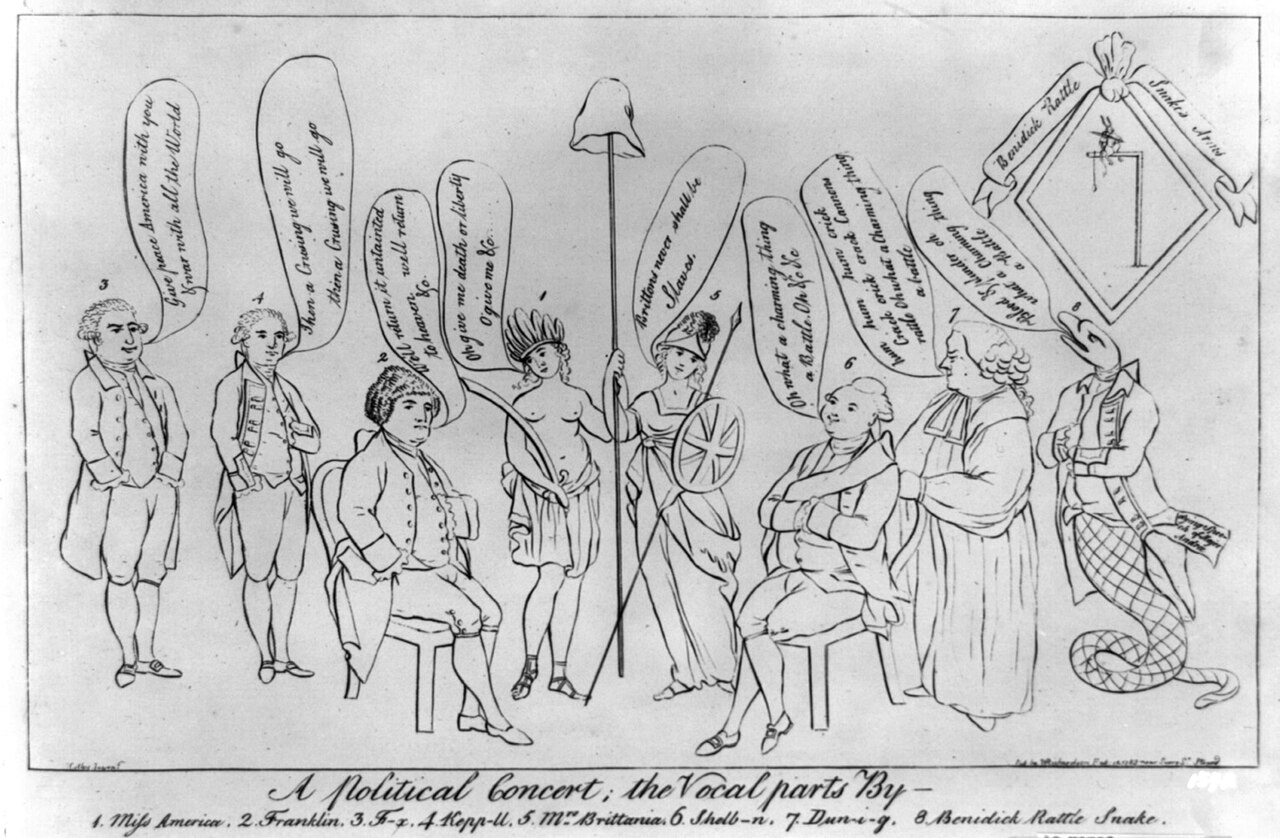
Black-and-white satirical line engraving of a 1783 British political cartoon. Eight figures sit or stand in a scene: a seated man, a nude figure of America, Britannia with shield and spear topped by a liberty cap, and others. Speech scrolls float above them. Caption below reads 'A Political Concert; the Vocal parts by'.Painting

Primary source

A Political Concert

1783

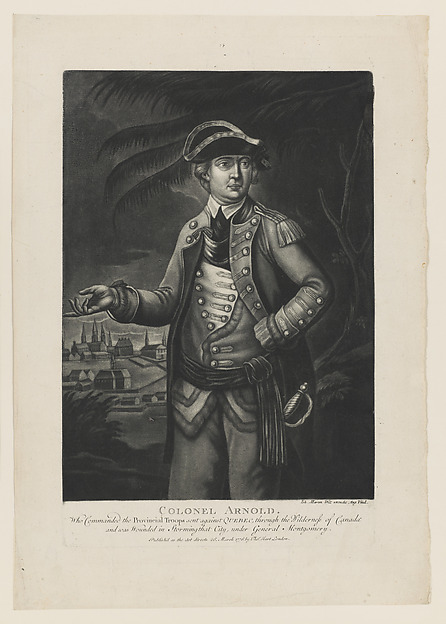
Mezzotint portrait print of a man in a tricorn hat and military uniform with double-breasted buttoned coat, epaulette, and sword, standing before a town skyline and dark trees. Title engraved in capitals below the image, with explanatory text beneath it.Painting

Primary source

Colonel Arnold, Who Commanded the Provincial Troops Sent against Quebec

Thomas Hart · 26 March 1776

Diary entry

Primary source

Journal of Captain Simeon Thayer on the 1775 Invasion of Canada

Simeon Thayer · 1867 (written 1775-1776)

Journal of the Expedition against Quebec under Col. Benedict ArnoldDiary entry

Primary source

Journal of the Expedition against Quebec under Col. Benedict Arnold

Return Jonathan Meigs · 1864 (written 1775)

The Real Benedict ArnoldBook

Secondary source

The Real Benedict Arnold

Charles Burr Todd · 1903

Document

Tertiary source

Arnold, Benedict (Dictionary of National Biography entry)

Richard Garnett · 1885-1900

Document

Tertiary source

Arnold, Benedict (soldier) (Appletons' Cyclopaedia entry)

John Fiske · 1900

Book

Secondary source

Benedict Arnold: A Biography, Chapter IX — Arnold at Philadelphia

George Canning Hill · 1884

Book

Secondary source

Benedict Arnold: A Biography, Chapter VII — The Northern Army

George Canning Hill · 1884

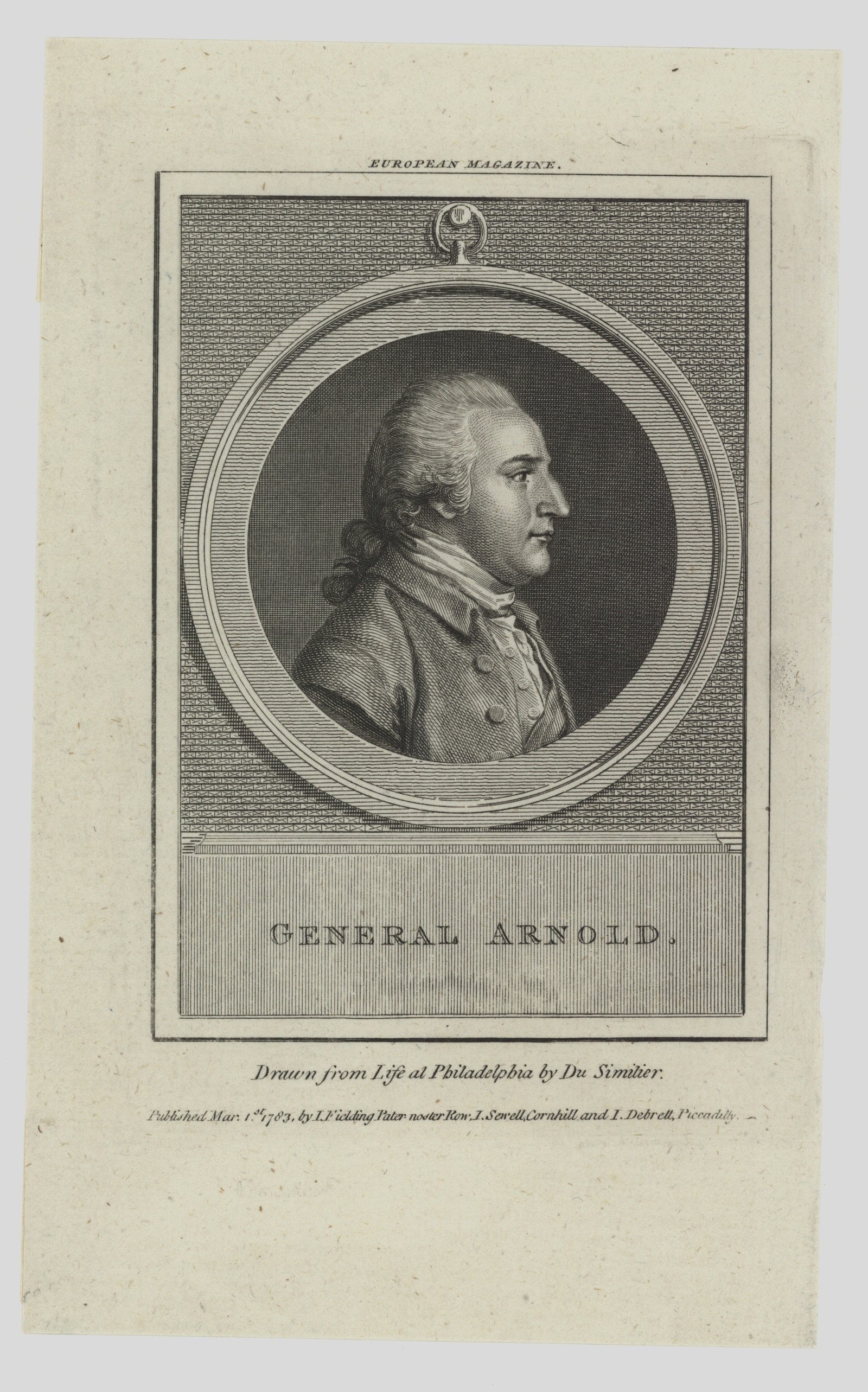
Engraved portrait in profile of a man with powdered hair tied back, wearing a high cravat and a buttoned coat, inside an oval frame. Printed title below reads 'GENERAL ARNOLD.' with text 'Drawn from Life at Philadelphia by Du Simitier' and publication line 'Published Mar. 1st 1783' beneath. Header reads 'EUROPEAN MAGAZINE.'Painting

Primary source

General Arnold

I. Fielding after Du Simitière · 1783

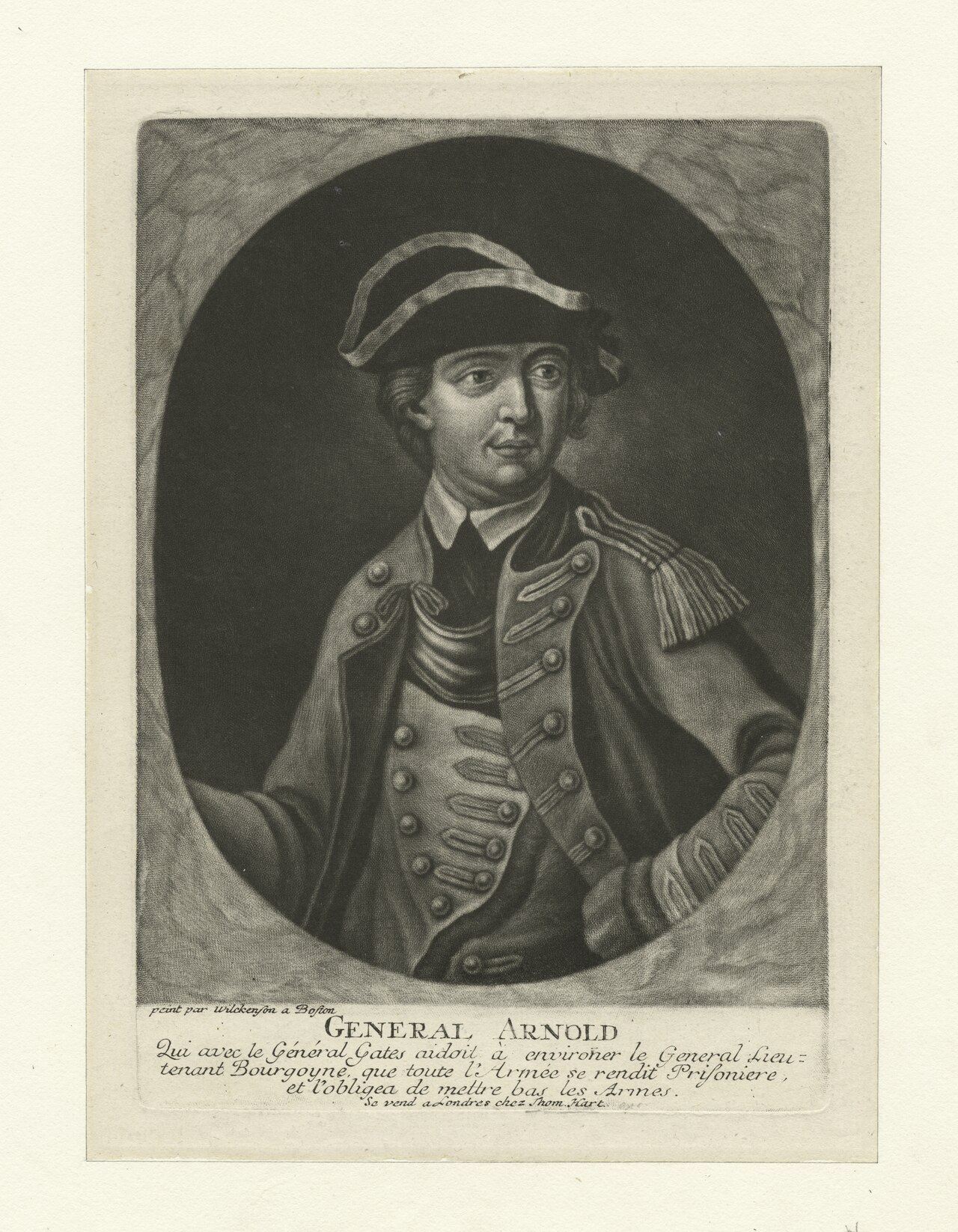
Engraved oval portrait of a man in a military uniform with a tricorn hat trimmed with light braid, epaulette on the right shoulder, and buttoned coat. Caption below reads 'General Arnold' with French text beneath.Painting

Secondary source

General Arnold, Engraved Portrait

Unknown engraver, after earlier source · 19th century

Journals of the Continental Congress, 1774-1789Document

Primary source

Journals of the Continental Congress, 1774-1789

United States Continental Congress · 1774-1789 (published 1904)

Document

Tertiary source

Arnold, Benedict (soldier), entry in The Biographical Dictionary of America

Rossiter Johnson · 1906

Document

Secondary source

Benedict Arnold, Encyclopaedia Britannica (11th edition)

1911

Document

Secondary source

Benedict Arnold, The New Student's Reference Work

1914

Document

Secondary source

Benedict Arnold, The New International Encyclopaedia

1902

Andreana: Trial, Execution and Documents on Major John AndréDocument

Secondary source

Andreana: Trial, Execution and Documents on Major John André

Horace Wemyss Smith · 1865

Painted colour print of a man in a tricorn hat with gold braid, wearing a blue military coat with gold epaulette and gold-trimmed buttons over a buff waistcoat, standing before dark palm fronds with his hand on his hip.Painting

Primary source

Benedict Arnold Mezzotint

Thomas Hart · 26 March 1776

Revolutionary TypesBook

Secondary source

Revolutionary Types

Ida A. Taylor · 1904

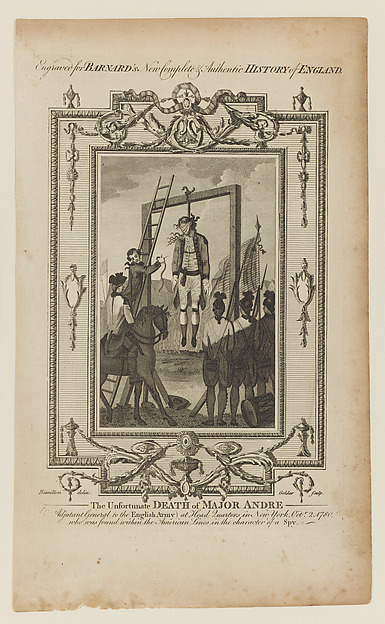
Engraved print titled 'The Unfortunate Death of Major André' framed by ornamental borders, with a caption reading 'Adjutant General to the English Army at Head Quarters, New York, Oct 2, 1780, who was found within the American Lines in the character of a Spy.' Central scene shows a hanged man on a gallows-like frame, with a ladder leaning against it, and a crowd of soldiers with rifles and a flag on the right. Engraver credits appear at the bottom corners. Title band at top reads 'Engraved for Barnard's New Complete & Authentic History of England.'Painting

Primary source

The Unfortunate Death of Major André

Jabez Goldar · 1782

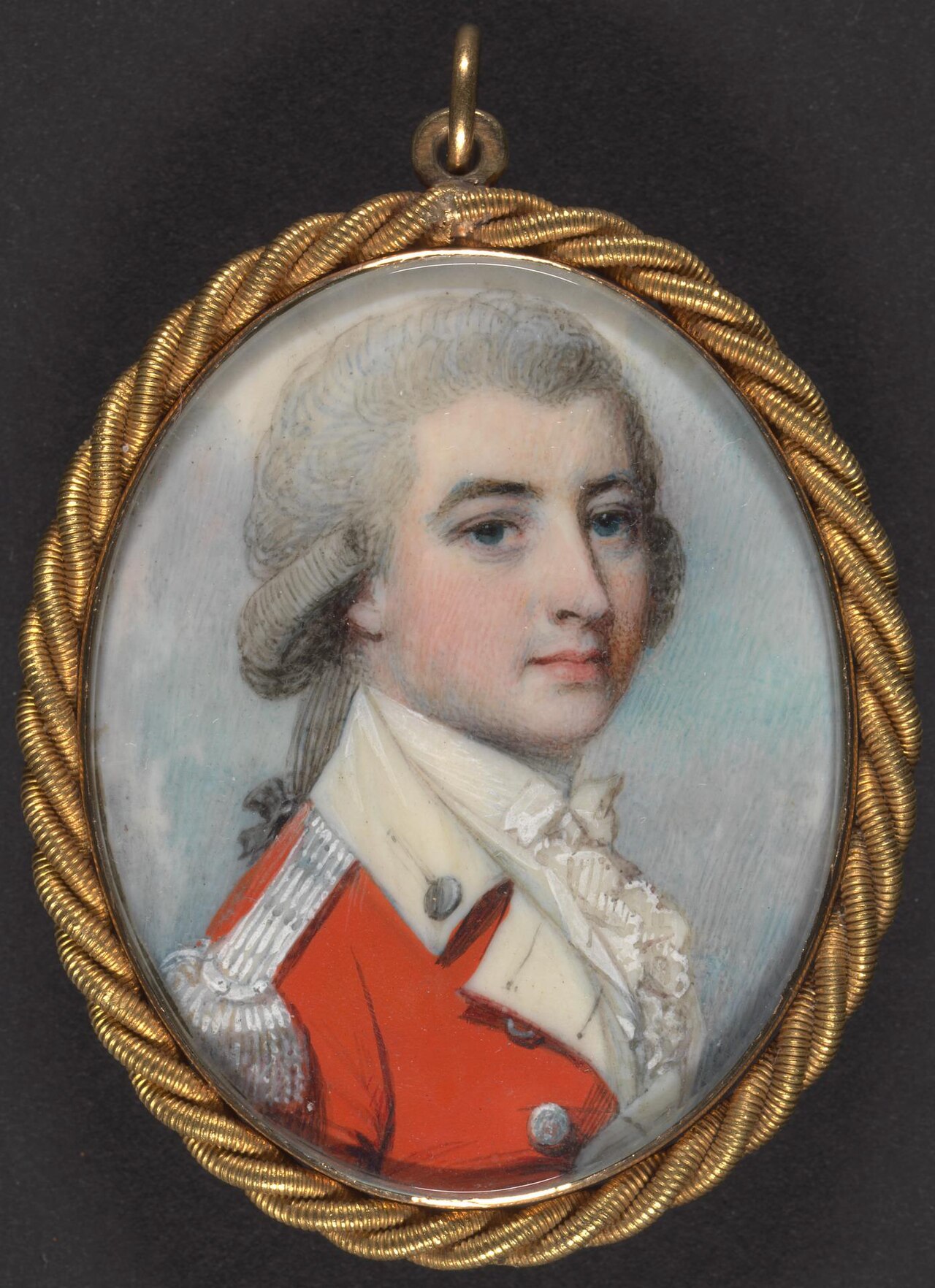
Oval portrait miniature in a twisted gold wire frame with a loop at top. A man with powdered grey hair tied back, wearing a red coat with white epaulette and a white cravat with lace jabot, against a pale blue background.Painting

Primary source

Major André Miniature

George Engleheart · between 1771 and 1780

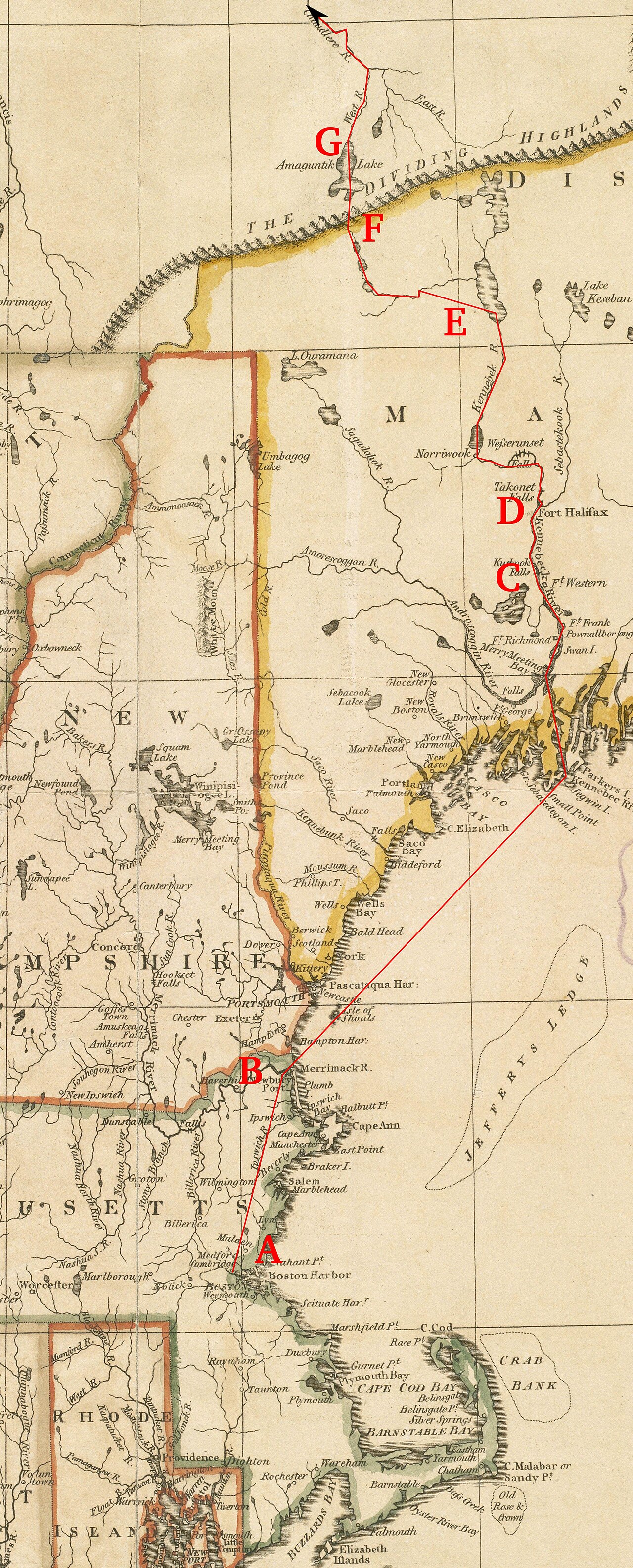
Historic hand-colored map of New England, with a red line tracing Benedict Arnold's 1775 route from Cambridge, Massachusetts, north through Maine's Kennebec River valley toward the Dividing Highlands and Quebec. Red letters A through G mark key points along the route.Document

Secondary source

Map of Arnold's 1775 Expedition Route to Quebec

John Russell; markings by Magicpiano · Base map 1795, markings added 2010

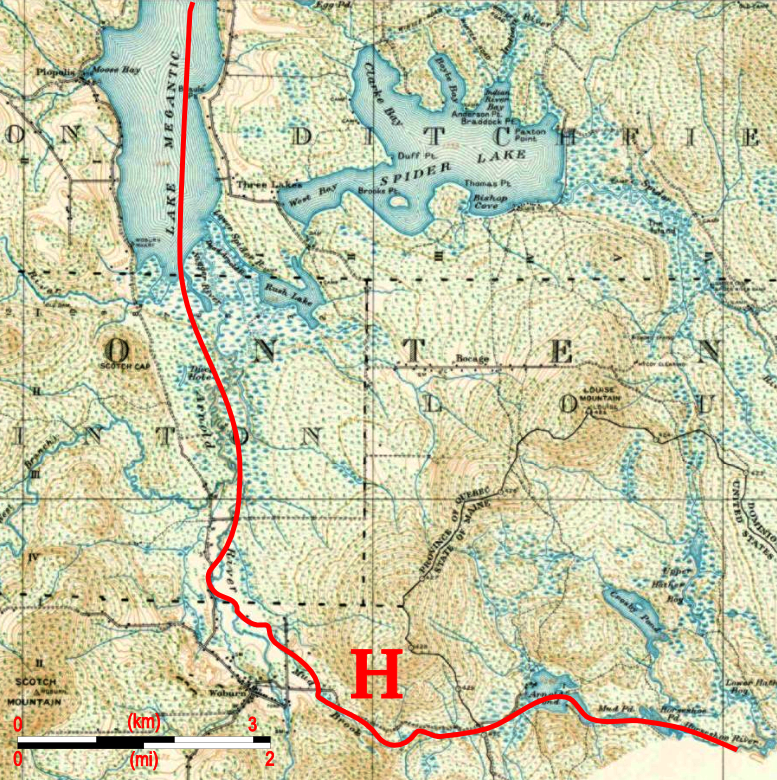
Topographic map of a wilderness area with lakes, rivers, and contour shading, labeled with place names such as Lake Megantic and Spider Lake. A red line traces a route from the top-left down the left side and across the lower right, marked with a large red letter H.Document

Secondary source

Annotated Topographic Map of Arnold's Maine Route

Canadian Department of National Defence; markings by Magicpiano · Base map 1924, markings added 2010

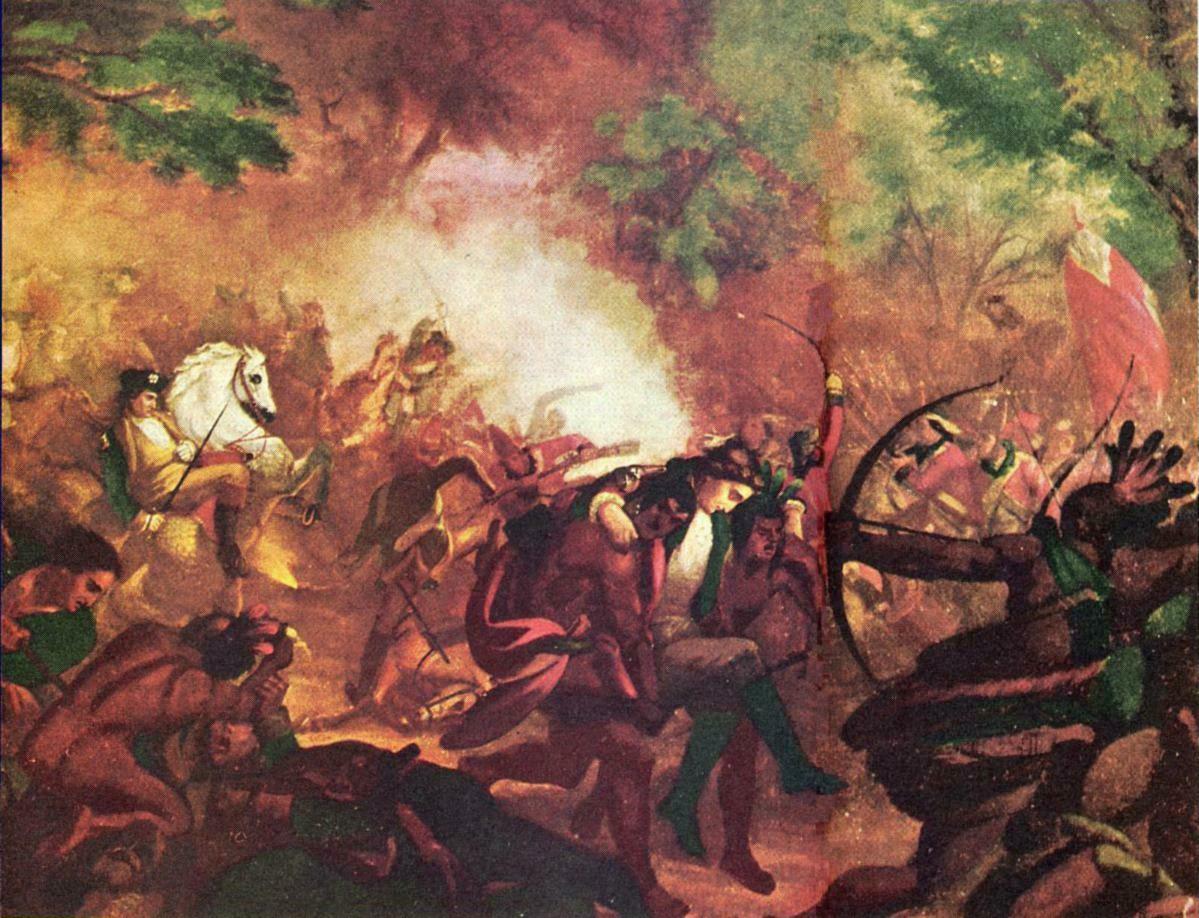
Colorful painted battle scene in a wooded setting with smoke in the background. A mounted officer in a dark hat and yellow coat rides a white horse on the left, while soldiers fight and fall in the foreground. A red flag rises on the right.Painting

Secondary source

Benedict Arnold at the Second Battle of Saratoga

Unknown · 19th century

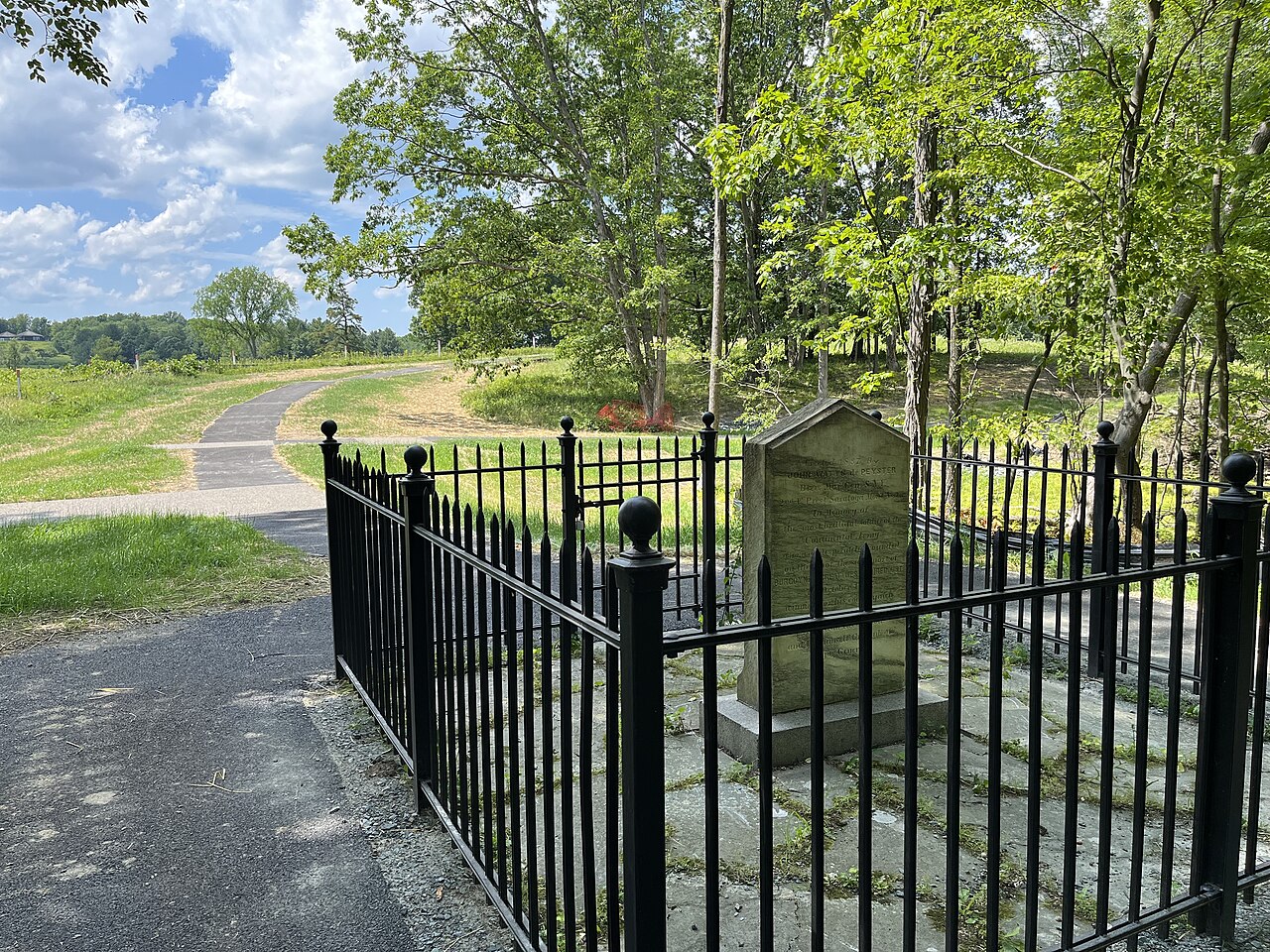
A tall, pale stone monument with a pointed top stands inside a black wrought-iron fence on a stone base, on grass and a stone-paved area. A paved path curves through green grass and trees under a blue sky with clouds.Photograph

Secondary source

The Boot Monument Uncovered, Saratoga, 2022

National Park Service · 11 July 2022

Black-and-white engraved profile portrait of a man facing left, with powdered hair tied back in a ribbon, wearing a high-collared military coat with buttons, a lace jabot at the throat, and an epaulette with a star on the shoulder.Painting

Secondary source

Benedict Arnold Engraving After John Trumbull

Henry Bryan Hall, after John Trumbull · Between 1931 and 1932

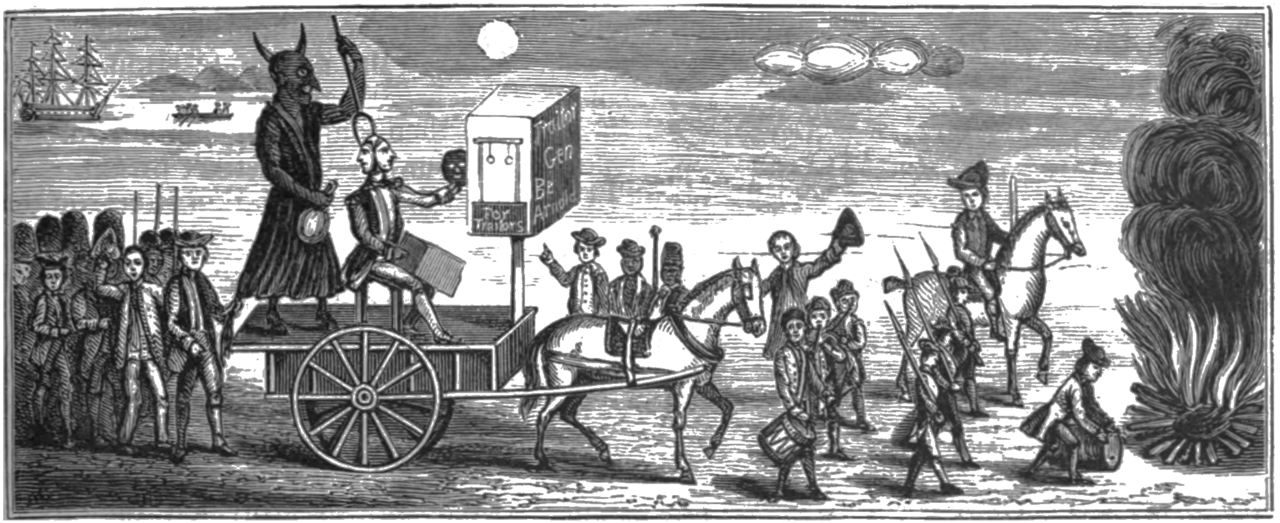
Engraved illustration of a parade cart carrying a devil-like figure and an effigy of a man in colonial dress beside a sign reading 'Benedict Arnold' with a gallows-like frame. Crowds of marchers and a drummer follow, and a large bonfire blazes at right.Painting

Secondary source

Burning Benedict Arnold in Effigy, 1876 Illustration

Unknown · 1876

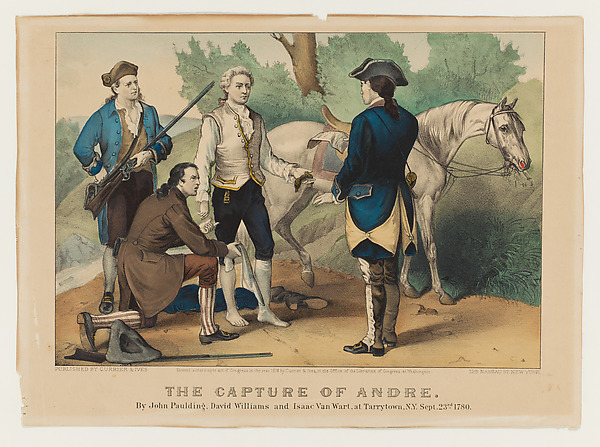
Color lithograph titled 'The Capture of Andre'. Three men in 18th-century dress surround a seated man who is pulling off a boot; a fourth man in a dark blue coat and tricorn hat stands at right beside a gray horse. Trees and a hillside are behind them, and a rifle leans against a tree at left. Printed caption text runs along the bottom.Painting

Secondary source

The Capture of André at Tarrytown

Currier & Ives · 1876

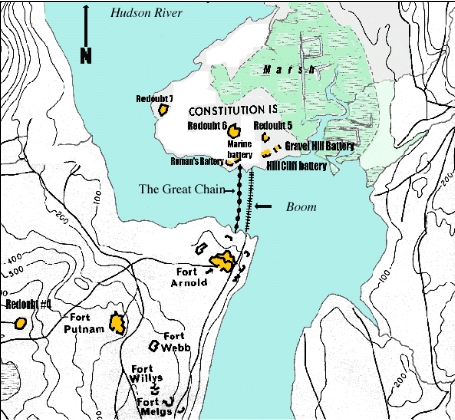
Annotated map of the Hudson River at West Point showing Revolutionary War fortifications. Labels include Constitution Island, Redoubts 3, 4 and 5, Fort Arnold, Fort Putnam, Fort Webb, Fort Willys, Fort Meigs, Gravel Hill Battery, Rattan's Battery, Marine Battery, the Great Chain across the river, and a Boom. Marsh areas are shaded green and the river is shown in light blue.Document

Secondary source

West Point Fortifications Map, Revolutionary War Period

United States Military Academy Department of Geography · 2008

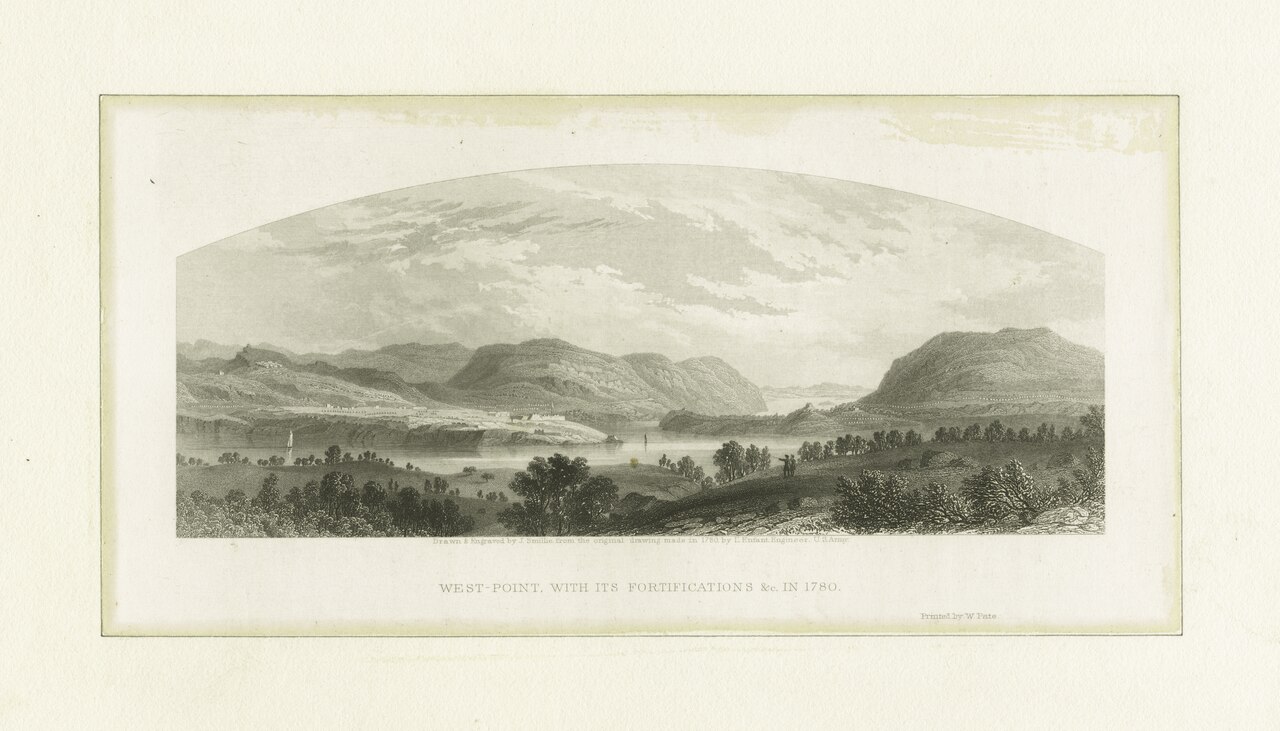
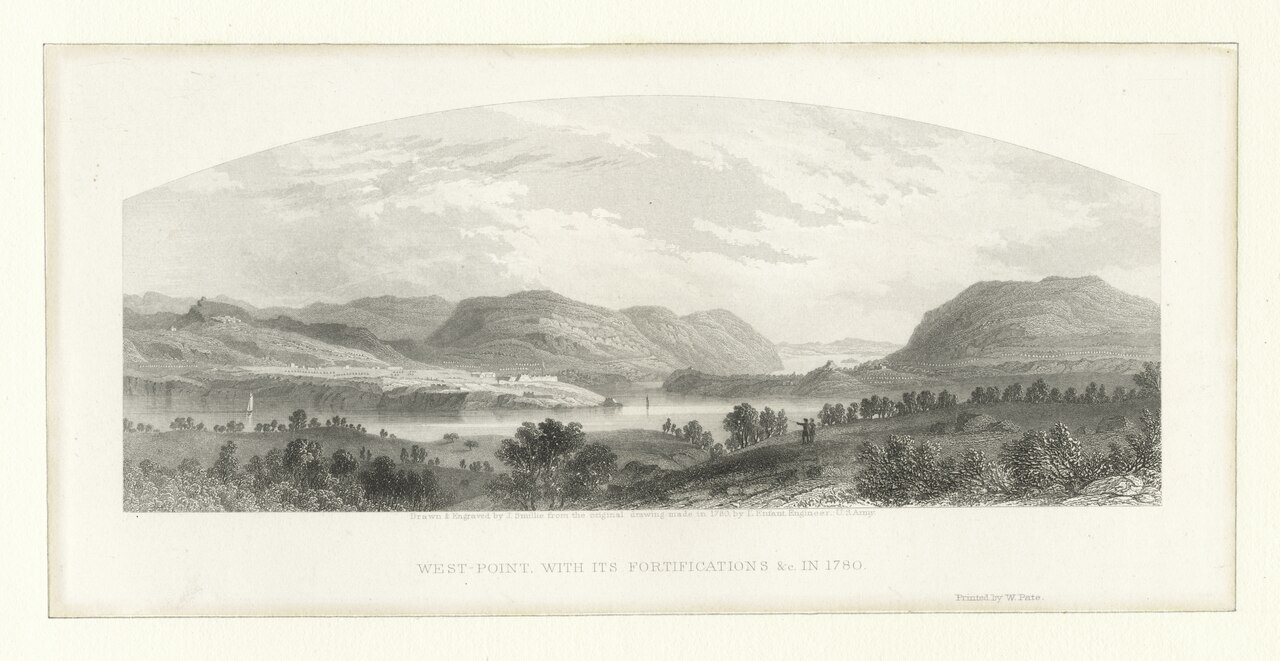
Engraved print of a wide panoramic landscape with a river and hills, showing a fortified bluff on the left and a flat-topped mountain on the right. Title below reads: West Point, with its fortifications &c. in 1780. Small printer credit in lower right corner.Painting

Secondary source

West Point with its Fortifications in 1780

J. Smillie · c. 1775–1890

Engraved panoramic view of West Point on the Hudson River, with hills, a wide river, a sailboat, and scattered trees and buildings along the shoreline. Title printed below: West Point, with its fortifications &c. in 1780. Printed by W. Pate.Painting

Secondary source

West Point with its Fortifications in 1780 (Second Print)

Henry Bryan Hall and James Smillie · 1780 (print later)

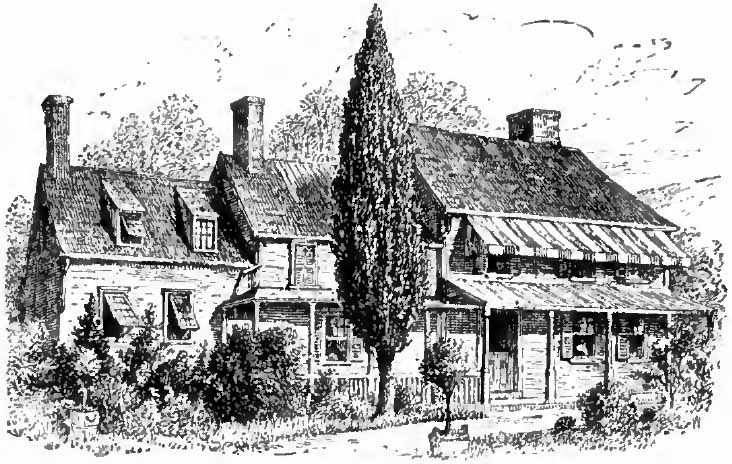
Black and white engraved illustration of a two-story wooden house with multiple brick chimneys, dormer windows, a striped awning over an upper porch, a front porch with columns, and a tall cypress-like tree beside it.Artifact

Secondary source

Beverley Robinson House, Arnold's Headquarters

published 1900

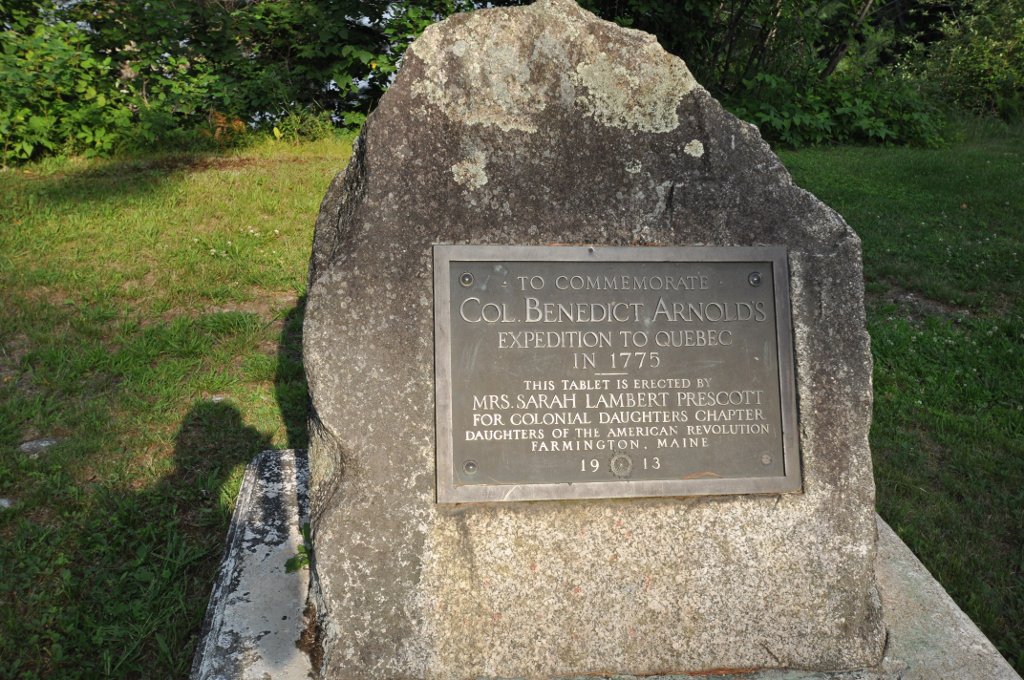
A granite boulder with a bronze plaque on a grassy lawn with trees behind. The plaque reads: To commemorate Col. Benedict Arnold's expedition to Quebec in 1775. This tablet is erected by Mrs. Sarah Lambert Prescott for Colonial Daughters Chapter, Daughters of the American Revolution, Farmington, Maine, 1913.Photograph

Secondary source

Arnold Trail Marker at Eustis, Maine

Magicpiano · 22 July 2014 (marker erected 1913)

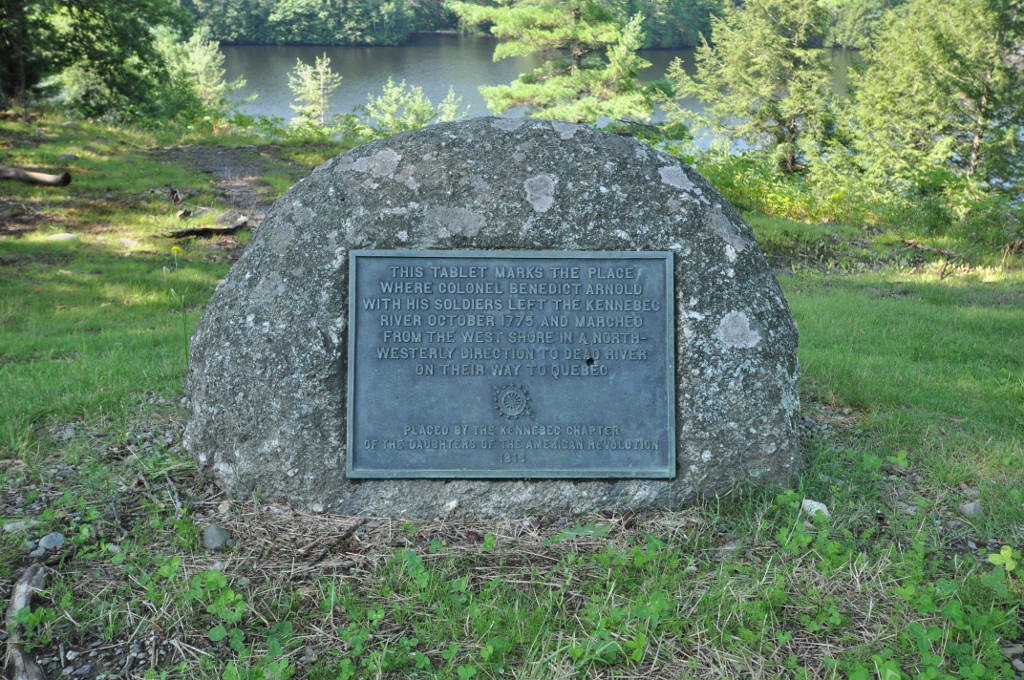
A large rounded granite boulder, lichen-spotted, sits on grass beside a lake with pine trees. On its face is a bronze plaque reading that it marks where Colonel Benedict Arnold and his soldiers left the Kennebec River in October 1775, then marched northwest to Dead River toward Quebec. Placed by the Kennebec Chapter of the Daughters of the American Revolution, 1914.Photograph

Secondary source

Arnold Trail marker at Caratunk, Maine

Magicpiano · 2018

Photograph of a bronze plaque mounted on a large granite boulder, surrounded by green trees and grass beside a river. The plaque has a shield-shaped outline and raised text describing Colonel Benedict Arnold's expedition to Quebec in 1775. The water is visible in the background.Photograph

Secondary source

Arnold Trail marker, Augusta, Maine

Magicpiano · 2 July 2013

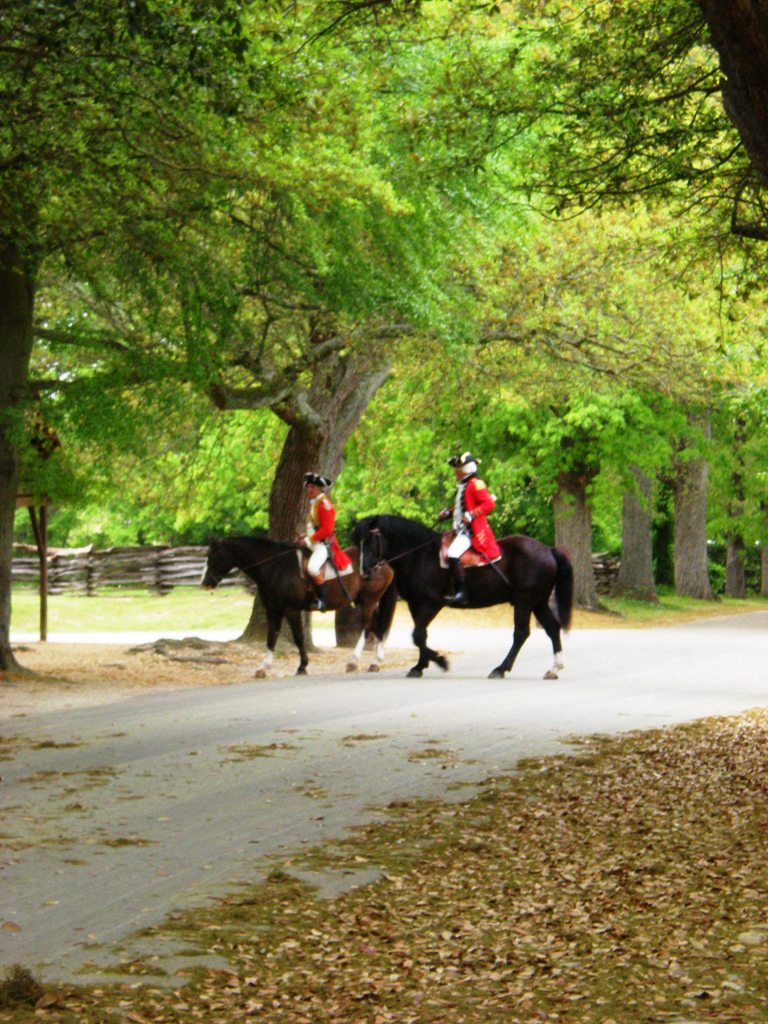
Two men in red British-style colonial military coats and tricorn hats ride dark horses on a paved road lined with tall trees and fallen leaves. A split-rail fence stands at left.Photograph

Secondary source

Benedict Arnold at Colonial Williamsburg

Sarah Stierch · 29 April 2009

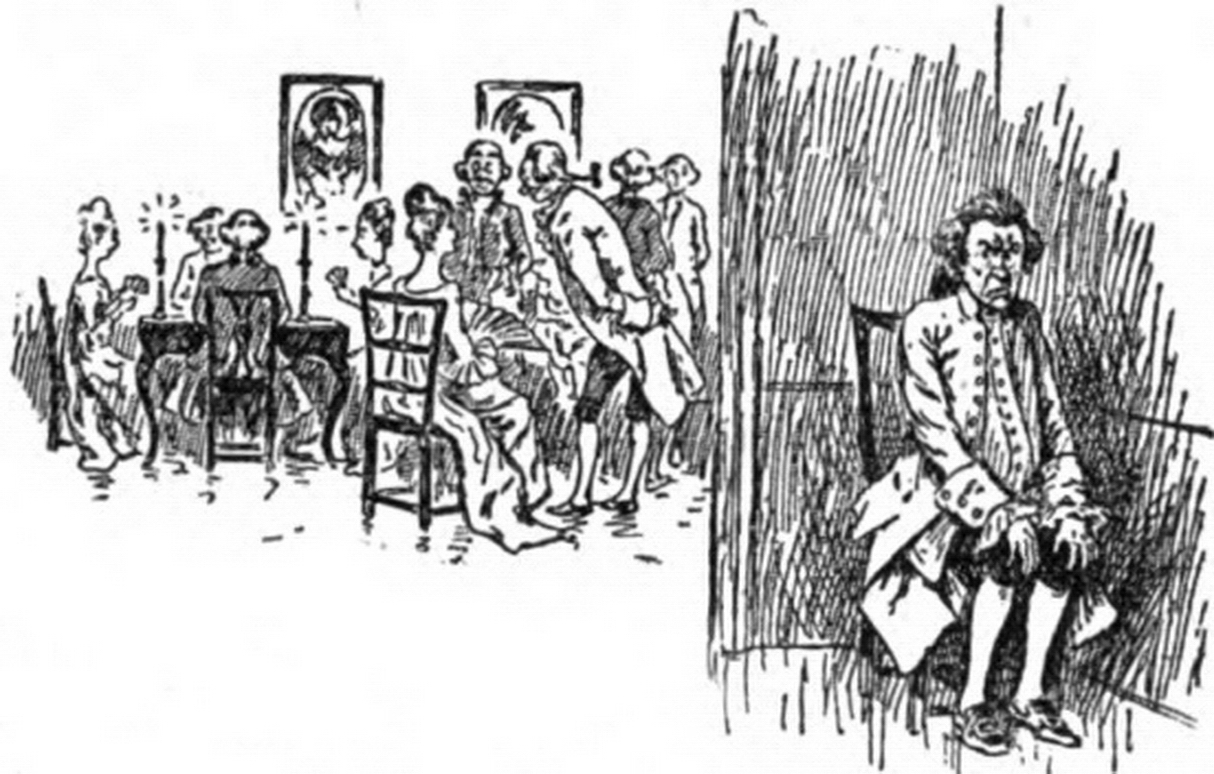
Pen-and-ink cartoon of an 18th-century English drawing room where well-dressed guests in period clothing turn away from a seated man on the right, who looks sullen and is dressed in a frock coat and breeches. Guests on the left gather near candelabras and portraits on the wall.Painting

Secondary source

Arnold's Reception in England, Bill Nye's History

Edgar Wilson "Bill" Nye · 1894

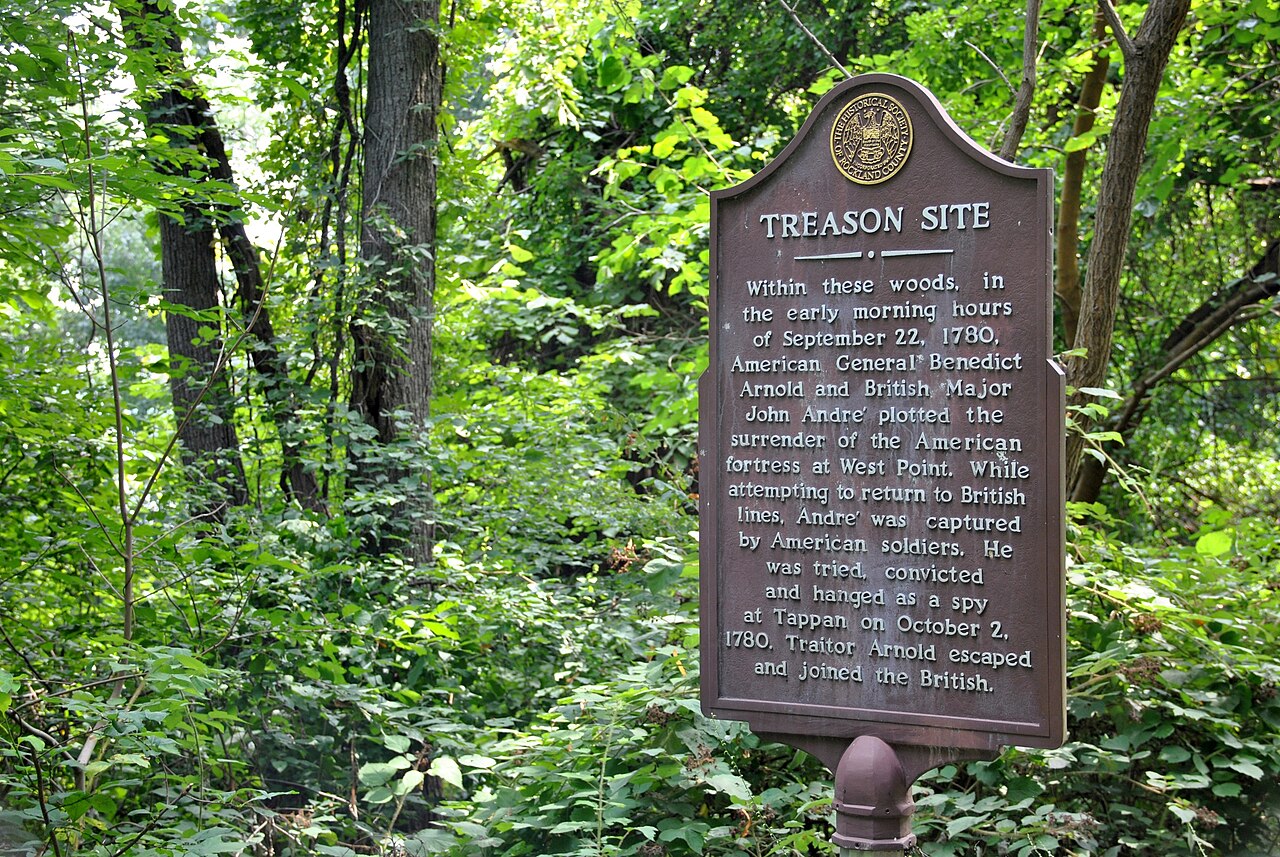
A brown historic marker titled TREASON SITE stands in a leafy wooded area with green foliage and tree trunks. The marker has a gold seal at top and text describing Arnold and Andre plotting the surrender of West Point in 1780.Photograph

Secondary source

Treason Site historic marker, Haverstraw

NYErik · 18 August 2011

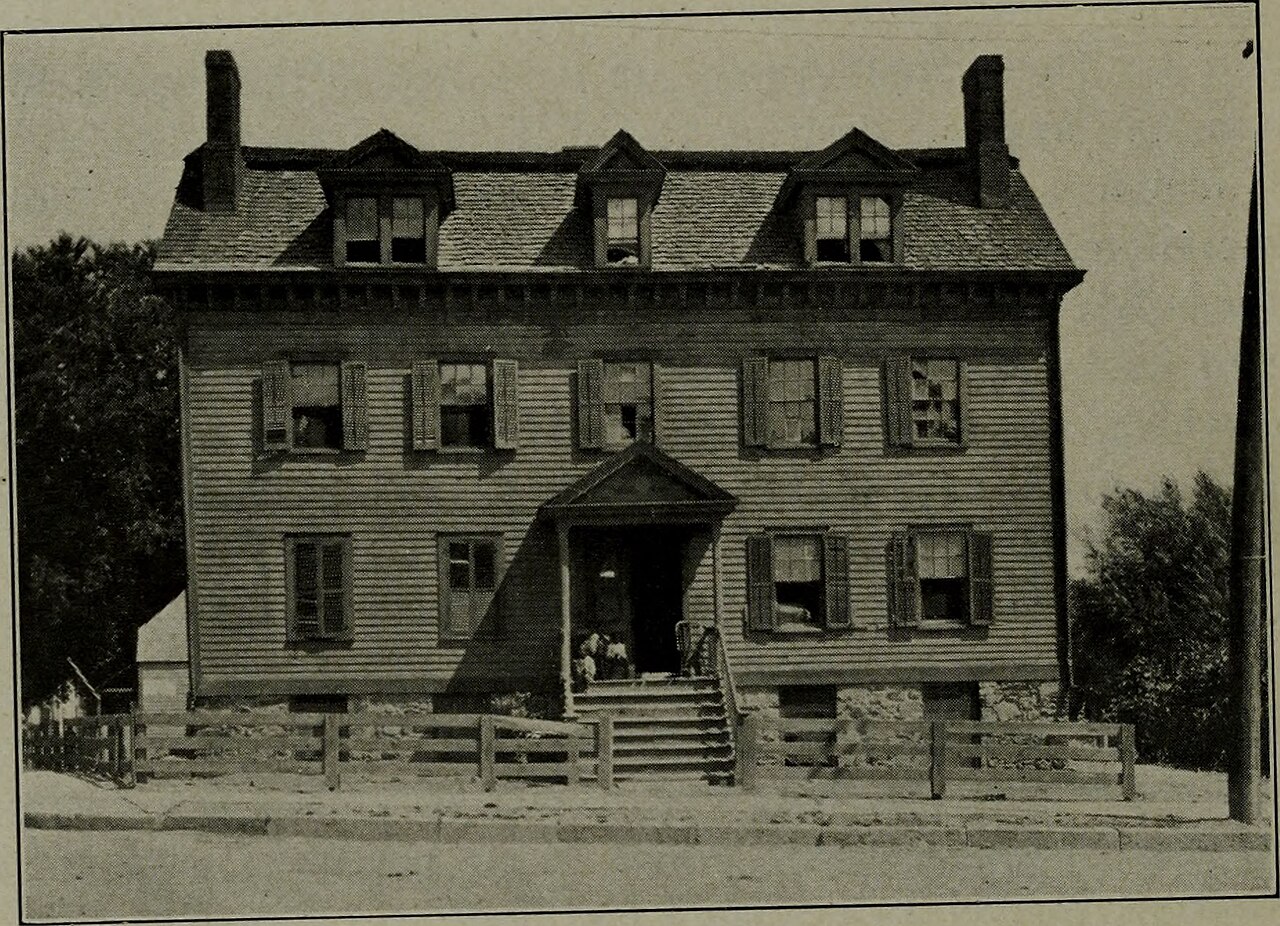
Black-and-white photograph of a two-story wooden clapboard building with a steep hipped roof, three dormer windows, two chimneys, shuttered windows, and a central entrance porch with steps. A wooden fence runs along the front.Photograph

Secondary source

Norris Tavern, Morristown, New Jersey

William Henry Broadwell · 1911

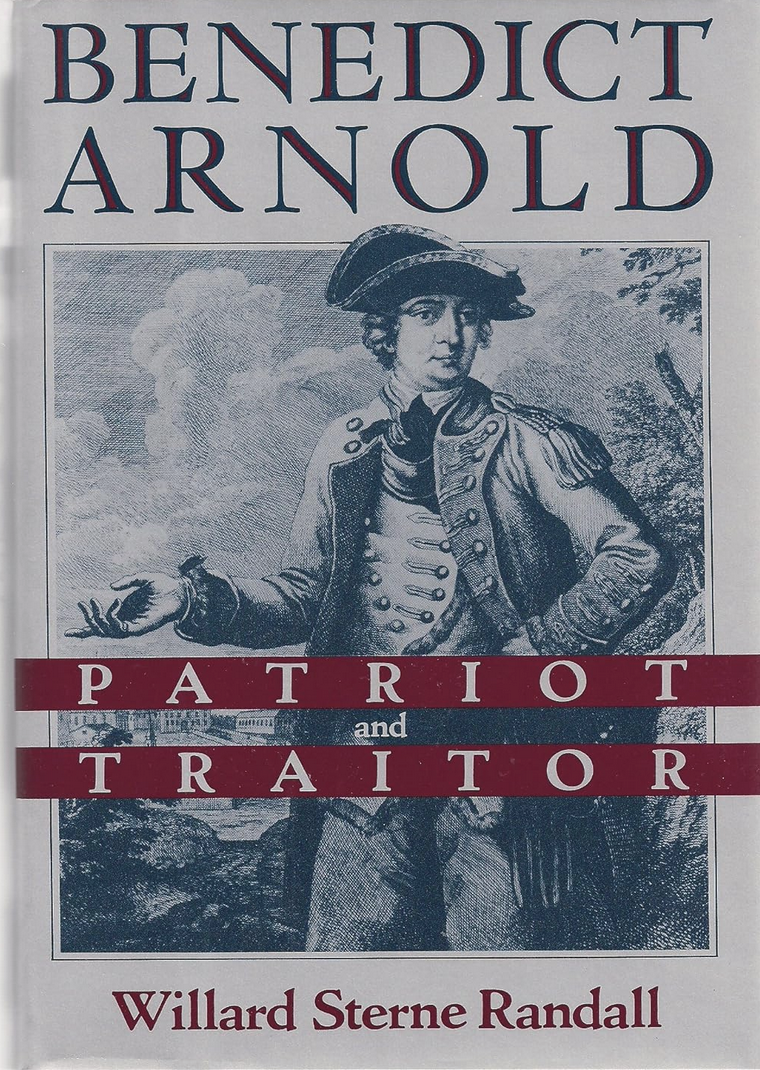
Book cover of Benedict Arnold: Patriot and Traitor by Willard Sterne Randall. Title in large letters at top, with a sepia engraving of a man in a tricorn hat and military coat gesturing outward, and the words Patriot and Traitor on red bands.Book

Secondary source

Benedict Arnold: Patriot and Traitor (book cover)

Willard Sterne Randall · 1990

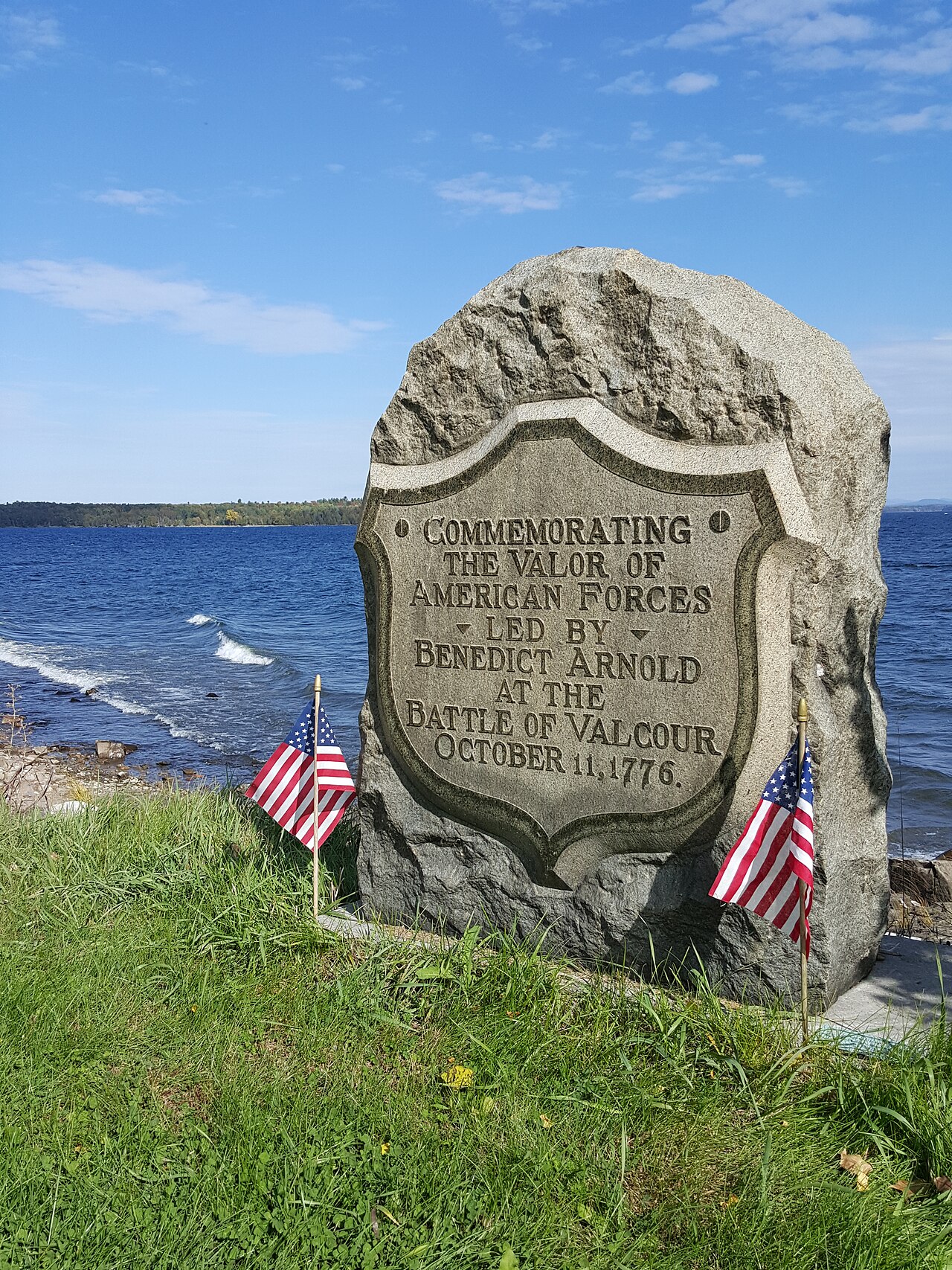
A granite monument beside a lake with a shield-shaped inscribed panel reading: Commemorating the valor of American forces led by Benedict Arnold at the Battle of Valcour, October 11, 1776. Two small American flags stand in the grass in front of it, with water and a wooded shoreline behind.Photograph

Secondary source

Battle of Valcour Monument Naming Benedict Arnold

Saranac Chapter, Daughters of the American Revolution · Monument dedicated 1928; photograph taken 11 October 2015

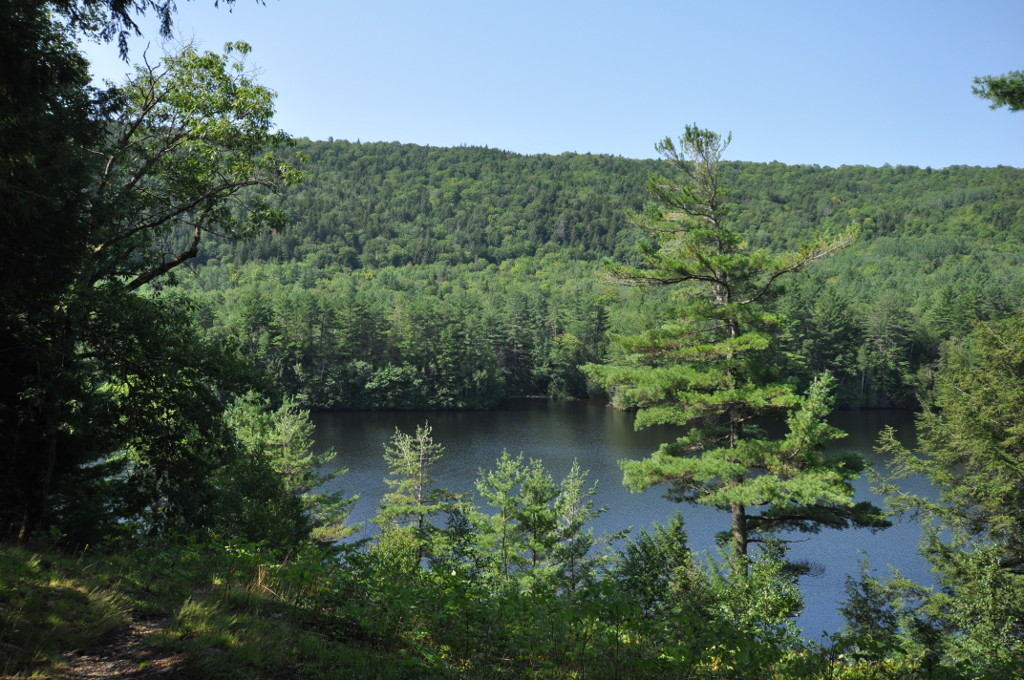
A dark blue lake framed by green forested hills under a clear blue sky. In the foreground, tall pine trees, deciduous trees, and shrubs line a grassy slope above the water.Photograph

Secondary source

Great Carrying Place on the Kennebec River, Caratunk, Maine

Magicpiano · 5 August 2018

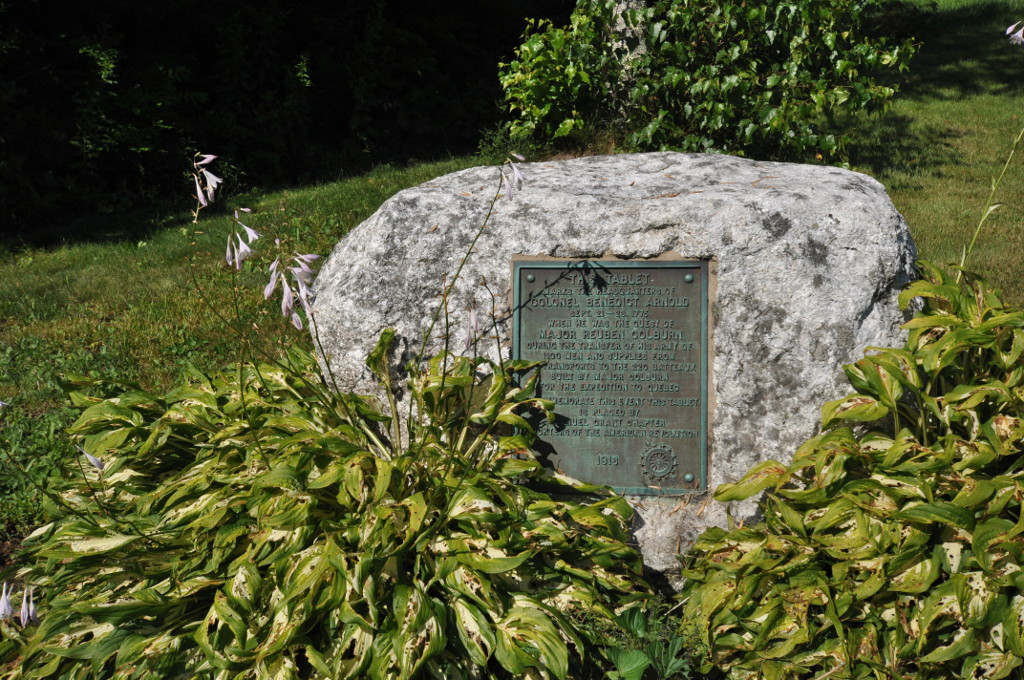
A large grey granite boulder with a bronze plaque inscribed with text about Colonel Benedict Arnold and Major Reuben Colburn, set in grass with green leafy plants in front.Photograph

Secondary source

Arnold Trail marker at Colburn House, Pittston, Maine

Magicpiano · 3 August 2018

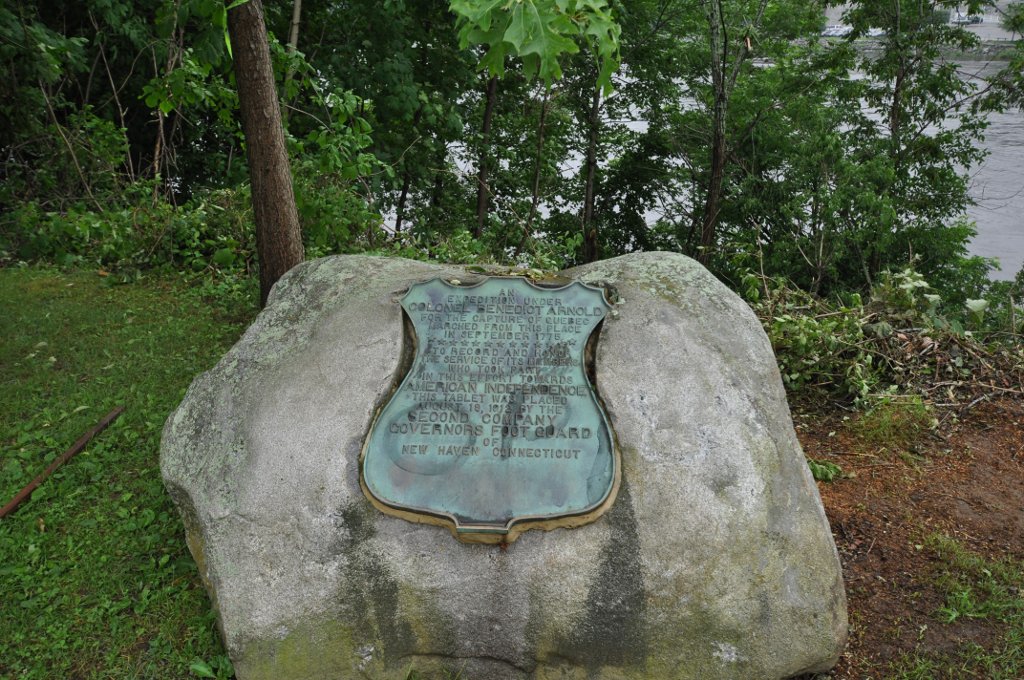
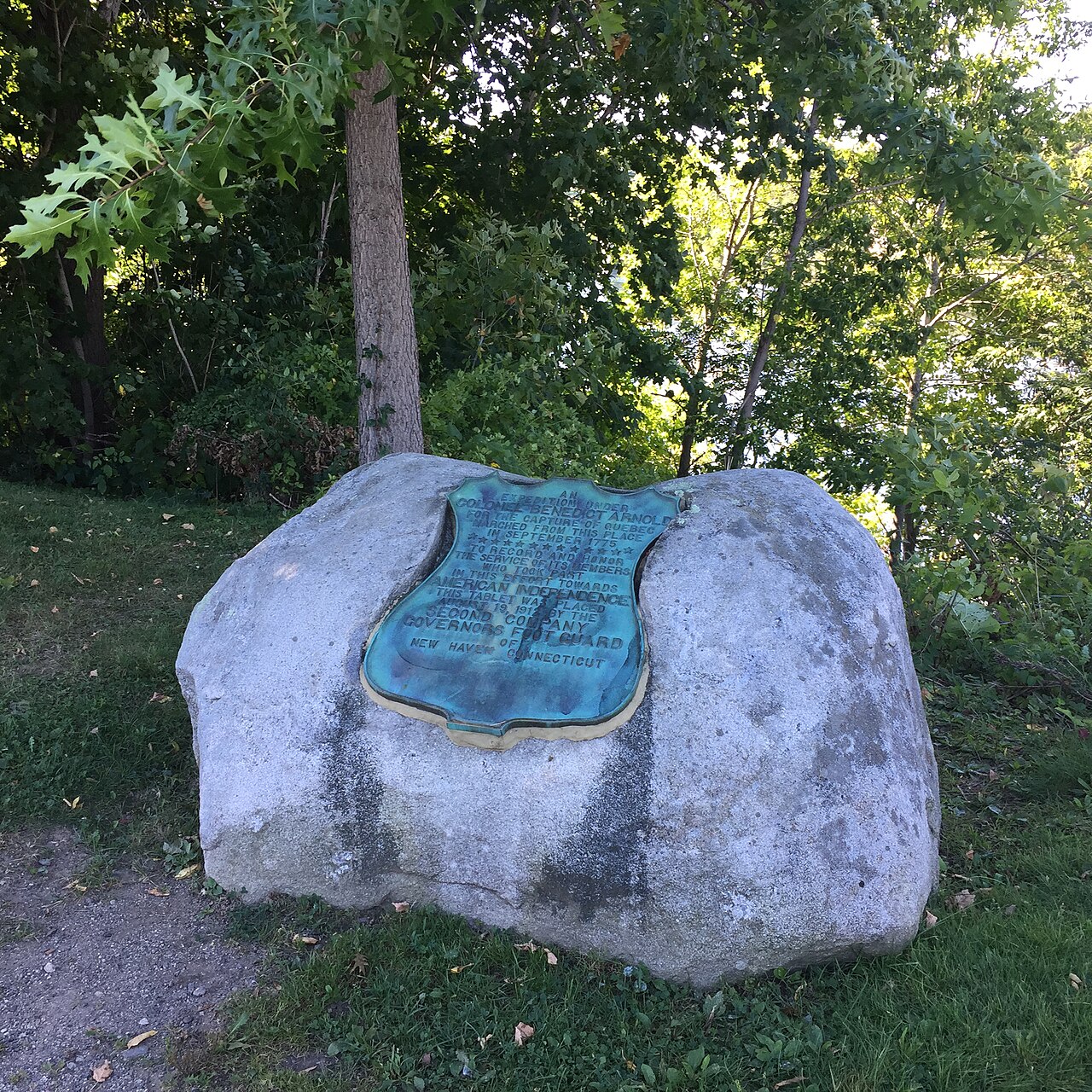
A weathered granite boulder on grass with a green-patinated bronze shield-shaped plaque set into its face. The plaque has raised lettering about Benedict Arnold's expedition and the Second Company, Governor's Foot Guard, New Haven, Connecticut. Trees stand behind the rock.Photograph

Secondary source

Bronze plaque for Arnold expedition, Augusta, Maine

Laura A. Macaluso, Ph.D. · 20 September 2015

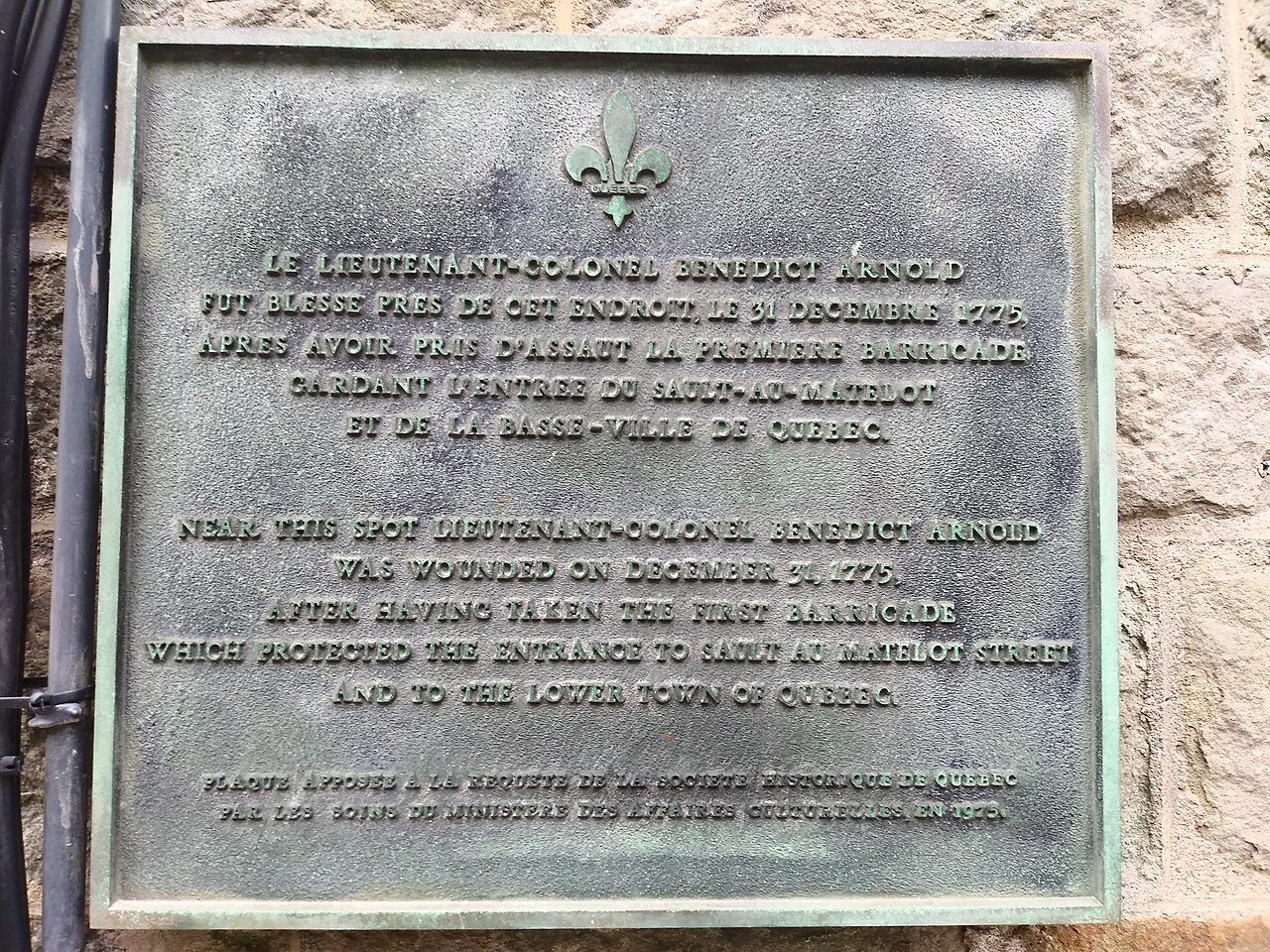
Bronze plaque on a stone wall with a fleur-de-lis at top, bilingual French and English text commemorating that Lieutenant-Colonel Benedict Arnold was wounded near this spot on December 31, 1775, after taking the first barricade. Pipes run along the left edge.Photograph

Secondary source

Plaque commemorating the Battle of Quebec, 31 December 1775

Marc Gauthier (utilisateur:mgquebec) · 14 June 2018

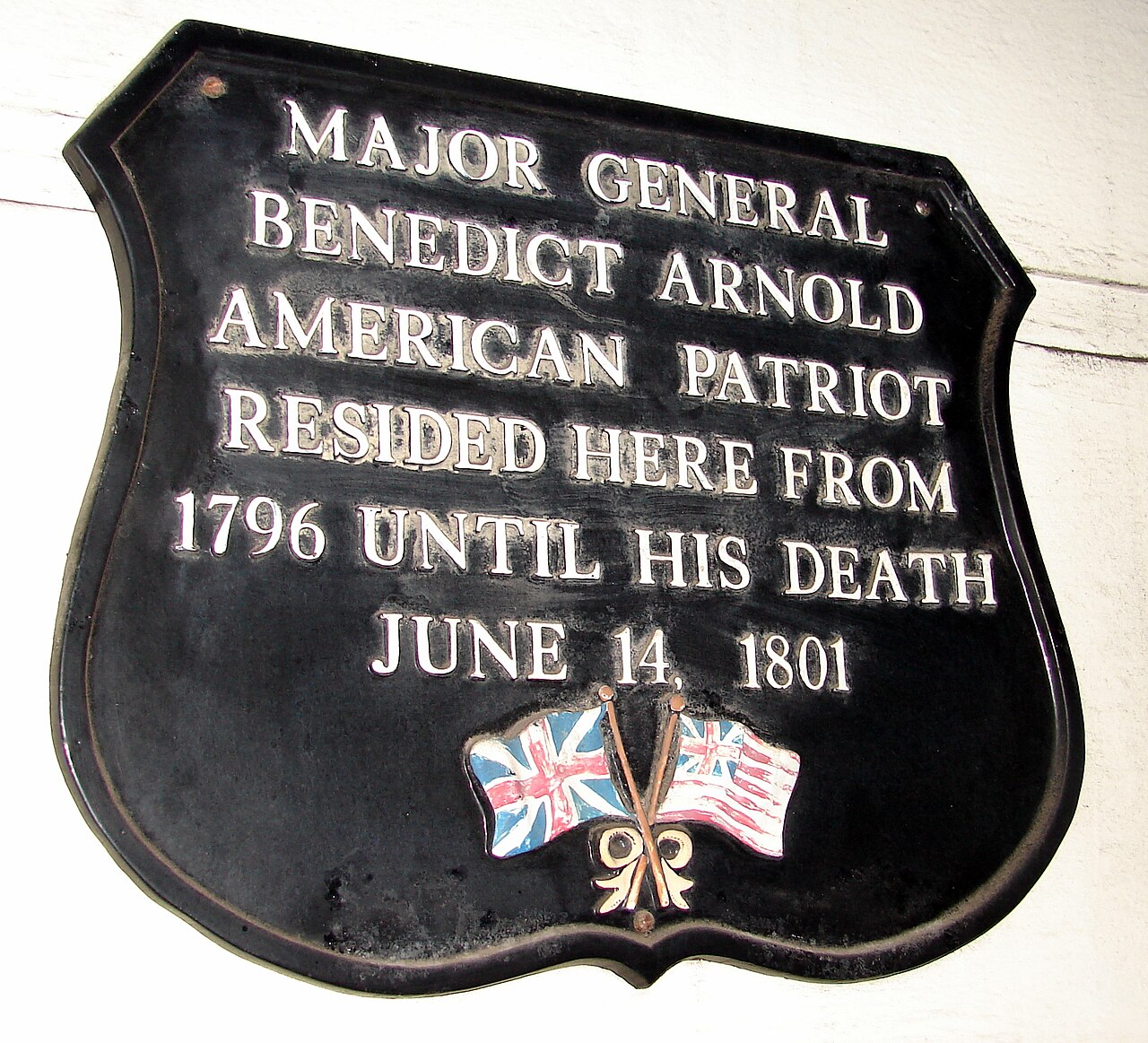
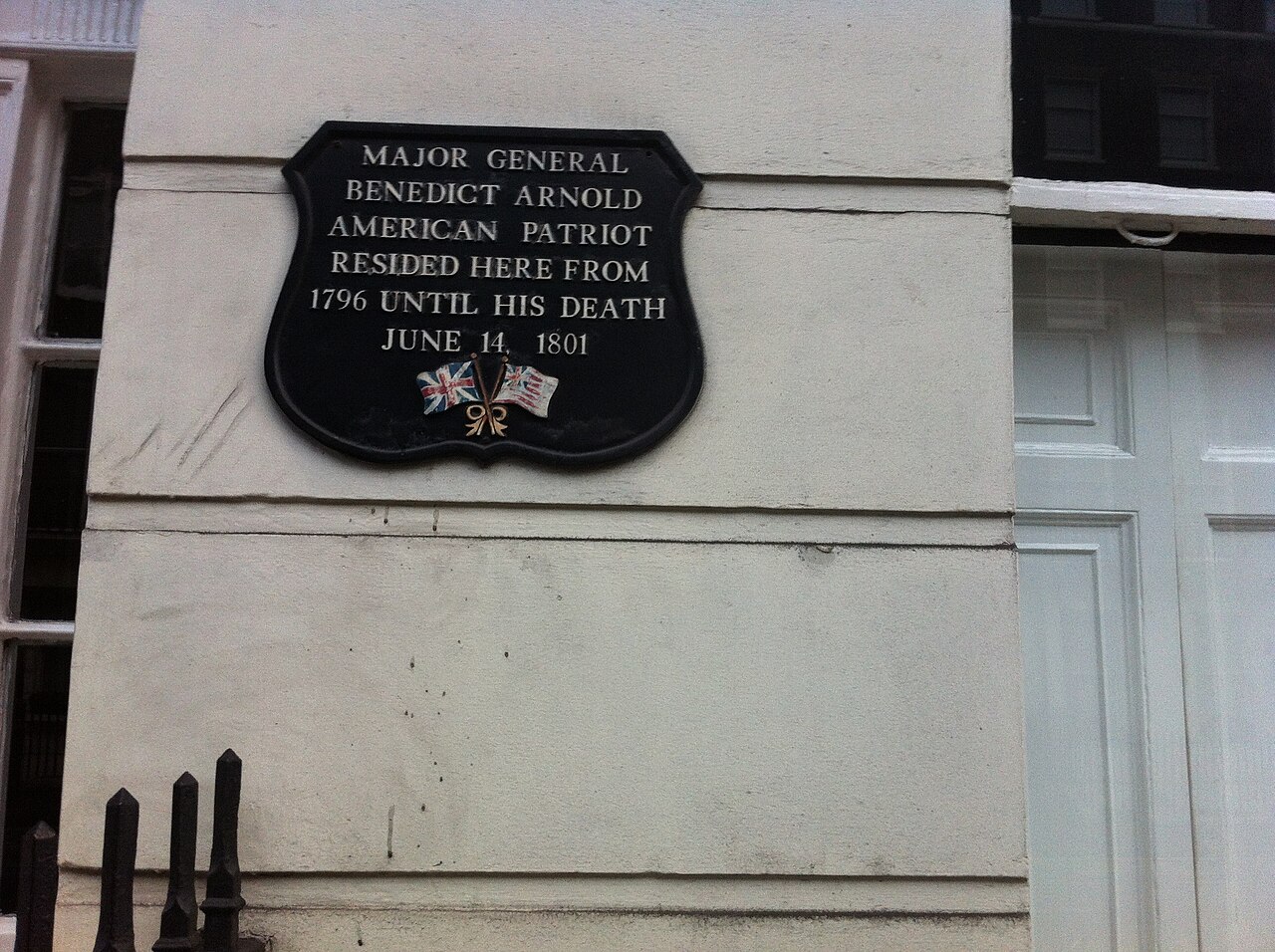
A black shield-shaped plaque with raised white lettering reading 'Major General Benedict Arnold, American Patriot, Resided here from 1796 until his death June 14, 1801', with painted British and American flags crossed at the bottom, mounted on a white wall.Photograph

Secondary source

Major General Benedict Arnold plaque, 2010 photograph

Simon Harriyott · 18 February 2010

Black shield-shaped plaque mounted on a cream-colored building wall, reading: MAJOR GENERAL BENEDICT ARNOLD AMERICAN PATRIOT RESIDED HERE FROM 1796 UNTIL HIS DEATH JUNE 14, 1801. Below the text are crossed British and American flags with a ribbon. Black iron railings are at lower left.Photograph

Secondary source

Benedict Arnold plaque in London

Warren Bennett · 27 December 2014

Want the full shelf? Chat with Benedict Arnold in the app and open the Sources panel — every quote links back to the original.

Use Benedict Arnold in class

2 collections

Ready-made collections from the Humy team that feature Benedict Arnold. Preview any of them, then try it free.

Trusted by educators worldwide

Conversations
375,000+
Real exchanges between students and historical figures
Messages exchanged
4,142,000+
Across every figure, classroom and language
Historical figures
100,000+
Each informed by a curated biography and selected sources
Languages supported
50+
From English and Spanish to Arabic and Korean

Paying customers

Used by 98 schools and universities

Partner school logo
Tecnológico de Monterrey logo
Hyper Island logo
Partner school logo
Chambersburg Area School District logo
Broward County Public Schools logo
Nebo School District logo
National Louis University logo
South Florida PBS logo
Punahou School logo
University of Wisconsin–River Falls logo
Partner school logo
Partner school logo
Archbishop Mitty High School logo
Kingsburg High School logo
Norwalk Public Schools logo
Partner school logo
Connections logo
Partner school logo
Moore Public Schools logo
Partner school logo
Partner school logo
Partner school logo
Partner school logo
Robbinsville Public Schools logo
Partner school logo
Partner school logo
Partner school logo
Tecnológico de Monterrey logo
Hyper Island logo
Partner school logo
Chambersburg Area School District logo
Broward County Public Schools logo
Nebo School District logo
National Louis University logo
South Florida PBS logo
Punahou School logo
University of Wisconsin–River Falls logo
Partner school logo
Partner school logo
Archbishop Mitty High School logo
Kingsburg High School logo
Norwalk Public Schools logo
Partner school logo
Connections logo
Partner school logo
Moore Public Schools logo
Partner school logo
Partner school logo
Partner school logo
Partner school logo
Robbinsville Public Schools logo
Partner school logo
Partner school logo

What educators are saying

“We enjoyed the program last year and used it frequently.”
“My students say it’s a welcome change of pace. I’m not a fan of the “sage on the stage” model, so I try to incorporate research-oriented and self-paced activities. With Humy, students have to take charge of their learning. They’ve become more adept at critical thinking, forming better questions, and improving their reading comprehension. The interview feature has been my go-to tool. I create assignments where students must ask historical figures a set number of questions, then summarize the responses to ensure they’re truly absorbing the material. This approach lets them actively explore the past rather than passively consuming information.”
“Humy has helped me bring historical figures, sometimes long past, to life. When my students interact with these figures in real-time, it eliminates some of the perceived “ancient” characteristics of my curriculum. This has shifted my students’ thinking away from viewing history as abstract or irrelevant. Real-time interactions make historical figures relatable, even allowing students to ask off-topic questions that help put historical lives in a more relevant context for 13-year-olds. The feature I use the most is the interview feature. After teaching a topic, most recently Gandhi and Joan of Arc, I have the students ask pointed, focused questions. We practice good conversation techniques beforehand, teaching them to listen (or read) carefully and formulate thoughtful follow-up questions rather than just interrogating. It helps students practice effective conversation skills.”

FAQ

Frequently asked questions

Who is Benedict Arnold?
Revolutionary War general who defected to the British Army. On Humy.ai you can chat with an AI version of Benedict Arnold that draws on a short biography and 77 historical sources during the conversation — by text or voice, in 42 languages.
Is Benedict Arnold AI free?
Benedict Arnold is part of Humy's full library of more than 100,000 figures, which comes with a paid plan. A free account (no credit card) includes 20 messages a month with the free library's figures, so you can try how the conversations work first.
What sources does the Benedict Arnold AI use?
It draws on a short biography and 77 historical sources (paintings, documents and photographs), including “Arnold Treason Cipher Letter”, “Benedict Arnold's Oath of Allegiance” and “Portrait of Benedict Arnold”. Each source has its own page on Humy.ai.
How historically accurate is the AI version of Benedict Arnold?
Each figure uses a short biography and a small set of selected historical sources as context (retrieval-augmented generation), so answers stay closer to known material than the model's general knowledge alone. It isn't a citation-grade research tool — like any LLM, the AI can get details wrong or extrapolate. Treat it as a strong starting point for inquiry and cross-reference important claims.
Can I talk to Benedict Arnold by voice?
Yes. In addition to text chat, you can call Benedict Arnold and hear their voice respond in real time — useful for auditory learners, interview practice and Socratic dialogue.
Is Humy.ai safe and compliant for schools?
Yes. Humy.ai is used by more than 100 schools, universities and organisations. The platform is FERPA- and GDPR-aligned, supports SSO, and offers an IT-approval pack tailored for school procurement teams.

Cross-reference Benedict Arnold

Like any LLM, the AI version of Benedict Arnold can get details wrong. Open one of these sources in a new tab to verify what you’ve read.

Ready when you are

Start chatting with Benedict Arnold now.

20 messages free · No credit card · Available in 50+ languages.