


Primary sourceDocument29 September 1664
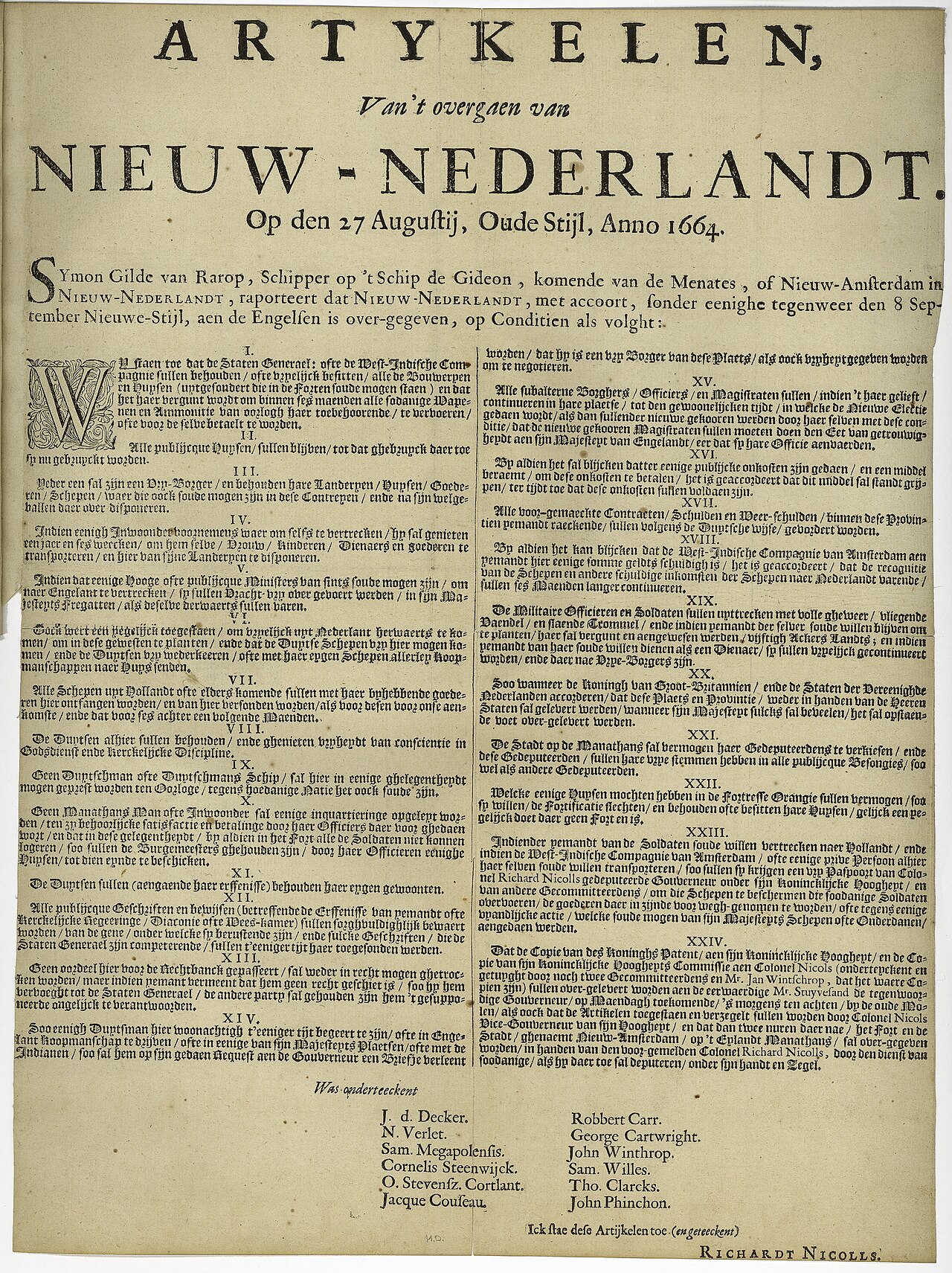
Articles of Capitulation on the Reduction of New Netherland
29 September 1664
The 1664 surrender terms negotiated by Stuyvesant's deputies, ending Dutch rule over New Netherland and handing it to England.
These surrender terms set the policy of conciliation toward Dutch residents that Lovelace continued during his governorship.
About this source
What it is
This document records the terms by which New Netherland passed from Dutch to English control in 1664. Stuyvesant's lawyer Johannes de Decker led the Dutch negotiating team, and the articles were signed on an English ship by representatives of both sides, including English commander Richard Nicolls.
Why it matters
Although Stuyvesant himself did not sign in person, the terms were negotiated in his name and protected Dutch colonists' property, inheritance customs, and freedom of worship under the new English government. Many of these legal protections later influenced American constitutional rights. The surrender marked the end of Stuyvesant's eighteen years as director-general.
Look closer
- Why might both sides have wanted to protect existing property and religious rights rather than start over?
- What does the detailed list of terms suggest about how organized New Netherland's society had become?
- Why do you think Stuyvesant delegated this negotiation rather than sign himself?
This document is part of the curated material that grounds the AI version of Francis Lovelace and Peter Stuyvesant on Humy.ai — when students ask about related events, the AI can quote it and cite it.
More Francis Lovelace sources
Meet the AI Francis Lovelace → Document
Primary source
Minutes of the Executive Council of the Province of New York, Administration of Francis Lovelace
Council of the Province of New York under Francis Lovelace · 1668–1673
 Artifact
Secondary source
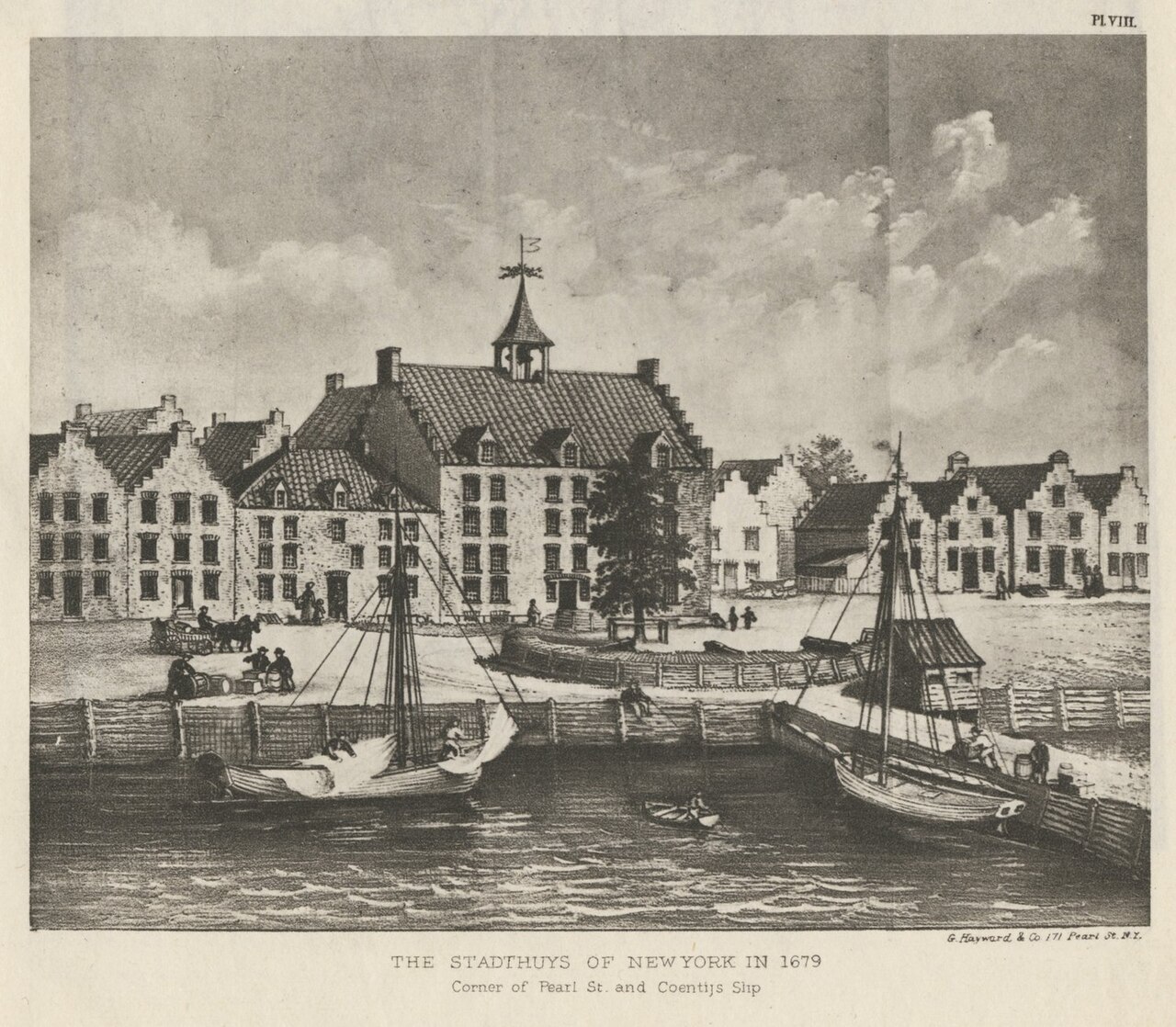
Stadt Huys Site
1670 (tavern); excavated 1979–1981
 Document
Secondary source
Calendar of Historical Manuscripts in the Office of the Secretary of State, Albany: English Manuscripts
Edmund Bailey O'Callaghan · 1866
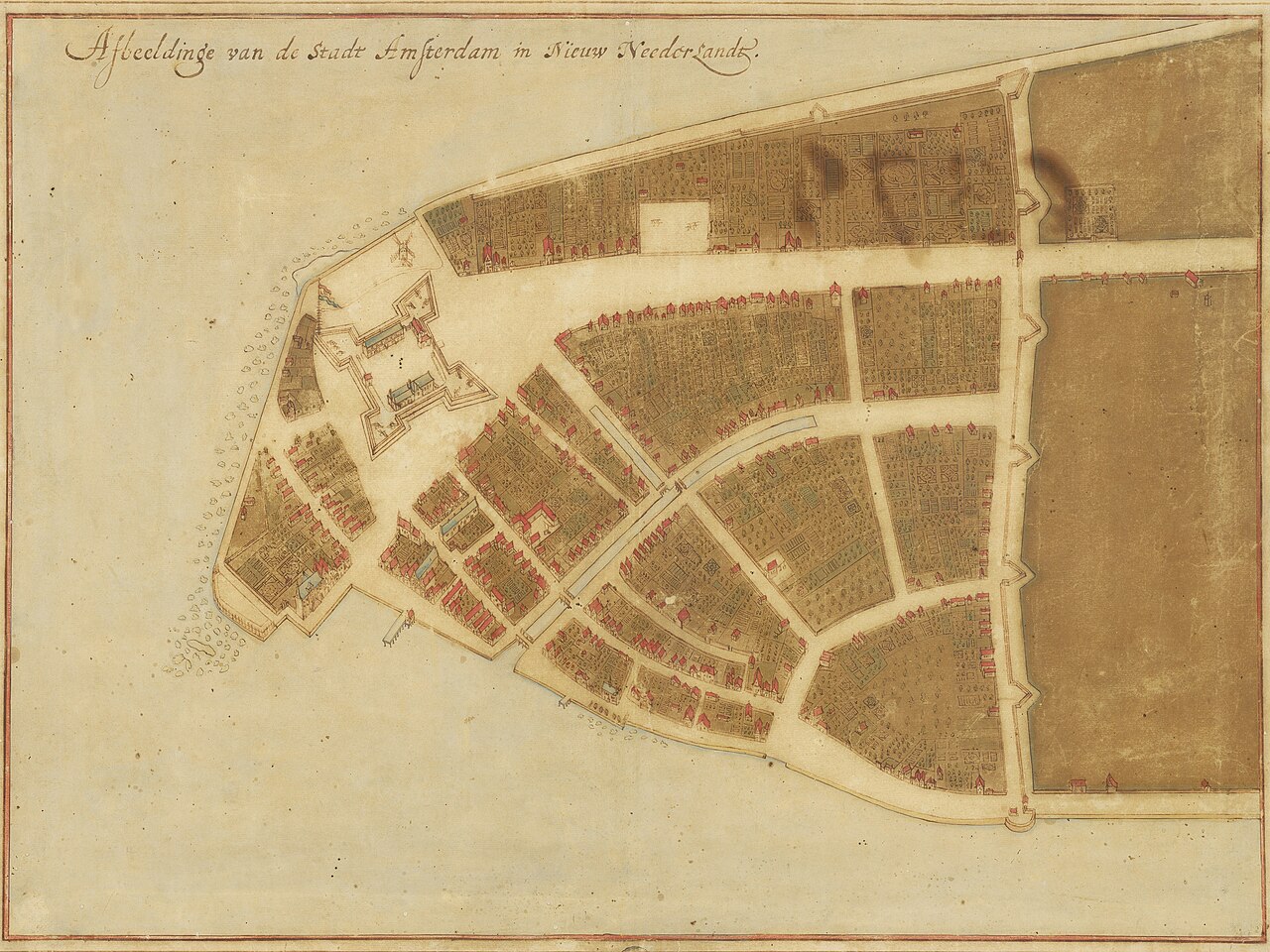 Artifact
Primary source
Fort Amsterdam
Kryn Fredericksen · 1625
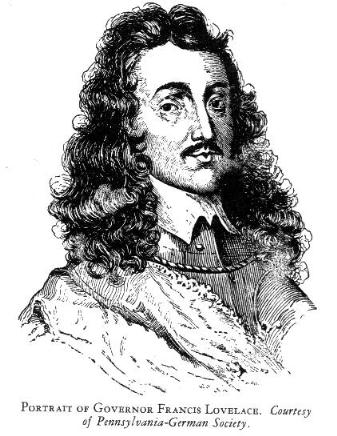 Painting
Secondary source
Portrait of Francis Lovelace
Ready when you are
Start chatting with Francis Lovelace now.
20 messages free · No credit card · Available in 50+ languages.