


Secondary sourceBook1609
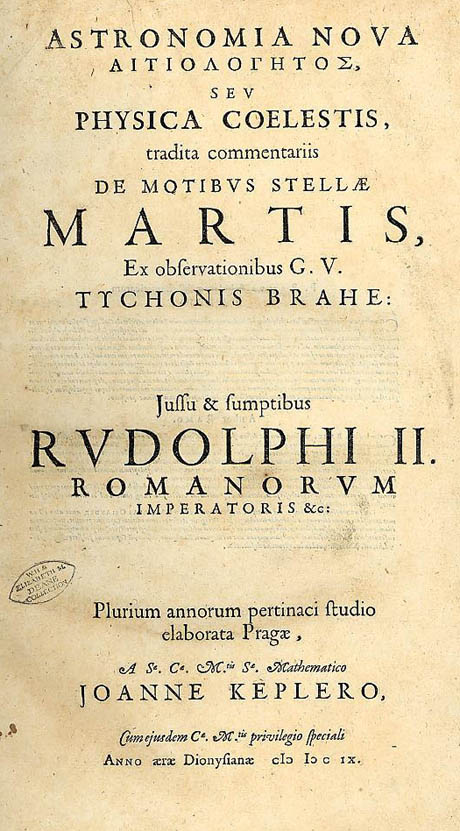
Astronomia Nova
Johannes Kepler · 1609
Johannes Kepler's 1609 book, which used Tycho Brahe's precise observations of Mars to prove planets move in ellipses.
Built directly on Tycho's Mars observations, this book shows how his data outlived and reshaped his own cosmology.
About this source
What it is
Astronomia Nova is a book published in 1609 by Johannes Kepler, presenting ten years of research into the motion of Mars. Its full title credits the observations of Tycho Brahe, Kepler's mentor.
Why it matters
Kepler relied on Tycho's exceptionally precise data, gathered over years on Mars's position, to discover that planets travel in elliptical orbits rather than perfect circles. On his deathbed, Tycho had asked Kepler to continue his own model of the cosmos, but Kepler instead used Tycho's data to overturn it, rejecting the geocentric, heliocentric and Tychonic systems in favour of his own. The book is considered one of the most important works of the Scientific Revolution, showing how one astronomer's data could transform another's theory.
Look closer
- Why might Kepler have rejected the very model Tycho asked him to finish?
- What does this show about the relationship between careful observation and new theory?
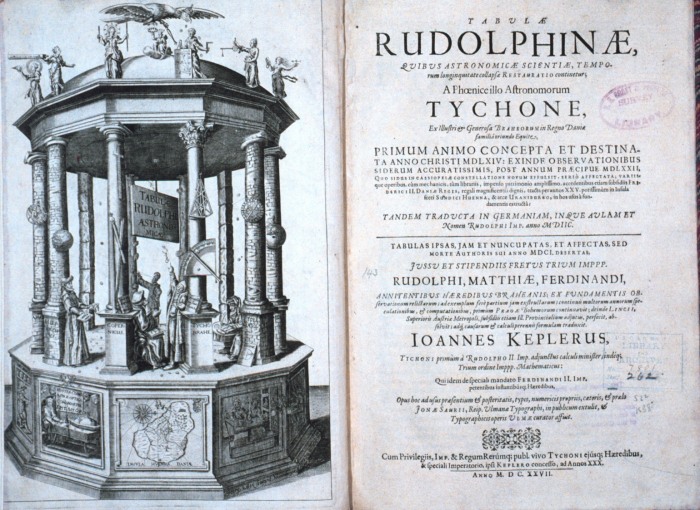
- The title page is in Latin — what does that tell you about who could read scientific books at the time?
This book is part of the curated material that grounds the AI version of Tycho Brahe and Johannes Kepler on Humy.ai — when students ask about related events, the AI can quote it and cite it.
More Tycho Brahe sources
Meet the AI Tycho Brahe →
Ready when you are
Start chatting with Tycho Brahe now.
20 messages free · No credit card · Available in 50+ languages.