


Secondary sourcePainting17th century
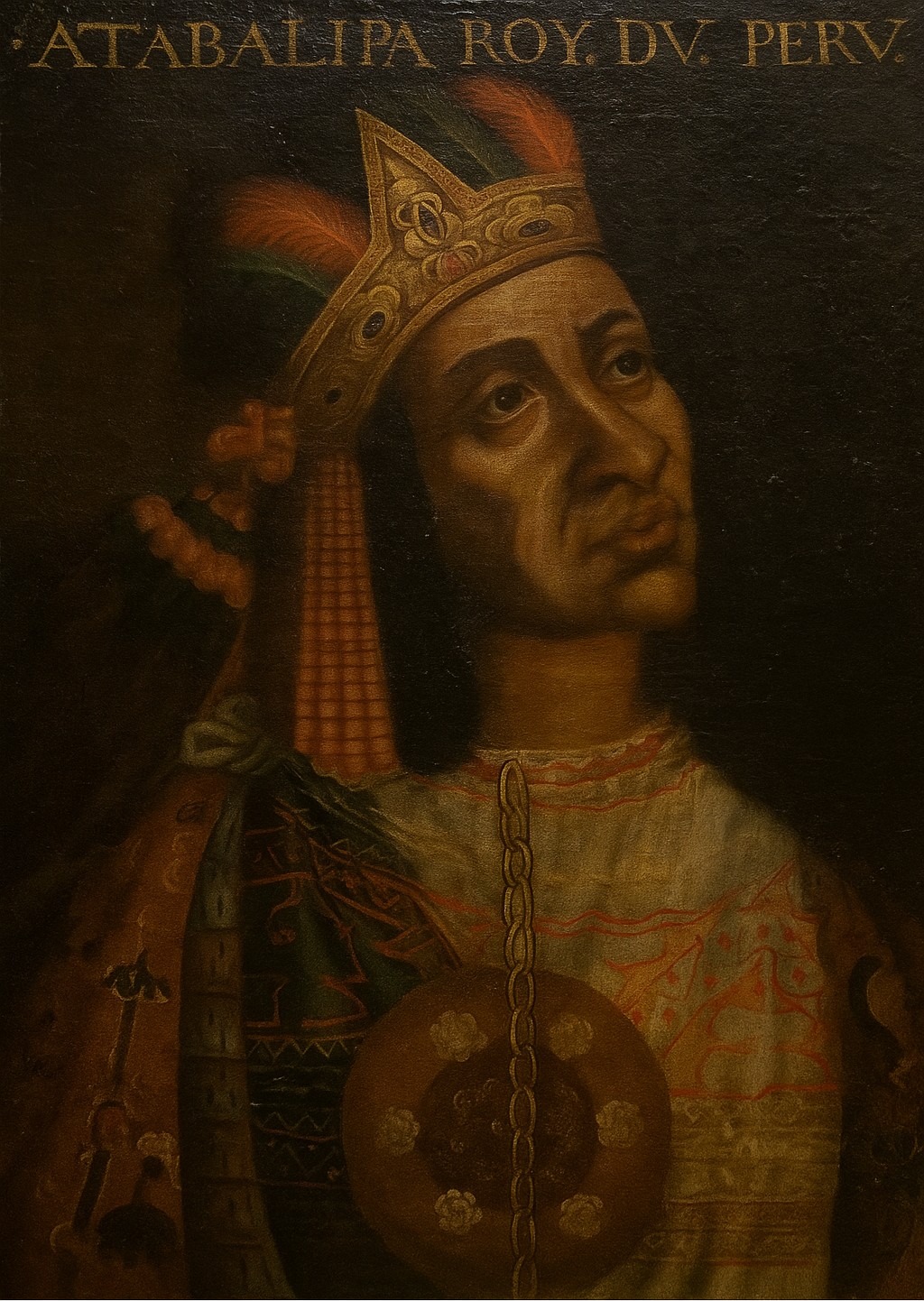
Atabalipa Roy Du Peru
Unknown · 17th century
A 17th-century oil painting of Atahualpa, based on European prints, showing how his image returned to and circulated in the Andes.
This painting depicts Atahualpa as a crowned ruler, based on earlier European images rather than direct knowledge.
About this source
What it is
This is an oil painting from the 17th century, held in the national museum in Quito. The artist is unknown. It shows a crowned man labelled 'ATABALIPA ROY DU PERV' in gold lettering, derived from earlier European printed images rather than from life.
Why it matters
The painting shows how images of Atahualpa, first created by European engravers who never saw him, travelled back across the Atlantic and were copied by Andean or colonial painters. It reveals how historical memory of the last Inca emperor was shaped by secondhand European sources rather than direct observation.
Look closer
- Why might an unknown painter copy a European print instead of inventing a new image?
- What does the crown, feathers, and medallion suggest about how Atahualpa was imagined as a ruler?
- Since this was painted long after Atahualpa's death, how reliable is it as evidence of what he actually looked like?
This painting is part of the curated material that grounds the AI version of Atahualpa on Humy.ai — when students ask about related events, the AI can quote it and cite it.
More Atahualpa sources
Meet the AI Atahualpa →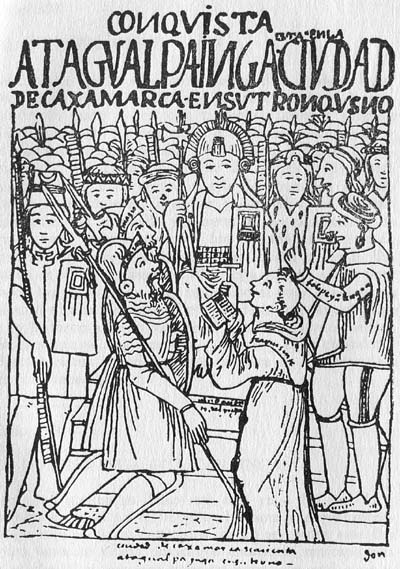 Painting
Secondary source
Atawallpa Pizarro tinkuy
Felipe Guaman Poma de Ayala · 1532 (depicted); drawing later
 Book
Primary source
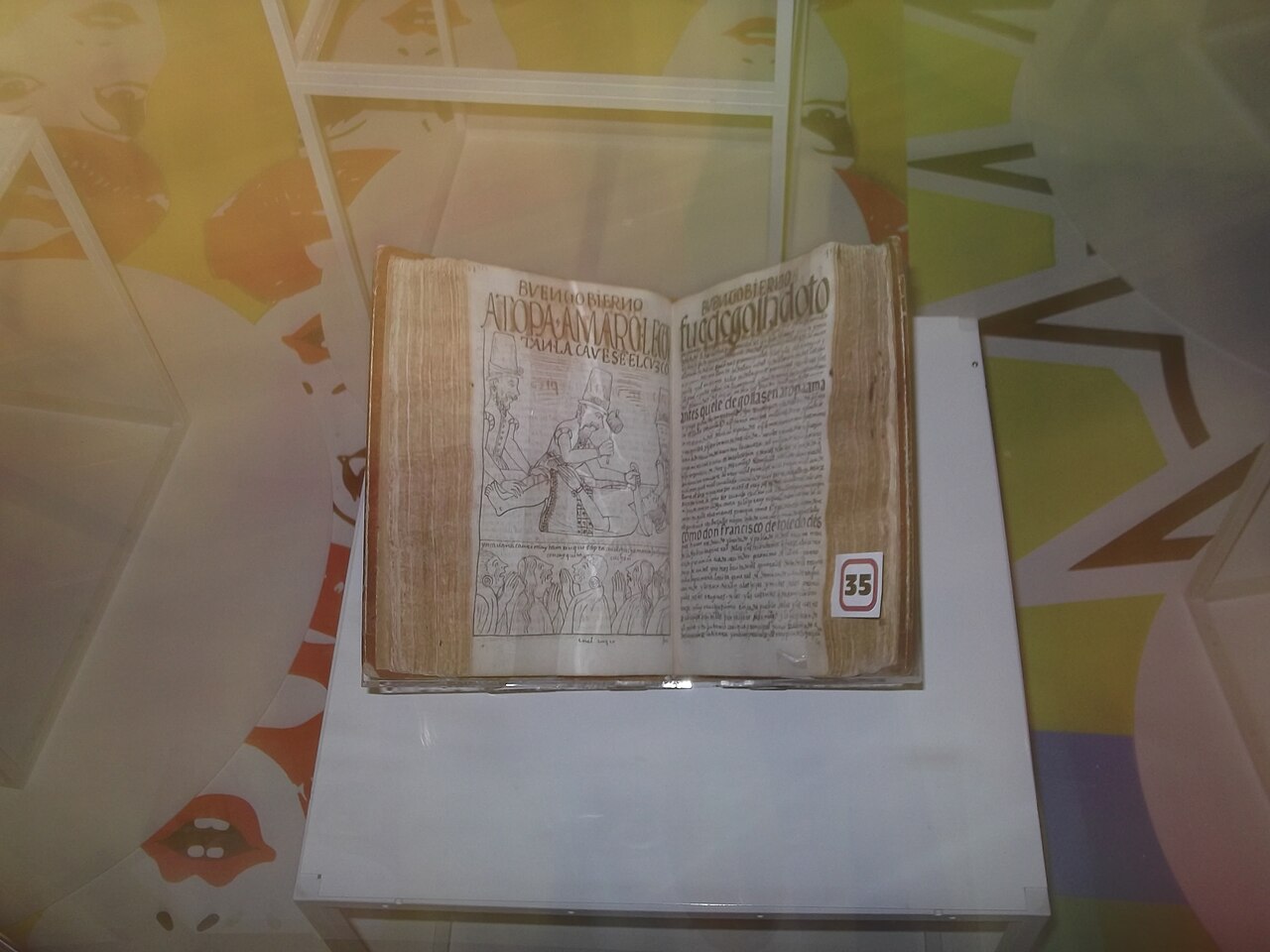
El primer nueva corónica y buen gobierno
Felipe Guaman Poma de Ayala · c. 1615
 Painting
Secondary source
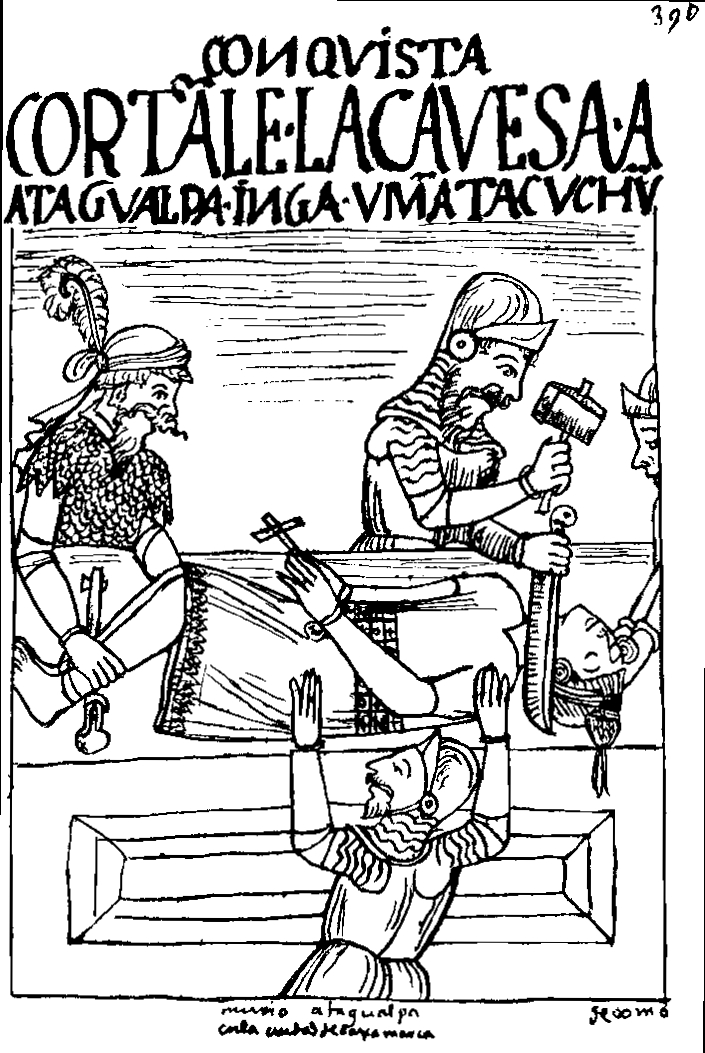
Muerte de Atagualpa Inca
Felipe Huaman Puma de Ayala · c. 1615
 Artifact
Secondary source
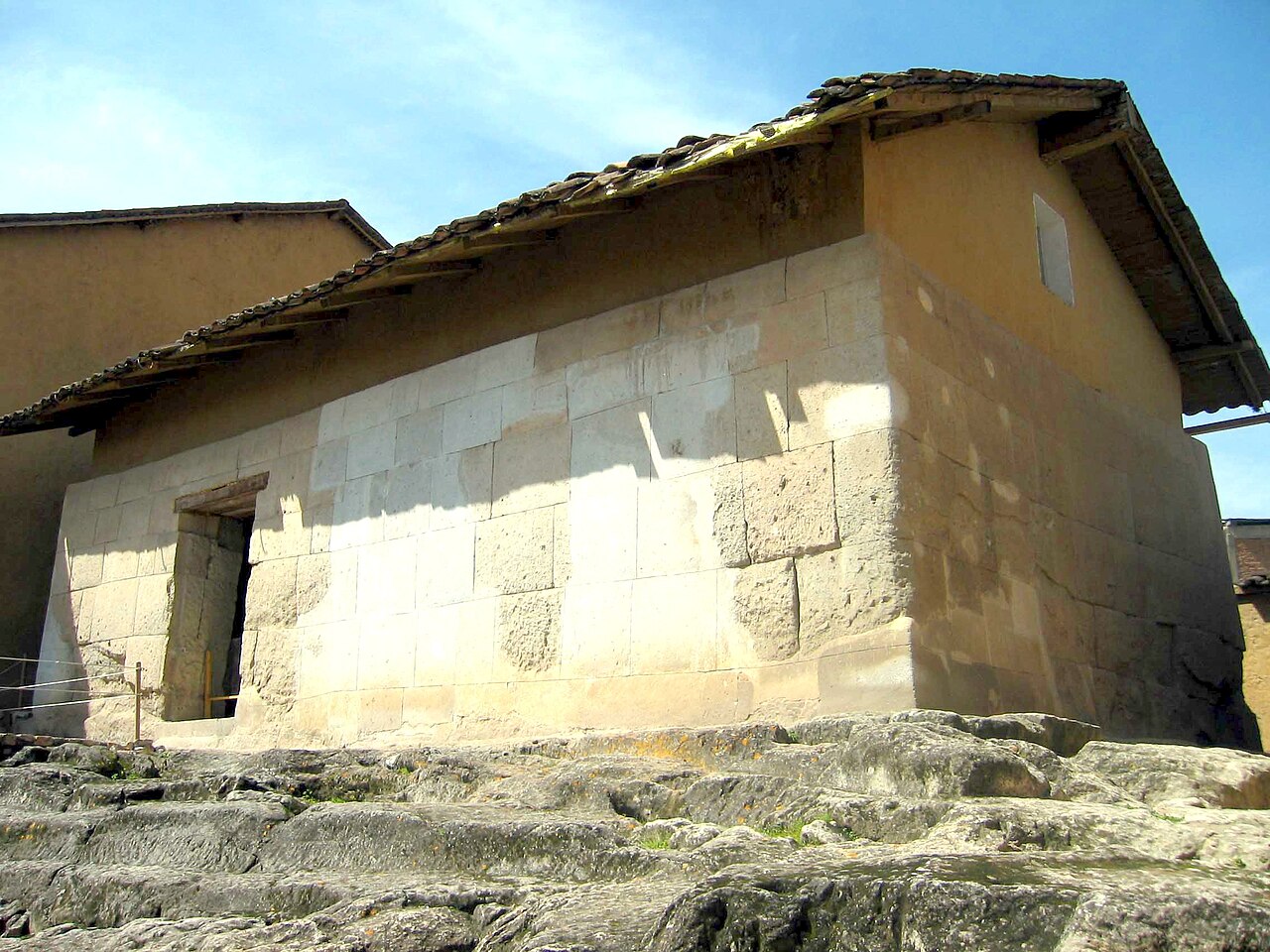
Ransom Room
Secondary source
Suma y Narración de los Incas
Juan de Betanzos · 1551
Ready when you are
Start chatting with Atahualpa now.
20 messages free · No credit card · Available in 50+ languages.