


Secondary sourcePaintingbetween 1790 and 1799 (uncertain)
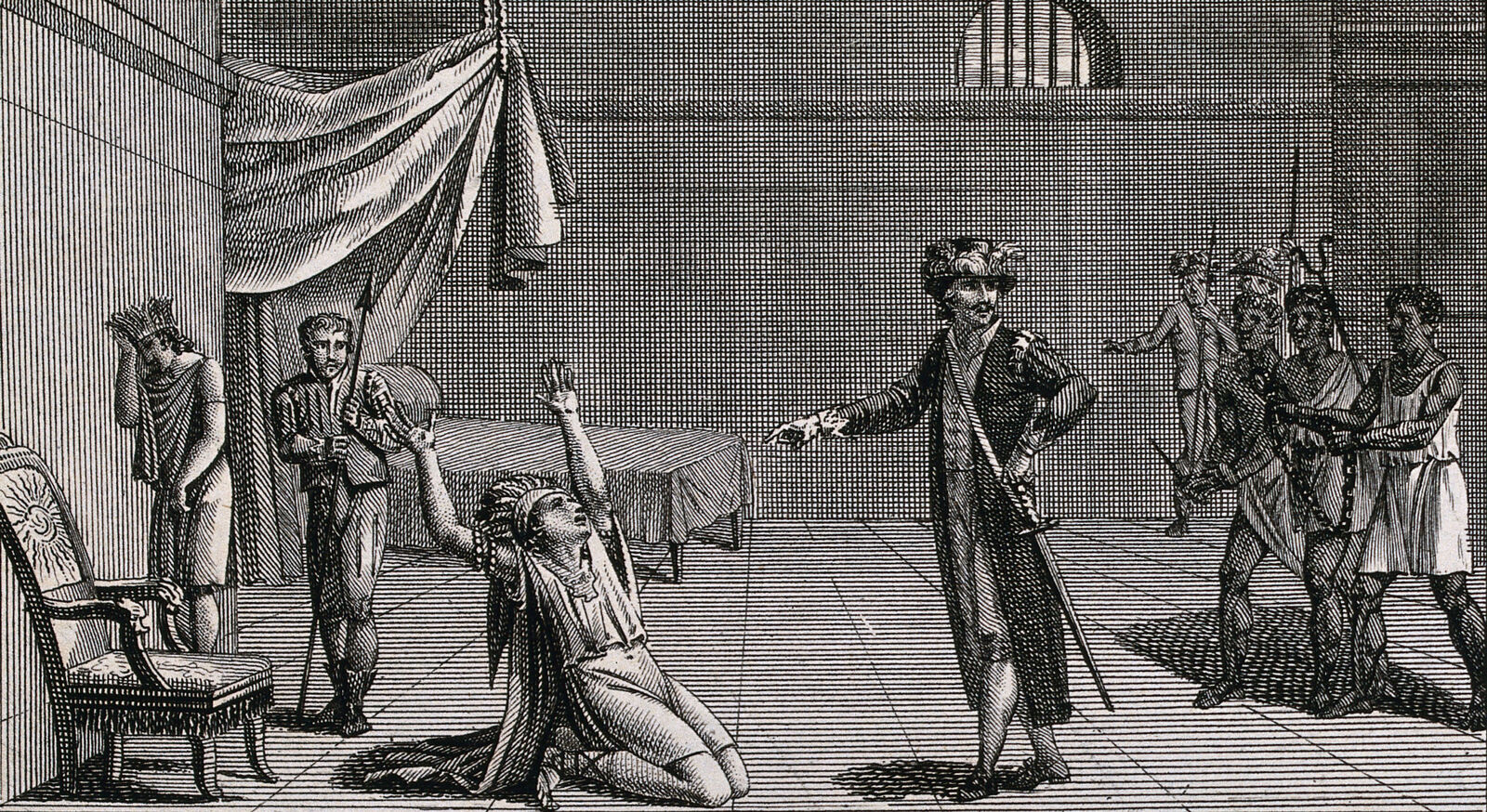
Atahualpa begging Pizarro for mercy
A.C.F. Villerey after Nanine Vallain · between 1790 and 1799 (uncertain)
A late 18th-century etching imagining the Inca ruler Atahualpa pleading for his life before Francisco Pizarro.
Imagines Atahualpa kneeling before Pizarro during the moment of his capture.
About this source
What it is
An etching made between about 1790 and 1799 by A.C.F. Villerey after a design by Nanine Vallain, held by the Wellcome Collection in London. It shows a kneeling figure, possibly meant to be Atahualpa, before a standing man in a feathered hat.
Why it matters
Made centuries after the events, this print is part of a tradition of European artists imagining the dramatic fall of the Inca Empire. The curators note the identification of the figure as Atahualpa is uncertain, a reminder that many such images were created from imagination rather than eyewitness accounts.
Look closer
- What details in the room—curtained bed, chair, barred window—suggest this is an imagined, staged setting rather than a real record?
- How does the artist use body language to show power and submission?
- Why do you think this scene of capture was a popular subject for European artists?
This painting is part of the curated material that grounds the AI version of Atahualpa on Humy.ai — when students ask about related events, the AI can quote it and cite it.
More Atahualpa sources
Meet the AI Atahualpa →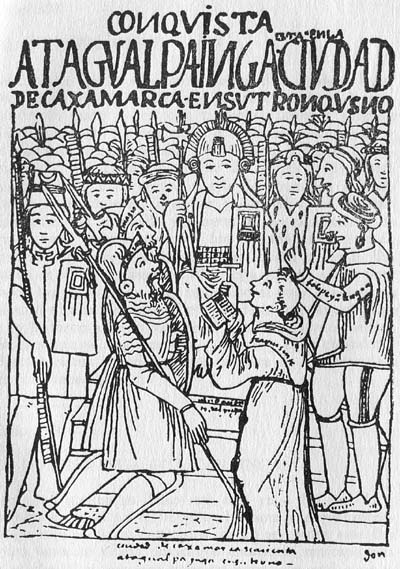 Painting
Secondary source
Atawallpa Pizarro tinkuy
Felipe Guaman Poma de Ayala · 1532 (depicted); drawing later
 Book
Primary source
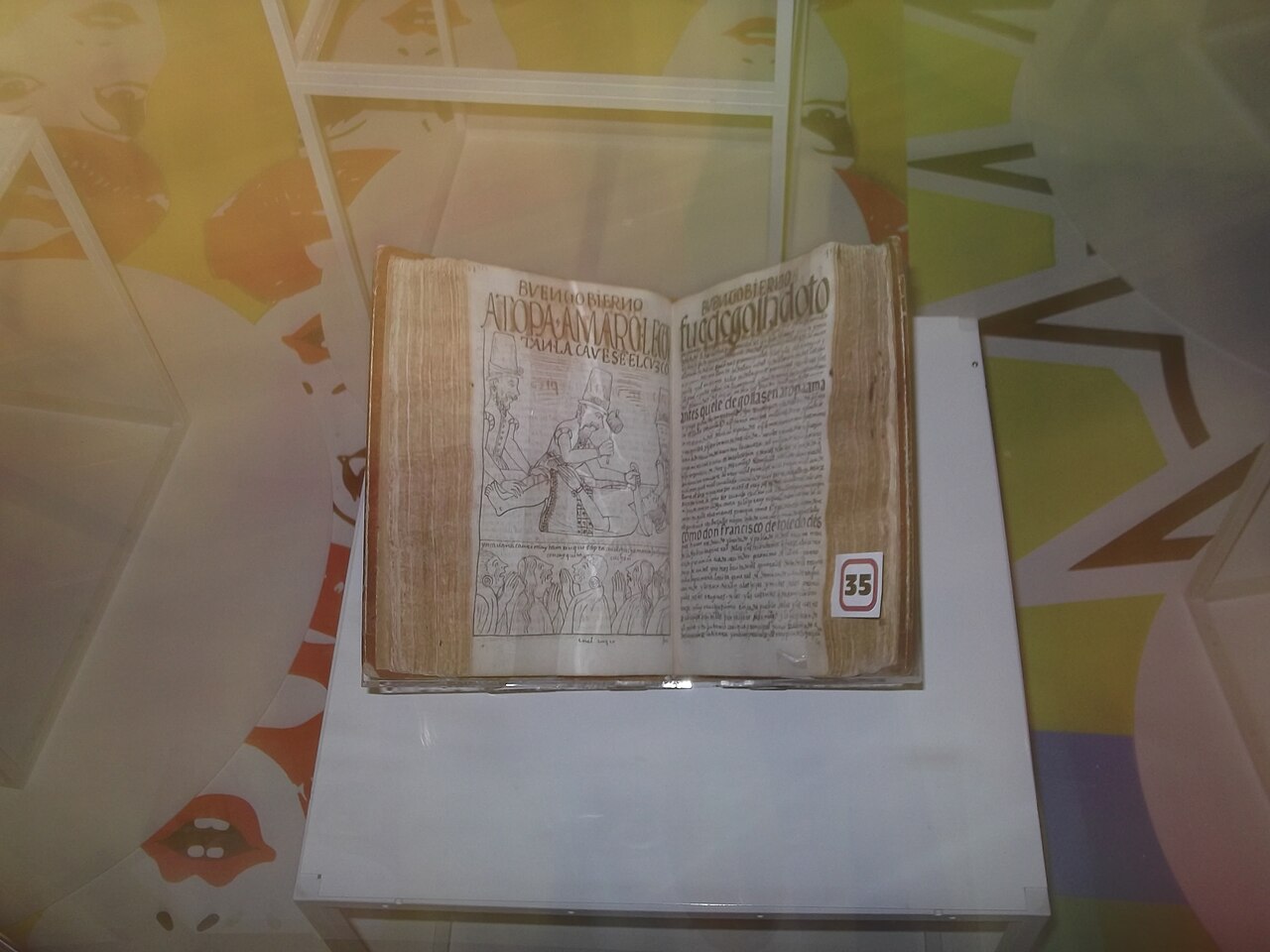
El primer nueva corónica y buen gobierno
Felipe Guaman Poma de Ayala · c. 1615
 Painting
Secondary source
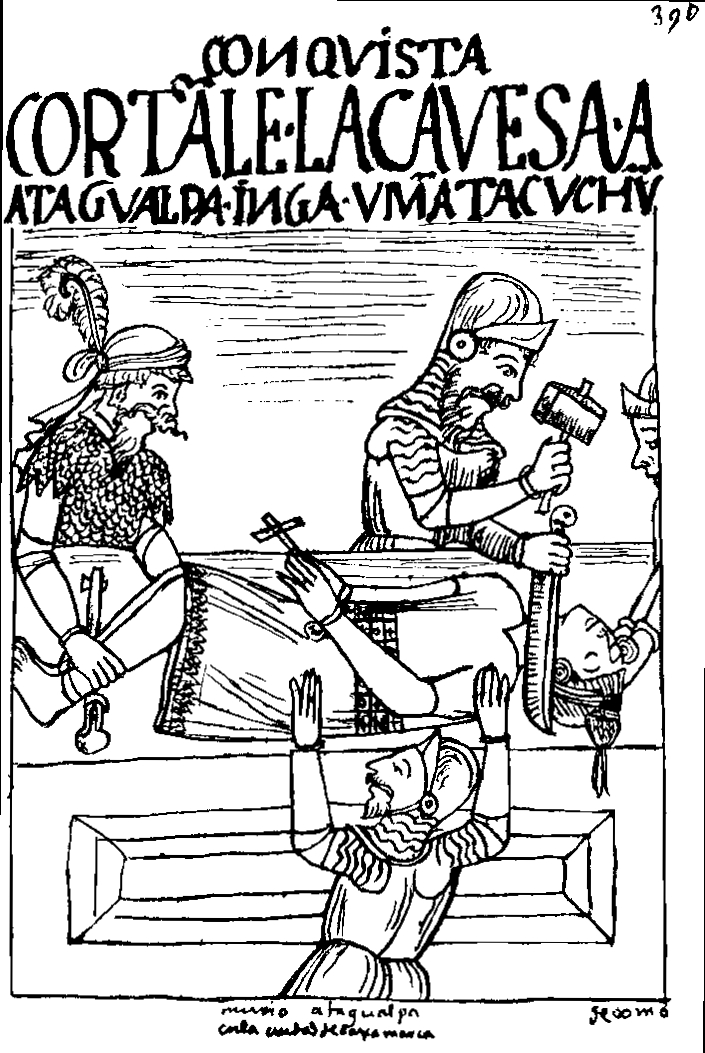
Muerte de Atagualpa Inca
Felipe Huaman Puma de Ayala · c. 1615
 Artifact
Secondary source
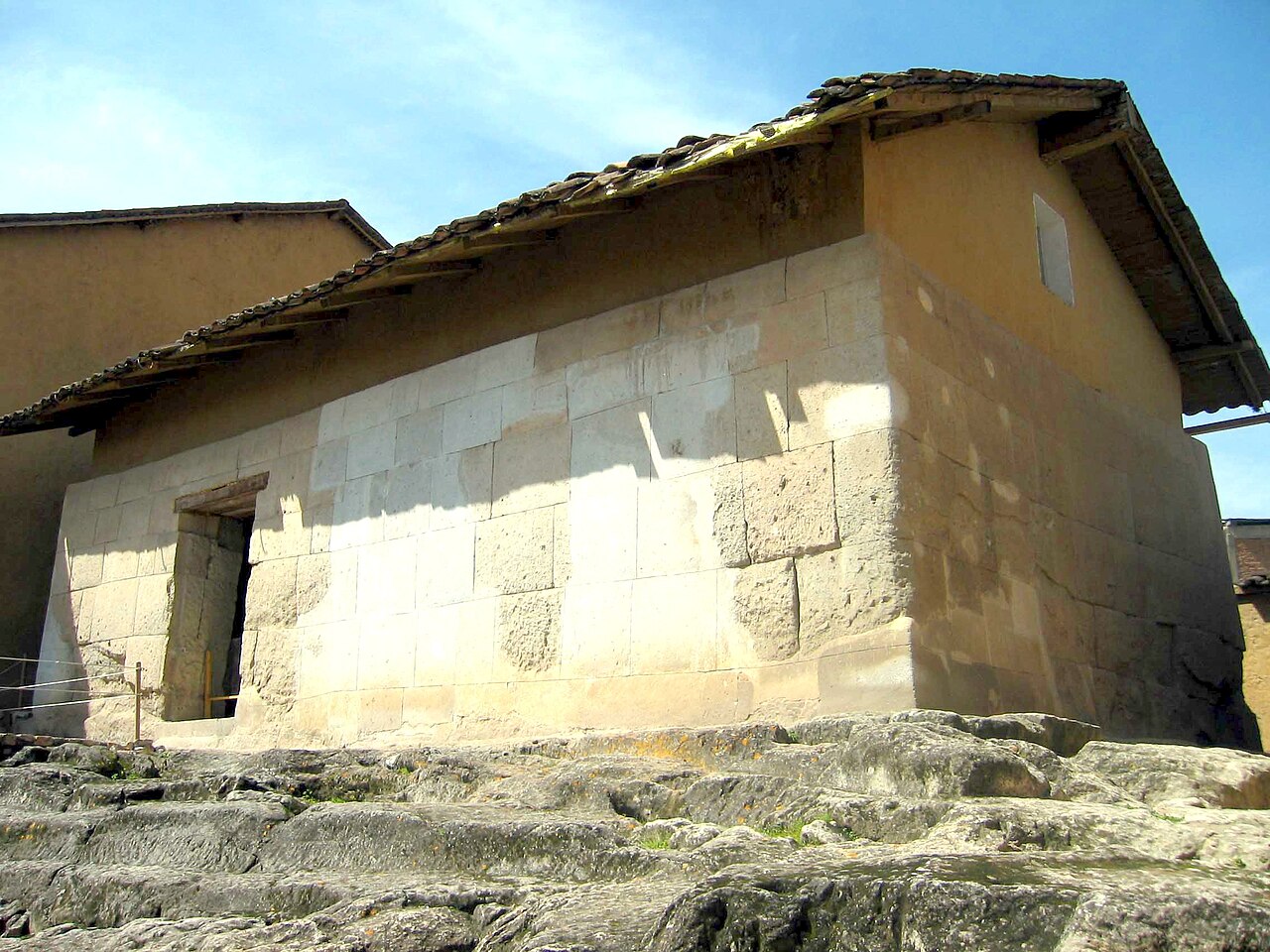
Ransom Room
Secondary source
Suma y Narración de los Incas
Juan de Betanzos · 1551
Ready when you are
Start chatting with Atahualpa now.
20 messages free · No credit card · Available in 50+ languages.