


Primary sourcePainting1927
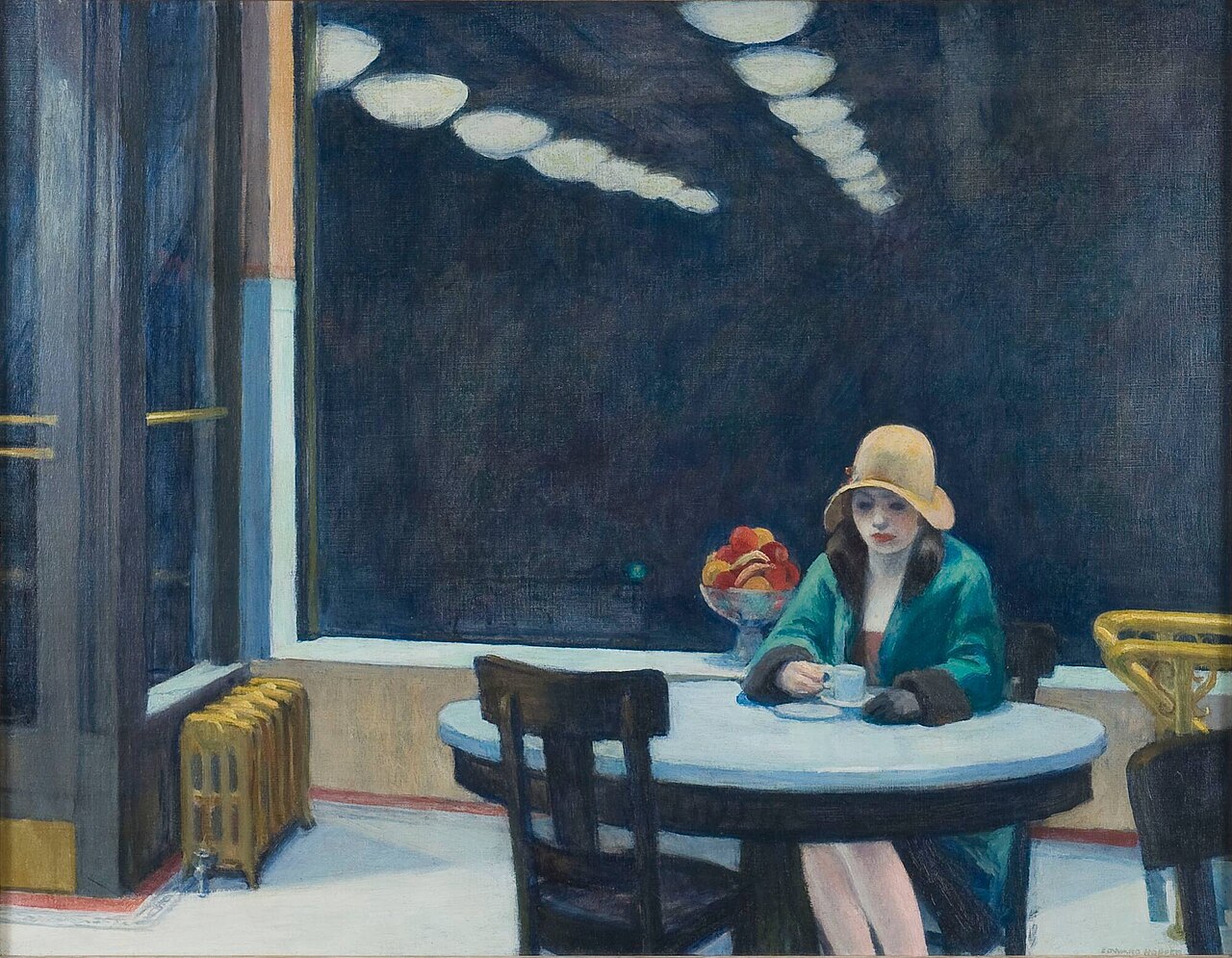
Automat
Edward Hopper · 1927
Hopper's 1927 painting of a lone woman in a self-service cafeteria, modeled by his wife Jo, an early image of urban solitude.
Painted by Hopper using his wife Jo as the model, this is one of his key early images of modern solitude.
About this source
What it is
Automat is an oil painting made by Edward Hopper in 1927, first shown at his second solo show in New York. It depicts a woman sitting alone at night in an automat, a kind of self-service cafeteria common in American cities at the time. The painting is now held by the Des Moines Art Center.
Hopper's wife, Jo Hopper, posed as the model, though Hopper altered her face and figure to make her appear younger and slimmer than she was.
Why it matters
The painting is often linked to ideas of modern urban alienation, showing a well-dressed woman alone with her thoughts in a public but impersonal space. Automats of this era were promoted as safe places for working women to eat alone, which adds context to the scene. Critics have compared the composition to earlier European paintings of solitary women in cafes.
Look closer
- What details suggest whether the woman is coming from work, going to work, or out socially?
- Why might Hopper have changed his wife's appearance for this painting?
- What does the empty restaurant and dark window suggest about the time of night?
This painting is part of the curated material that grounds the AI version of Edward Hopper on Humy.ai — when students ask about related events, the AI can quote it and cite it.
More Edward Hopper sources
Browse all 94 →
Ready when you are
Start chatting with Edward Hopper now.
20 messages free · No credit card · Available in 50+ languages.