


Primary sourcePainting1930
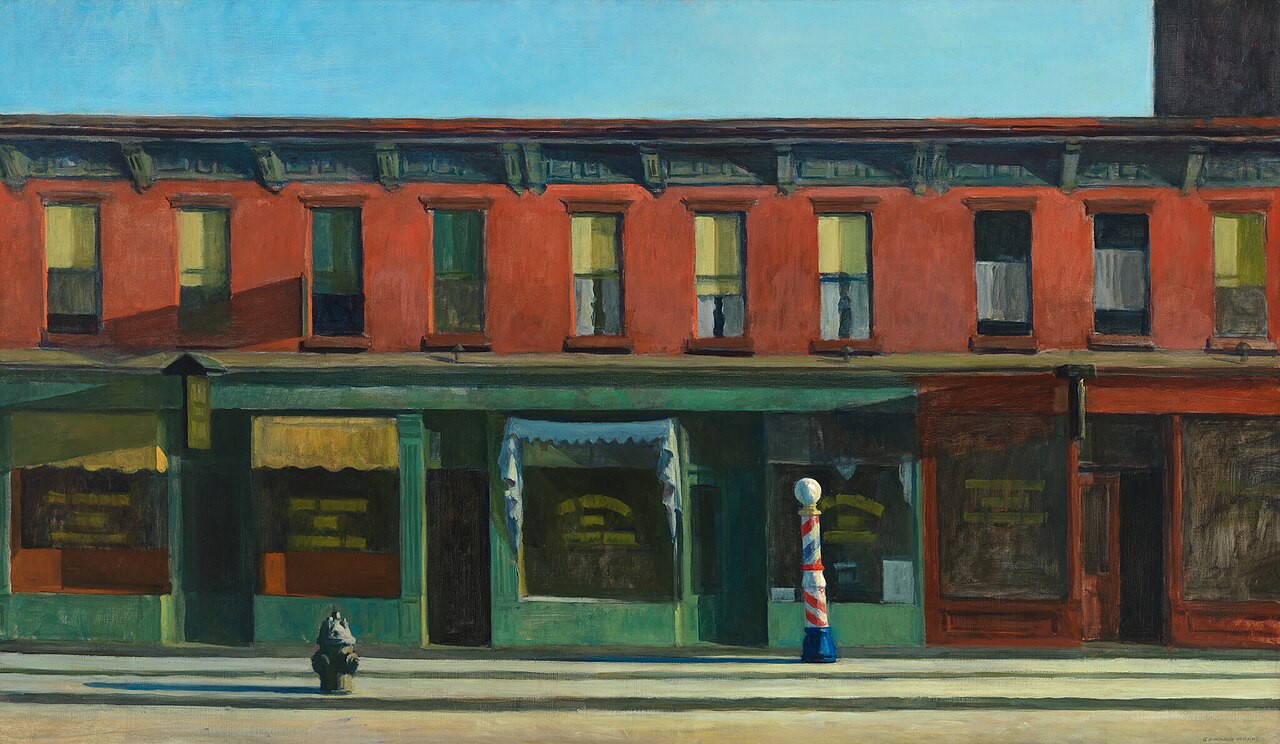
Early Sunday Morning
Edward Hopper · 1930
Hopper's 1930 painting of an empty Seventh Avenue storefront row in early light, evoking the deserted city during the Great Depression.
One of Hopper's best-known Depression-era paintings, showing his vision of the deserted American street.
About this source
What it is
Early Sunday Morning is an oil painting made by Edward Hopper in 1930, showing a row of shops on Seventh Avenue in New York City shortly after sunrise. It was bought soon after it was painted and became part of the founding collection of the Whitney Museum of American Art, where it remains.
Hopper based the image on a real building near his studio but changed details such as the size of the doorways and the storefront lettering.
Why it matters
The empty street and closed shops have often been read as a picture of the dire state of American cities during the Great Depression, though Hopper said the title's reference to Sunday was added by someone else, not by him. The painting shows how Hopper transformed an ordinary, nearby street into something quietly haunting.
Look closer
- What mood does the empty street and the raking morning light create?
- Why might Hopper have simplified or changed details from the real building?
- What is left out of this street scene that you might expect to see?
This painting is part of the curated material that grounds the AI version of Edward Hopper on Humy.ai — when students ask about related events, the AI can quote it and cite it.
More Edward Hopper sources
Browse all 94 →
Ready when you are
Start chatting with Edward Hopper now.
20 messages free · No credit card · Available in 50+ languages.