


Secondary sourceSculpturec. 100 AD
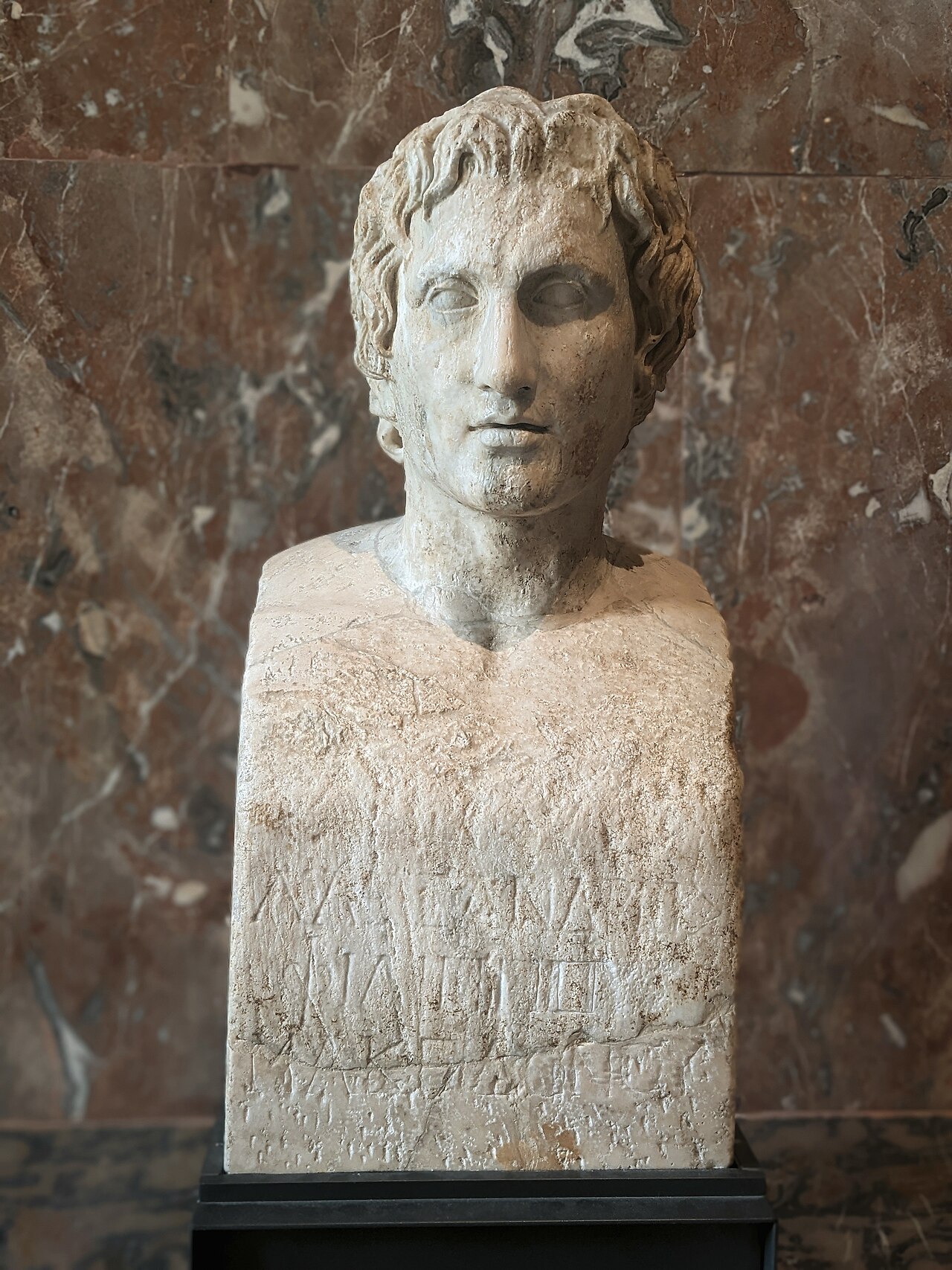
Azara Herm
c. 100 AD
A Roman marble herm bust inscribed with Alexander's name, copying a lost portrait by his court sculptor Lysippos.
This is the only securely identified portrait of Alexander, copying a lost original by his own court sculptor.
About this source
What it is
This is a marble herm (a bust on a squared pillar) carved in Roman times, around the 1st century AD, as a copy of an earlier Greek portrait. It is held today in the Louvre's department of Greek, Etruscan and Roman Antiquities.
An inscription on the base names the subject, which is why experts trust that this really shows Alexander the Great.
Why it matters
The original portrait this copies was made by Lysippos, the sculptor who worked at Alexander's own court. Because the inscription survives, this is the only portrait of Alexander that can be identified with certainty, making it a key reference for recognising him in other, unlabelled images.
Look closer
- What does the young, calm face suggest about how Alexander wanted to be remembered?
- Why might a labelled copy made centuries later be so valuable to historians?
- What can't a bust like this tell us about a person's life or actions?
This sculpture is part of the curated material that grounds the AI version of Alexander the Great on Humy.ai — when students ask about related events, the AI can quote it and cite it.
More Alexander the Great sources
Meet the AI Alexander the Great →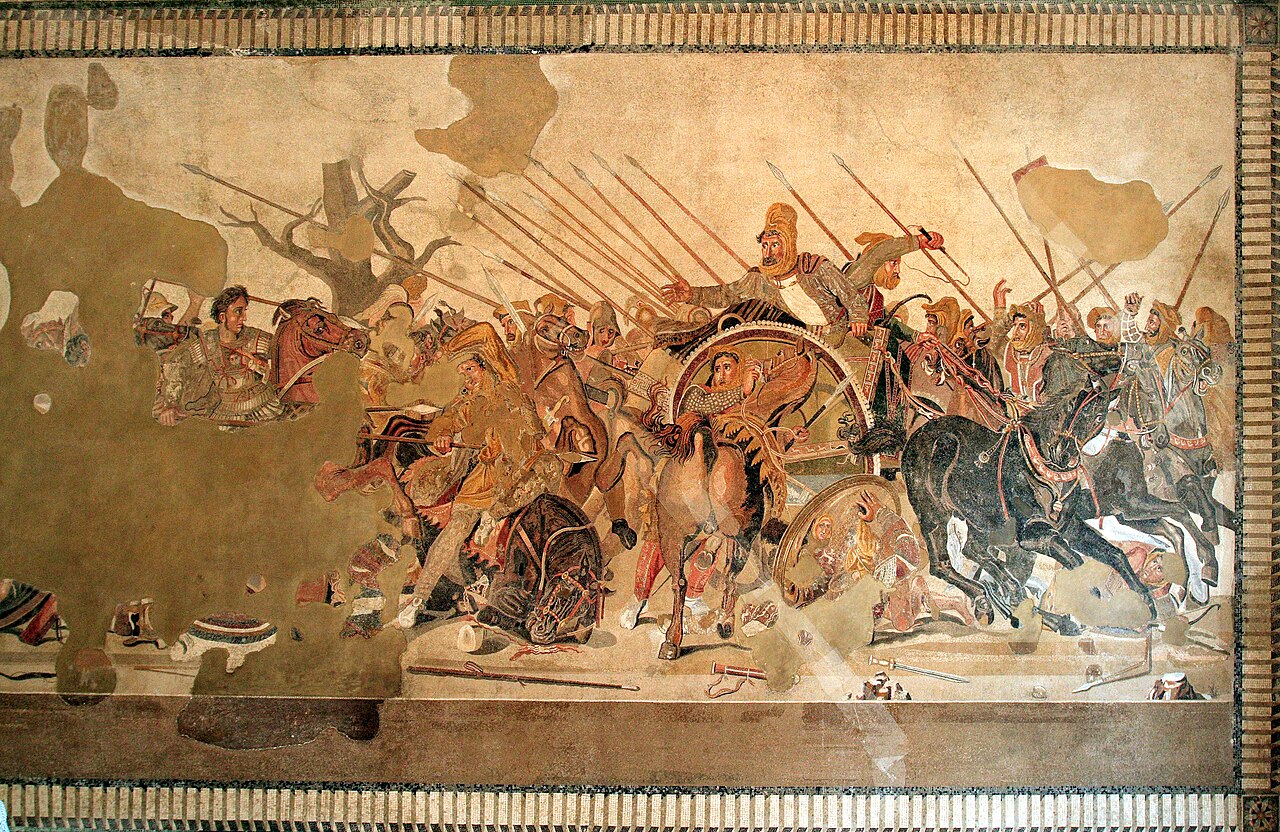 Artifact
Secondary source
Alexander Mosaic
Philoxenus of Eretria · c. 120-100 BCE (copy of an earlier Hellenistic painting)
 Painting
Secondary source
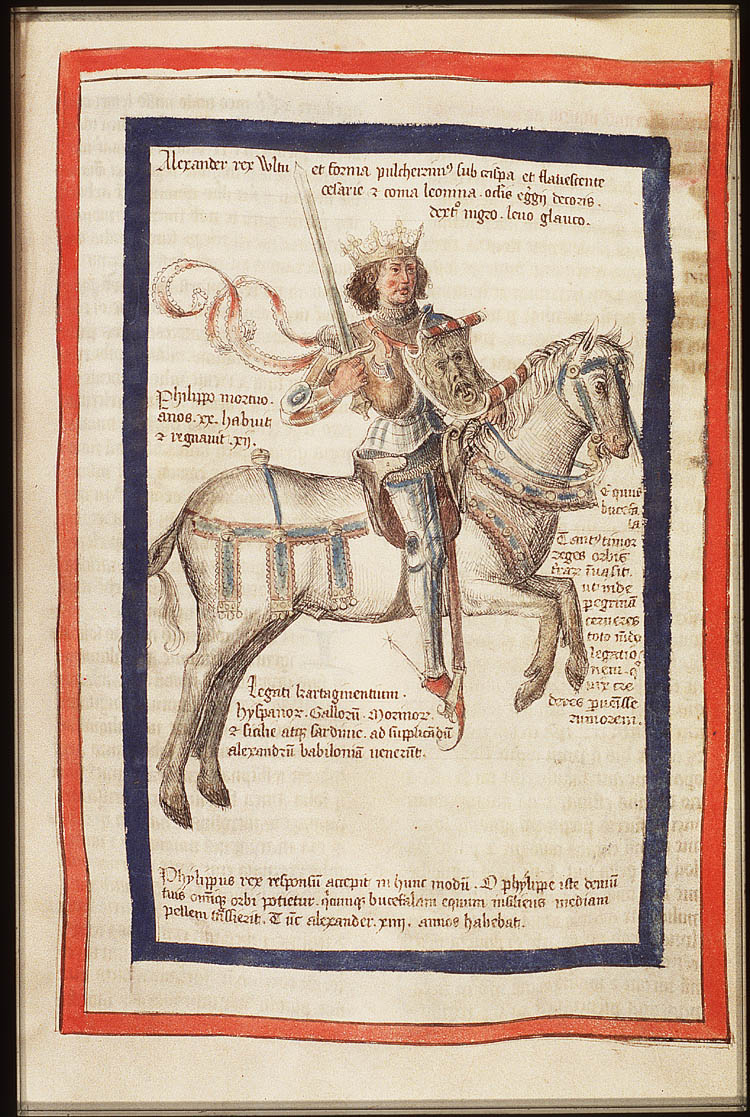
Alexander the Great riding Bucephalus
1460
 Artifact
Primary source
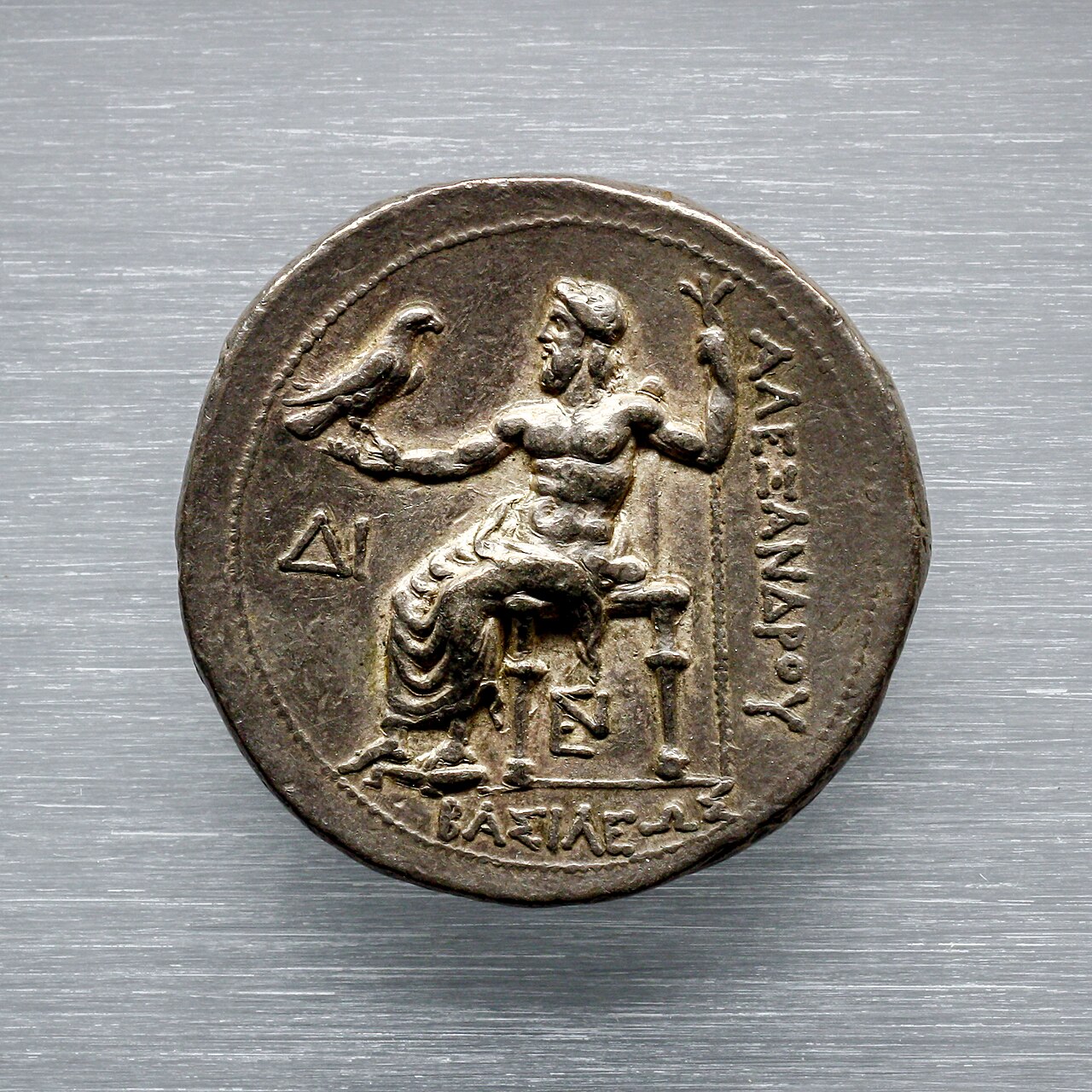
Silver Tetradrachm of Alexander the Great
Royal mints of Alexander III · c. 336-323 BCE
 Painting
Secondary source
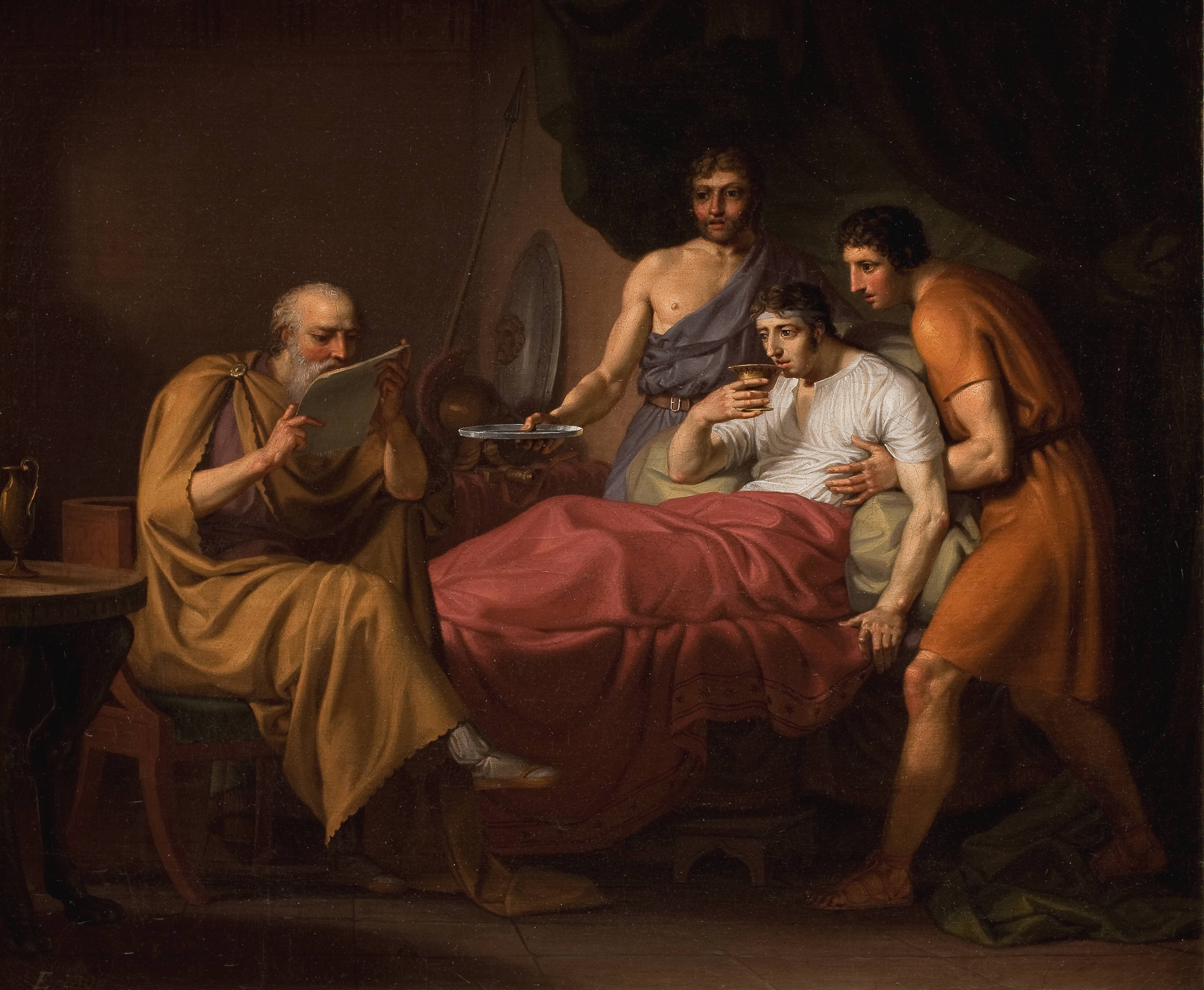
Alexander the Great on his Sickbed
1806
 Book
Secondary source
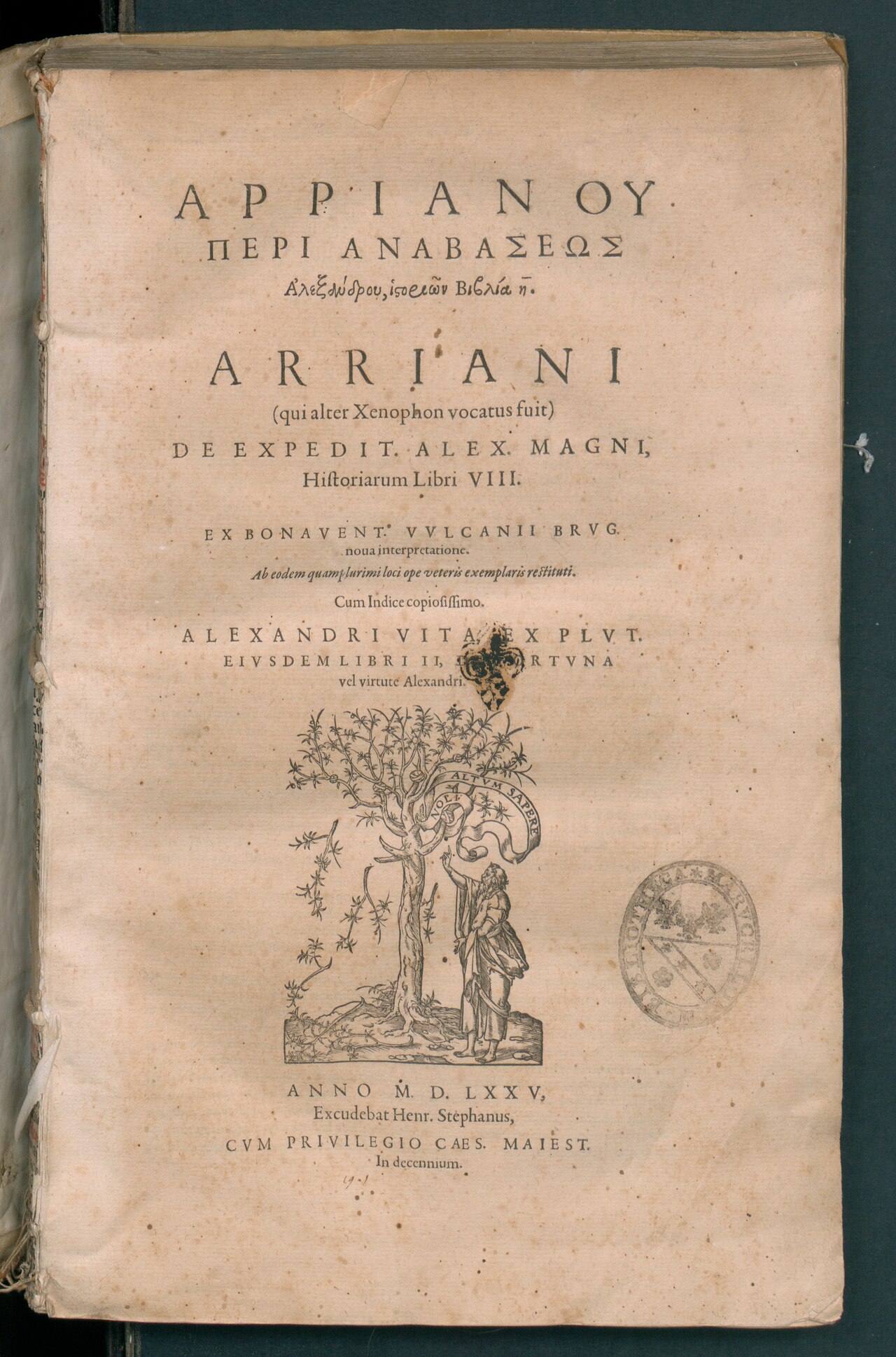
Anabasis of Alexander
Arrian · c. 150 AD
Ready when you are
Start chatting with Alexander the Great now.
20 messages free · No credit card · Available in 50+ languages.