


Primary sourceArtifact1785
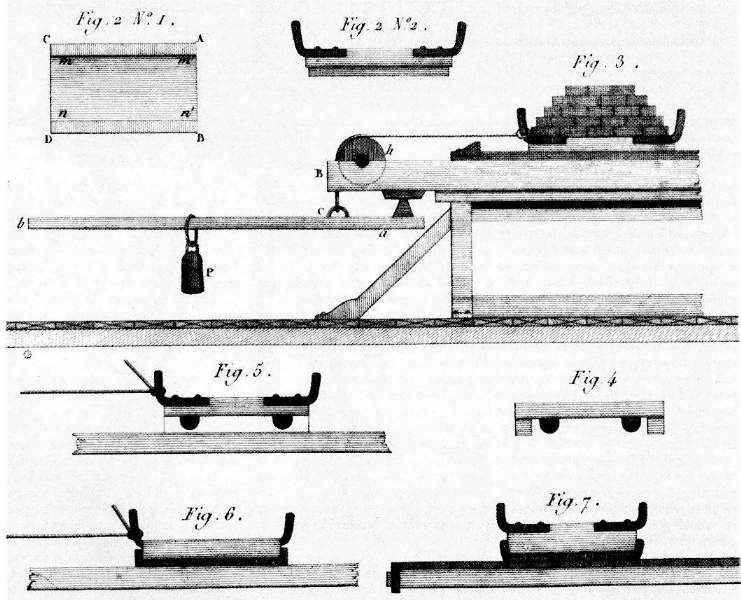
Balance de Coulomb Engraving
Charles-Augustin de Coulomb · 1785
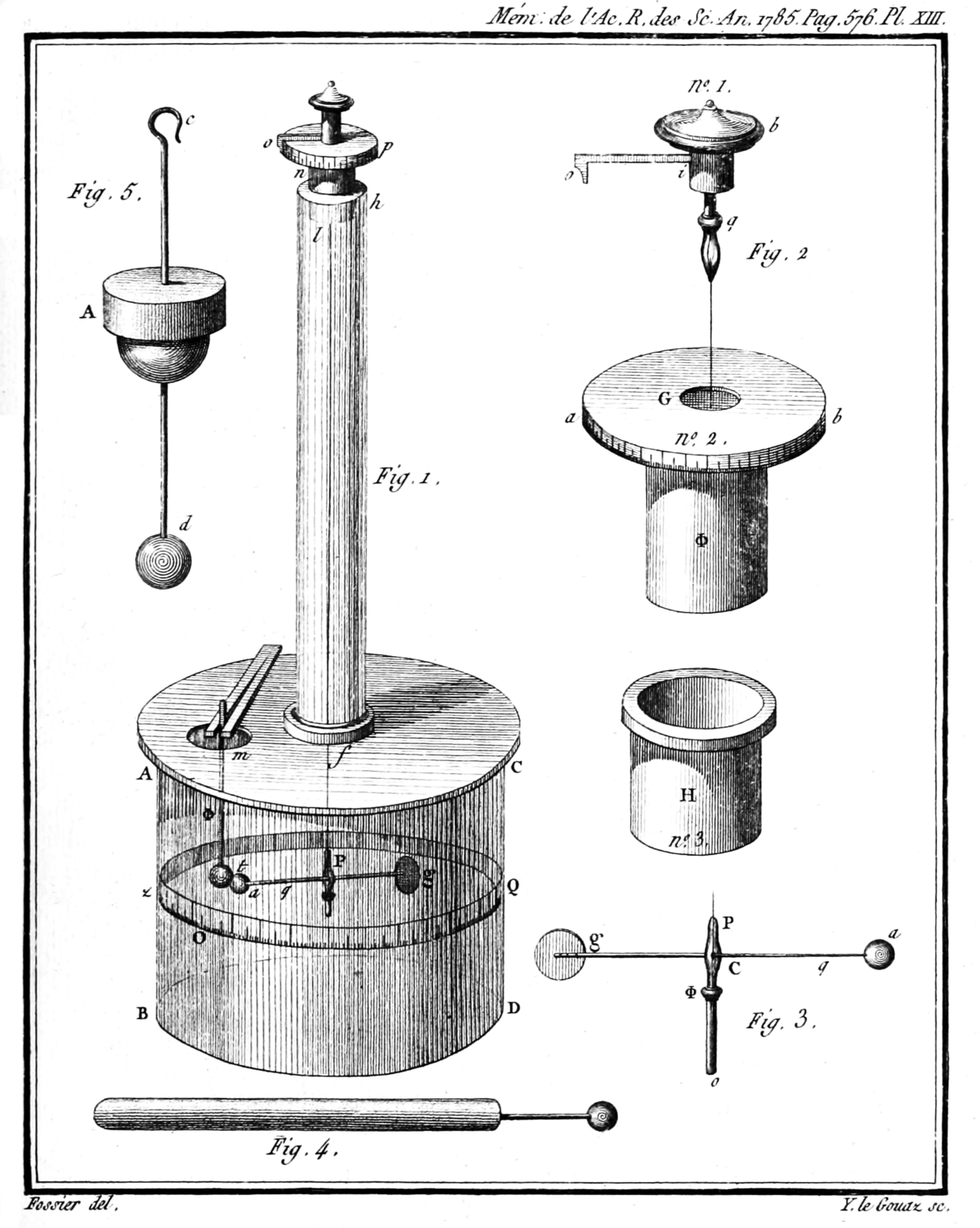
An engraved plate from Coulomb's 1785 memoir showing his torsion balance, the apparatus he used to measure electric force.
This diagram, from Coulomb's own memoir, depicts the torsion balance he invented and used for his electrical experiments.
About this source
What it is
This is an engraved plate from the 1785 Mémoires de l'Académie Royale des Sciences, showing diagrams of the torsion balance invented by Charles-Augustin de Coulomb. The plate labels several figures showing the cylindrical case, glass column, suspended needle and balls that made up the device.
Why it matters
The torsion balance allowed Coulomb to measure very small forces precisely, which let him establish the relationship between electric charge and distance now known as Coulomb's law. This image was used to teach his experiment to other scientists of the time.
Look closer
- Why might an engraving be more useful than a written description for explaining this device?
- What parts of the apparatus can you identify from the labeled figures?
- What does this level of detail tell you about how science was shared in the 1780s?
This artifact is part of the curated material that grounds the AI version of Charles-Augustin de Coulomb on Humy.ai — when students ask about related events, the AI can quote it and cite it.
More Charles-Augustin de Coulomb sources
Browse all 20 → Document
Primary source
Experimente zur Bestimmung der Dichte der Erde
Henry Cavendish · 2024 (translation of 1798 original)
 Painting
Secondary source
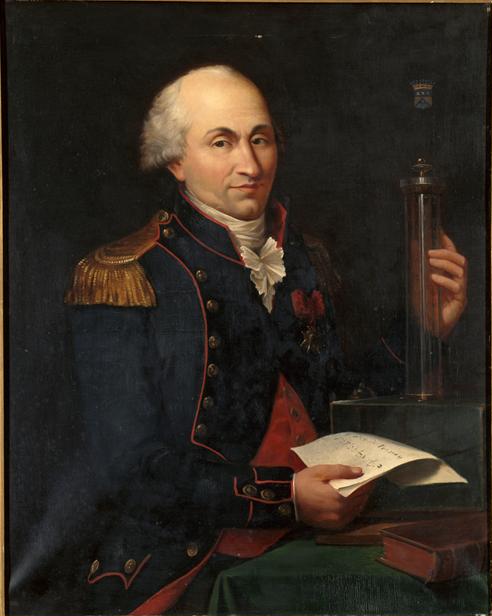
Portrait of Charles-Augustin de Coulomb
 Artifact
Secondary source
Coulomb-type Declinometer
 Artifact
Secondary source
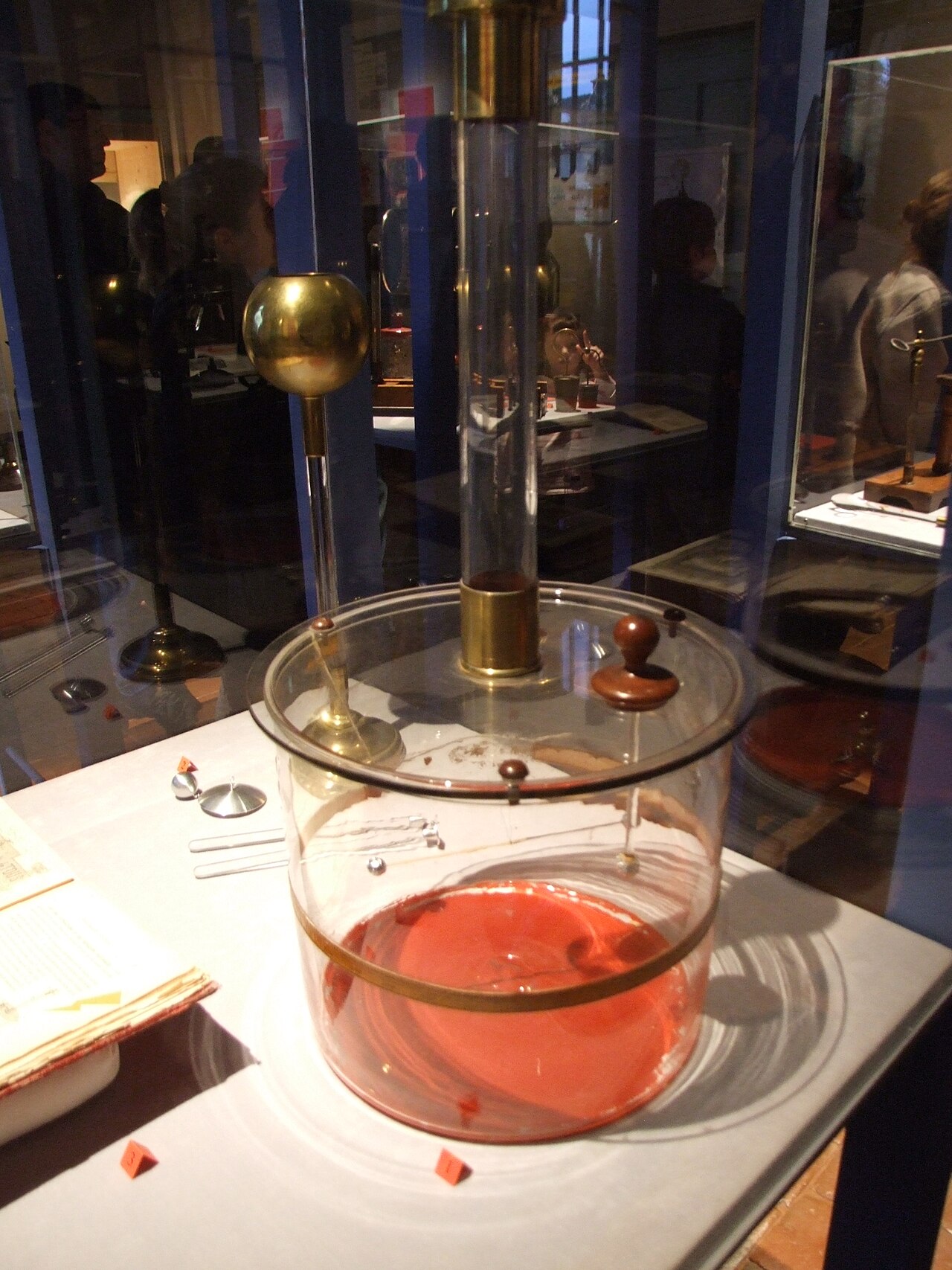
Balance de Coulomb Exhibition Display
2008
Free account
Read every Charles-Augustin de Coulomb source
Sign up free →
Ready when you are
Start chatting with Charles-Augustin de Coulomb now.
20 messages free · No credit card · Available in 50+ languages.