


Secondary sourcePainting1833
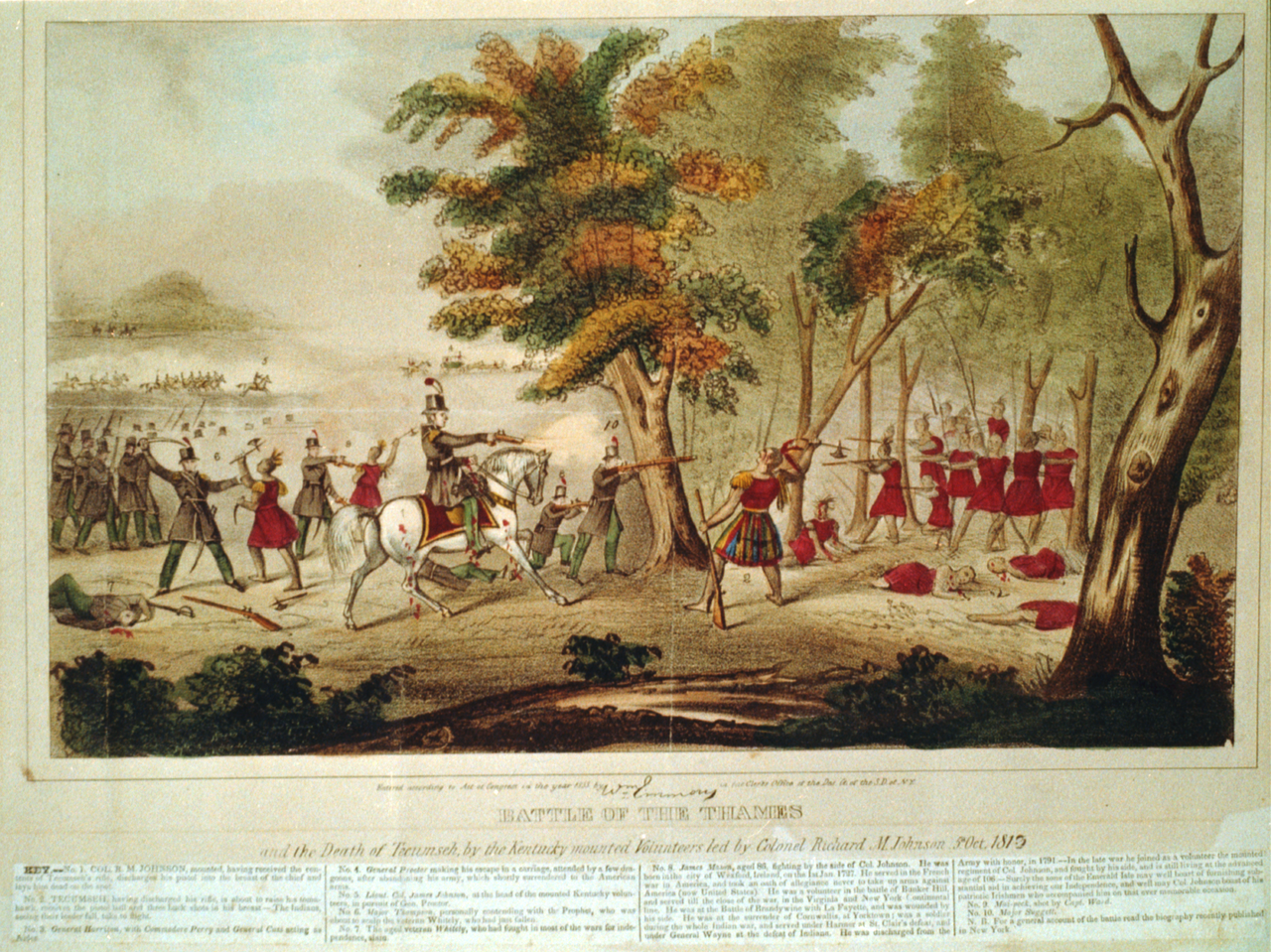
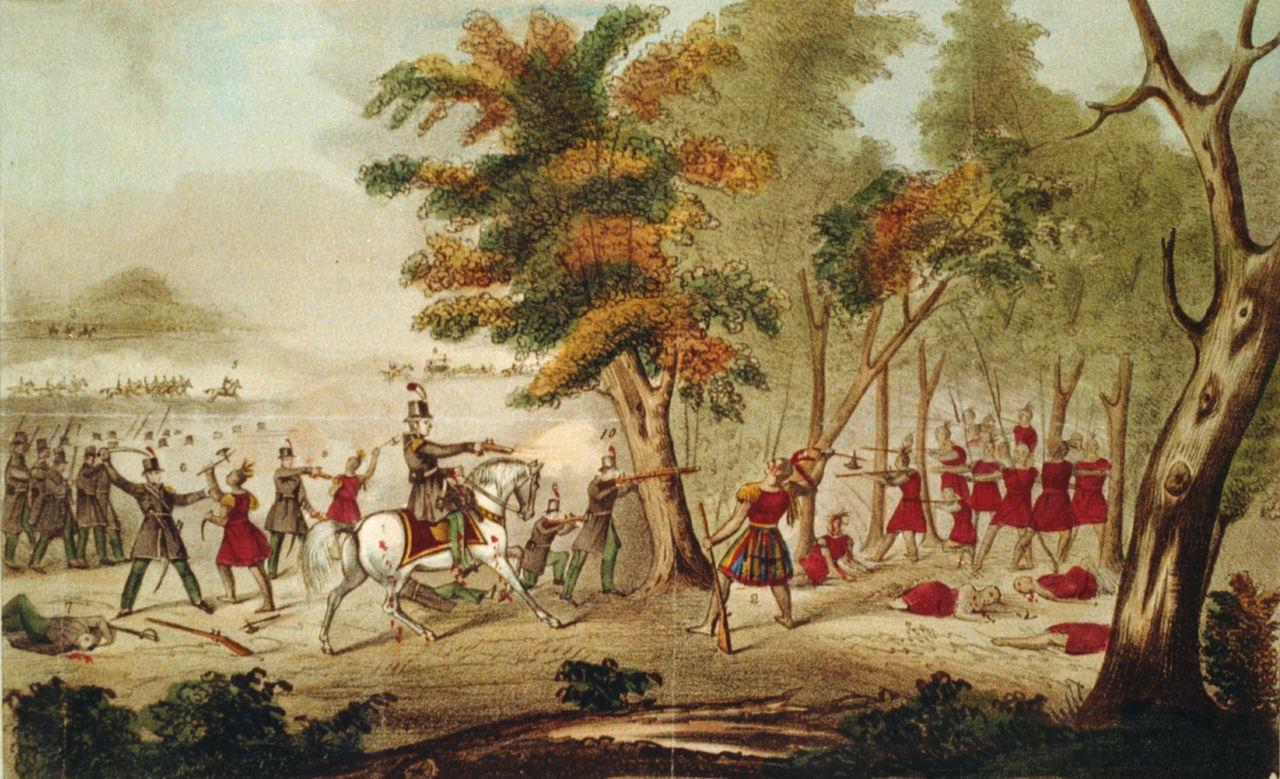
Battle of the Thames and the Death of Tecumseh (William Emmons)
William Emmons · 1833
A hand-coloured 1833 lithograph by William Emmons showing the Battle of the Thames and Tecumseh's death, made twenty years after the battle.
A print made twenty years after Tecumseh's death, showing how the battle where he fell was publicly portrayed.
About this source
What it is
This is a hand-coloured lithograph by William Emmons, titled 'Battle of the Thames and the Death of Tecumseh'. It shows mounted soldiers in dark uniforms and red-plumed helmets on the left, with a mounted officer on a white horse firing a pistol. Opposing figures in red leggings and feathered clothing fight among trees on the right, and fallen bodies lie on the ground. A printed key runs along the bottom. The print is dated 1833 and describes the battle as fought by Kentucky mounted volunteers led by Colonel Richard M. Johnson on 5 October 1813.
Why it matters
The print was made about twenty years after the battle, when the story of Tecumseh's death had become a subject of popular interest. Colonel Richard M. Johnson, who led the Kentucky volunteers, is credited in the title and later became a national figure. The image shows how the battle was presented to the public, with the Native fighters placed in the background of an American victory. Historians today study such prints alongside eyewitness accounts.
Look closer
- Which figures are placed in the foreground, and which are pushed to the edges or trees?
- Why might a print from 1833 highlight Colonel Johnson's role in the battle?
- What would an account by a Native participant show that this print does not?
This painting is part of the curated material that grounds the AI version of Tecumseh on Humy.ai — when students ask about related events, the AI can quote it and cite it.
More Tecumseh sources
Browse all 93 →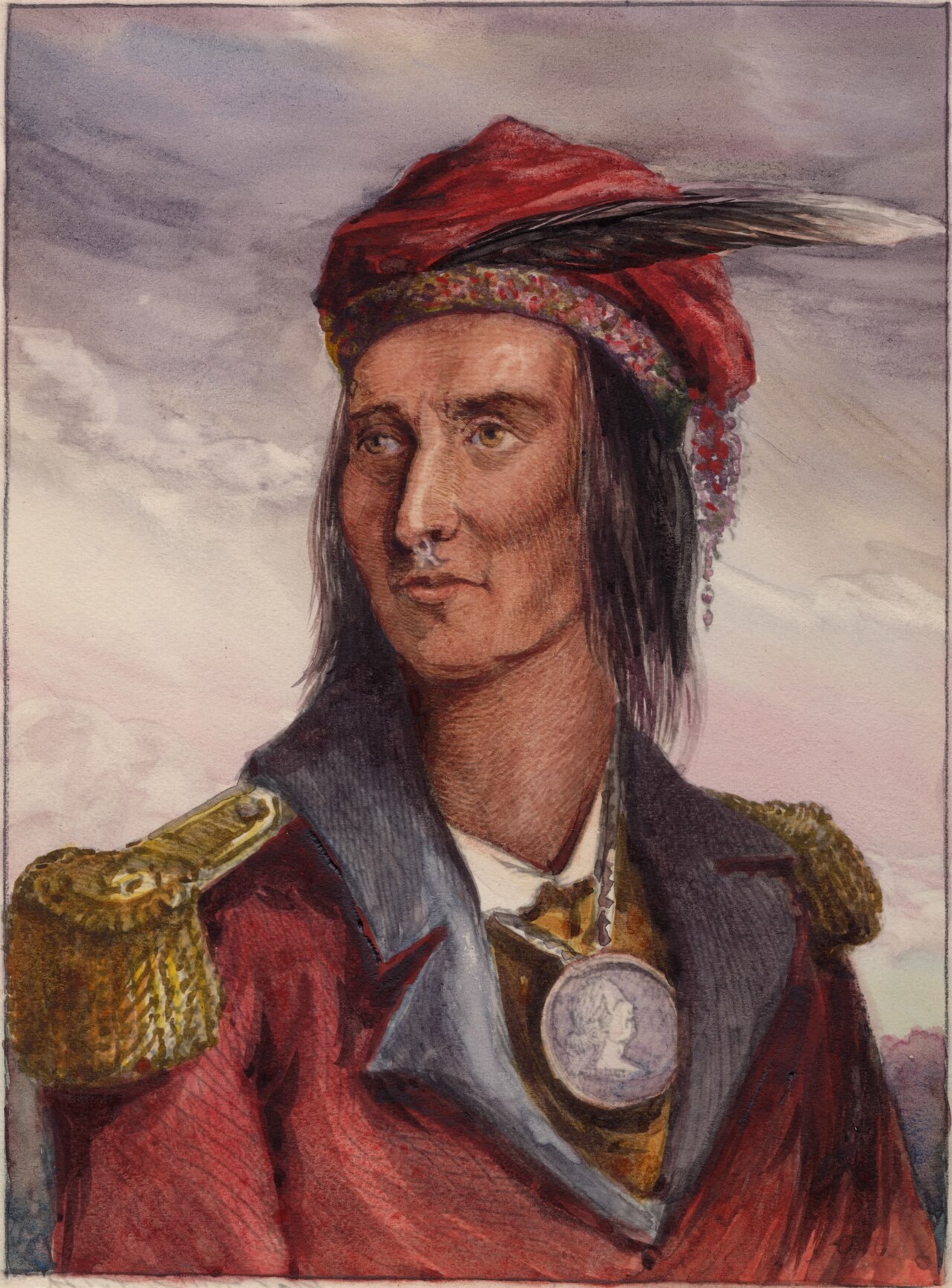 Painting
Secondary source
Portrait of Tecumseh
Pierre Le Dru (original sketch); reworked by Benson Lossing, 1868 · 1868 (after an earlier sketch)
 Document
Primary source
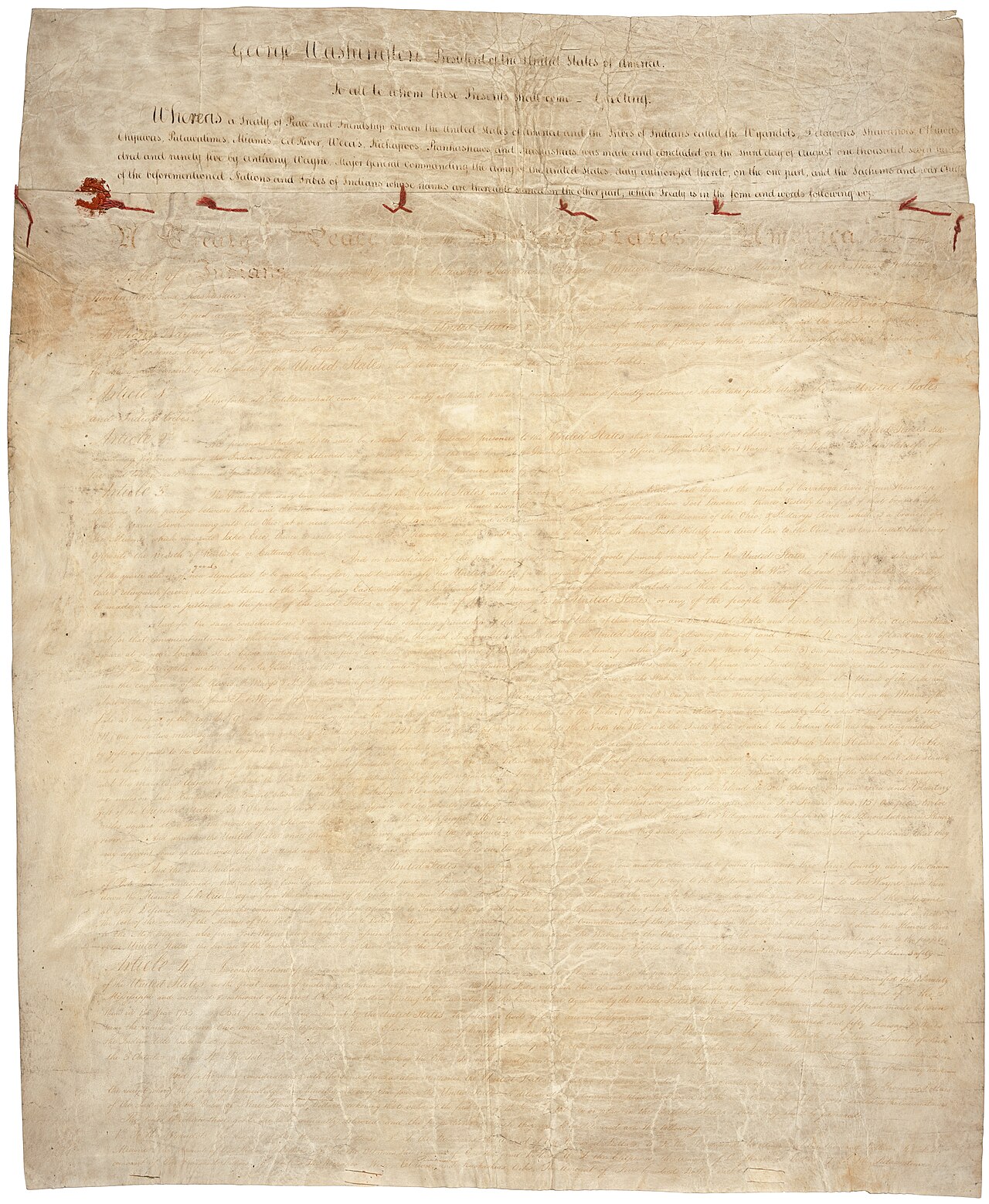
Treaty of Greenville
3 August 1795
 Document
Primary source
Messages and Letters of William Henry Harrison
William Henry Harrison; ed. Logan Esarey · 1800-1816 (published 1922)
 Document
Primary source
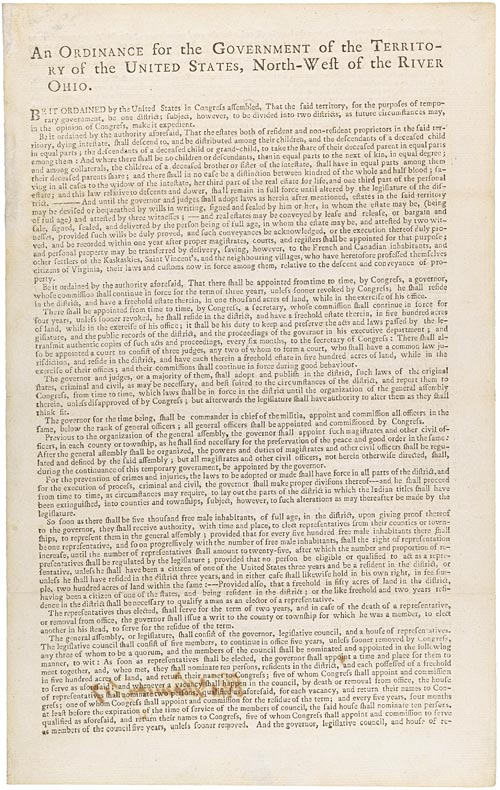
Northwest Ordinance
Confederation Congress · 13 July 1787
Free account
Read every Tecumseh source
Sign up free →
Ready when you are
Start chatting with Tecumseh now.
20 messages free · No credit card · Available in 50+ languages.