


Primary sourceDocument2 January 1843
Bill of Sale to Andrew Johnson for Dolly
John W. Gragg · 2 January 1843
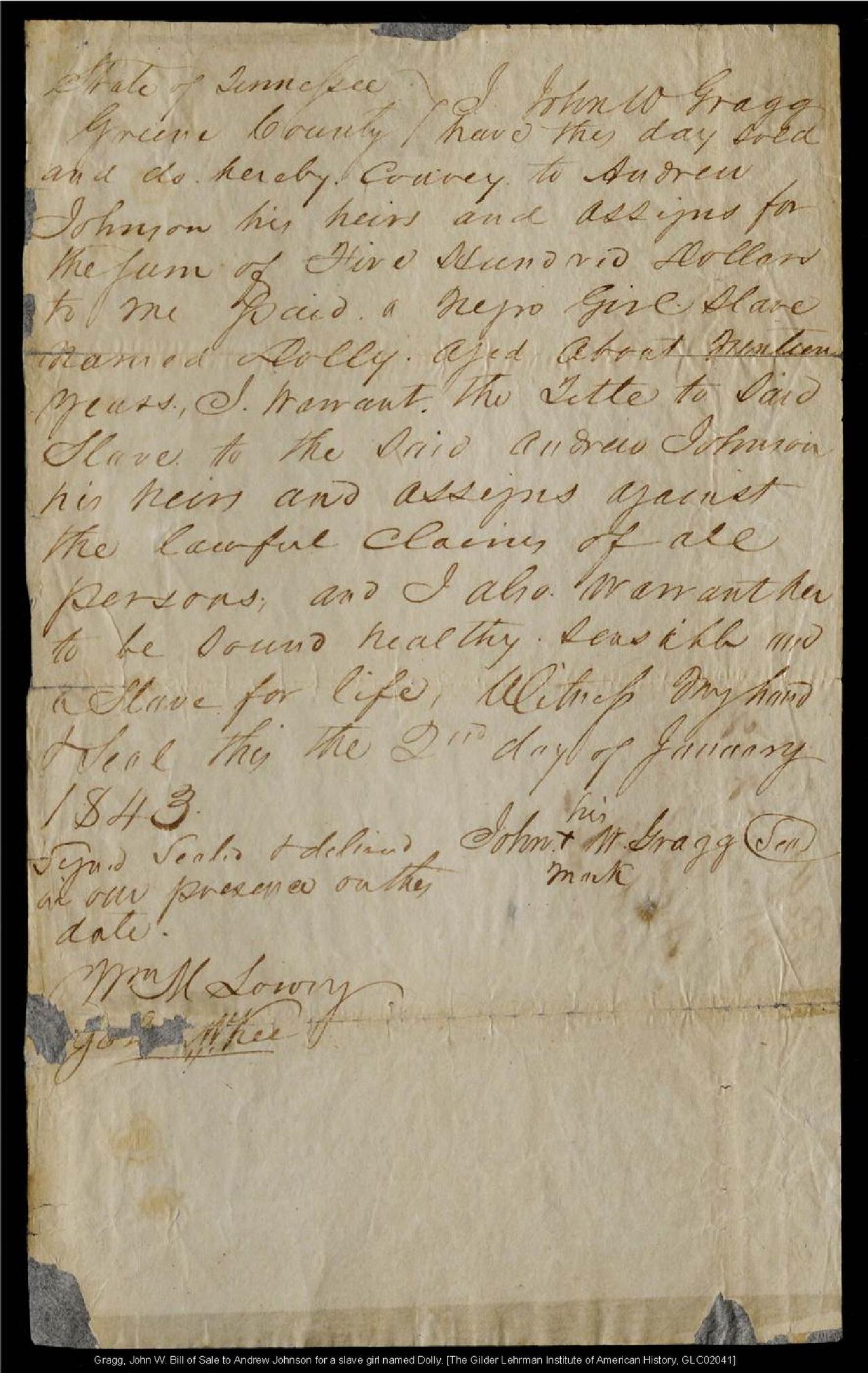
A handwritten 1843 bill of sale recording Andrew Johnson's purchase of an enslaved fourteen-year-old girl named Dolly.
Records Andrew Johnson's purchase of an enslaved girl, direct evidence of his personal involvement in slavery.
About this source
What it is
This is a legal bill of sale dated 2 January 1843, written in Greene County, Tennessee. In it, John W. Gragg conveys an enslaved girl named Dolly, aged about fourteen, to Andrew Johnson for five hundred dollars. The document is signed with Gragg's mark and witnessed. It is held in the Gilder Lehrman Collection.
Why it matters
This document shows slavery as a legal transaction, treating a human being as property to be bought, sold and warranted "sound healthy sensible." It is direct evidence that Andrew Johnson personally purchased an enslaved child, connecting him and John W. Gragg to the everyday business of slavery in the antebellum South.
Look closer
- What words in the document show that Dolly is being treated as property rather than a person?
- Why might a buyer want a written guarantee of a slave's health and "title"?
- What does this record tell us, and what does it not tell us, about Dolly's own life?
This document is part of the curated material that grounds the AI version of Andrew Johnson on Humy.ai — when students ask about related events, the AI can quote it and cite it.
More Andrew Johnson sources
Meet the AI Andrew Johnson →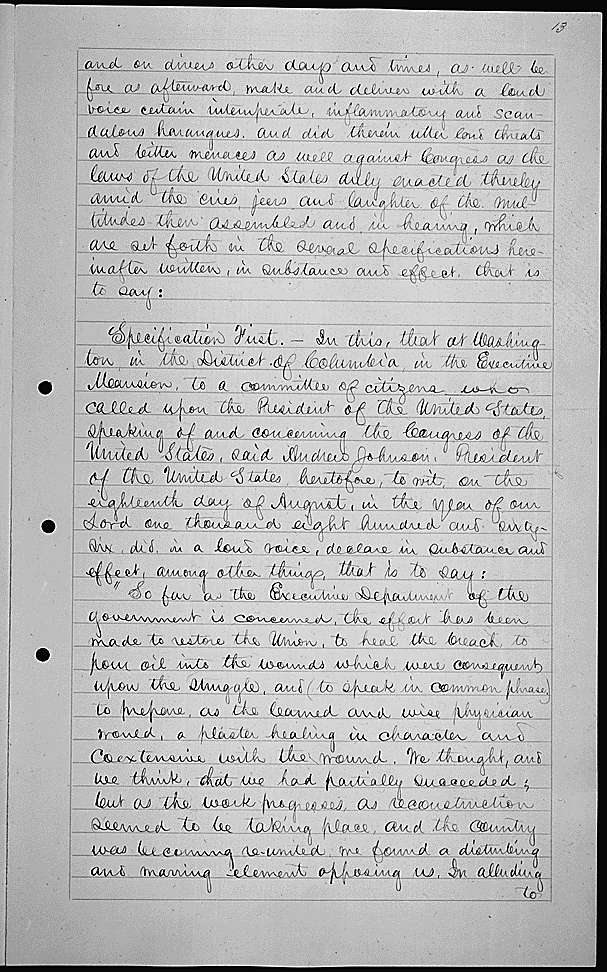 Document
Primary source
Articles of Impeachment of Andrew Johnson
United States House of Representatives · March 1868
 Document
Primary source
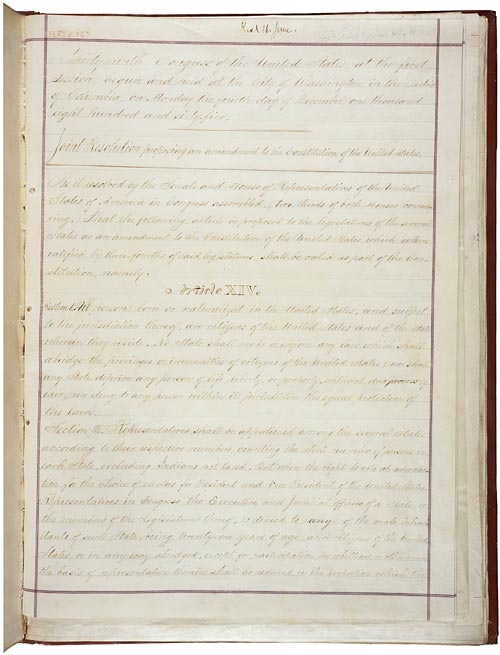
14th Amendment to the U.S. Constitution: Civil Rights
United States Congress · 1868
 Document
Primary source
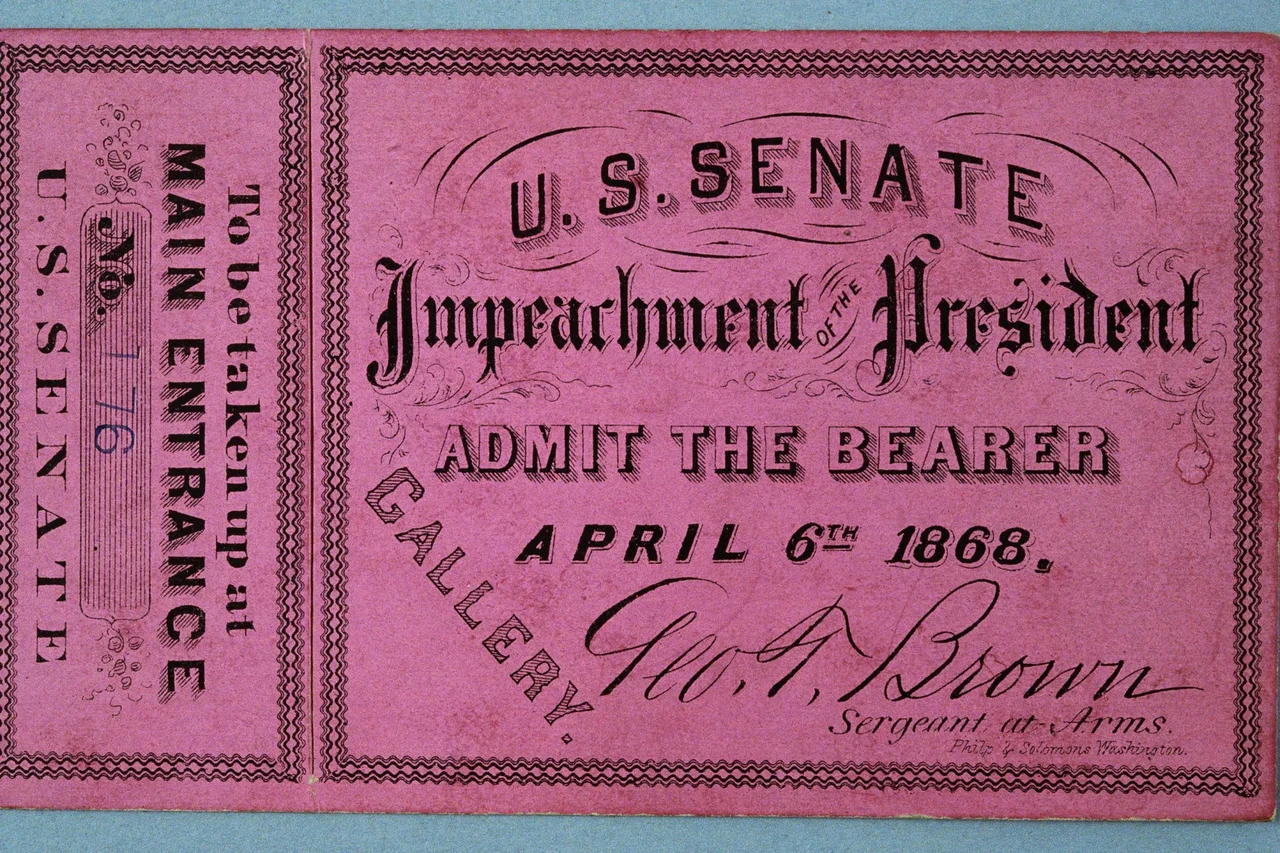
Admission Ticket to the Impeachment Trial of Andrew Johnson
United States Senate · 6 April 1868
 Photograph
Primary source
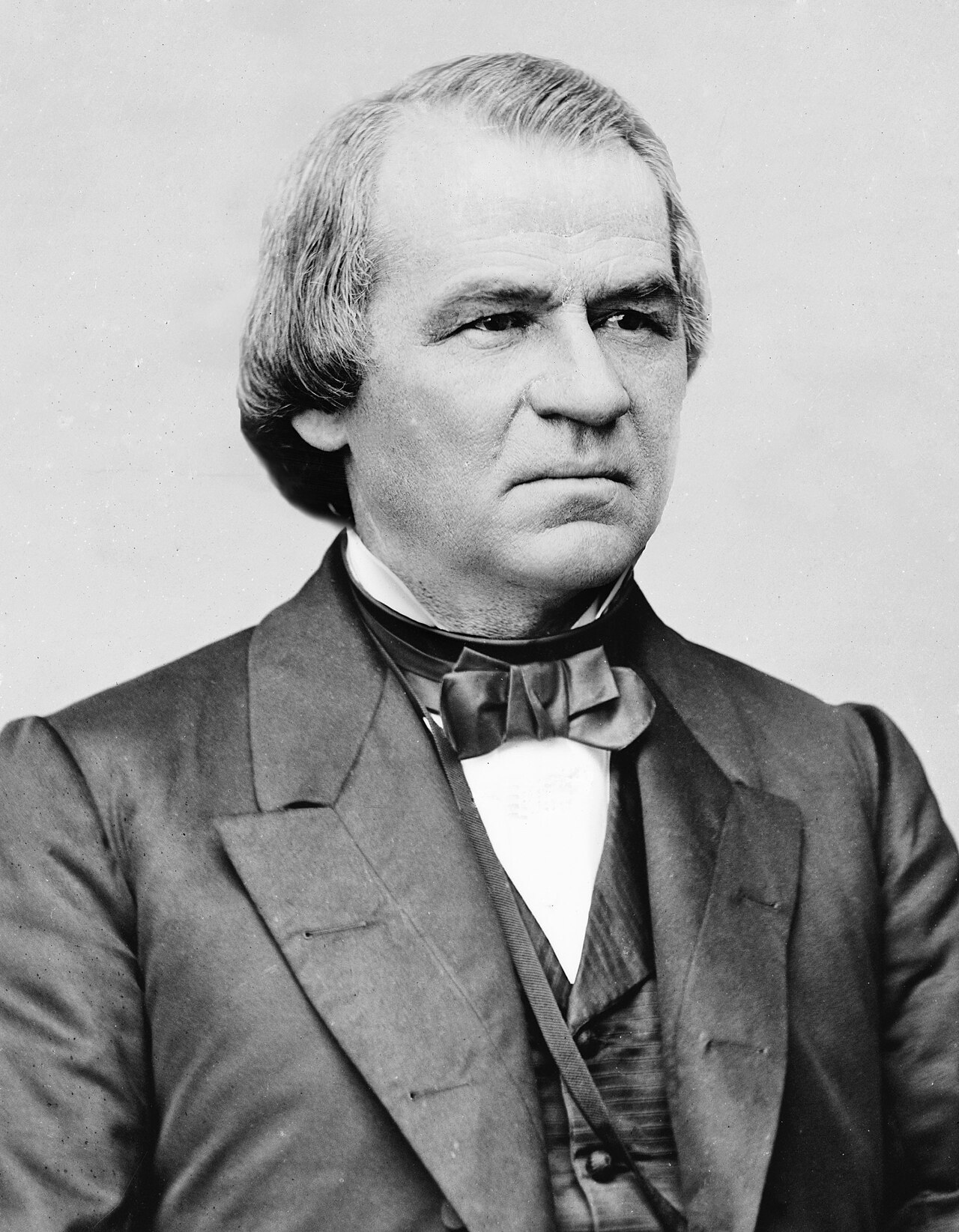
Photograph of President Andrew Johnson
Mathew Benjamin Brady · c. 1870-1880
 Painting
Primary source
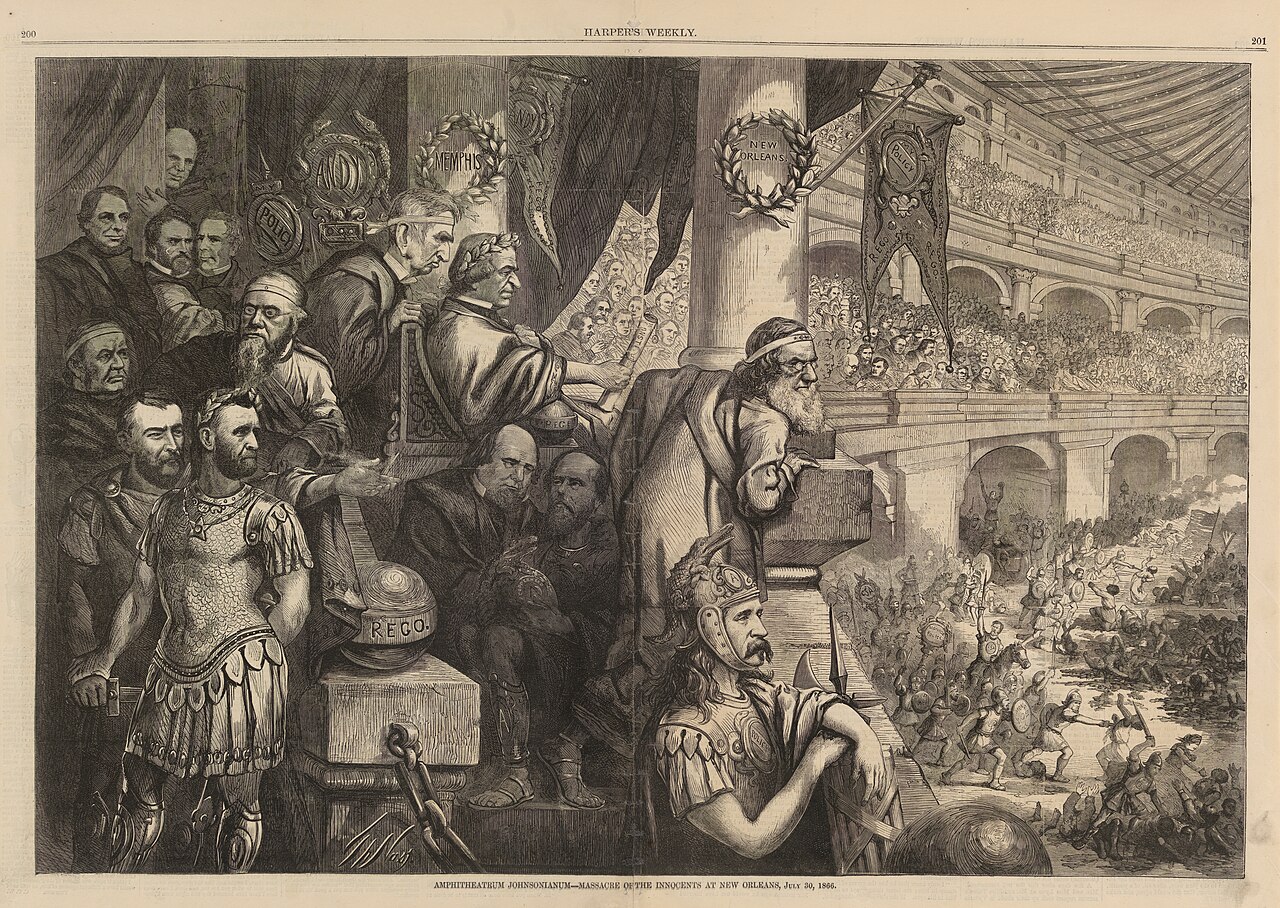
Amphitheatrum Johnsonianum – Massacre of the Innocents at New Orleans
Thomas Nast · 30 March 1867
Ready when you are
Start chatting with Andrew Johnson now.
20 messages free · No credit card · Available in 50+ languages.