


Primary sourceBook1961
Black Nativity
Langston Hughes · 1961
A gospel song-play by Langston Hughes retelling the Nativity story with an all-Black cast, first staged in 1961.
Hughes wrote this gospel retelling of the Nativity, one of his best-known works of theatre.
About this source
What it is
Black Nativity is a gospel song-play written by Langston Hughes, retelling the Nativity story with an entirely Black cast. It uses traditional Christmas carols sung in gospel style along with a few original songs. It premiered Off-Broadway on 11 December 1961.
Why it matters
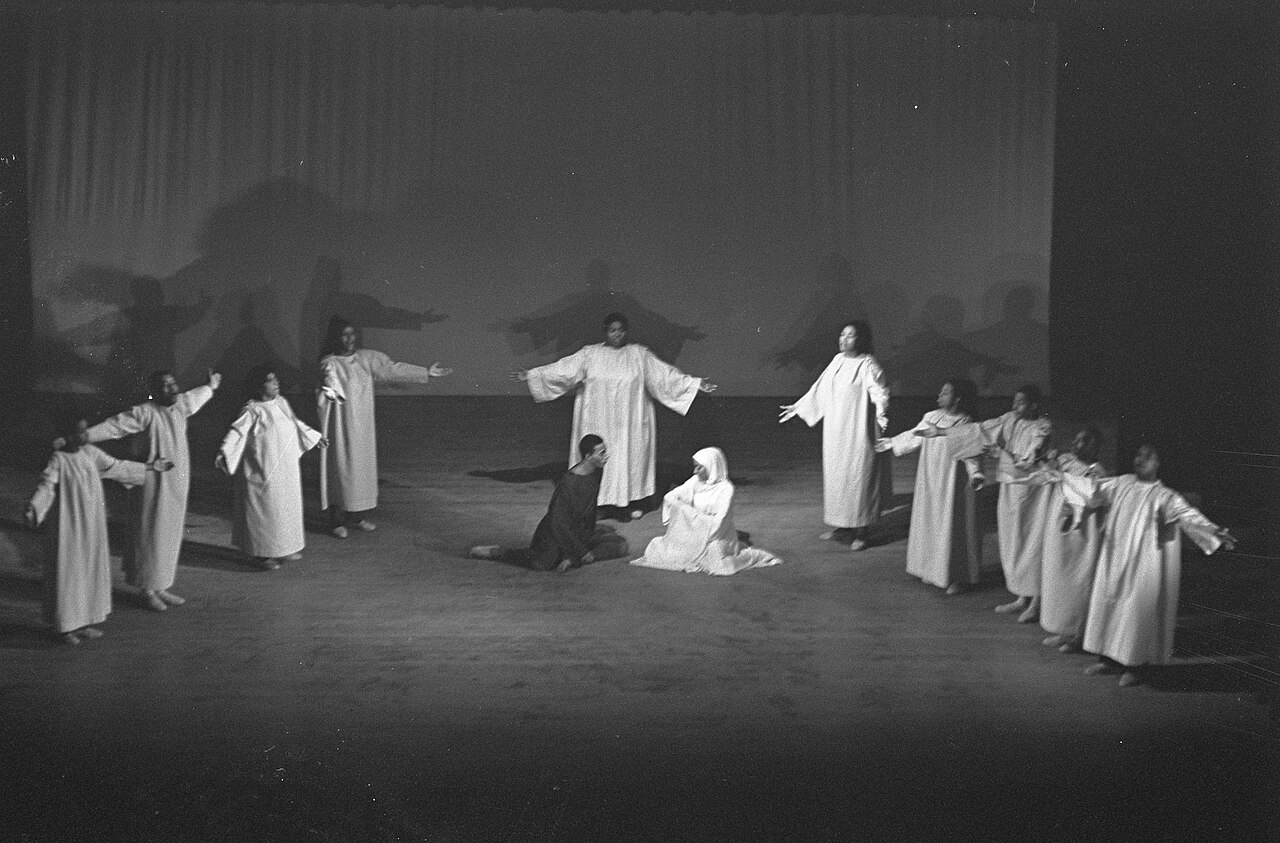
The show was one of the first plays by an African American writer staged Off-Broadway, and it fused Christian tradition with Black gospel music and performance style. It has been performed every year in several American cities ever since, showing the lasting reach of Hughes's work. The photograph here shows a 1962 staging in Rotterdam, during the show's European tour, proof of its quick international impact.
Look closer
- Why might Hughes have chosen gospel music and an all-Black cast to tell this familiar story?
- What does the controversy over the show's title tell you about how people saw race and religion in 1961?
- What does the image's staging and lighting suggest about the mood the production aimed to create?
This book is part of the curated material that grounds the AI version of Langston Hughes on Humy.ai — when students ask about related events, the AI can quote it and cite it.
More Langston Hughes sources
Meet the AI Langston Hughes →
Ready when you are
Start chatting with Langston Hughes now.
20 messages free · No credit card · Available in 50+ languages.