


Primary sourcePainting1907
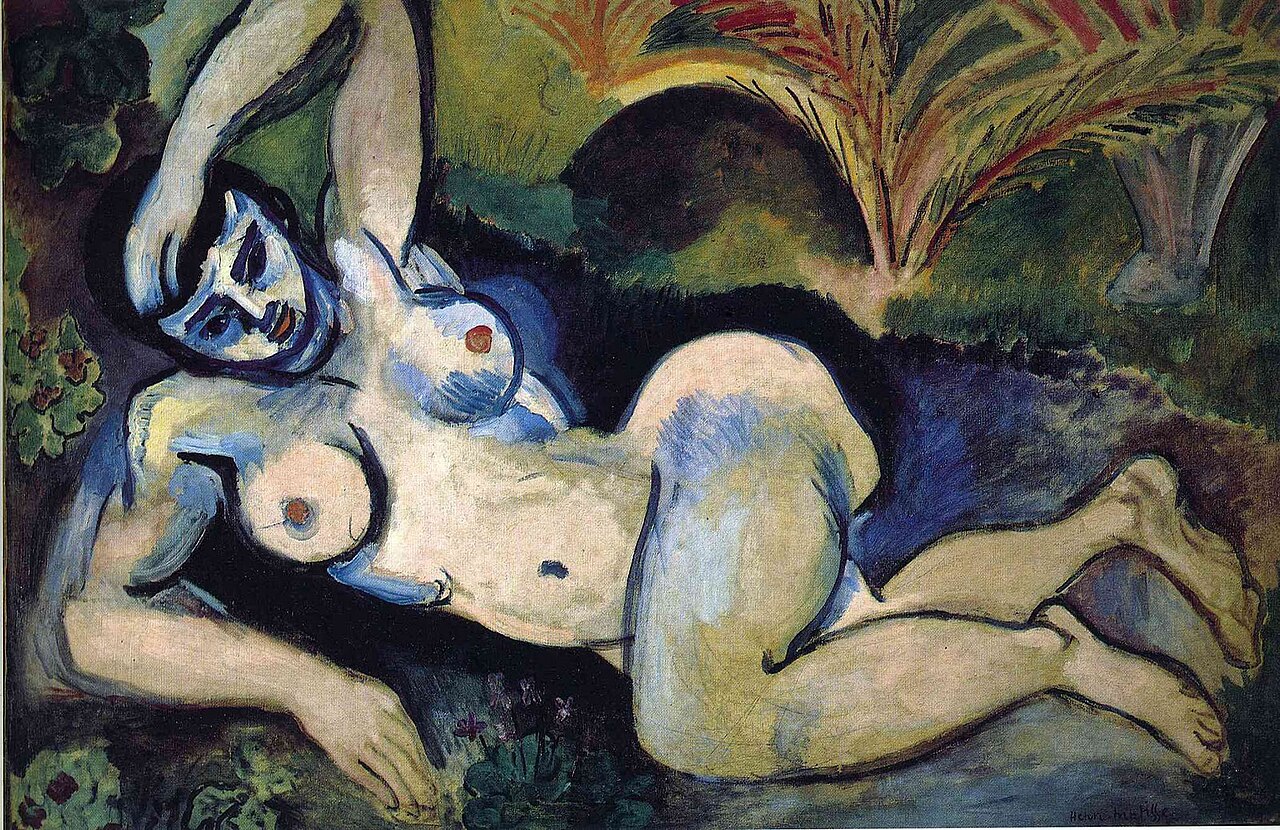
Blue Nude (Souvenir of Biskra)
Henri Matisse · 1907
A 1907 Fauvist painting by Henri Matisse of a reclining nude, so controversial it was burned in effigy by protesting students in Chicago in 1913.
Painted by Matisse, this nude became one of the most controversial works of his career and shows his shocking early reception.
About this source
What it is
This oil painting was made by Henri Matisse in 1907, after a sculpture he was working on broke and he reworked the subject in paint instead. It depicts a reclining nude woman in a stylised Mediterranean landscape, with a title referencing Biskra, a town in French colonial North Africa. It is held at the Baltimore Museum of Art.
Why it matters
The painting shocked the French public when first shown and later caused outrage at the 1913 Armory Show in New York and Chicago, where students burned a copy of it in effigy, a dramatic sign of how threatening modern art seemed at the time. It strongly influenced Pablo Picasso and Georges Braque. Scholars today also discuss how the painting reflects period attitudes connecting French colonial North Africa with ideas about available or exoticised women's bodies.
Look closer
- Why do you think the painting caused such a strong public reaction?
- What might the choice of blue skin tone and harsh lines be meant to suggest about the figure?
- How might the painting's title and setting reflect colonial attitudes of the time?
This painting is part of the curated material that grounds the AI version of Henri Matisse and Gertrude Stein on Humy.ai — when students ask about related events, the AI can quote it and cite it.
More Henri Matisse sources
Browse all 99 →
Ready when you are
Start chatting with Henri Matisse now.
20 messages free · No credit card · Available in 50+ languages.