


Secondary sourcePainting1898, based on a 1768 engraving
Boston 1768: British Ships Landing Troops (1898 colored reproduction)
Paul Revere · 1898, based on a 1768 engraving
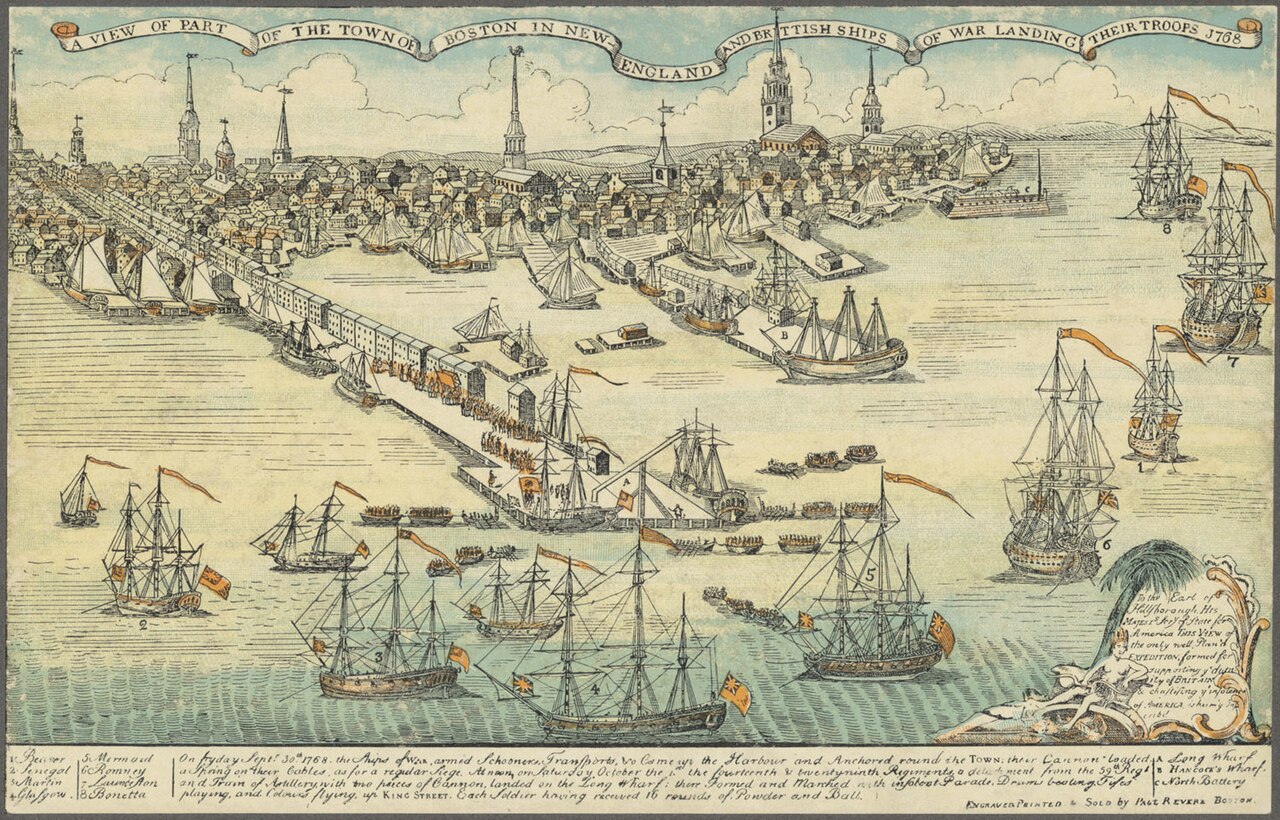
A colored 1898 reproduction of Paul Revere's 1768 engraving showing British warships and soldiers landing in Boston. The occupation it shows followed the Circular Letter that Samuel Adams helped write.
Adams's Circular Letter helped provoke the 1768 British occupation that this image shows, so it illustrates the crisis he was part of.
About this source
What it is
This is a colored reproduction, made in 1898, of an engraving by Paul Revere from 1768. The engraving shows the Boston waterfront with many British warships anchored in the harbor and rowboats carrying soldiers ashore along a wharf. The title banner reads 'A View of Part of the Town of Boston in New England and British Ships of War Landing Their Troops 1768'.
Why it matters
The image records the arrival of British troops in Boston in 1768. The curator's note links this occupation to the Circular Letter that Samuel Adams helped provoke. Revere's engraving was a widely circulated picture of the crisis, and it shows how colonists saw the British presence in their town.
Look closer
- What does the artist include in the harbor and along the wharf, and what does the crowd of ships suggest?
- Why might Revere have chosen to show the soldiers landing rather than a battle?
- What does the picture leave out about the colonists' own views or actions?
This painting is part of the curated material that grounds the AI version of Samuel Adams on Humy.ai — when students ask about related events, the AI can quote it and cite it.
More Samuel Adams sources
Meet the AI Samuel Adams →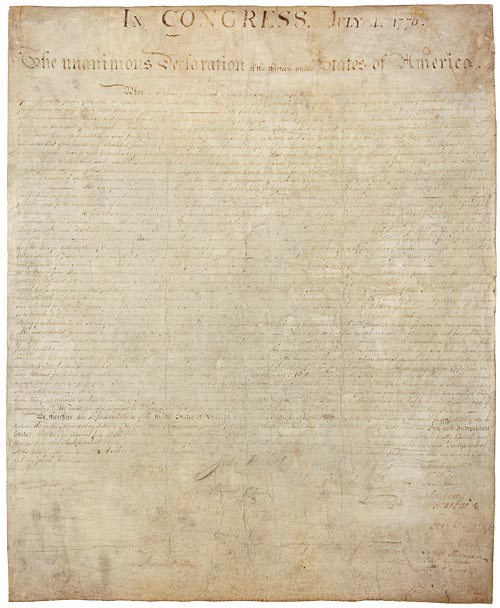 Document
Primary source
Declaration of Independence
Continental Congress (drafted by Thomas Jefferson) · 1776
 Document
Primary source
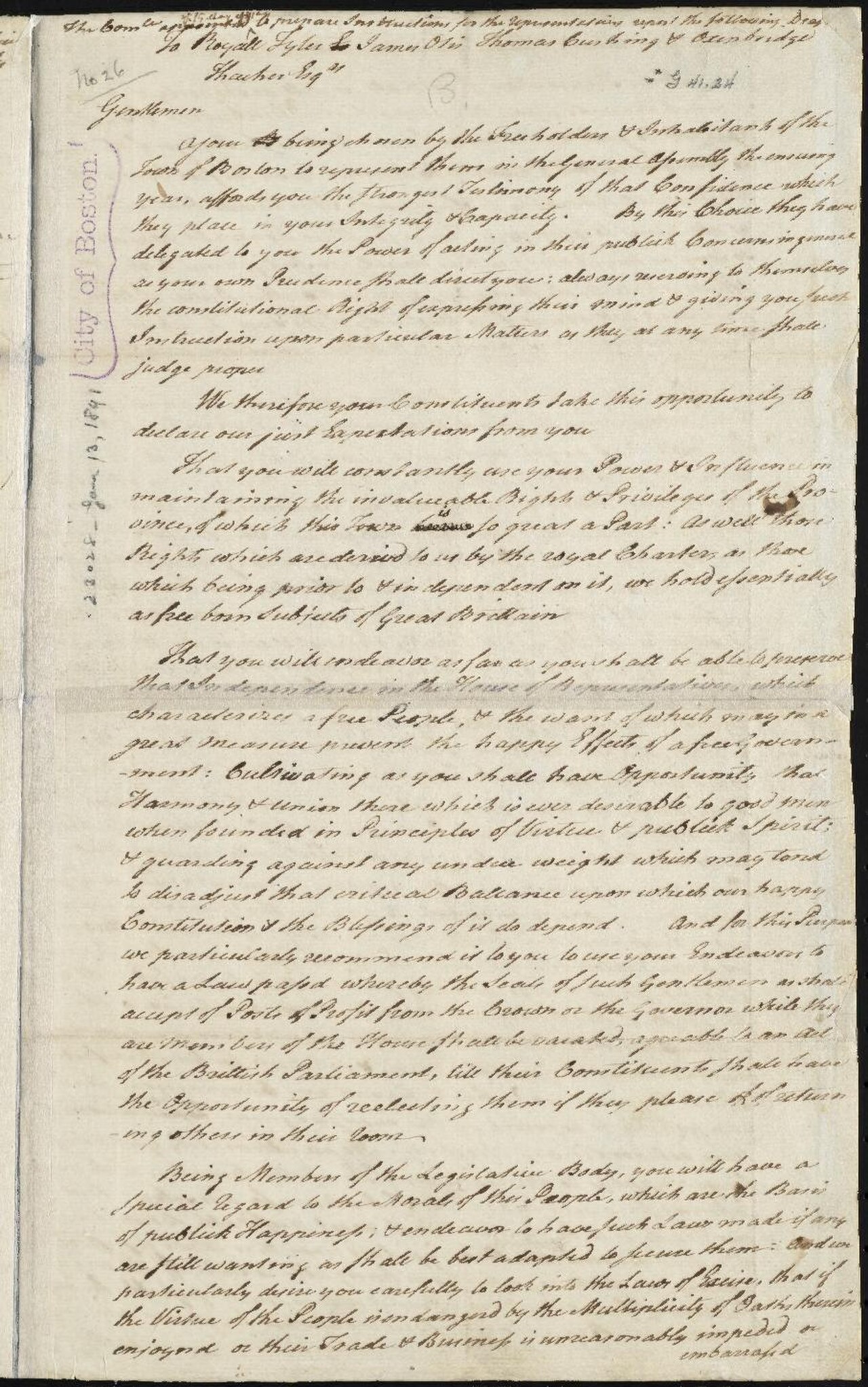
Instructions of the Town of Boston to its Representatives
Samuel Adams · May 1764
 Painting
Primary source
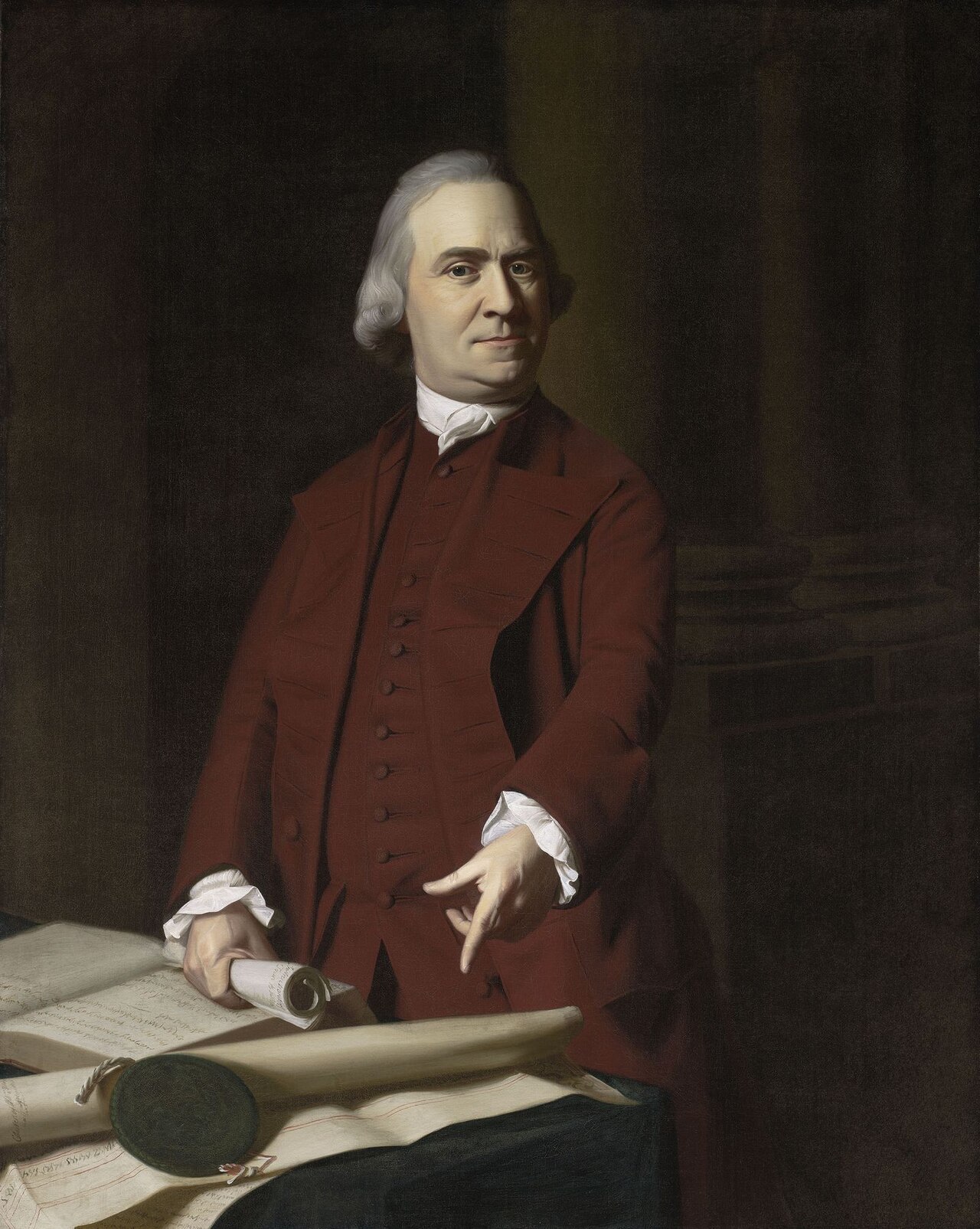
Samuel Adams
John Singleton Copley · 1772
 Document
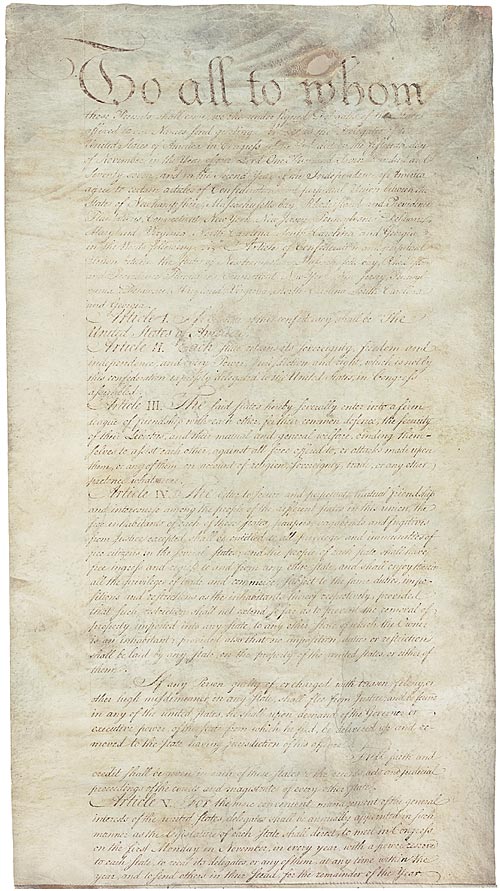
Primary source
Articles of Confederation
Continental Congress · 1777
 Document
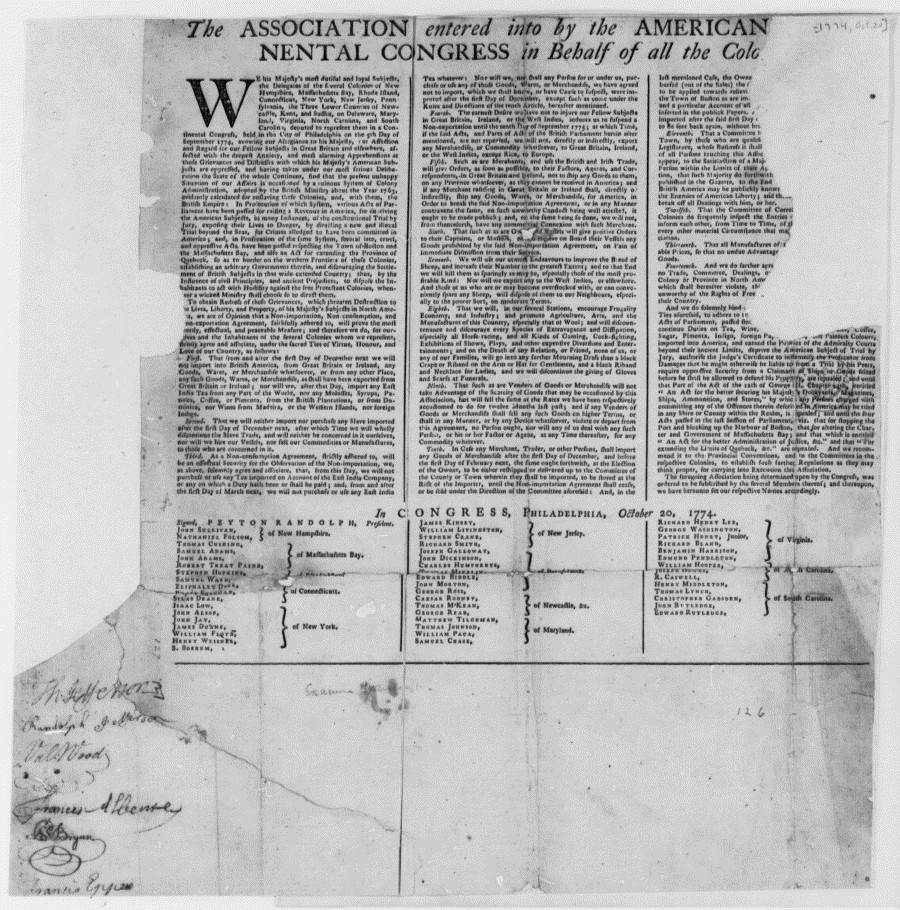
Primary source
Continental Association
First Continental Congress · 20 October 1774
Ready when you are
Start chatting with Samuel Adams now.
20 messages free · No credit card · Available in 50+ languages.