


Secondary sourceSculpturec. 100 BCE
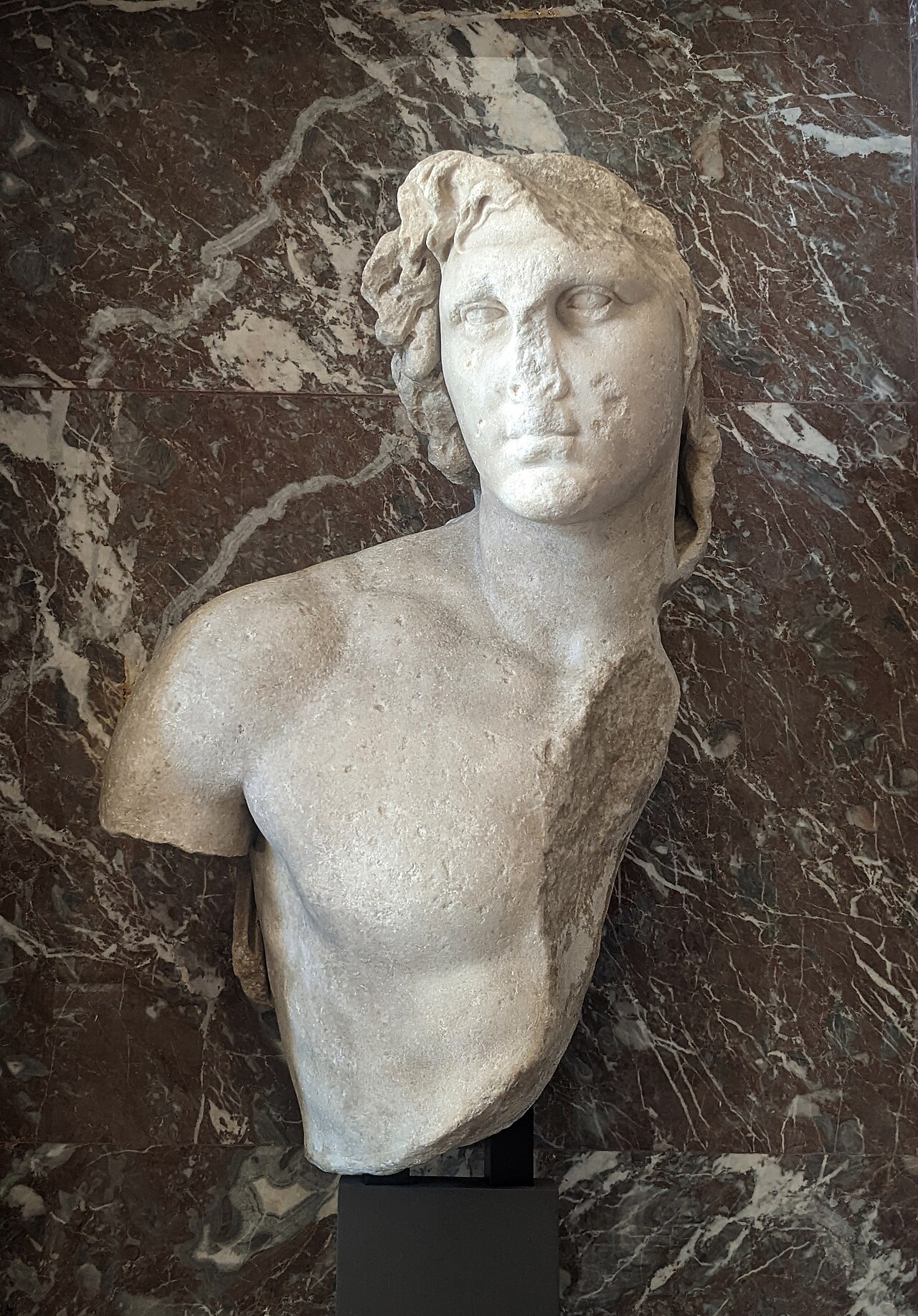
Bust of Alexander the Great, known as the "Inopos"
c. 100 BCE
A Hellenistic marble bust from Delos showing the idealised, dramatic image of Alexander created after his death.
A Hellenistic bust believed to depict Alexander, part of the idealised portrait tradition created after his death.
About this source
What it is
This marble bust depicts a young man with swept-back curly hair, broken off at the shoulder. It dates to around 100 BCE and is held in the Louvre's department of Greek, Etruscan, and Roman Antiquities.
Why it matters
The bust belongs to a type of idealised portrait of Alexander the Great that was developed by his successors after his death, used to show him as a dramatic, almost god-like figure. It shows how later rulers and artists shaped Alexander's image for their own purposes long after he had died.
Look closer
- What features make this face look youthful and heroic rather than ordinary?
- Why might later rulers want to be linked with such an idealised image of Alexander?
- What is lost when only a damaged fragment of a statue survives?
This sculpture is part of the curated material that grounds the AI version of Alexander the Great on Humy.ai — when students ask about related events, the AI can quote it and cite it.
More Alexander the Great sources
Meet the AI Alexander the Great →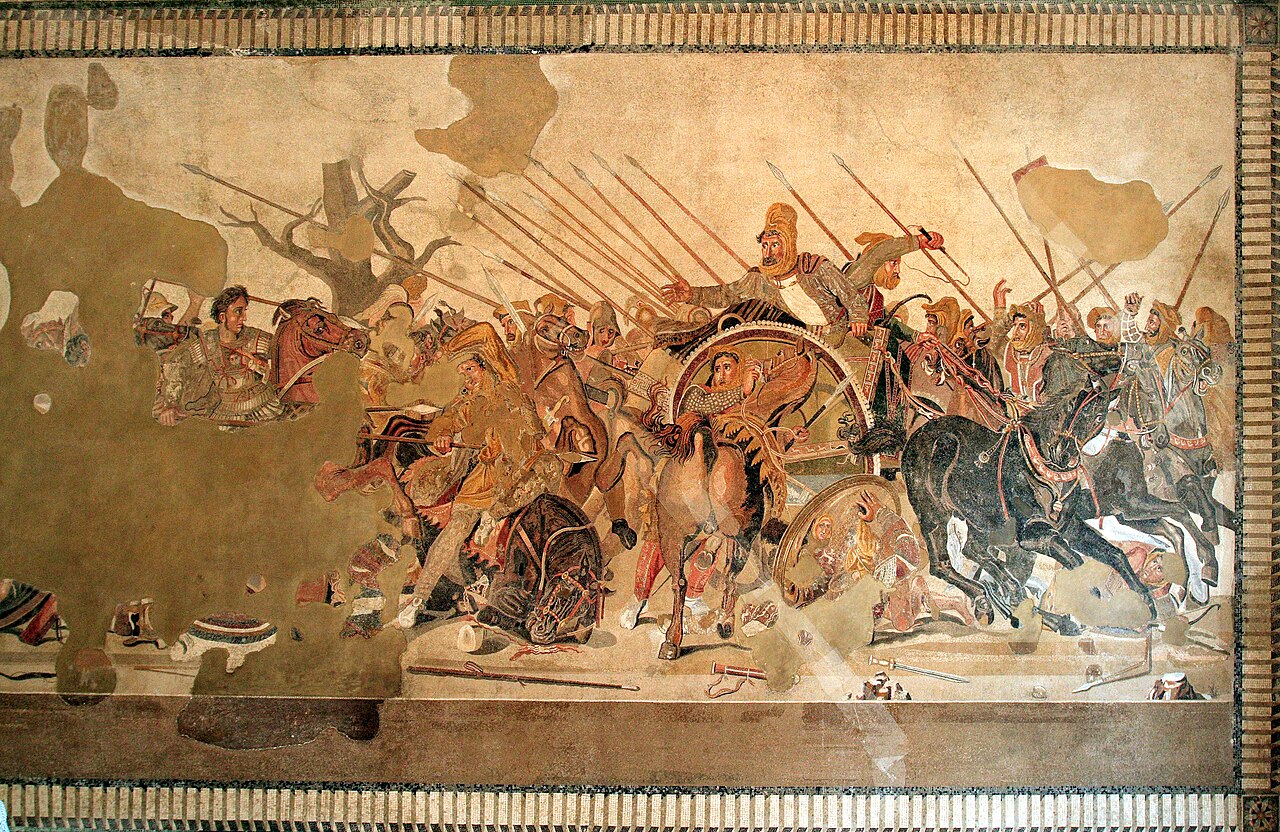 Artifact
Secondary source
Alexander Mosaic
Philoxenus of Eretria · c. 120-100 BCE (copy of an earlier Hellenistic painting)
 Painting
Secondary source
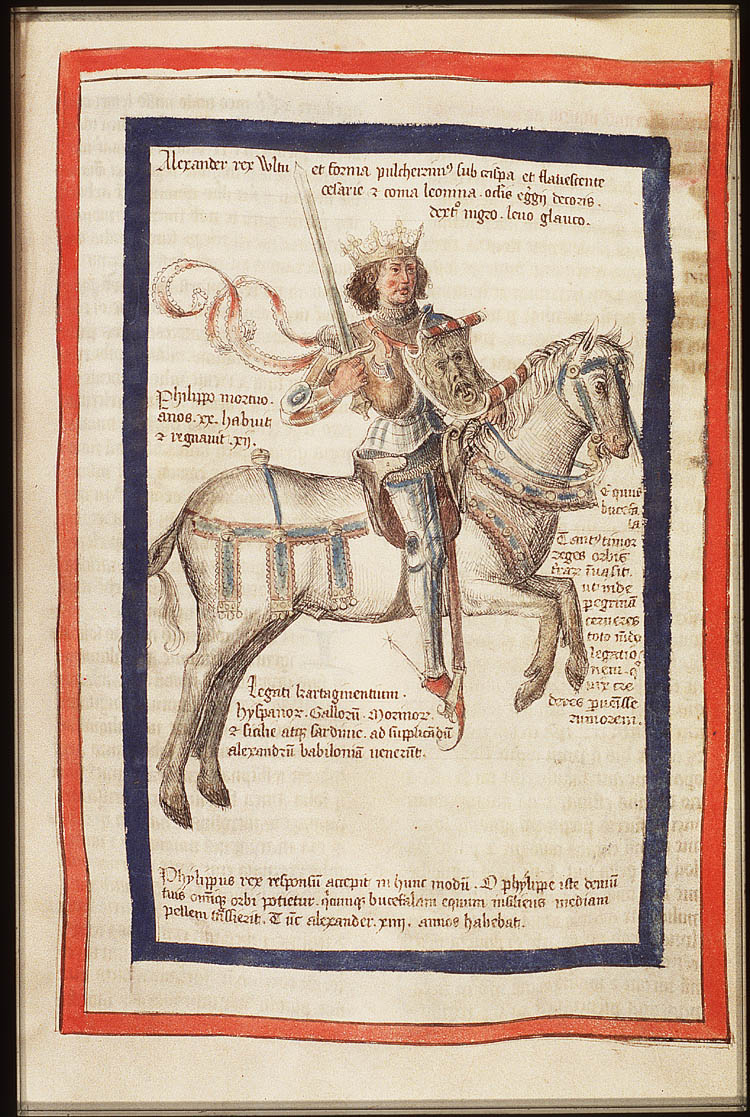
Alexander the Great riding Bucephalus
1460
 Artifact
Primary source
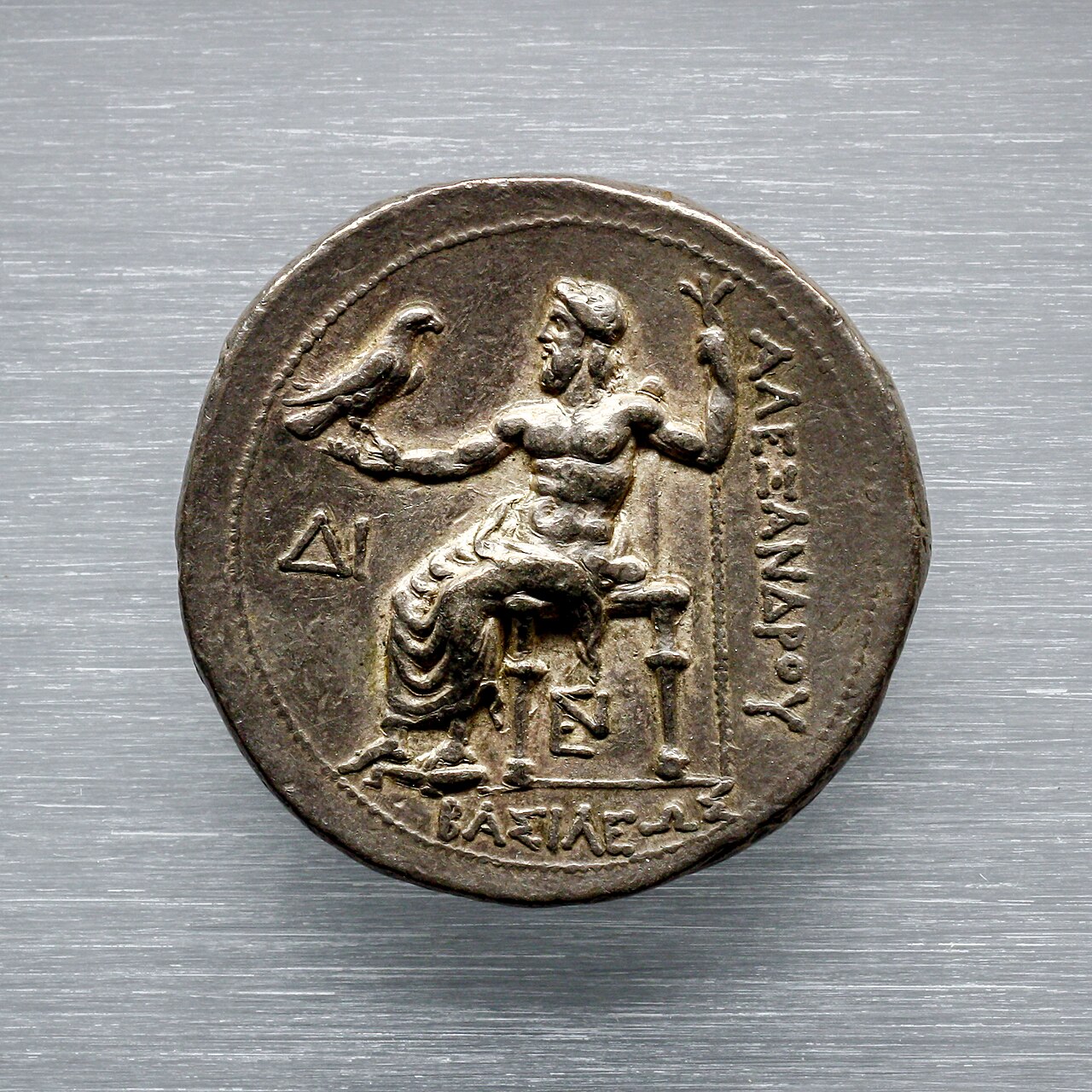
Silver Tetradrachm of Alexander the Great
Royal mints of Alexander III · c. 336-323 BCE
 Painting
Secondary source
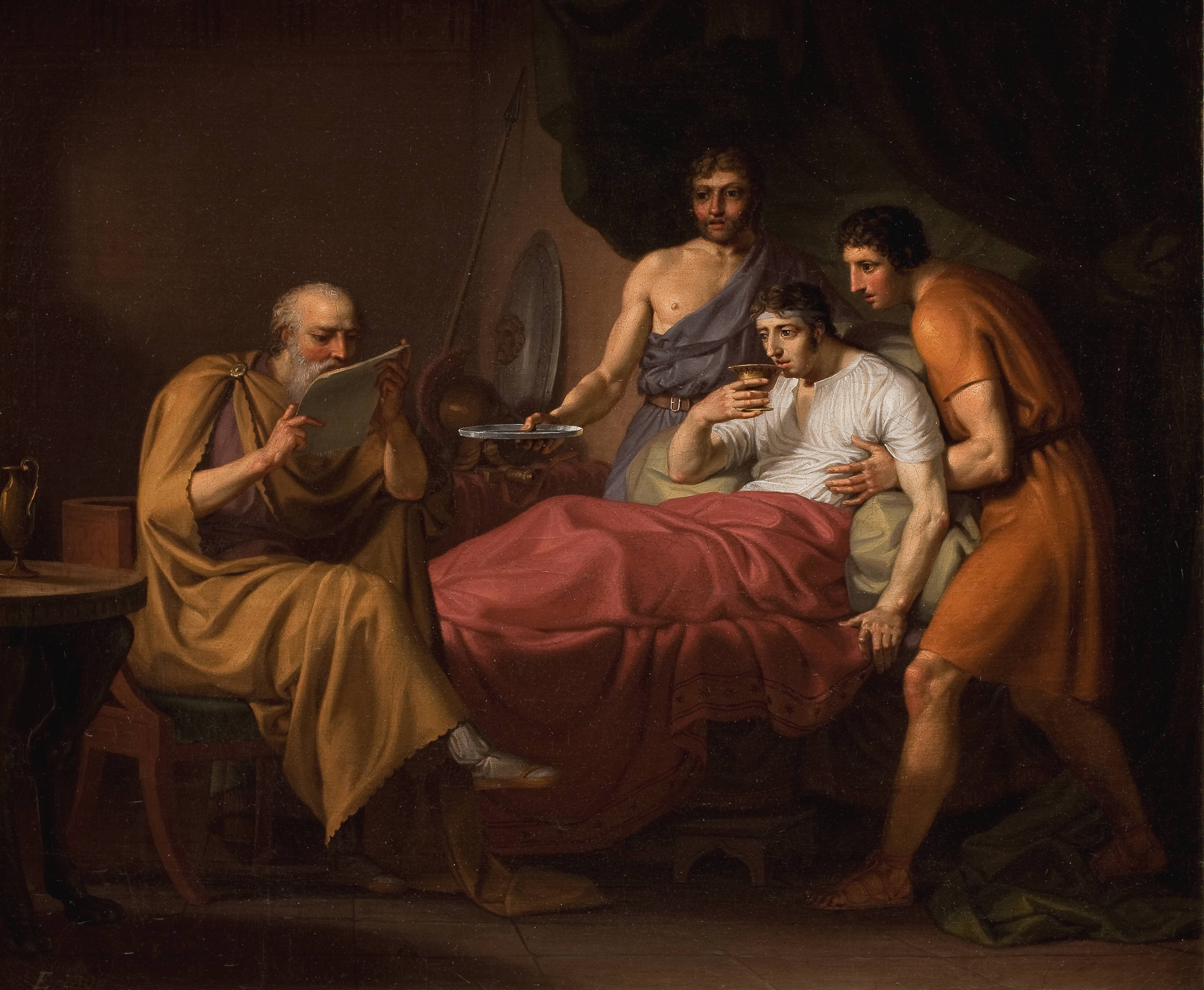
Alexander the Great on his Sickbed
1806
 Book
Secondary source
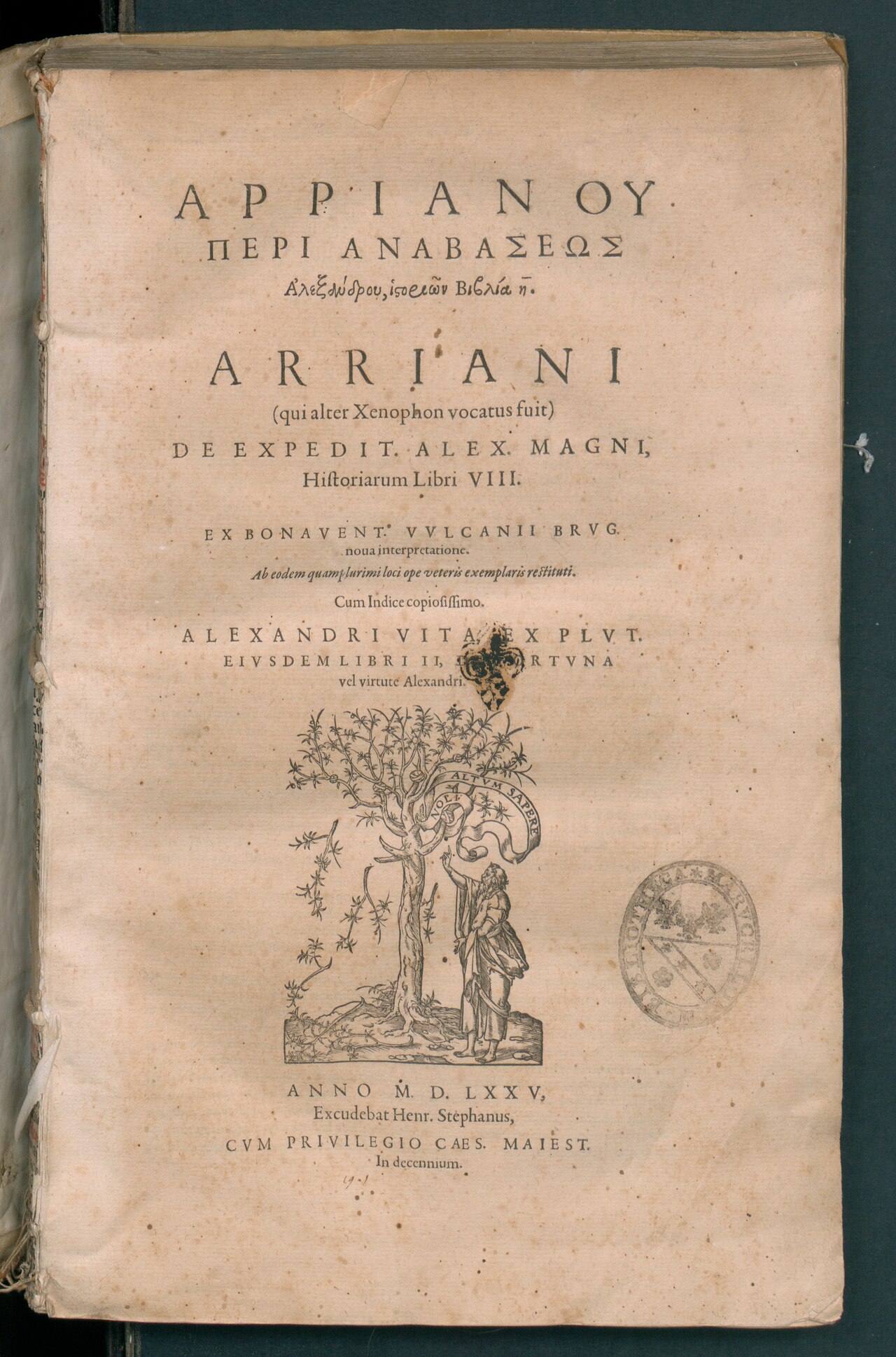
Anabasis of Alexander
Arrian · c. 150 AD
Ready when you are
Start chatting with Alexander the Great now.
20 messages free · No credit card · Available in 50+ languages.