


Secondary sourceSculpture2nd century AD
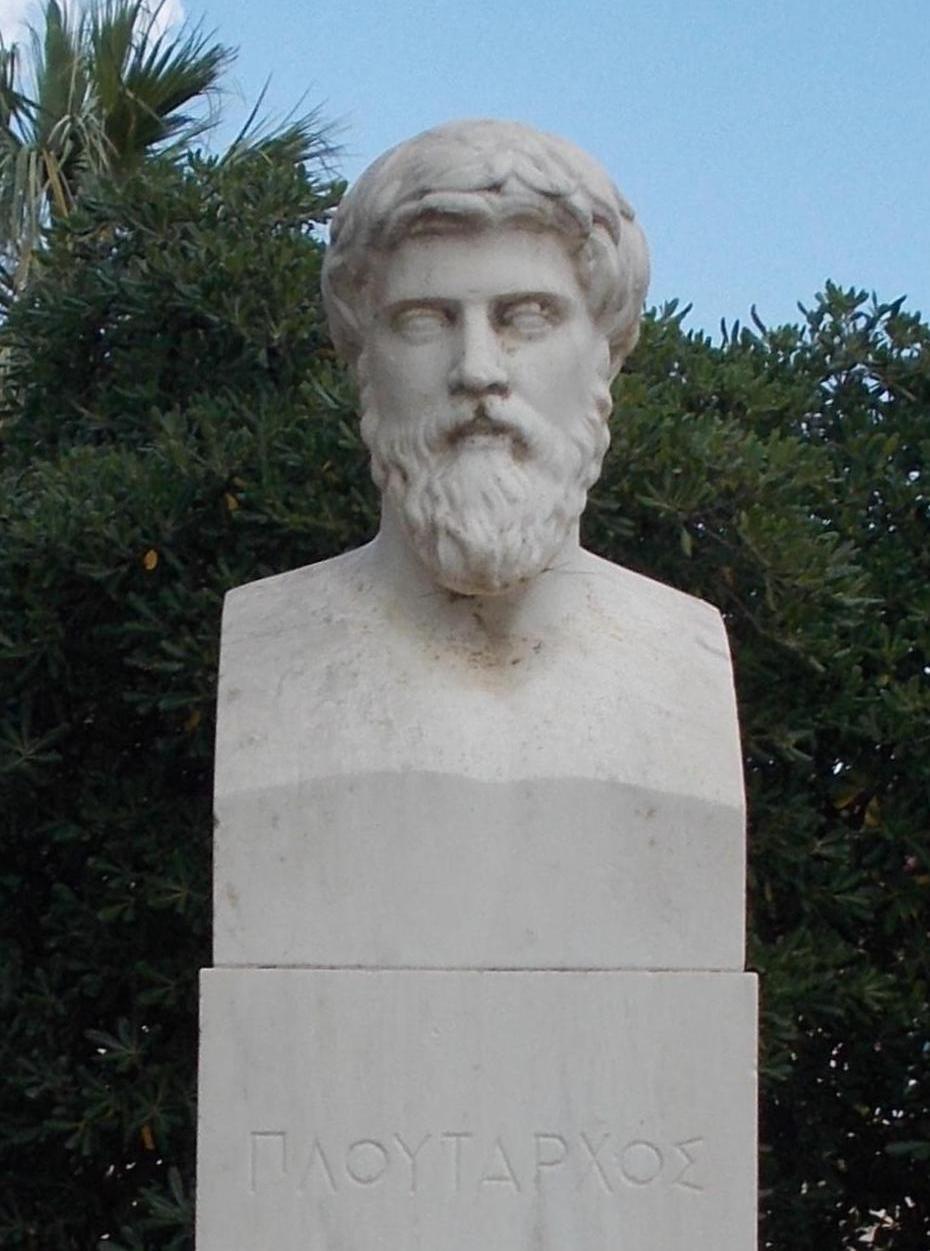
Bust of Plutarch
2nd century AD
A marble portrait bust at Chaeronea traditionally identified as Plutarch, inscribed with his name.
This bust, inscribed with his name, is the traditional image by which Plutarch is pictured.
About this source
What it is
This marble bust shows a bearded man with wavy hair wearing a fillet band, set on a pedestal inscribed with the Greek letters spelling "Plutarch." It is located at Chaeronea, Plutarch's home city, and is dated to the 2nd century.
Why it matters
Portrait busts like this are how we visualize ancient writers whose actual appearance is otherwise unknown. The inscribed name links this specific bust to Plutarch, but ancient portrait identifications are not always certain, and historians sometimes debate how reliable such labels are.
Look closer
- Why is the inscription on the pedestal important for identifying who this bust represents?
- What can and can't a sculpture like this tell us about a real historical person?
- Why might later generations have wanted a physical image of Plutarch at all?
This sculpture is part of the curated material that grounds the AI version of Plutarch on Humy.ai — when students ask about related events, the AI can quote it and cite it.



Ready when you are
Start chatting with Plutarch now.
20 messages free · No credit card · Available in 50+ languages.