


Primary sourceBook
Moralia
Plutarch
Plutarch's collected essays and dialogues on ethics, religion and daily life, revealing him as philosopher and priest as well as biographer.
This collection of essays is Plutarch's own writing, showing his philosophical and religious side beyond his biographies.
Free Humy account · No credit card · 120,912 sources to read
About this source
What it is
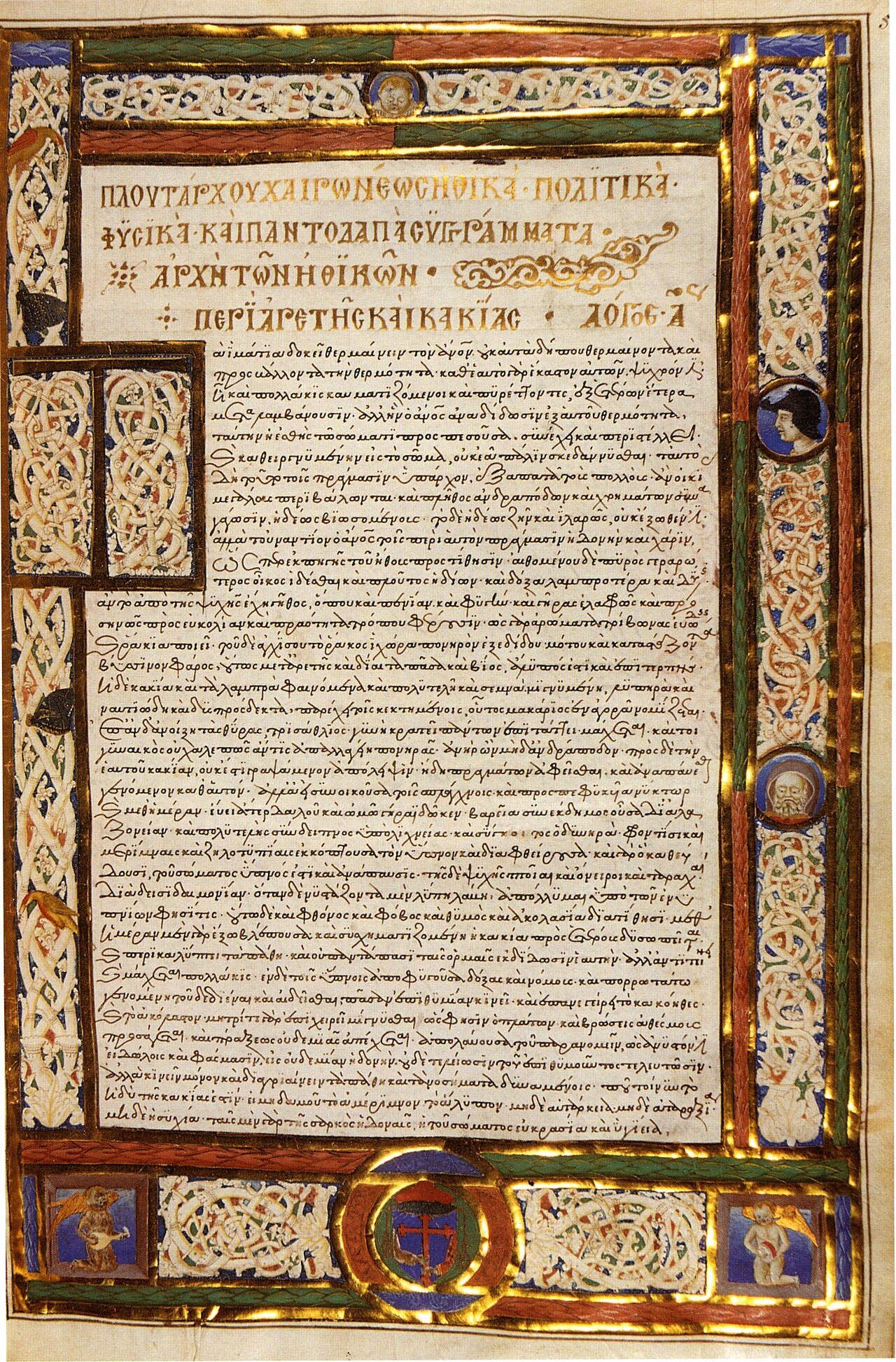
The Moralia is a collection of 78 essays and speeches attributed to Plutarch, covering subjects from philosophy and religion to lighter dialogues. They were written before his Parallel Lives, during the earlier part of his career. The oldest surviving manuscript with all the essays dates from shortly after 1302, and the image here shows an illuminated Greek manuscript page made for a later owner.
Why it matters
The essays show Plutarch as a Platonist philosopher and priest of Apollo, not just a biographer. They cover topics like Egyptian religion, criticism of the historian Herodotus, and even a letter of consolation to his own wife about the death of their daughter. Readers for centuries, including Renaissance humanists, drew on these works.
Look closer
- What kinds of subjects does Plutarch write about besides famous men's lives?
- Why might a personal letter about grief be included in a published collection of essays?
- How does a manuscript made centuries after Plutarch's death still count as evidence about his writing?
This book is part of the curated material that grounds the AI version of Plutarch on Humy.ai — when students ask about related events, the AI can quote it and cite it.
More Plutarch sources
Browse all 90 →

Ready when you are
Start chatting with Plutarch now.
20 messages free · No credit card · Available in 50+ languages.