


Secondary sourceArtifactc. 1619-1620
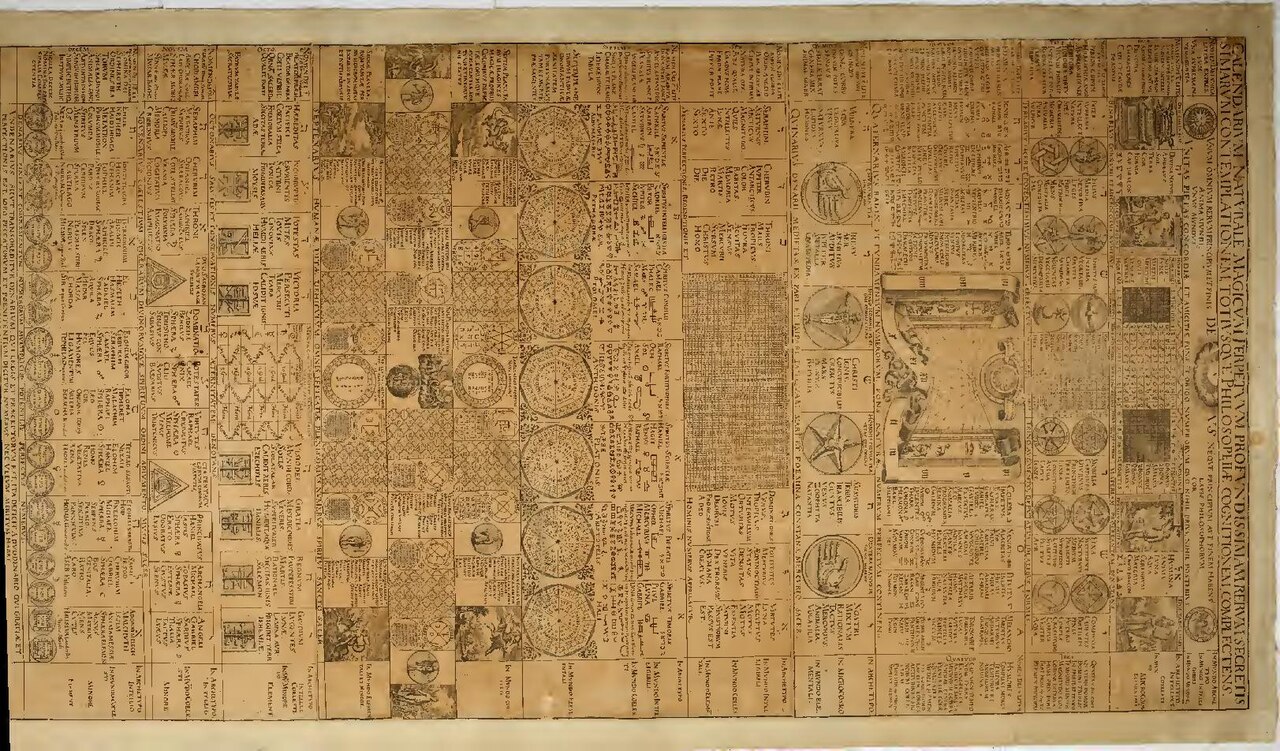
Calendarium Naturale Magicum Perpetuum
Johann Baptist Grossschedel · c. 1619-1620
A large esoteric engraved calendar from around 1619-1620, attributed in part to Tycho Brahe, blending astrology, alchemy and magic.
Tycho is credited as 'inventor' of the method behind this print, linking his reputation to astrology and magic.
About this source
What it is
This is a large three-sheet engraved broadside, over four feet long, printed around 1619-1620 in Frankfurt. Its full title calls it a grimoire covering the secrets of nature and philosophy. The print names Johann Baptist Grossschedel von Aicha as author, Theodor de Bry as original engraver from 1582, and credits Tycho Brahe as the inventor of the method it imitates.
Why it matters
This object shows a side of Tycho's world often left out of modern science stories: the overlap between astronomy, astrology, alchemy and magic in his time. Though Tycho did not create this print himself, being named as its inventor shows how later thinkers linked his authority to occult and hermetic ideas, and it influenced later movements like Rosicrucianism.
Look closer
- Why might later printers have wanted to connect their work to Tycho Brahe's name?
- What do the diagrams, hands and zodiac symbols suggest about how people combined science and magic?
- What does this source leave unclear about how much Tycho actually contributed?
This artifact is part of the curated material that grounds the AI version of Tycho Brahe on Humy.ai — when students ask about related events, the AI can quote it and cite it.
More Tycho Brahe sources
Meet the AI Tycho Brahe →
Ready when you are
Start chatting with Tycho Brahe now.
20 messages free · No credit card · Available in 50+ languages.