


Secondary sourceArtifactc. 1200
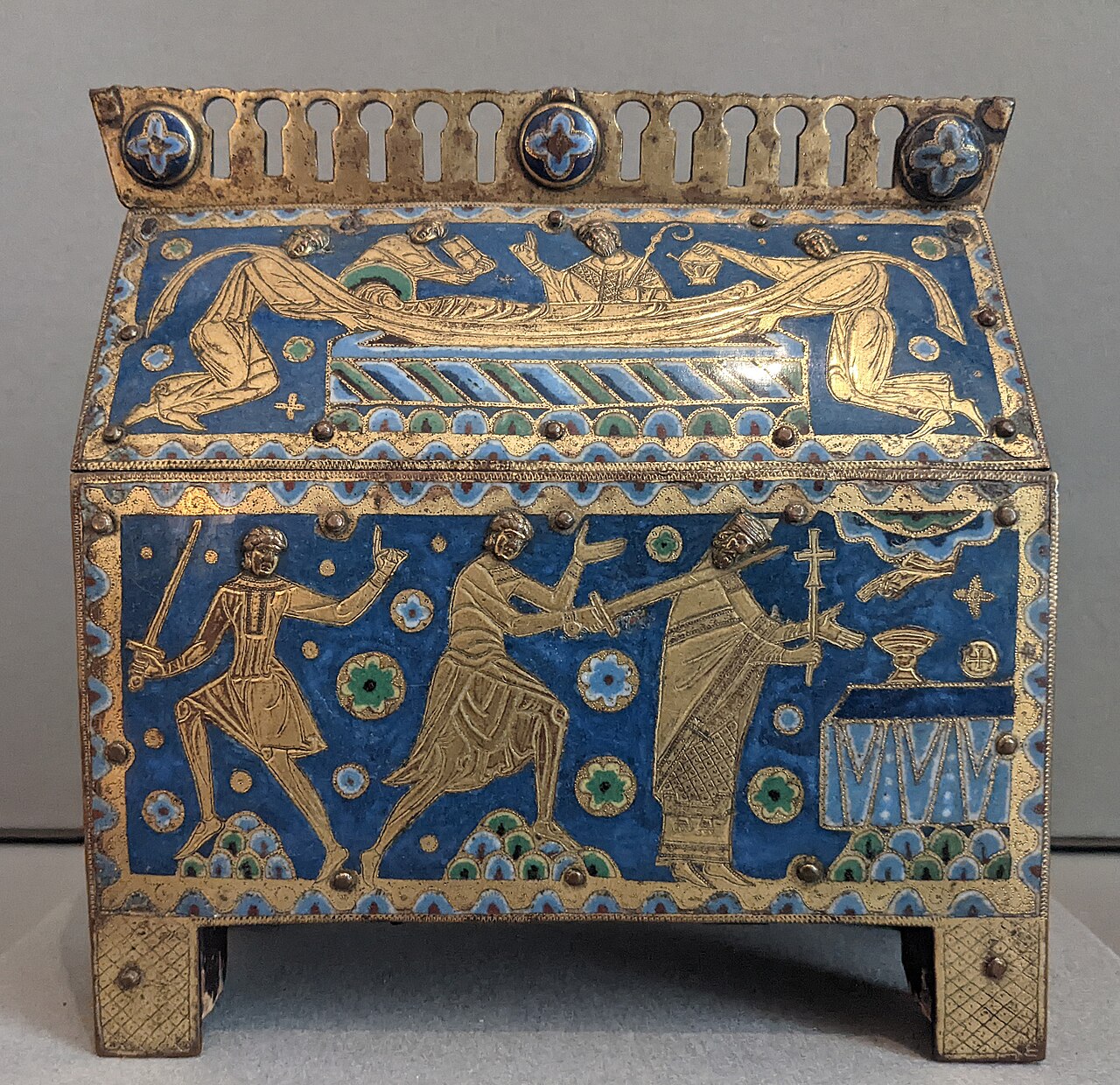
Casket with the Murder and Glorification of Thomas Becket
c. 1200
A Limoges enamel reliquary casket made around 1200, showing both the murder of Becket and his glorification as a saint.
This reliquary was made to hold relics of Becket and depicts both his murder and his later glorification as a saint.
About this source
What it is
This gilded metal reliquary casket, made around 1200, is decorated with blue enamel panels. Its lid shows a reclining effigy figure with a mitred figure above, and its front panel shows a scene of a man being struck down by another with a raised sword, beside an altar. It is held in the Department of Decorative Arts of the Louvre.
Why it matters
This object was made to hold relics associated with Becket, whose murder in his own cathedral shocked Europe and led to his quick recognition as a saint. The combination of the murder scene with his glorification shows how quickly his death was turned into a story of martyrdom, and how important his cult became to medieval craftsmen and worshippers.
Look closer
- Why would a reliquary show both the violent murder and the saint's glory side by side?
- What does the careful enamel work tell us about how valuable Becket's relics were considered?
- What is missing from this image that we would need historical records to explain?
This artifact is part of the curated material that grounds the AI version of Thomas Becket on Humy.ai — when students ask about related events, the AI can quote it and cite it.
More Thomas Becket sources
Meet the AI Thomas Becket →Primary source
Constitutions of Clarendon
Henry II of England · 1164
 Artifact
Primary source
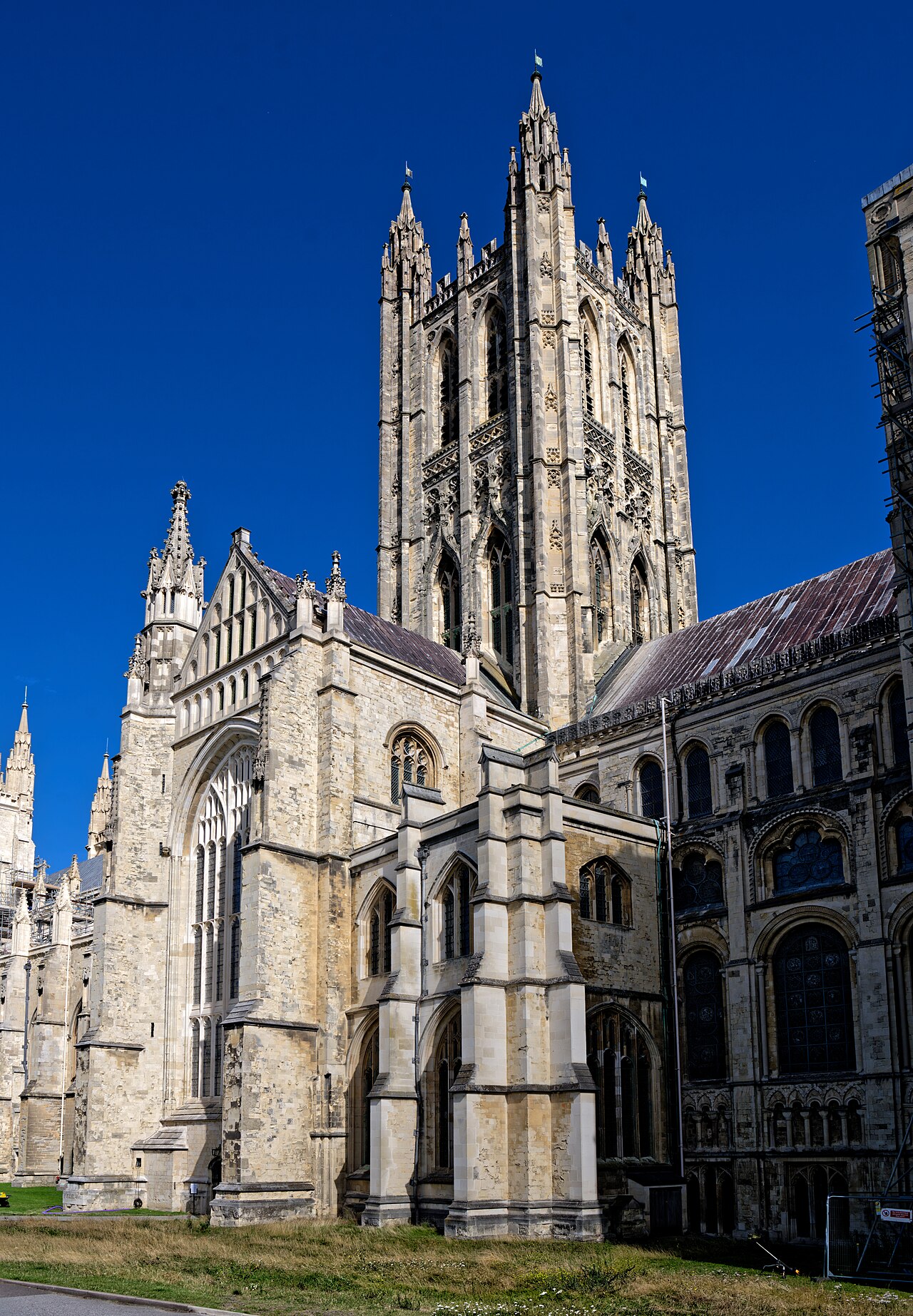
Canterbury Cathedral
founded 597
 Artifact
Secondary source
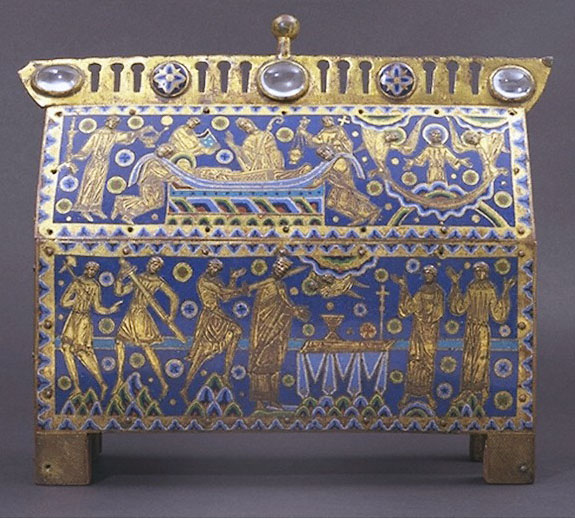
Becket Casket
c. 1180-1190
 Artifact
Secondary source
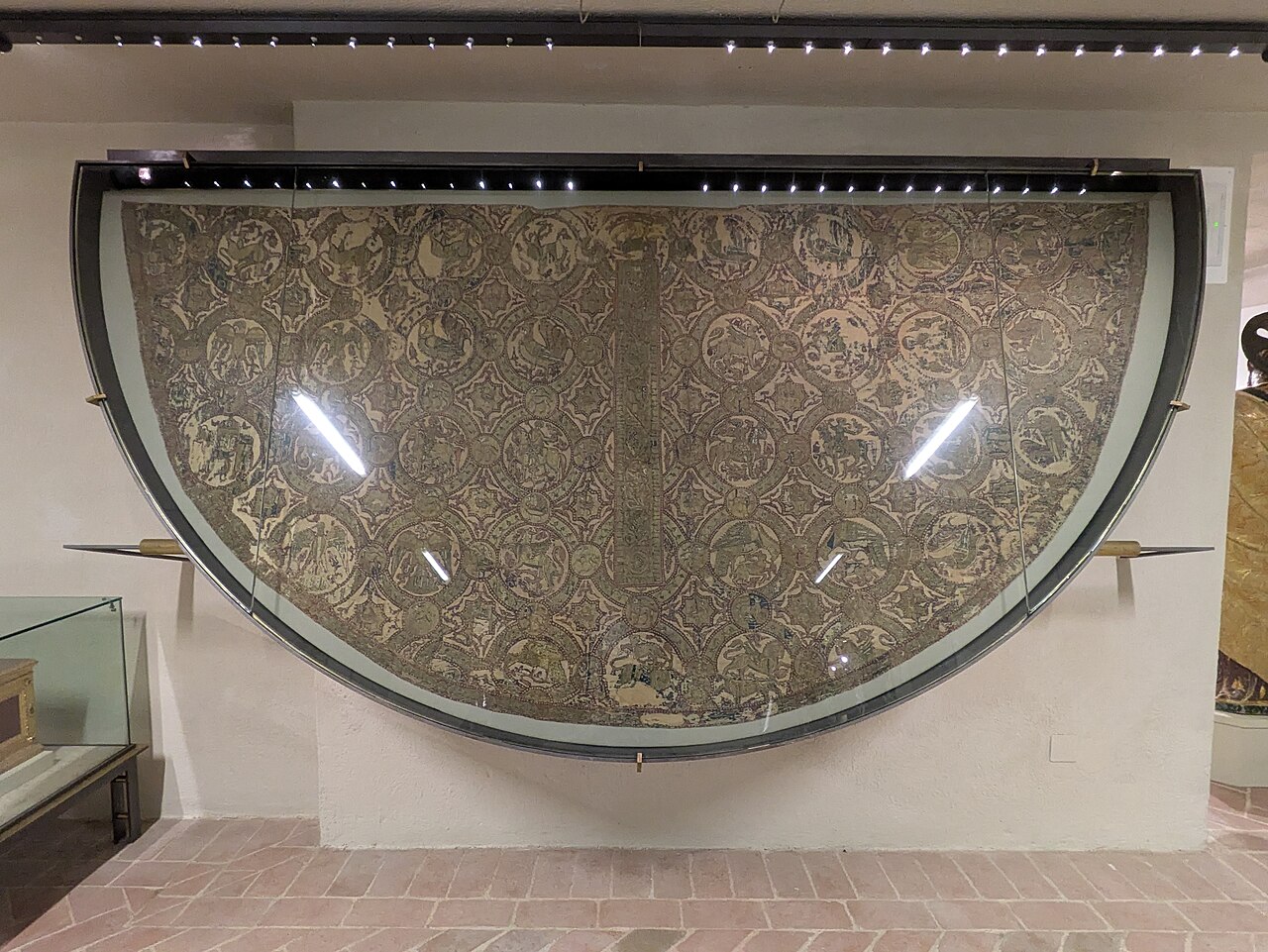
Fermo Chasuble of St. Thomas Becket
12th century
 Artifact
Secondary source
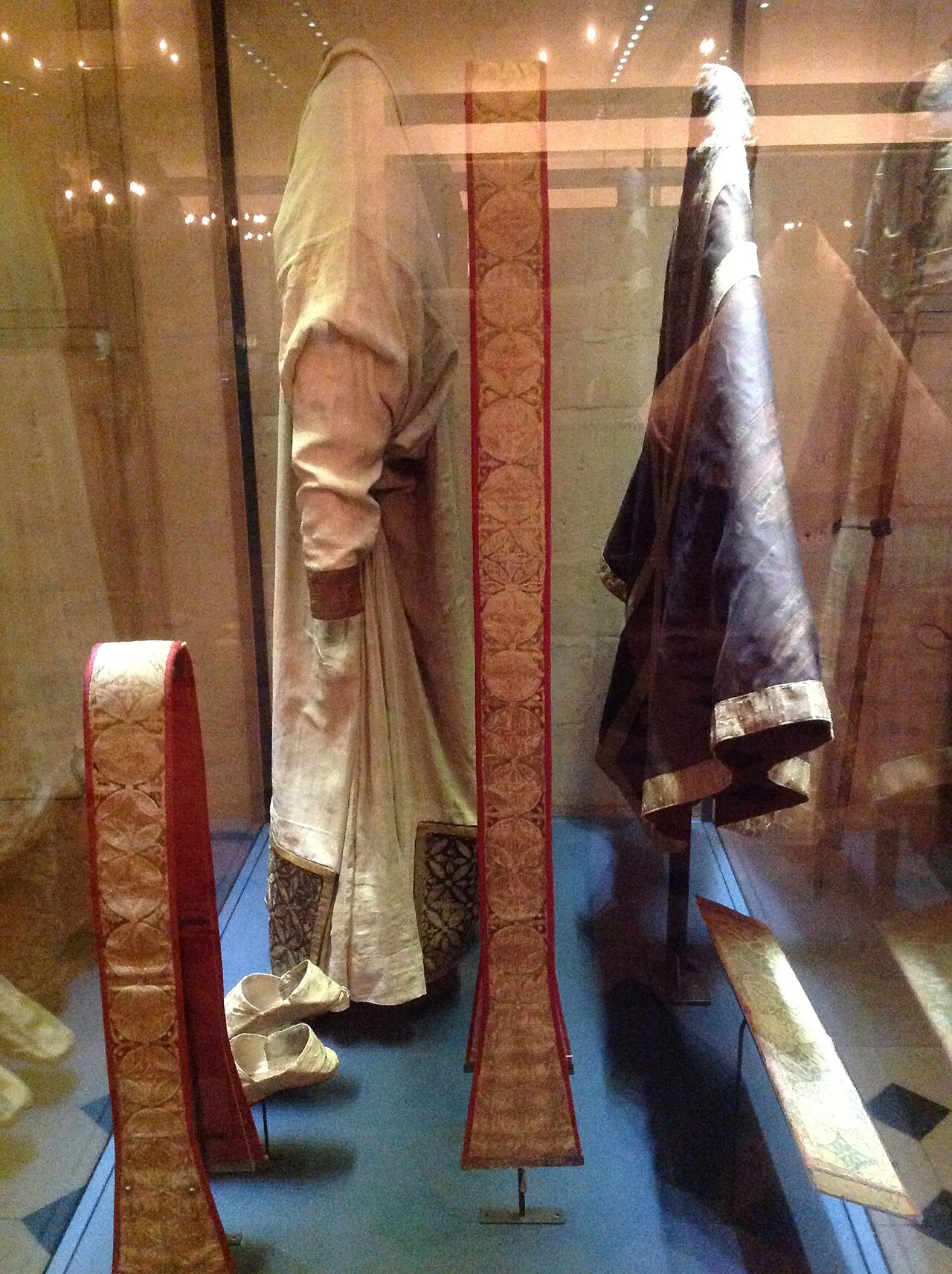
Becket Liturgical Garments, Sens Cathedral
12th century
Ready when you are
Start chatting with Thomas Becket now.
20 messages free · No credit card · Available in 50+ languages.