


Secondary sourcePainting1784
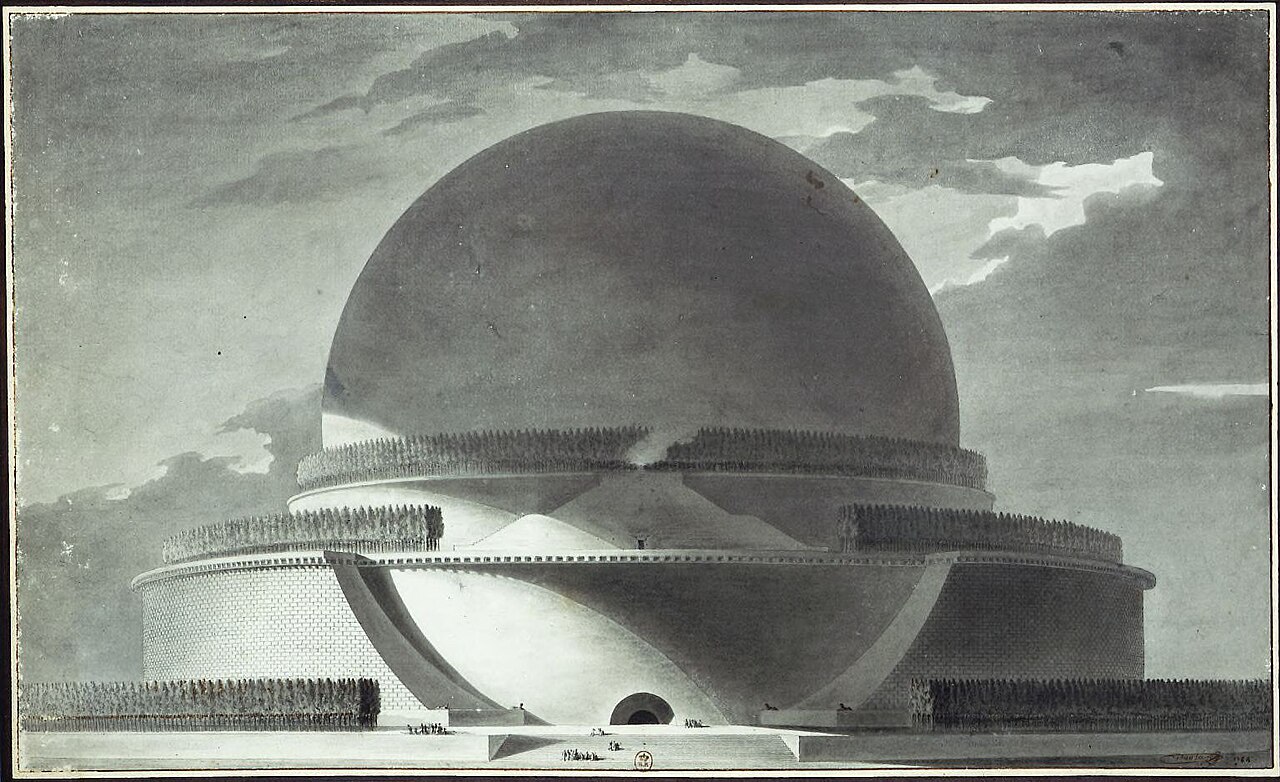
Cenotaph to Newton
Étienne-Louis Boullée · 1784
An unbuilt 1784 design by Étienne-Louis Boullée for a giant spherical monument honouring Isaac Newton.
A visionary monument designed decades after Newton's death to honour his near-sacred status in Enlightenment thought.
About this source
What it is
This is a grey wash perspective drawing by French architect Étienne-Louis Boullée, created in 1784. It shows a design for a massive spherical monument set on a wide cylindrical base, with a tiny entrance and rows of small figures on terraces below. The sphere was never built.
Why it matters
Boullée designed this cenotaph, or empty tomb-monument, to honour Isaac Newton long after Newton's death. The huge scale of the sphere compared to the tiny human figures shows how Enlightenment thinkers viewed Newton as an almost superhuman figure, whose discoveries about the universe deserved a monument as vast as the cosmos itself.
Look closer
- Why do you think Boullée chose a sphere to represent Newton's achievements?
- What does the tiny size of the human figures suggest about how Newton was seen?
- Why might a monument like this never actually get built?
This painting is part of the curated material that grounds the AI version of Isaac Newton on Humy.ai — when students ask about related events, the AI can quote it and cite it.
More Isaac Newton sources
Meet the AI Isaac Newton →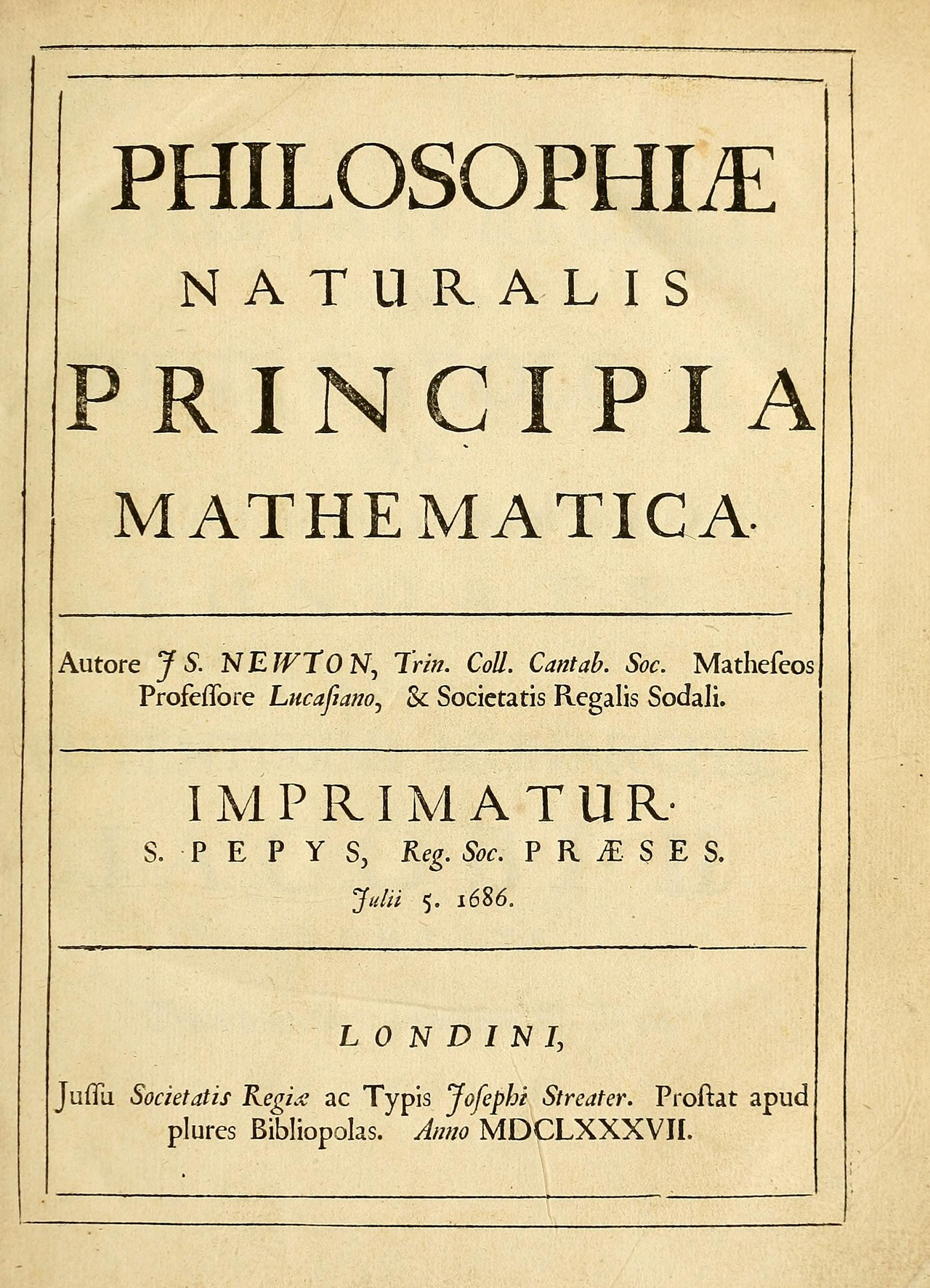 Book
Primary source
Philosophiæ Naturalis Principia Mathematica
Isaac Newton · 1687
 Book
Primary source
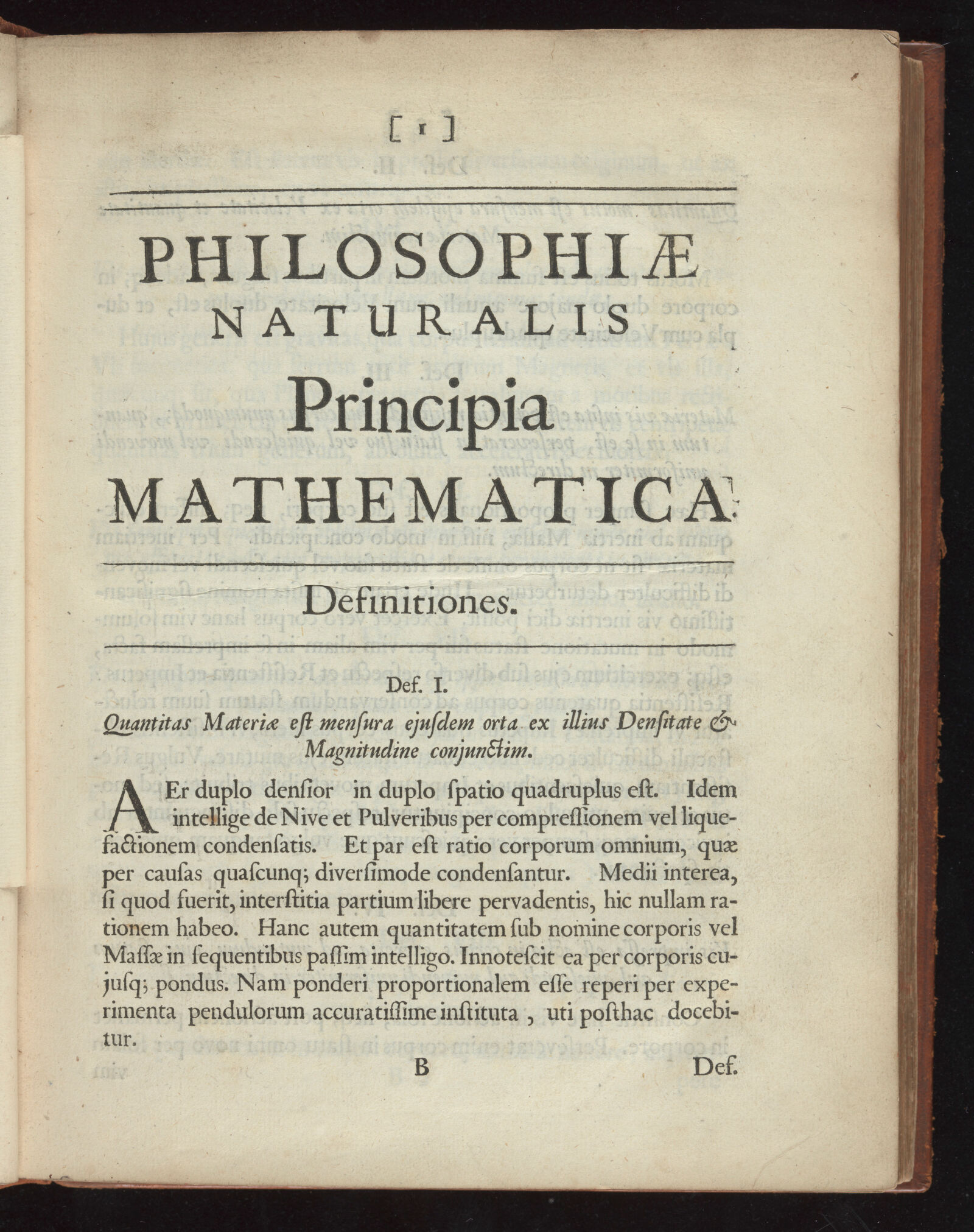
Principia Mathematica, Page 1: Definitions
Isaac Newton · 1687
 Painting
Primary source
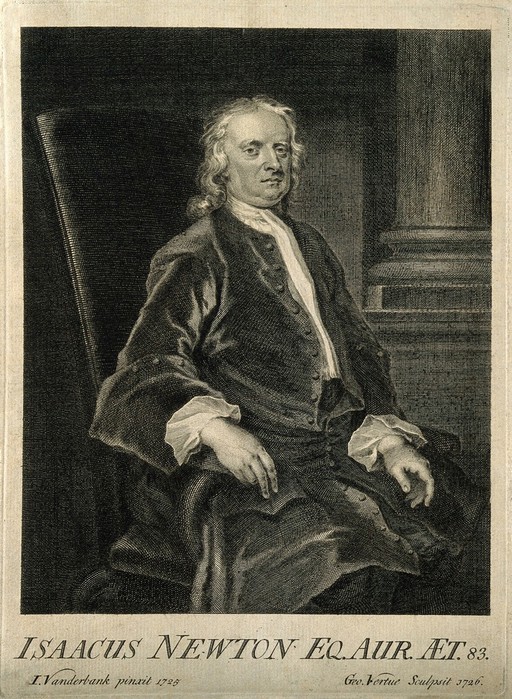
Sir Isaac Newton, line engraving by Vertue, 1726
George Vertue · 1726
 Document
Primary source
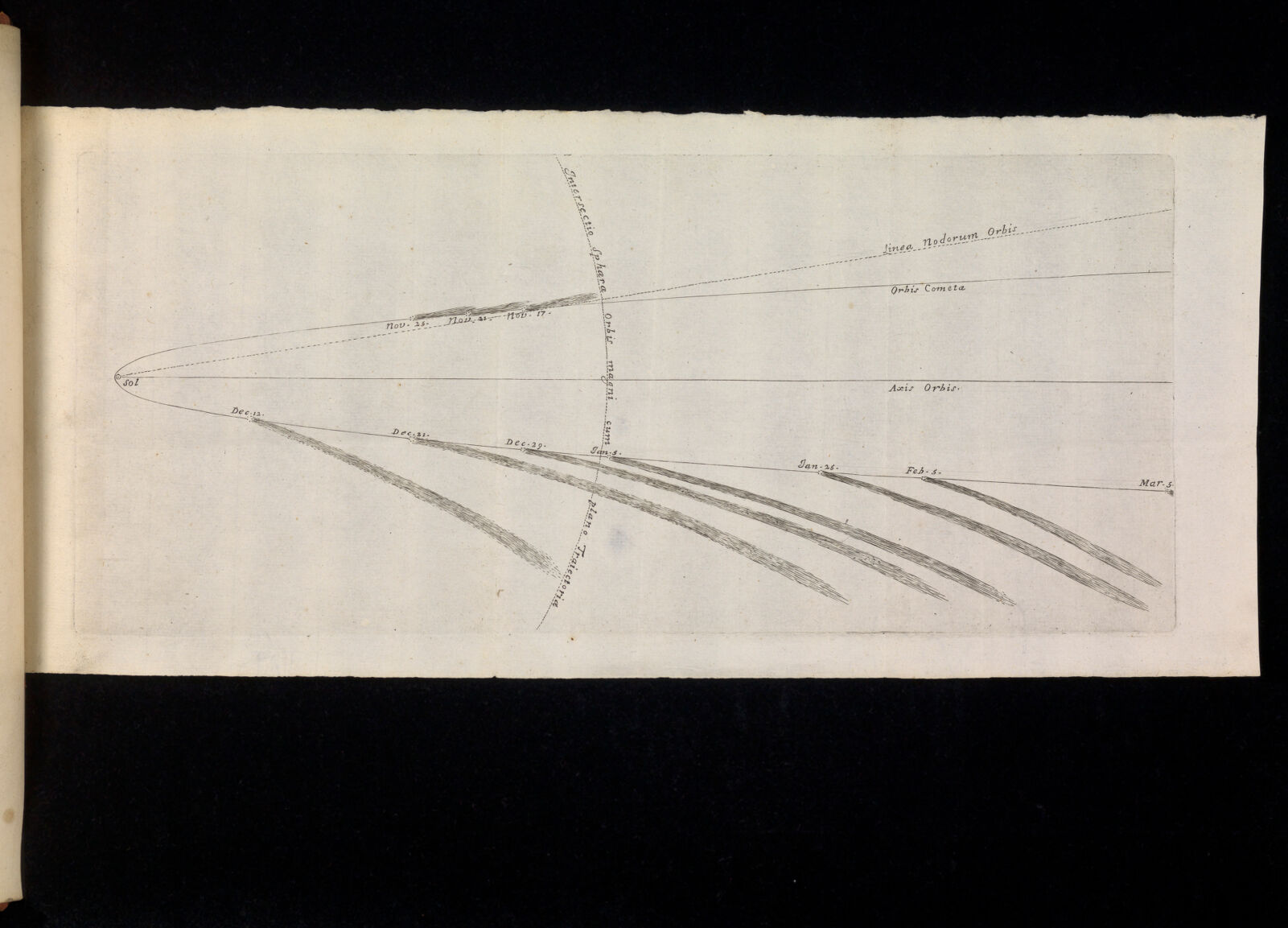
Principia Mathematica, Fold-out Diagram
Isaac Newton · 1687
 Painting
Primary source
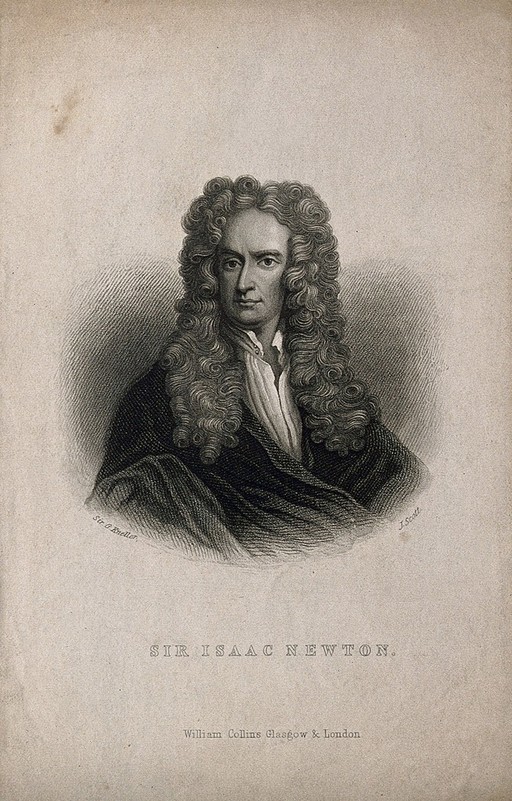
Sir Isaac Newton, stipple engraving by J. Scott after Kneller, 1702
J. Scott, after Sir Godfrey Kneller · 1702 (print made later)
Ready when you are
Start chatting with Isaac Newton now.
20 messages free · No credit card · Available in 50+ languages.