


Primary sourceDocument1687
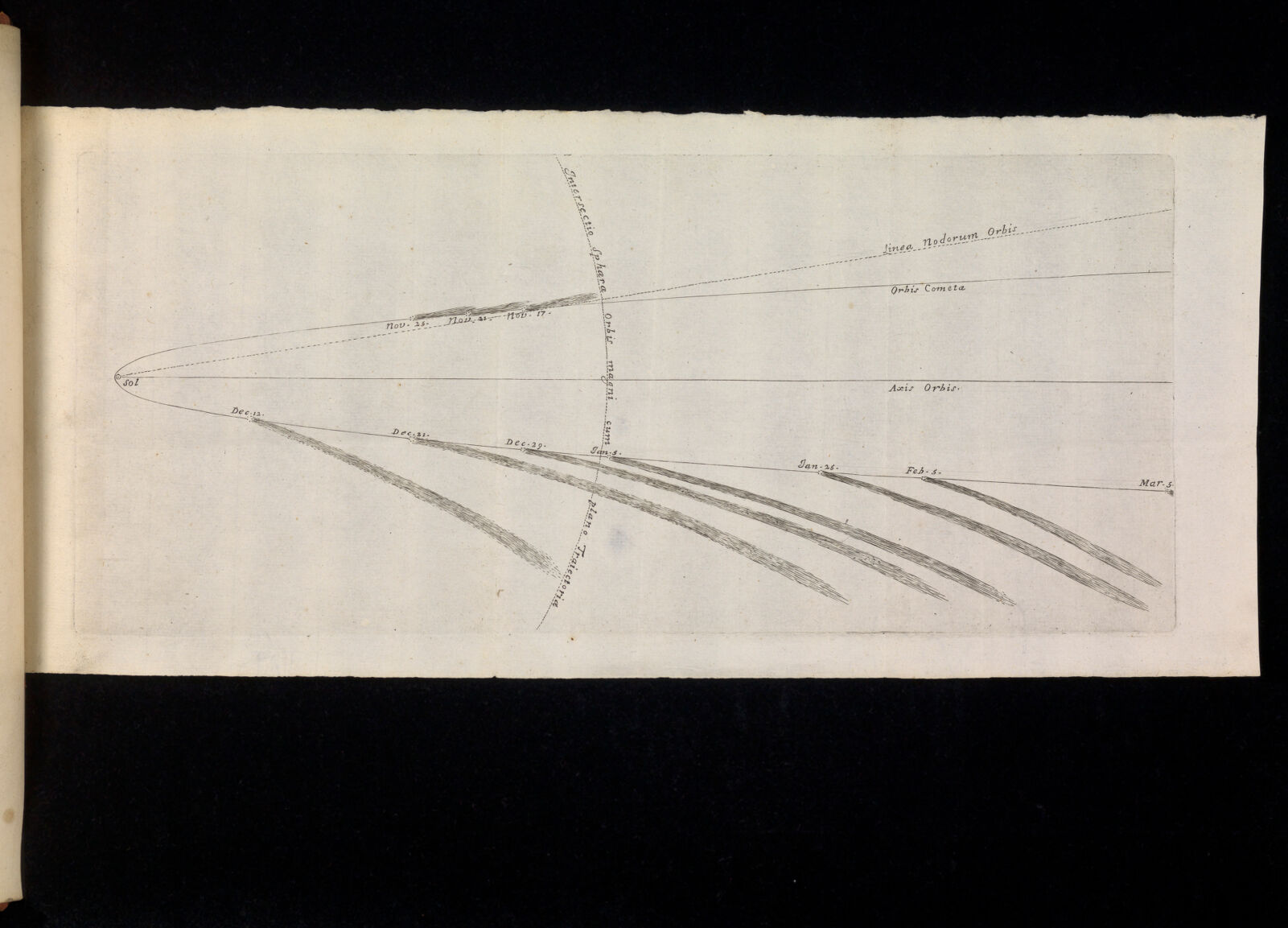
Principia Mathematica, Fold-out Diagram
Isaac Newton · 1687
A fold-out engraved diagram from Newton's 1687 Principia illustrating his geometric treatment of motion and force.
This diagram, from Newton's own Principia, illustrates the mathematical methods he devised to explain motion.
About this source
What it is
This fold-out page from Newton's Principia Mathematica (1687) contains an engraved diagram showing a curved path, likely tracing a comet's motion from the Sun, with dated positions and orbit lines. It is held by the Wellcome Collection in London.
Why it matters
Newton used geometric diagrams like this to demonstrate his laws of motion and gravitation mathematically. Such diagrams reveal how he combined observation, dates and geometry to prove his physical ideas rather than relying only on words.
Look closer
- Why would Newton use a diagram instead of only writing in words?
- What might the dated positions along the curve represent?
- Why do you think this page folds out rather than sitting flat in the book?
This document is part of the curated material that grounds the AI version of Isaac Newton on Humy.ai — when students ask about related events, the AI can quote it and cite it.
More Isaac Newton sources
Meet the AI Isaac Newton →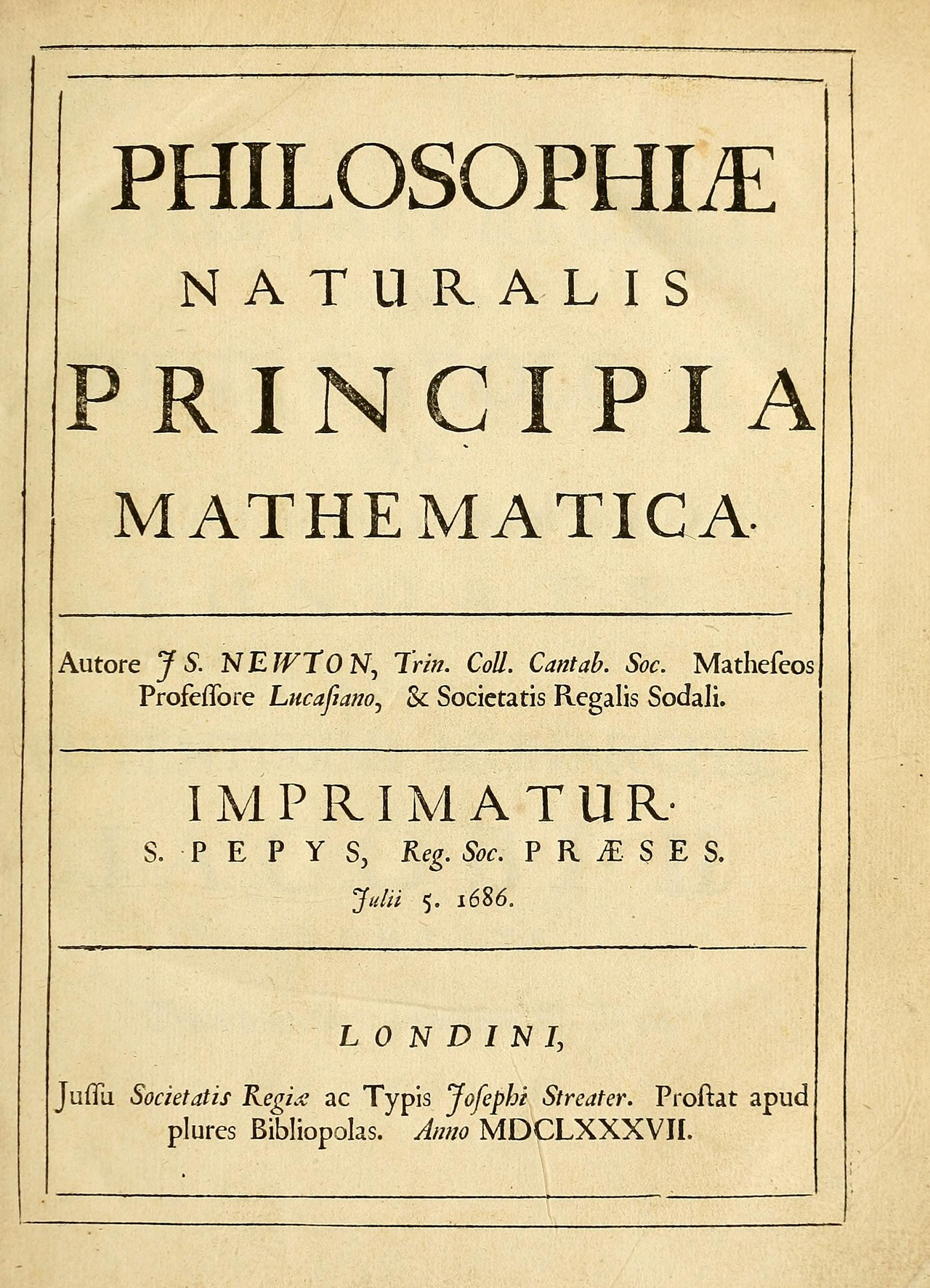 Book
Primary source
Philosophiæ Naturalis Principia Mathematica
Isaac Newton · 1687
 Book
Primary source
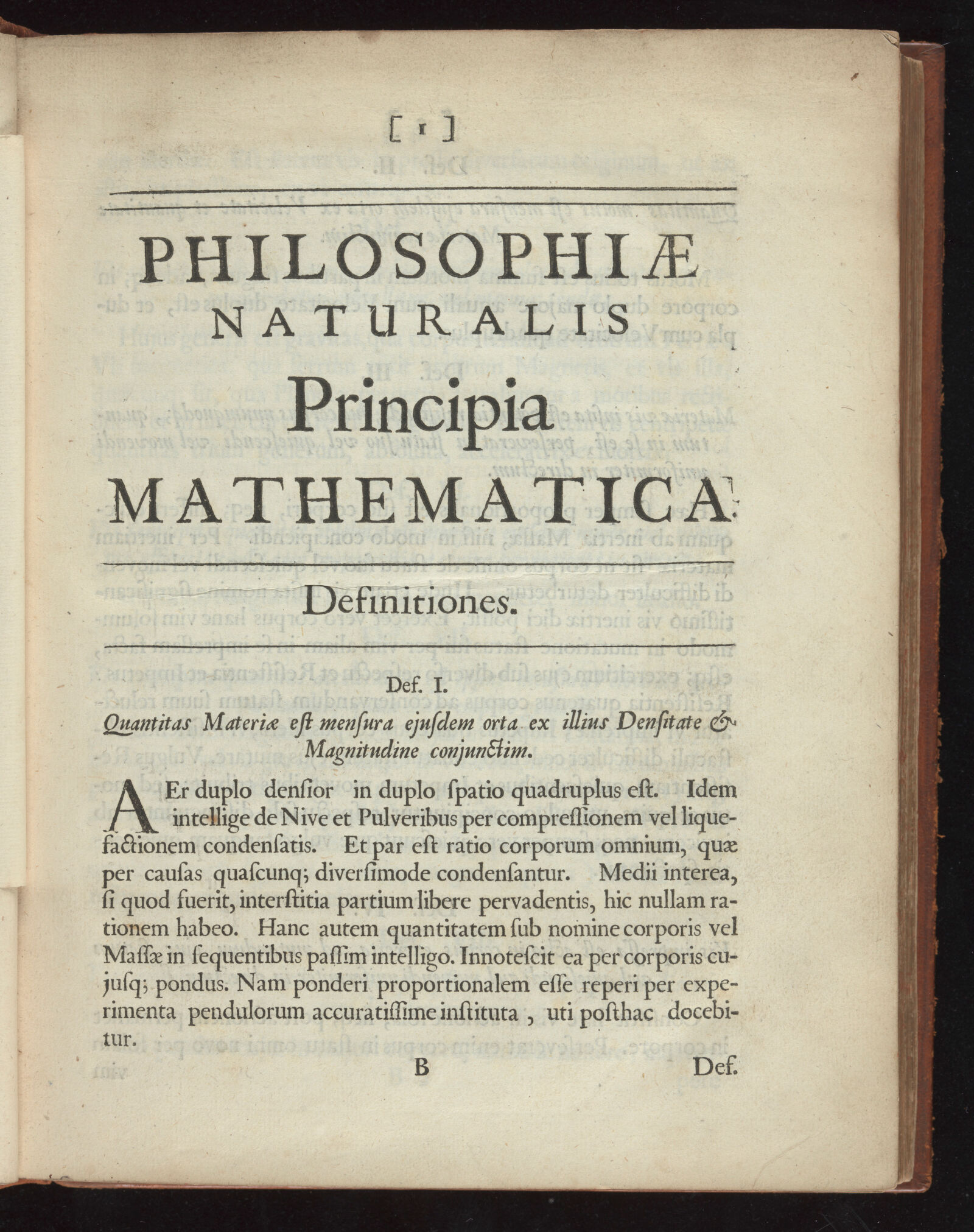
Principia Mathematica, Page 1: Definitions
Isaac Newton · 1687
 Painting
Primary source
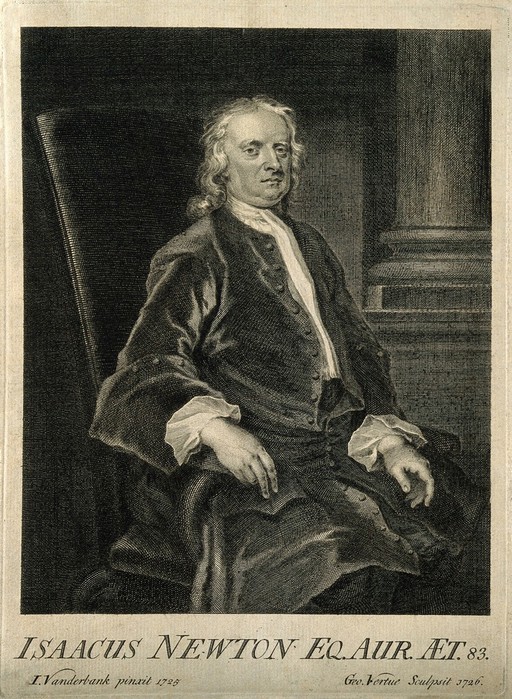
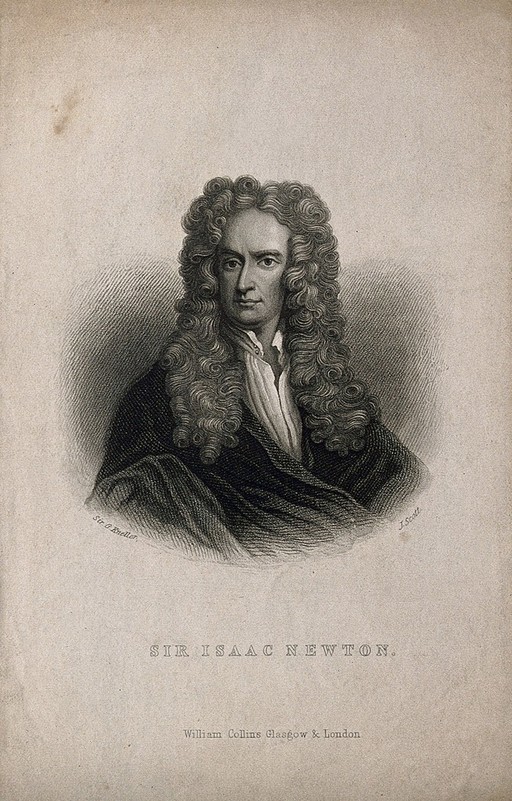
Sir Isaac Newton, line engraving by Vertue, 1726
George Vertue · 1726
 Painting
Primary source
Sir Isaac Newton, stipple engraving by J. Scott after Kneller, 1702
J. Scott, after Sir Godfrey Kneller · 1702 (print made later)
 Book
Primary source
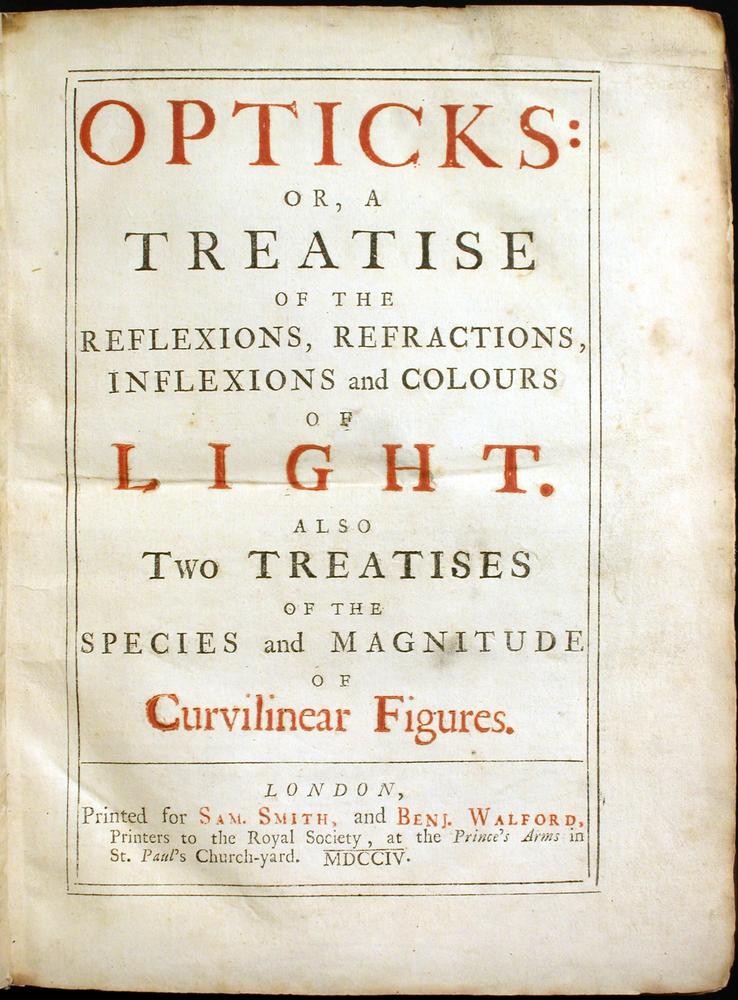
Opticks, or a Treatise of the Reflections, Refractions, Inflections and Colours of Light
Isaac Newton · 1704
Ready when you are
Start chatting with Isaac Newton now.
20 messages free · No credit card · Available in 50+ languages.