


Primary sourceDocument6 April 1868
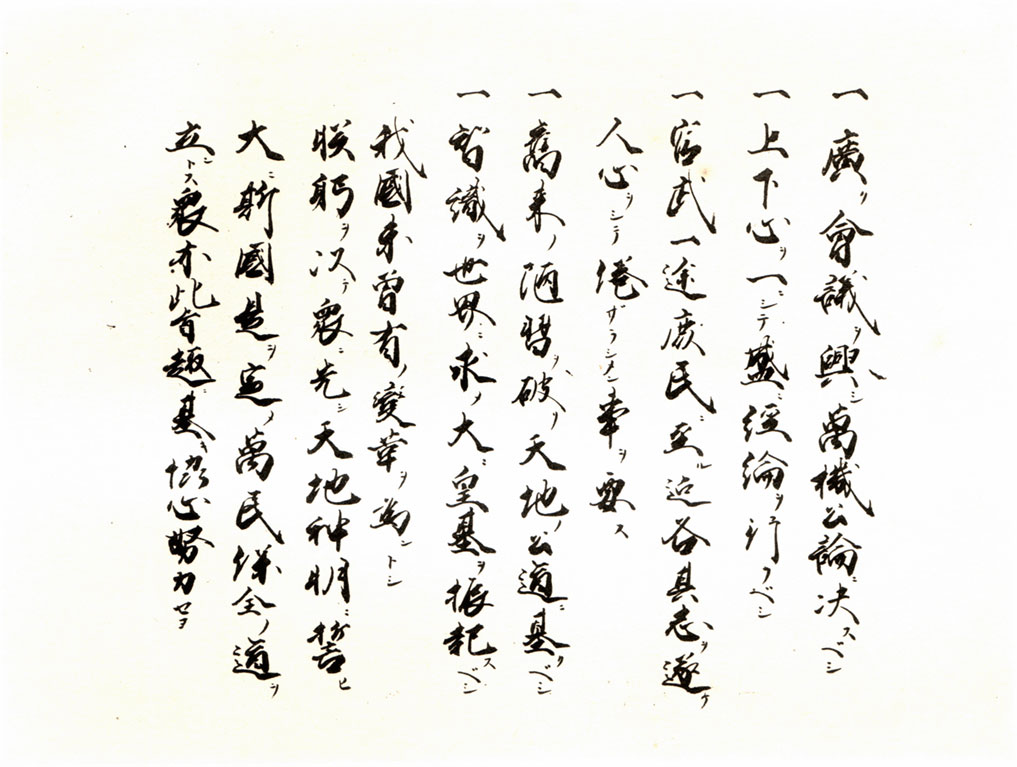
Charter Oath
Kido Takayoshi · 6 April 1868
The five-article oath sworn in Emperor Meiji's name in 1868, promising deliberative government and reform as the basis of the new regime.
Sworn in the teenage Emperor Meiji's name, the Oath launched his reign as the founding statement of the new imperial government.
Free Humy account · No credit card · 120,912 sources to read
About this source
What it is
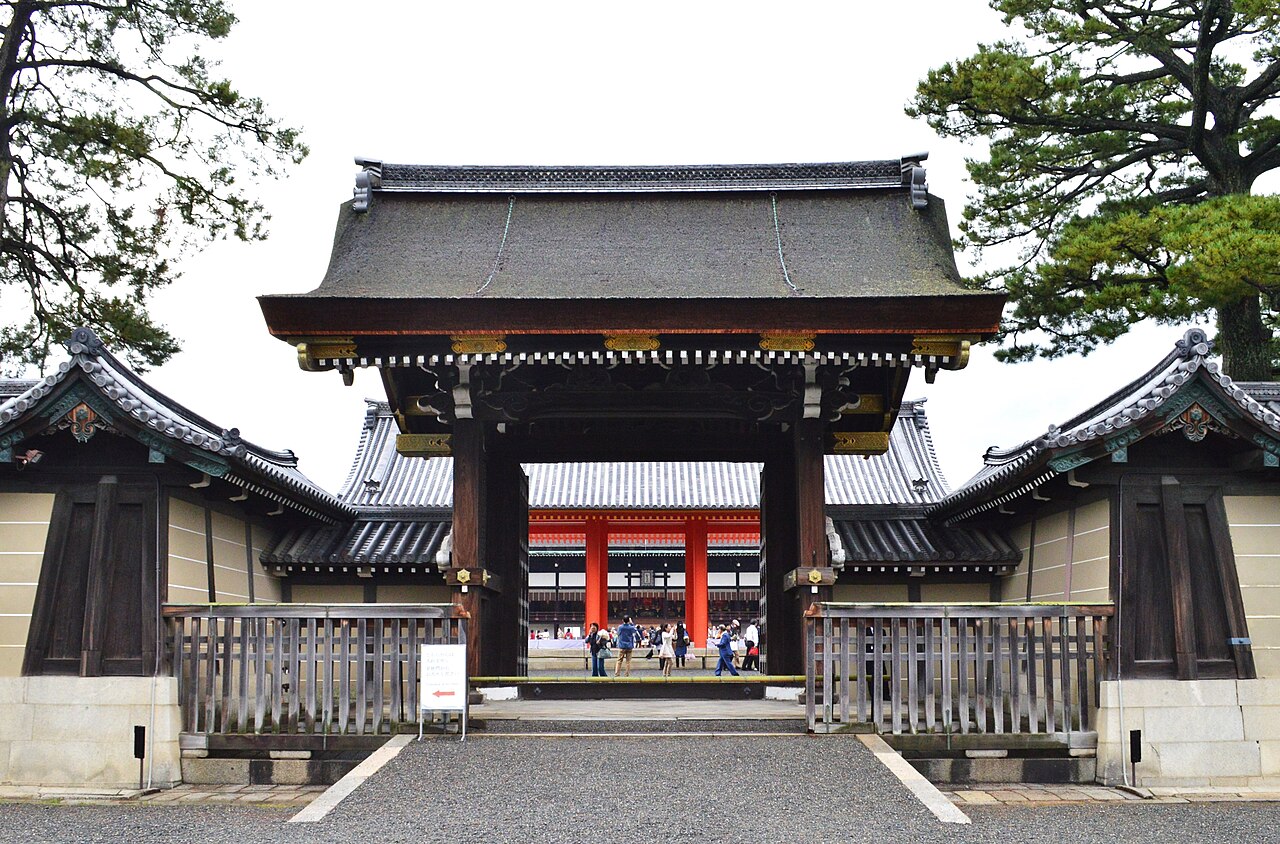
The Charter Oath is a document promulgated on 6 April 1868 at the Kyoto Imperial Palace, early in the reign of the teenage Emperor Meiji. Its final wording was prepared by the official Kido Takayoshi, building on an earlier draft by Yuri Kimimasa, moderated by Fukuoka Takachika. It was read aloud by Sanjō Sanetomi before the emperor and hundreds of officials, who then signed a pledge to uphold it.
Why it matters
The Oath set out five promises — including deliberative assemblies, unity across classes, and seeking knowledge from the world — that framed the Meiji government's modernization. It was issued in the emperor's name though written by his officials, showing how the young monarch's authority was used to legitimize reforms planned by the men around him, including Kido Takayoshi.
Look closer
- Why might the Oath's language have been made deliberately vague or broad?
- What does it mean that the Oath was sworn in the emperor's name but drafted by his advisers?
- Who was allowed to sign the Oath, and who was left out?
This document is part of the curated material that grounds the AI version of Emperor Meiji, Tokugawa Yoshinobu and Ōkubo Toshimichi on Humy.ai — when students ask about related events, the AI can quote it and cite it.
More Emperor Meiji sources
Browse all 94 →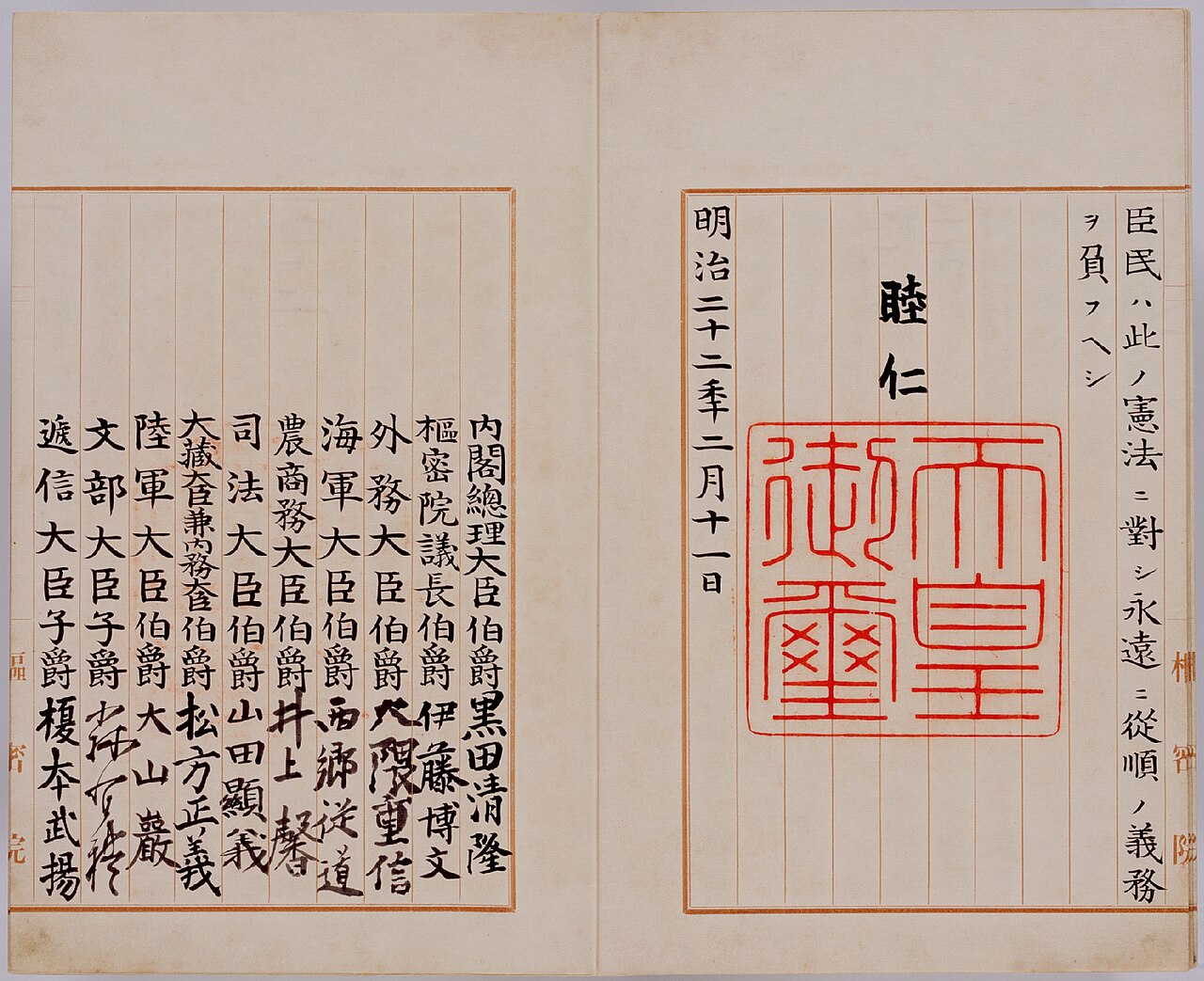 Document
Primary source
Constitution of the Empire of Japan
11 February 1889
 Document
Primary source
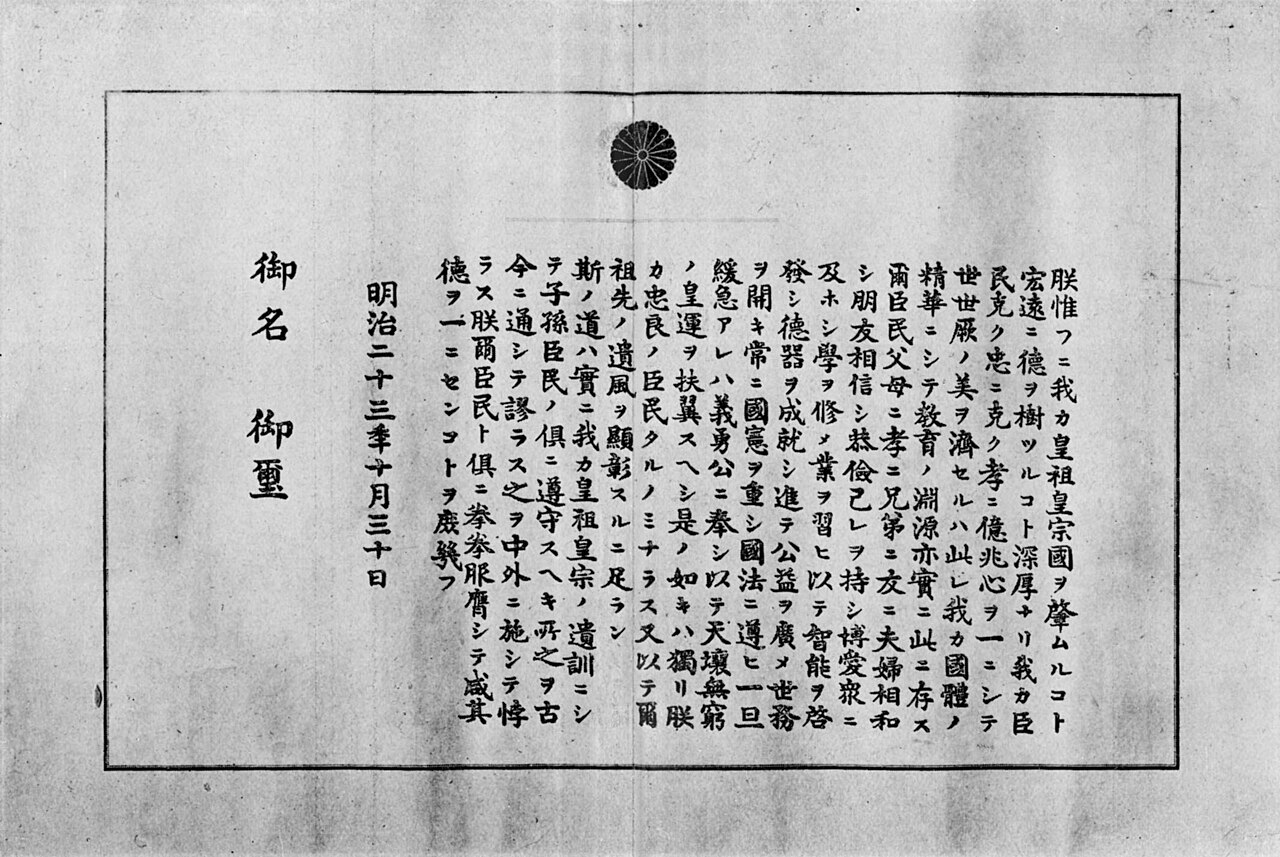
Imperial Rescript on Education
Inoue Kowashi · 30 October 1890
 Document
Primary source
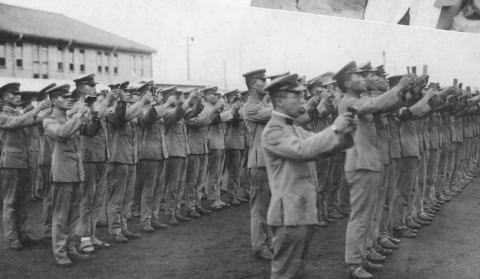
Imperial Rescript to Soldiers and Sailors
Yamagata Aritomo · 4 January 1882
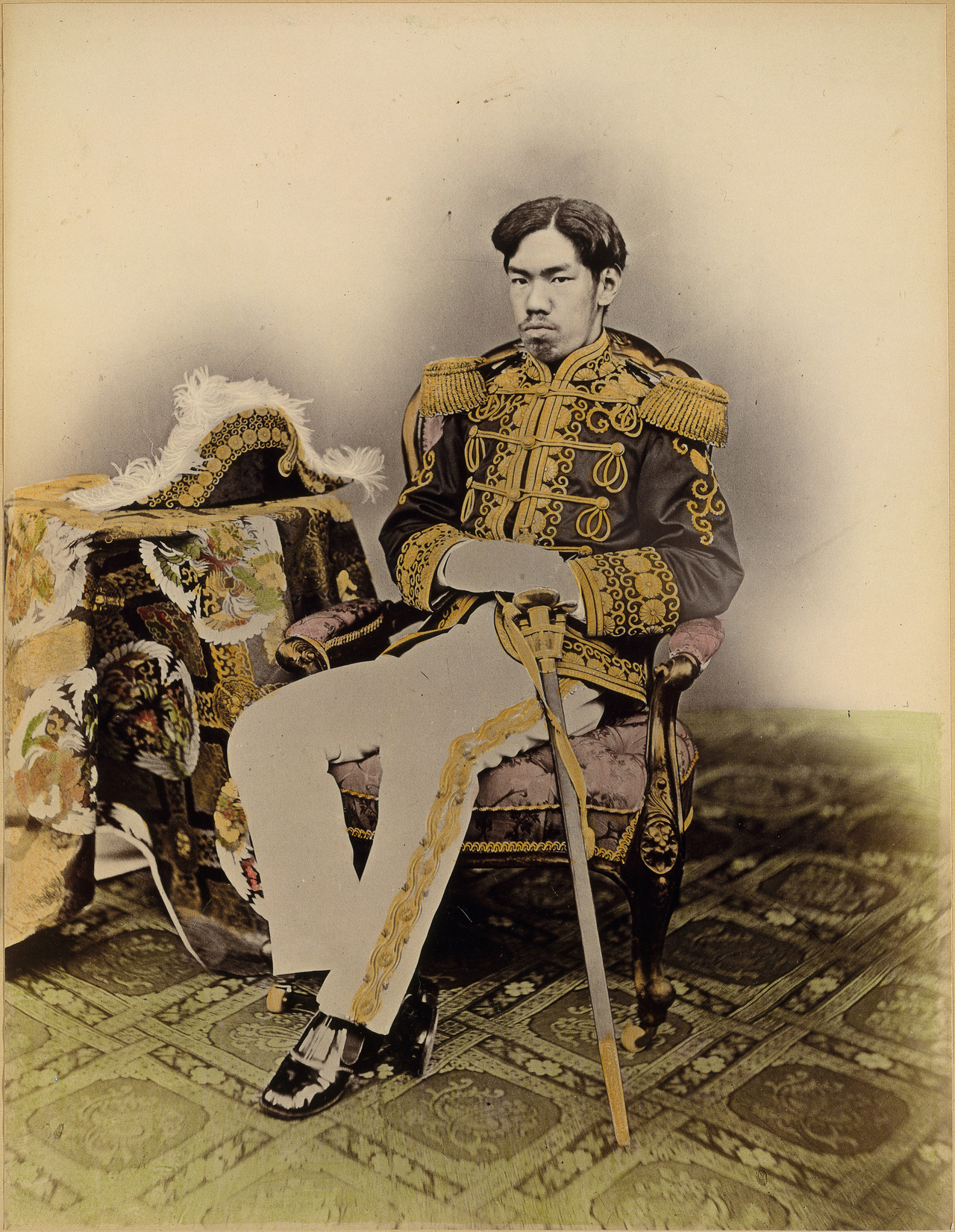 Photograph
Primary source
Mutsuhito, The Meiji Emperor
Uchida Kuichi · 1873
Free account
Read every Emperor Meiji source
Sign up free →
Ready when you are
Start chatting with Emperor Meiji now.
20 messages free · No credit card · Available in 50+ languages.