


Primary sourcePhotographc. 1903
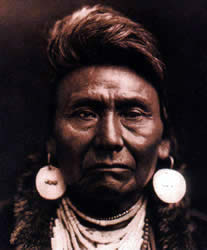
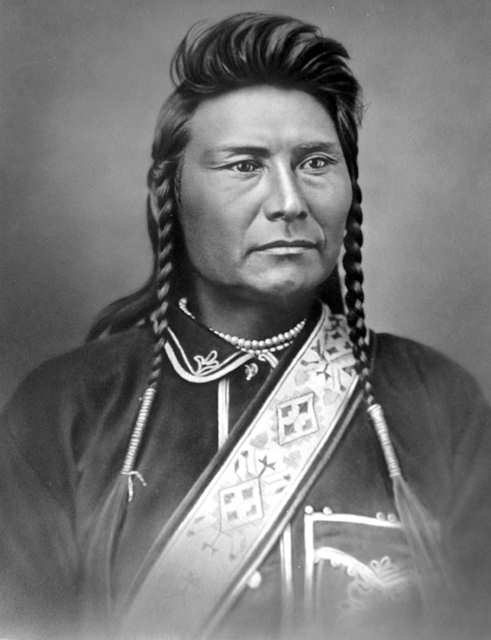
Chief Joseph (Curtis portrait)
Edward S. Curtis · c. 1903
Edward S. Curtis's early 1900s portrait of Chief Joseph, taken in exile near the end of his life, became the defining public image of him.
A late-life portrait of Joseph in exile that became the most widely known public image of him.
About this source
What it is
This sepia-toned photograph of Chief Joseph was made by Edward S. Curtis, and shows Joseph as an older man, wearing shell earrings, a beaded necklace, and fur-trimmed clothing. Joseph died in 1904, and the photograph was apparently published sometime between 1907 and 1930.
Why it matters
Curtis was known for his large project photographing Native American peoples, often in ways meant to look timeless or traditional. This portrait of Joseph, taken toward the end of his life in exile from his homeland, became one of the most widely reproduced images of him and shaped how later generations pictured him.
Look closer
- What does Joseph's expression in this photograph suggest to you?
- Why might Curtis have chosen to photograph Joseph in this style, and what might that choice leave out?
- How does this image compare with earlier photographs of Joseph taken right after his surrender?
This photograph is part of the curated material that grounds the AI version of Chief Joseph on Humy.ai — when students ask about related events, the AI can quote it and cite it.
More Chief Joseph sources
Meet the AI Chief Joseph →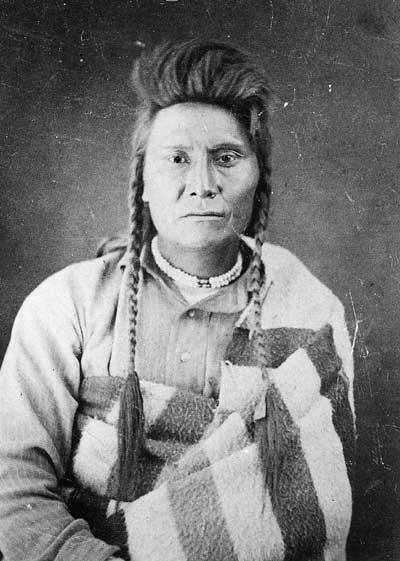 Photograph
Primary source
Chief Joseph, Three Weeks After Surrender
John Hale Fouch · 23 October 1877
 Painting
Primary source
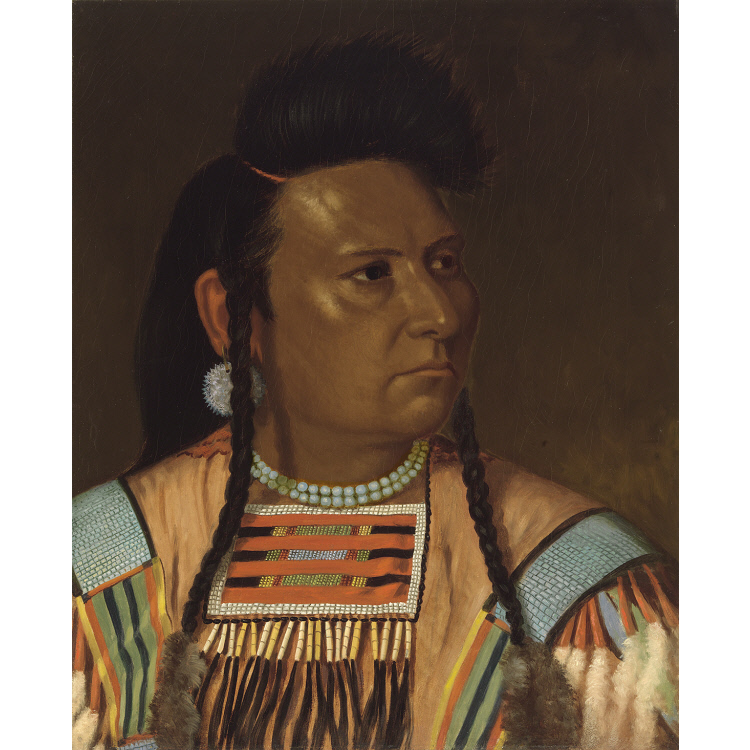
Chief Joseph
Cyrenius Hall · 1878
 Photograph
Primary source
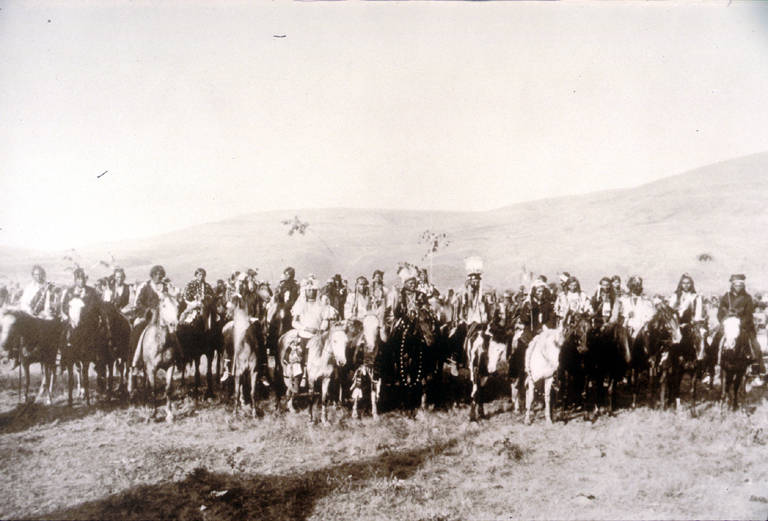
Chief Joseph's Band, Lapwai, 1877
spring 1877
 Photograph
Primary source
Chief Joseph, Bismarck Portrait
O. S. Goff (attributed) · November 1877
 Document
Primary source
Dawes Act
Henry Dawes · 8 February 1887
Ready when you are
Start chatting with Chief Joseph now.
20 messages free · No credit card · Available in 50+ languages.