


Secondary sourcePainting1935
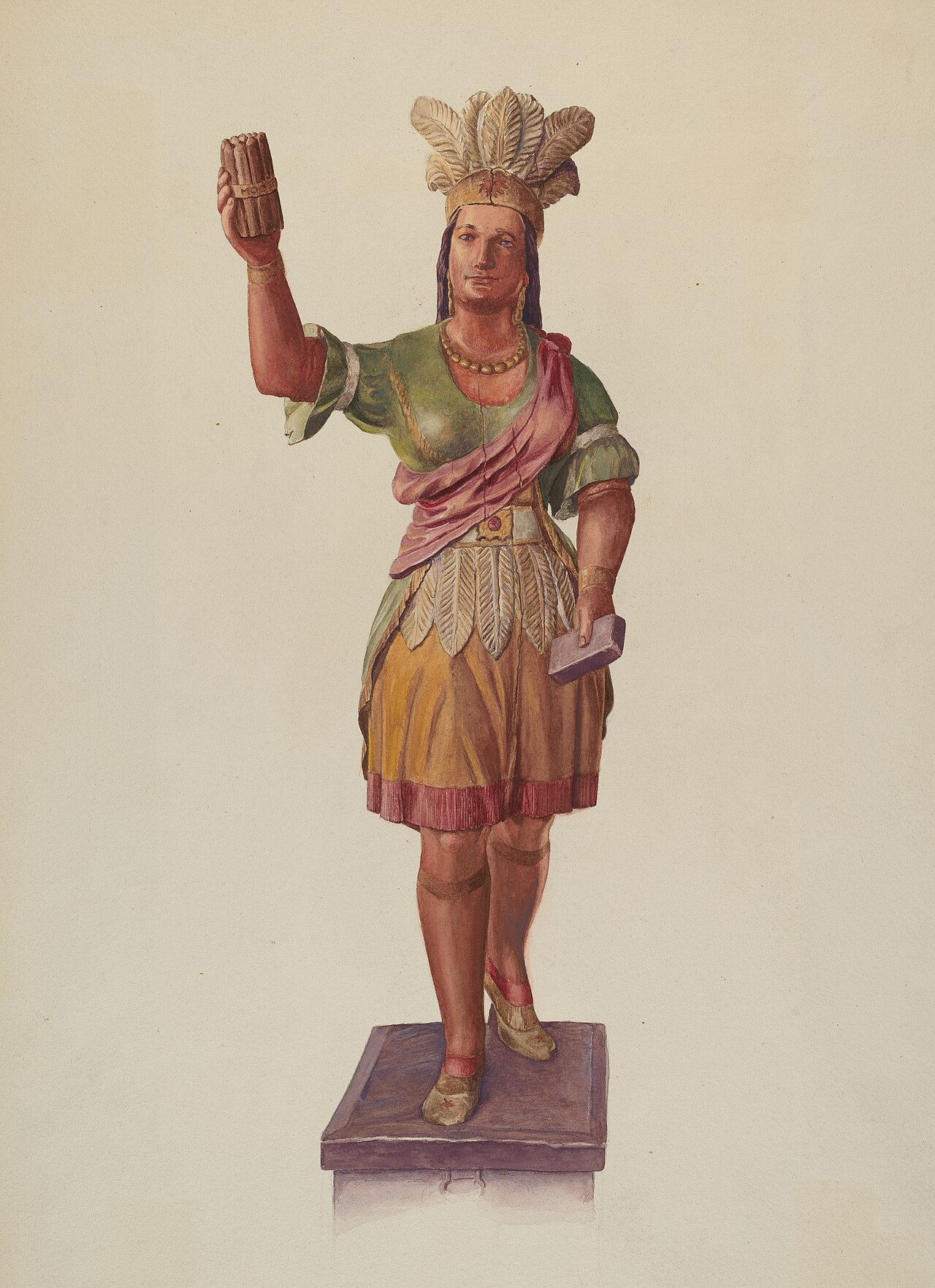
Cigar Store Pocahontas
1935
A 1935 watercolor rendering of a carved wooden cigar store figure representing Pocahontas, made for the Index of American Design.
Shows how Pocahontas's image was reduced to a racial stereotype used to sell tobacco in American shops.
About this source
What it is
This is a watercolor-style drawing made in 1935 for the Index of American Design, documenting a carved and painted wooden cigar store figure shaped like Pocahontas. The drawing is held among the drawings in the National Gallery of Art.
Why it matters
Cigar store figures were common commercial decorations in American shops, often shaped as caricatures of Native Americans to sell tobacco. This image shows how Pocahontas's identity was stripped of real history and reduced to a stereotyped selling figure, revealing how Native people and symbols were commercialized and distorted in American material culture.
Look closer
- Why might shopkeepers have chosen a Native American figure to advertise tobacco?
- What does this figure leave out or distort about Pocahontas as a real historical person?
- How does this image make you think about the line between honoring and stereotyping a historical figure?
This painting is part of the curated material that grounds the AI version of Pocahontas on Humy.ai — when students ask about related events, the AI can quote it and cite it.
More Pocahontas sources
Meet the AI Pocahontas →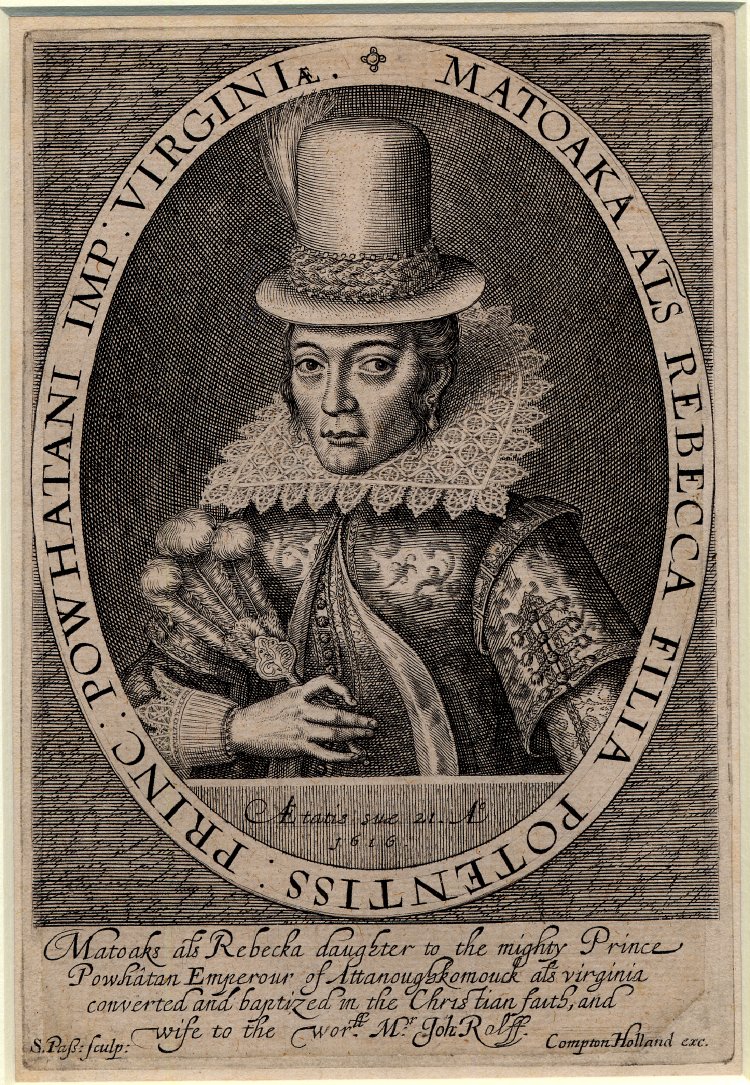 Painting
Primary source
Matoaka alias Rebecca Engraving
Simon van de Passe · 1616
 Painting
Secondary source
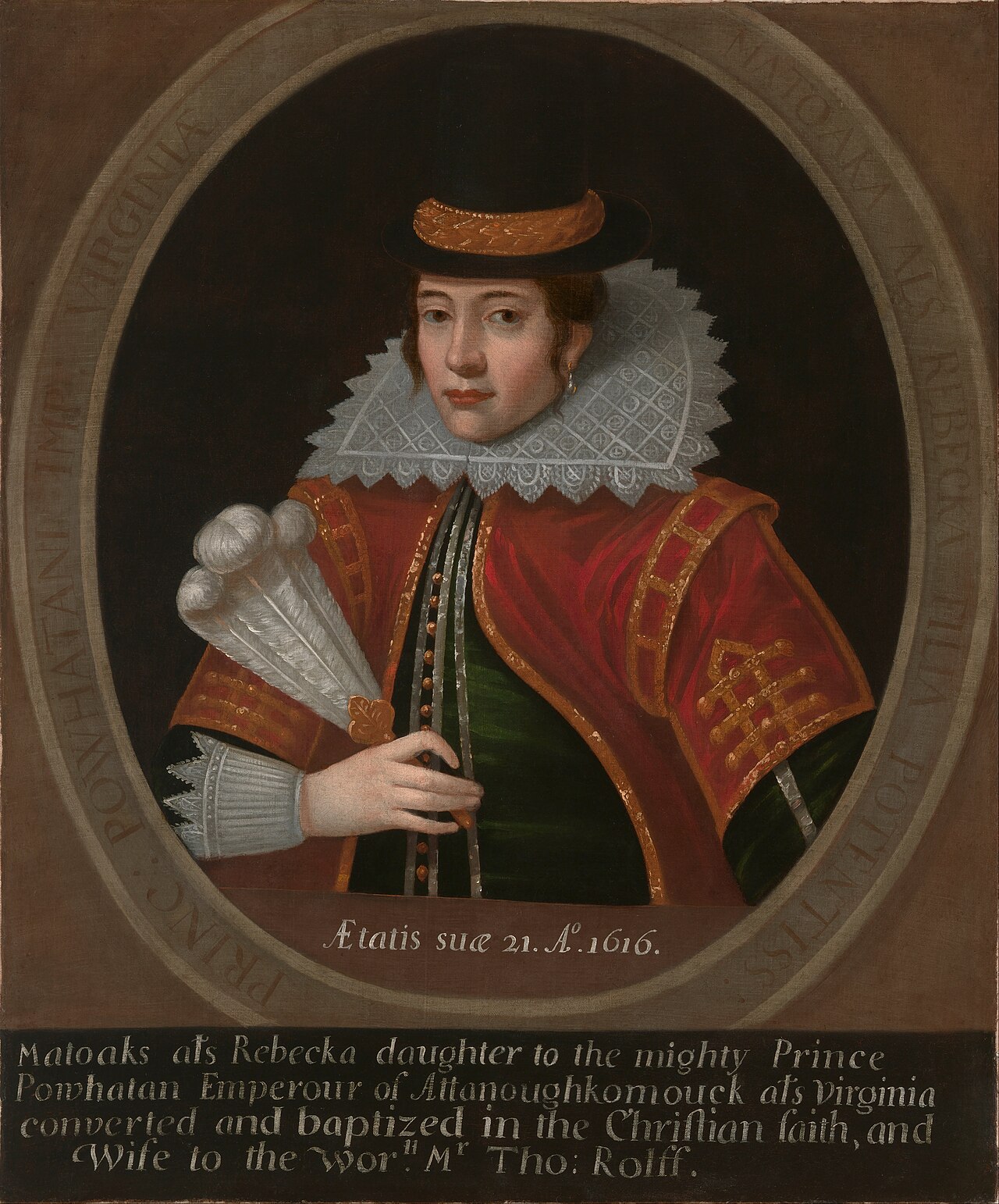
Pocahontas (Oil Portrait after van de Passe)
Unidentified Artist · 1616
 Book
Primary source
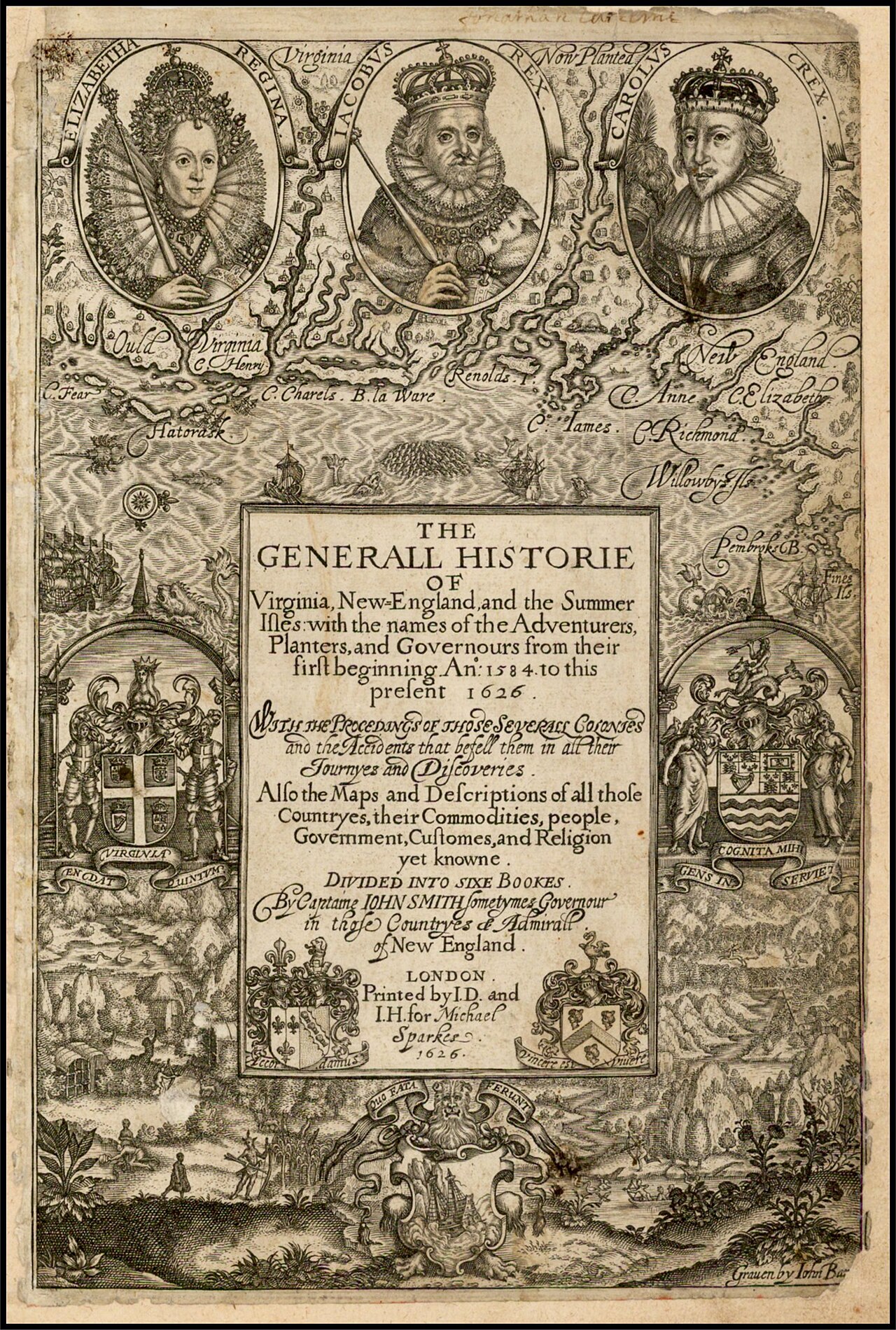
The Generall Historie of Virginia, New-England, and the Summer Isles
John Smith · 1624
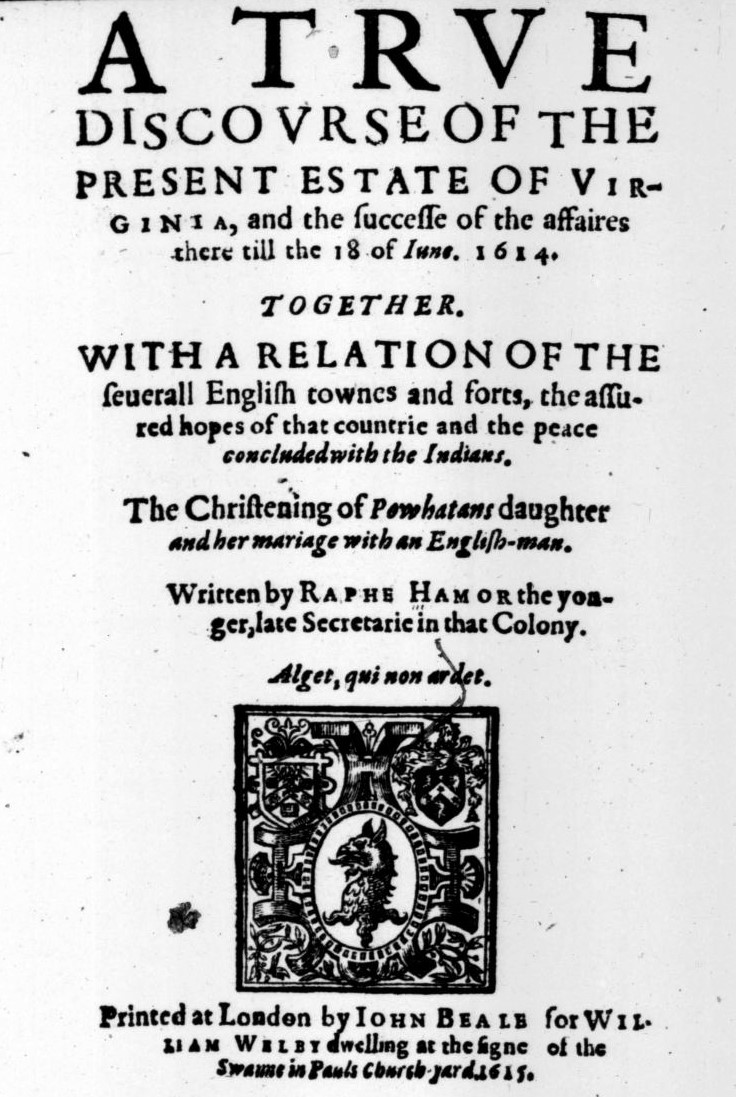 Book
Primary source
A True Discourse of the Present Estate of Virginia
Ralph Hamor · 1615
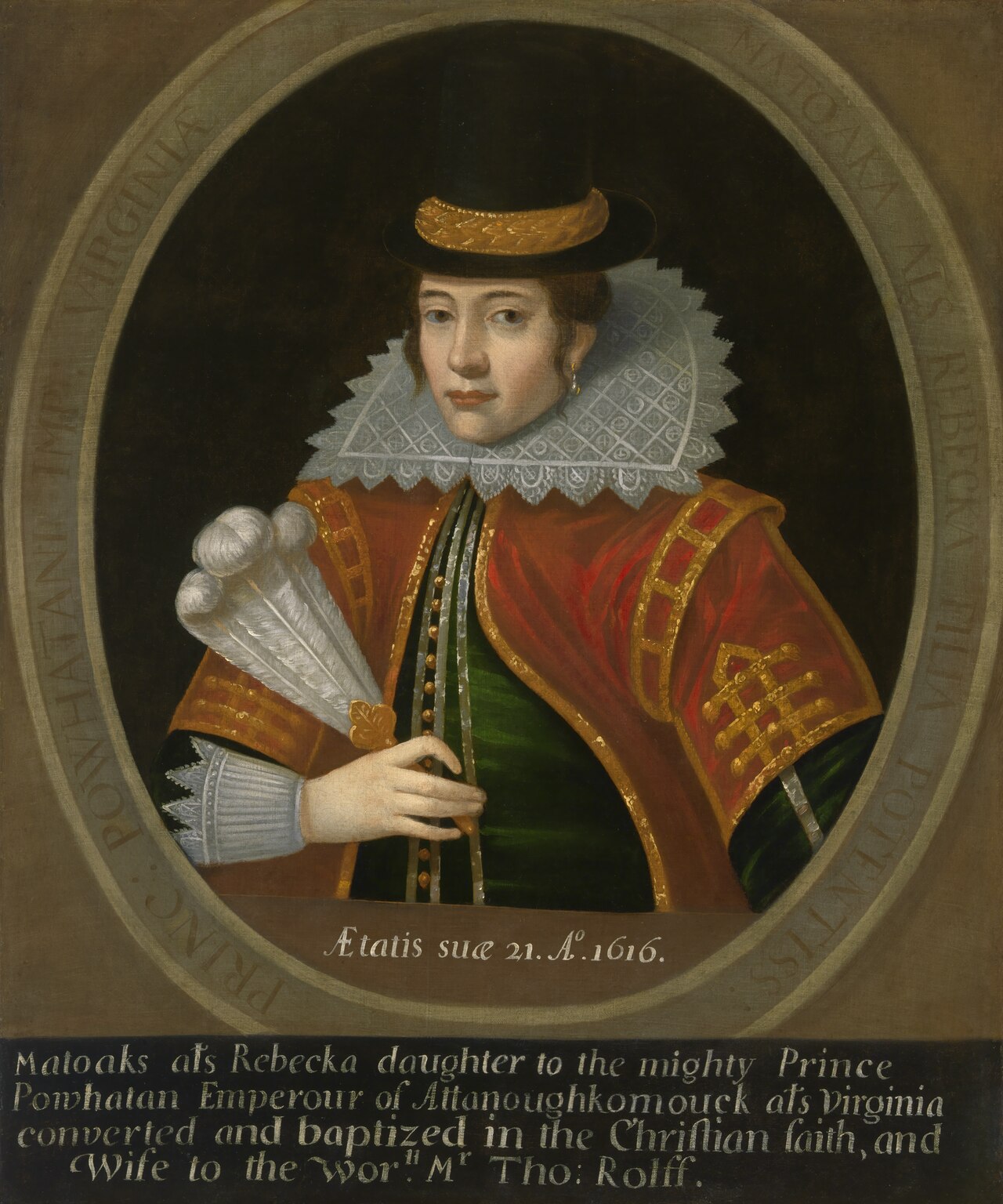 Painting
Secondary source
Portrait of Pocahontas
1616
Ready when you are
Start chatting with Pocahontas now.
20 messages free · No credit card · Available in 50+ languages.