


Primary sourceBook
Circumstances Alter Cases
Han Fei
An English translation of a chapter from Han Fei's own writings, using the story of Mi Tzu-hsia to show how a ruler's feelings toward the same actions can change.
This chapter is Han Fei's own writing, showing his Legalist reasoning in his own words, translated into English.
About this source
What it is
This is a chapter written by the Legalist philosopher Han Fei himself, here presented in English translation. It tells the story of Mi Tzu-hsia, a court favorite whose actions were praised by his prince at first and later condemned, even though his character had not changed.
Why it matters
The anecdote illustrates one of Han Fei's central ideas: that a ruler's favor is unstable and that love can turn to hate depending on circumstance, not on fixed virtue. It reflects his broader argument that rulers should rely on clear laws and incentives rather than personal affection, since feelings are unreliable.
Look closer
- Why does the same action please the prince once and anger him later?
- What does this story suggest about trusting a ruler's favor?
- How does this translation differ from reading Han Fei's original Chinese text?
This book is part of the curated material that grounds the AI version of Han Fei on Humy.ai — when students ask about related events, the AI can quote it and cite it.
More Han Fei sources
Meet the AI Han Fei →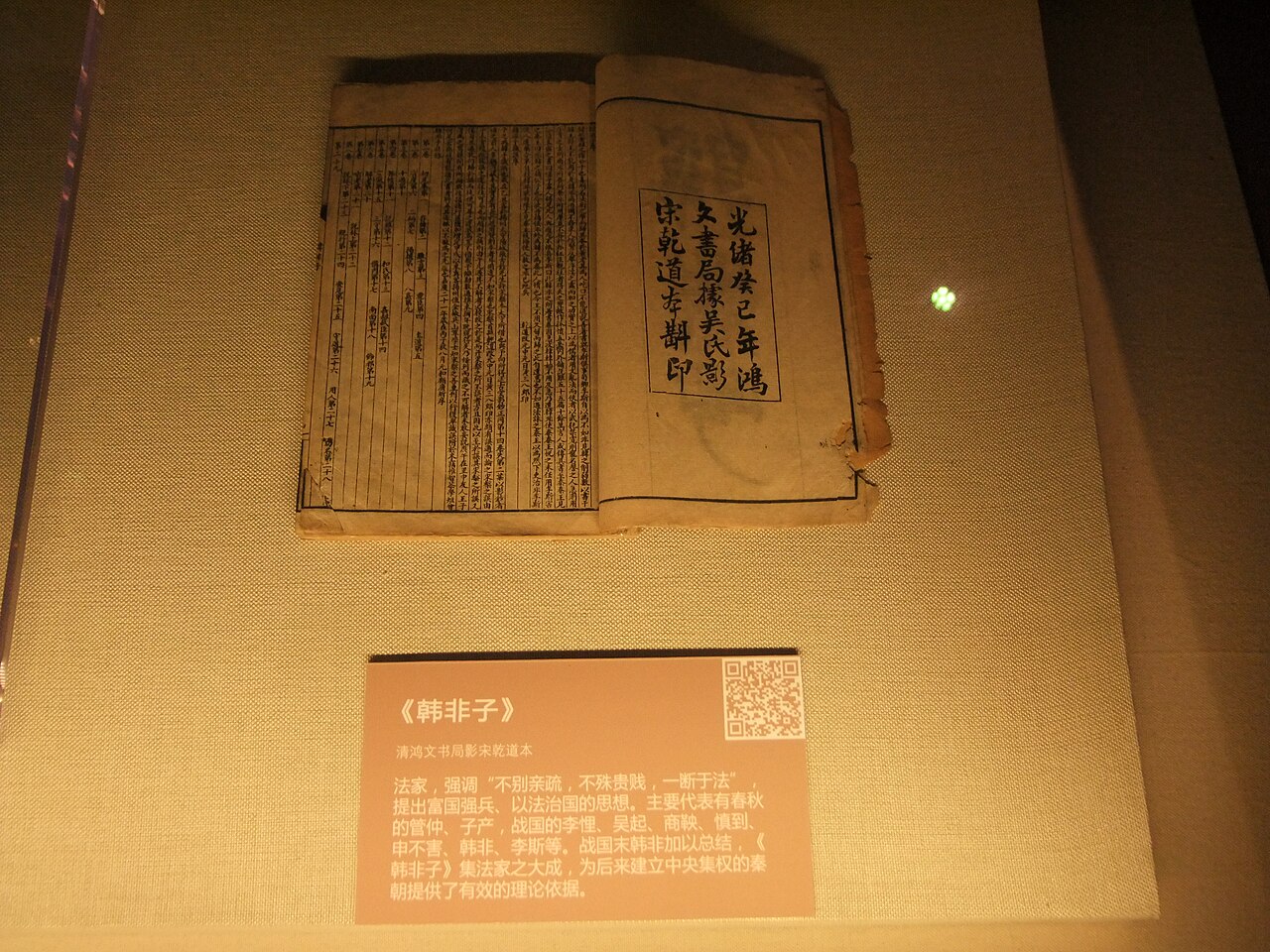 Book
Secondary source
Han Feizi
Han Fei · c. 3rd century BCE
Secondary source
Guanzi
Traditionally attributed to Guan Zhong; several anonymous authors · Compiled in the early Han dynasty; the received text was edited by Liu Xiang c. 26 BCE
 Book
Secondary source
Records of the Grand Historian
Sima Qian · c. 90 BC
 Book
Secondary source
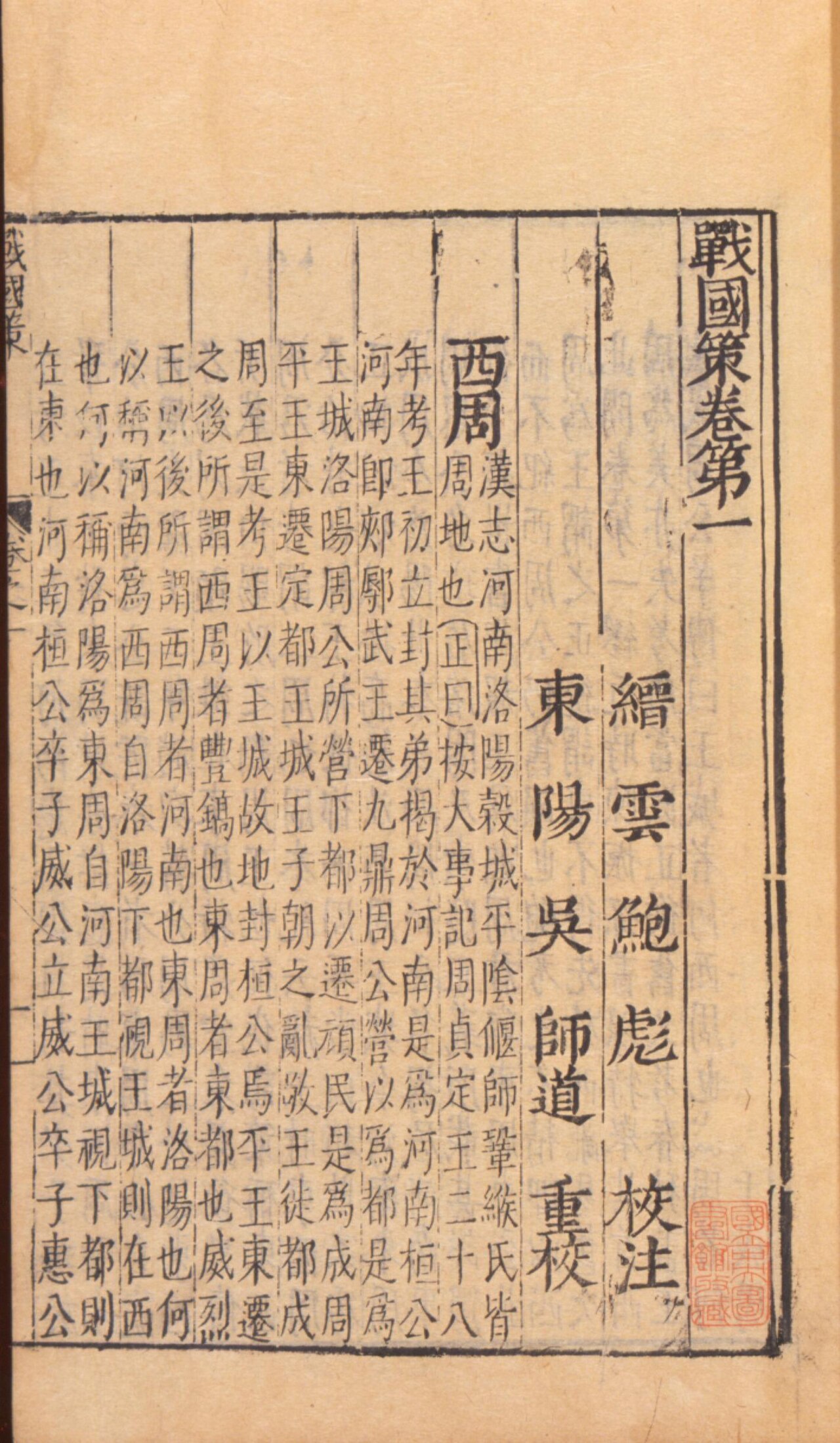
Zhan Guo Ce
Su Qin · compiled, Han dynasty, from Warring States materials
 Book
Secondary source
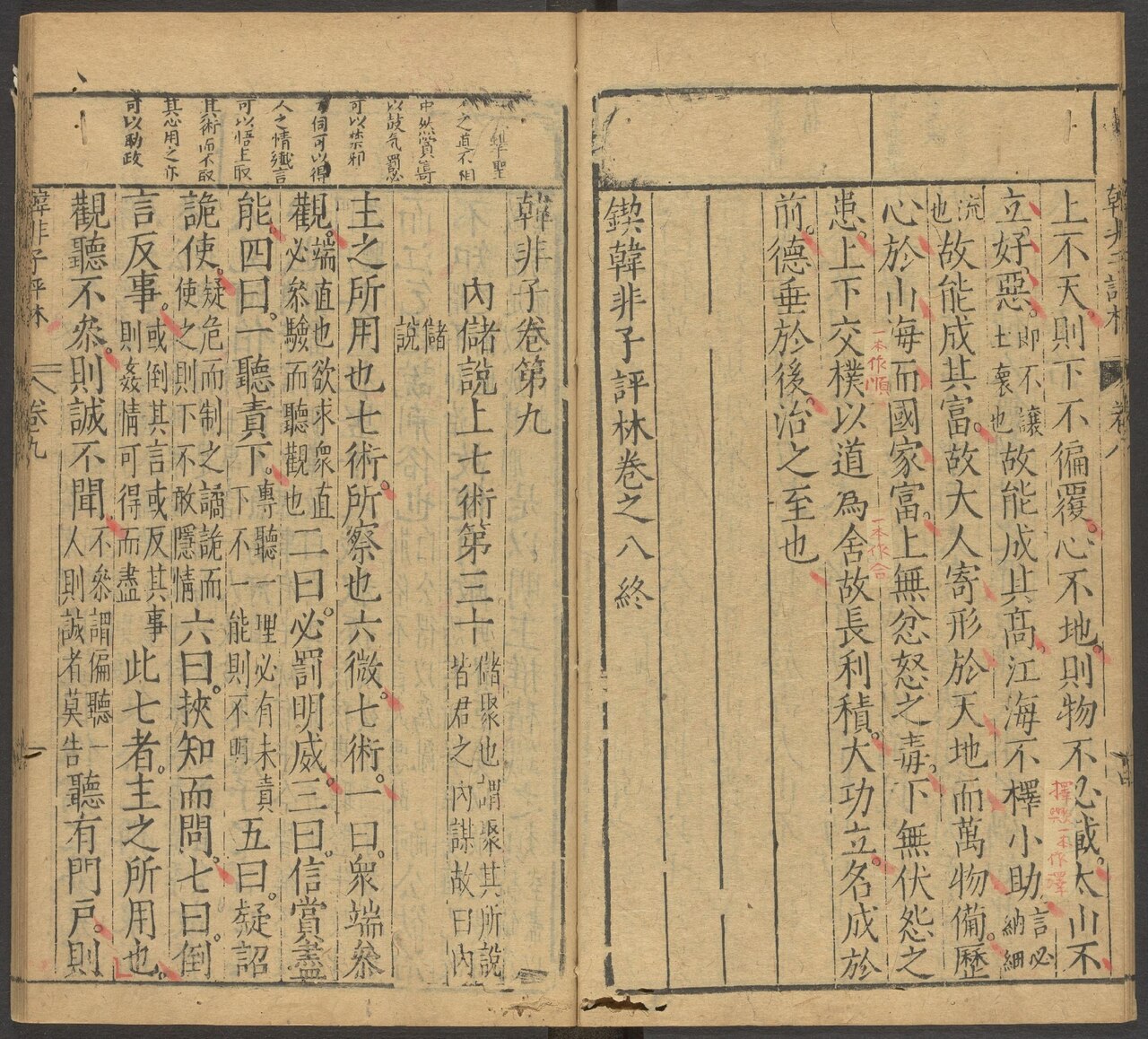
Han Feizi, Ming dynasty woodblock edition, volume 9
Han Fei (text); printed in the Ming dynasty · Ming dynasty, between 1465 and 1620
Ready when you are
Start chatting with Han Fei now.
20 messages free · No credit card · Available in 50+ languages.